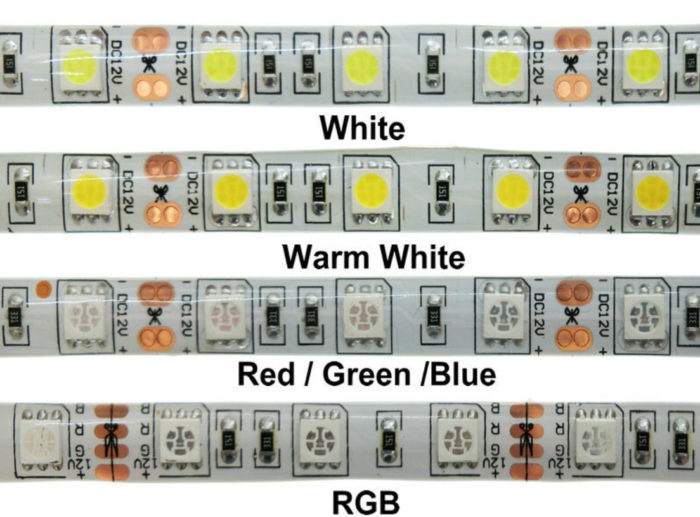
Types of LED strips - device and features of work
The advent of LED lighting has revolutionized the lighting market. And the point is not only in the ultra-low, compared with an incandescent lamp, electricity consumption. Light-emitting crystals have small dimensions, so they can combine light sources of various shapes. Flexible devices in the form of luminous ribbons are widely used.
How the LED strip works and how it works
The principle of operation of the tape, like any LED lamp, is based on the ability of semiconductor p-n junctions to radiate when current is passed. The frequency of the radiation can lie in the infrared, visible or ultraviolet region.In this way, you can get a monochrome glow, but not a white color, which is a mixture of colors in the visible part of the spectrum. A breakthrough was the development of LED, in which the light-emitting component was a coating of a phosphor substance. Its glow is initiated by p-n junction radiation, which does not have to be visible (usually UV glow). This dramatically expanded the scope of LED-lamps and this began their triumphant distribution.
The popularity of flexible luminaires is based on their application possibilities. Such a device can be fixed in a variety of places with any configuration. The device of the LED strip is not difficult. Groups of LEDs with quenching resistors or with addressable microcircuits are applied on a flexible base of various thicknesses. Power rails run along the canvas, ending with contact pads on both sides. On the other side, many manufacturers apply an adhesive layer to simplify installation.
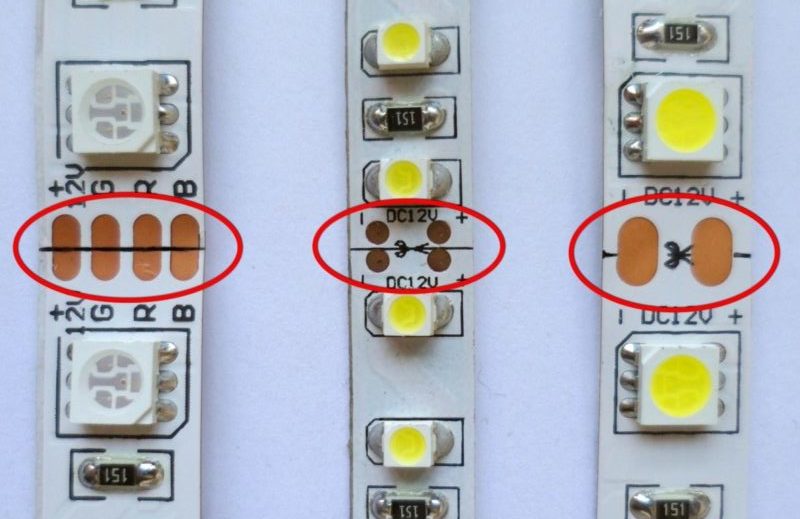
The canvas can cut in the indicated places, forming segments of the required length. Group schemes, types of LEDs and resistor values determine the characteristics of the lamp and its scope.
Where flexible luminaires are used
The scope of LED strips can be divided into two large sectors, depending on the device of the lamp:
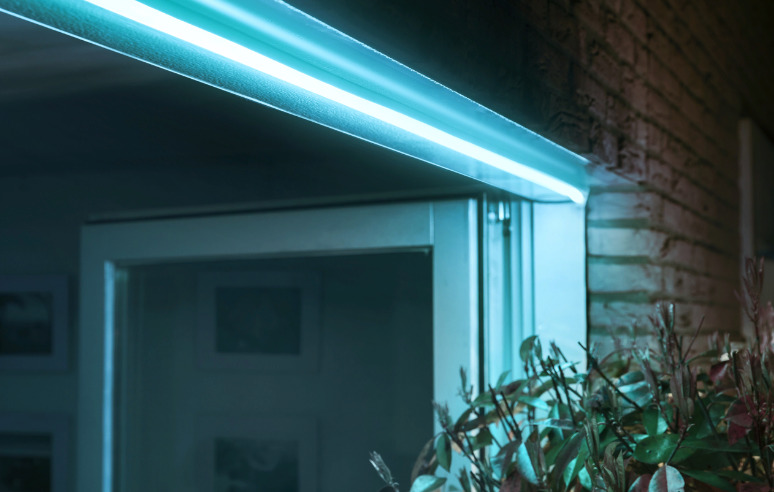
- Street and interior lighting. For this purpose, mostly white LEDs are used. You can choose lamps with a warm (red-yellow) spectrum, they are used in residential areas for bedrooms, living rooms, etc. Devices emitting in the neutral area are used for outdoor lighting and in industrial premises, as well as in living rooms, kitchens and public institutions. In museums and jewelry stores, cold shades of white are more suitable. It is convenient to use segments of the LED canvas to create local illumination.
![balcony doorway outdoor lighting]() An example of outdoor lighting for a balcony doorway.
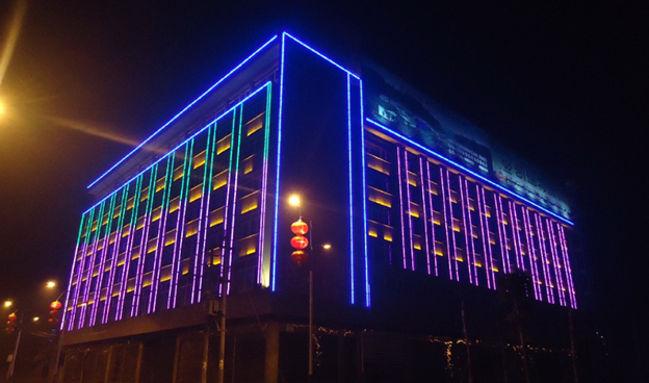
An example of outdoor lighting for a balcony doorway. - decorative building lighting, architectural structures, as well as festive illumination. RGB strips are widely used here, allowing you to dynamically change the color of the glow. Any boundaries in the creation of lighting effects ceased to exist after the appearance of lamps based on addressable LEDs.
![Decorative building lighting]() Decorative illumination of the building with the help of an RGB lamp.
Decorative illumination of the building with the help of an RGB lamp.
For each area of use, you can choose a luminaire that is most suitable in terms of capabilities and cost.
How LED strips are marked
The adoption of a unified system for marking LED strips is long overdue, but manufacturers of lighting equipment are in no hurry to negotiate among themselves. Therefore, there are several different parallel ways to briefly indicate the characteristics of LED-sheets. The most informative marking looks like RTW 2-5000PGS-12V-DayWhite 2x (3528, 600 LED, W). The decoding is given in the table.
| RTW | Sealed tape with frontal glow |
| 2 | factory series |
| 5000 | Total coil length in mm |
| PGS | Sealing method (silicone shell filled with sealant) |
| 12V | Supply voltage |
| day white | Glow color |
| 2x | Double density light emitting elements |
| 3528 | LED form factor |
| 600 LED | Total number of LEDs |
| W | Substrate color (W-white (white)) |
In this system, there was no place for at least two important parameters, without which the choice of a lighting device is difficult:
- the power consumption of one meter of tape (it can only be roughly estimated by the standard size of the LEDs used and the density of their installation);
- degree of protection (here you can also make an approximate assessment by the method of sealing).
But this marking seems to be the most suitable for adoption as a standard, or at least the basis for it.
The video block will complement the above.
Variety of types of LED strips
Competition in the lighting equipment market forces manufacturers to close all niches for the use of LED devices, and even create new ones. This is done by producing varieties of illuminators that have no analogues and prototypes in earlier developments.
According to the color of the radiation
Monochrome ribbons
With the development of the white light emitting diode, there are no obstacles left for LED equipment to fully conquer the market. But even white light is not the same, and has gradations in the spectrum of radiation, characterized by color temperature (in Kelvin).
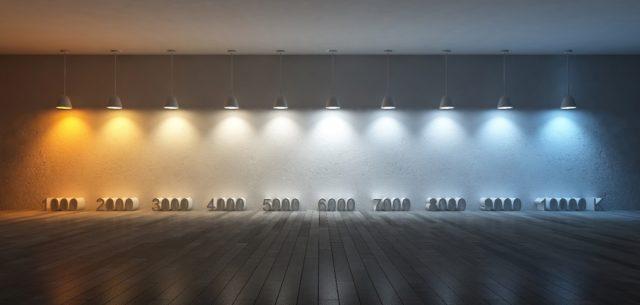
The consumer can choose from warm red-yellow shades to cool blue-violet. You can also purchase monochrome lamps with a color other than white. Their marking contains the name of the color in English (Green, Blue, etc.).
RGB lights
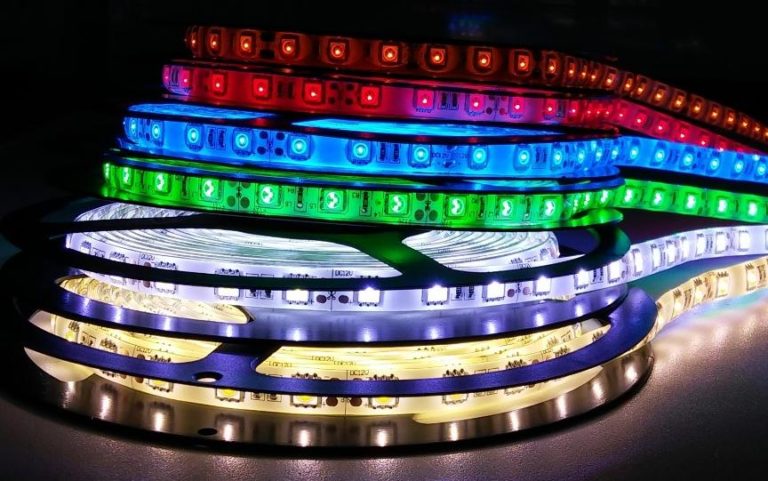
This type of tape contains three LEDs in red, green and blue. This makes it possible to obtain a glow of almost any color by mixing in different proportions of the three main shades. And this glow can be changed dynamically. Designers have almost unlimited potential for architectural lighting, visual effects, and more.Such devices in the designation have RGB symbols and are controlled using controllers (industrial or amateur design).
The only limitation of such lamps is white - it is impossible to obtain pure white from the three primary colors. For cases where this is critical, one white LED is added to every three colored LEDs. It "tints" the synthesized white color. Such a tape is marked with the letters RGBW (RGB + White).
Luminaire based on addressable LEDs
This type of LED strip has no analogues in the world of lighting technology and has a limitless multimedia component. Its main difference from the usual RGB tape is that it is possible to control the glow of each three-color element separately. Luminaires with the SPI bus can be controlled from industrial consoles, for devices with a single-wire bus (for example, based on WS2812b elements), control circuits based on microcontrollers (including those based on the Arduino platform) are used. This allows you to fully use the possibilities laid down by the developers.
Varieties in execution
Ordinary LED strips have a degree of protection IP20. This means that the instrument is protected against the ingress of solid particles larger than 12.5 cm and is not at all protected against the ingress of water. This design does not allow the use of the illuminator in open space, not to mention wet rooms. Therefore, special types of tapes with additional protection are produced:
- in the form of a transparent silicone tube put on the canvas - the marking contains the designation P;
- the canvas can be filled with a transparent sealant - indicated by the symbols SE;
- if both methods of protection are present (the silicone tube is filled with sealant), the marking contains the symbols PGS.
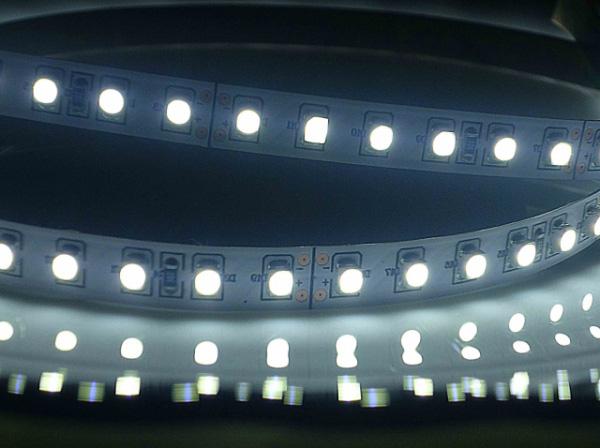
Such protection methods make it possible to produce LED luminaires with a degree of protection up to the highest (IP68) and to use tapes even under water.
According to the applied light-emitting elements
To form the luminous flux of LED strips, various types of LEDs are used, including housing cylindrical ones. But the most widespread are tapes based on leadless elements (smd). This design is the most technologically advanced in production and allows you to somewhat reduce the cost of lighting equipment. The LED form factor is marked with four digits indicating the dimensions of the element in terms of (length and width). These symbols are usually included in the labeling of the tape.
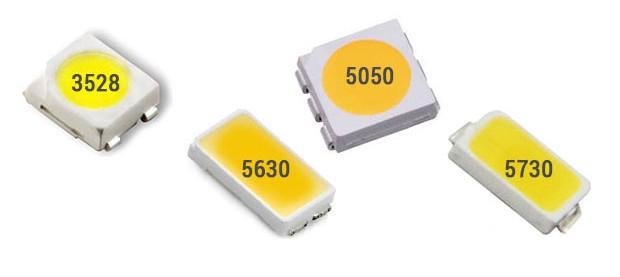
| Type of light emitting element | Dimensions, mm |
| 3528 | 3.5 x 2.8 |
| 5630 | 5.6 x 3 |
| 5050 | 5 x 5 |
| 5730 | 5.7 x 3 |
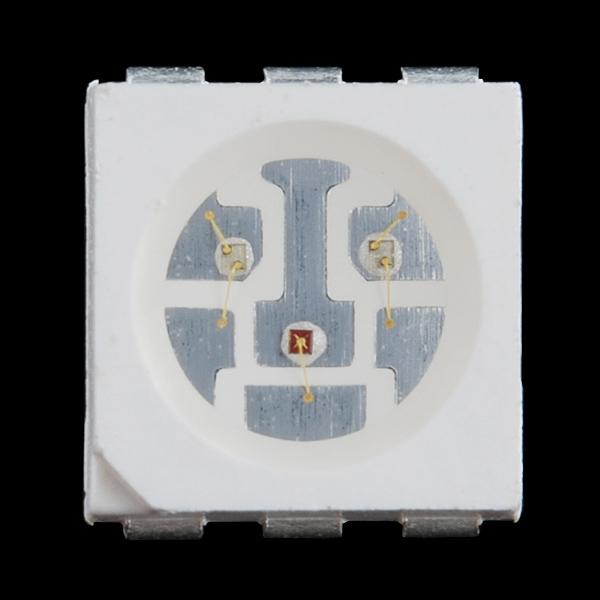
For RGB tapes are used LEDs, containing in one case three crystals with different colors of radiation. They are separately controlled, but their anodes are connected. Usually these elements are also used in a leadless version.
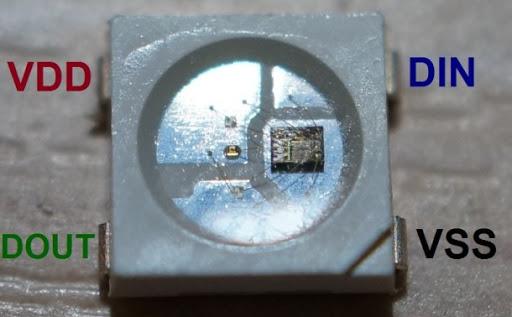
For creating address tapes use miniature PWM drivers, which can be embedded with light-emitting p-n junctions. But microcircuits with external connection of three LEDs of basic colors (or an LED matrix in a single package) are also widely used.
Power consumption
To create a luminous flux, the LED consumes electrical power.Although the ratio of this power to the intensity of radiation is much higher for LEDs than for incandescent lamps, strip lights can draw significant current. It is defined:
- energy consumption of a single element (depending on its type);
- the number of LEDs installed on the tape (depending on the density of the arrangement).
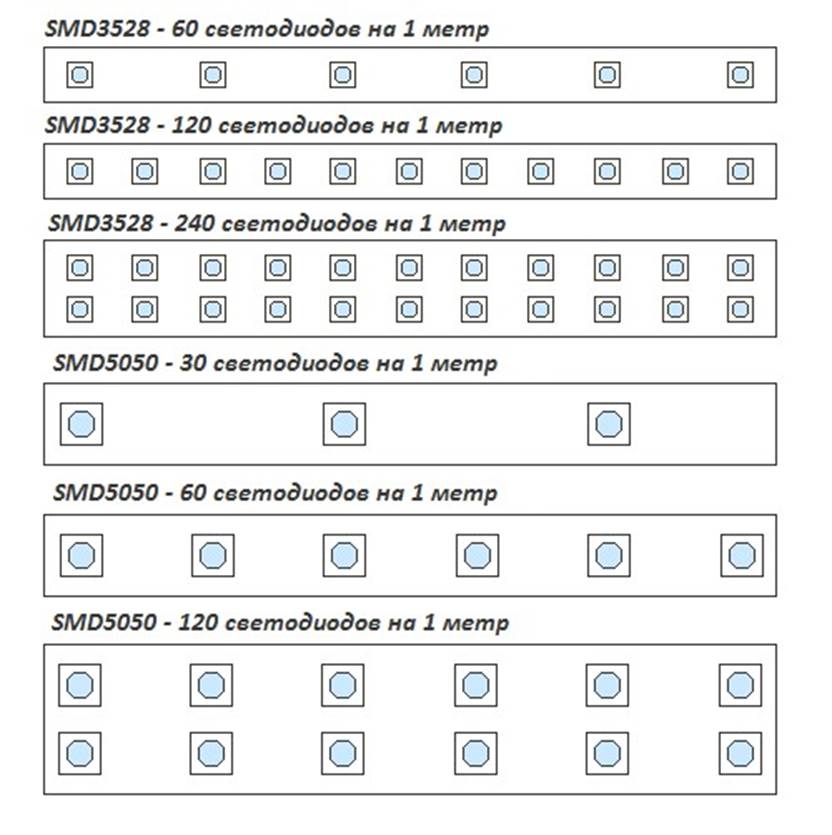
In practice, such a parameter as the power consumed by one meter of tape matters. When calculating lighting systems, they are based on this characteristic. There was no place for this parameter in the most common marking, but some manufacturers take it seriously. So, one of the tapes produced under the Apeyron brand is designated as Apeyron Electrics LSE-159 SMD 5050 30LED IP20 12V 7.2W 5m. Here 7.2 W is the specific power consumption.

Direction of the light stream
In most cases, the luminous flux is directed across the plane of the web. But a situation may arise when it is necessary to illuminate the surface, and it is problematic to place the tape strictly above it. Or you need to avoid a situation where the light will hit a person in the eye. Then a side-glow tape is used - its LEDs direct the main flow along the plane of the canvas, that is, along the surface on which the tape is pasted.
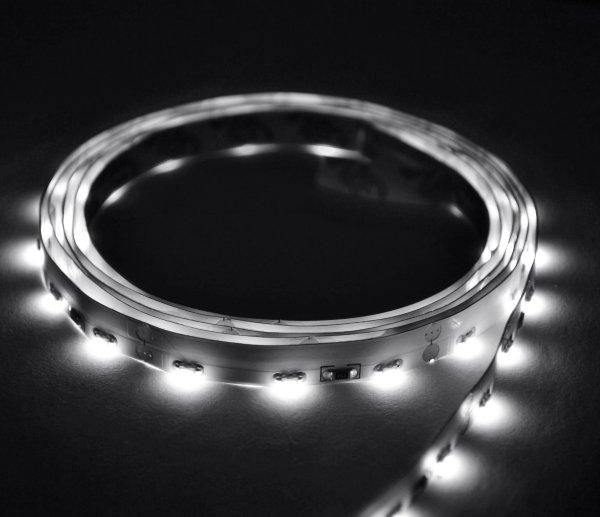
Such an LED strip in the most common marking is indicated:
- RS - open version;
- RSW - hermetically sealed.
By sticking such a lamp on the wall, you can illuminate the stairswithout blinding people.
How to connect LED strip
Luminaires on a flexible basis according to connection method are divided into several categories:
- monochrome 220 V. They are connected to the network through a rectifier.
- Monochrome low voltage. This category includes LED lamps for an operating voltage of 5/12/24/36 volts. They are best powered from power supplies at the appropriate voltage. If the tape is used on a car, it can be connected directly to the on-board network.
- RGB lights. To fully realize the possibilities, such LED strips are powered from a source of the appropriate voltage, and are controlled from an industrial or home-made controller. You can turn on a constant glow, but there is no economic sense - a monochrome ribbon is cheaper.
- Luminaires based on addressable elements. The voltage on the power buses is supplied from a separate source, the control is carried out only through the controller - there is no other way.
Thematic video: Everything you wanted to know about the LED strip.
Diverse types of LED strips allow you to implement almost any lighting options for any purpose. The decision on economic and aesthetic feasibility is always made by the user.