How to make light on a balcony or loggia yourself
It is not difficult to conduct light on a balcony or loggia, you can do the work yourself and save money. But at the same time, you need to understand the topic well, choose the lamps and connect them in compliance with safety standards. Any violations can lead to problems and you will have to redo the system or even re-wire.
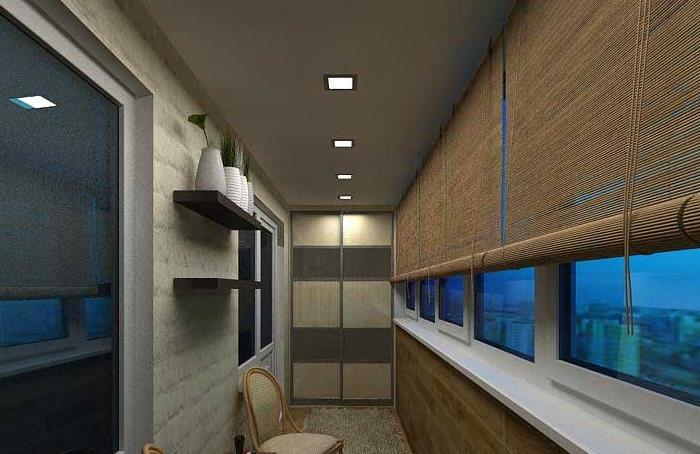
Features of lighting the balcony and loggia
Before starting work, you need to deal with a number of points that affect the choice of equipment, the method of wiring and connection. The following is taken into account:
- Glazed balcony or not. If the space is open, you need to buy a street lamp and use a suitable type of cable.In this case, the light is most often used occasionally, so the focus is on functionality, appearance does not really matter.
- For glazed, but not insulated balconies and loggias, it is also worth using equipment designed for the street. In winter, temperatures will drop below zero, and the lamp is also affected by changes in humidity and other adverse factors.
- On insulated structures, you can use lamps for rooms with increased protection against moisture. The indicator is selected according to the IP value, it consists of two digits, the second one has the main value. It must be at least 4, so that when humidity changes, water does not penetrate inside and does not cause oxidation of the contacts and corrosion of the metal.
- If the structure is insulated and heated or combined with a living space, then lighting on a balcony or loggia can be done in the same way as in rooms. It is allowed to put any lamps, there are no restrictions on resistance to moisture and dust.
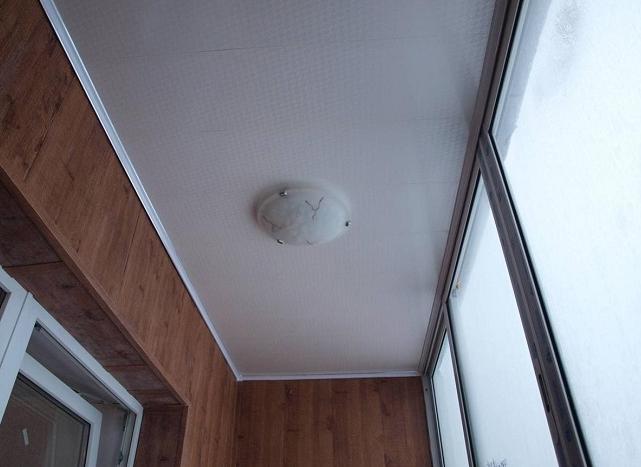
If subsequently the balcony or loggia is insulated or equipped with heating, then the wiring does not need to be changed.
Requirements for electrical safety on the balcony
To eliminate any problems when connecting the light and its further use, several recommendations must be followed that guarantee safety. Electrical work requires care, and the system must eliminate any risk of electric shock or short circuit. Remember the following:
- Before starting work, turn off the power supply at the instrument panel.If the system will be powered from the nearest outlet, then you can only click on the machine responsible for this direction, if it is available separately. When connecting through the shield, it is worth putting a separate machine on the balcony, this is the most convenient and reliable solution.
- Use a tool with dielectric coated handles. Even with the electricity turned off, it is worth using such devices to eliminate even the slightest chance of problems.
- If a strobe is made from the outlet to the balcony, check the surface with a device for hidden wiring in the wall so as not to damage it.
- It is better to choose fixtures with an increased level of protection against moisture, since even on insulated structures, the effect of temperature and humidity changes is much greater than in the room.
- For cable laying, use a special non-combustible corrugation to provide additional security. Therefore, the size of the strobe must be done taking into account this aspect.
- Connect the wires using special blocks, preferably of a closed type, which protect the contact from moisture. If twisting is used, then the joint must be additionally soldered to ensure good contact and protect the bare cores from oxidation.
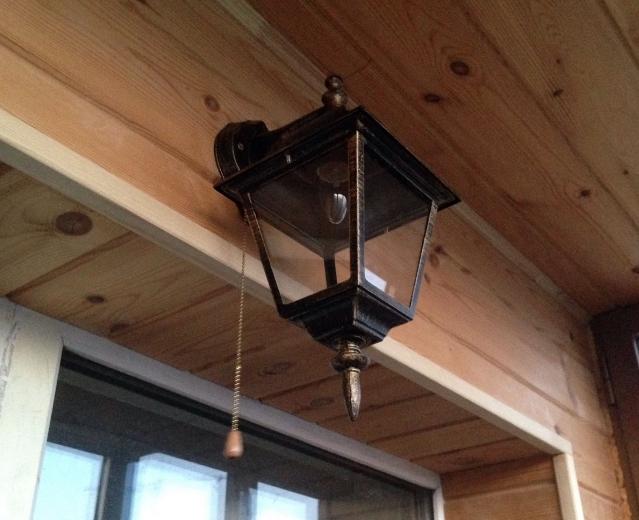
The light on the loggia or balcony should provide good visibility. Its brightness is selected depending on how the area will be used.
Types of lighting for closed balconies
The quality of light depends on the fixtures and bulbs used. There are several options, but it is not difficult to understand them. Do this before buying.
Lamp types
The quality of light, service life and energy consumption depend on this. There are also other important points that must be taken into account when choosing:
- Incandescent lamps. They cost the least, but they are inferior in quality to all analogues, the light is yellow, during operation the bulb becomes very hot. Do not use this type for recessed fixtures. The service life is the shortest.
- Halogen lamps. Improved view with tungsten filament and halogens pumped into bulb. Due to this, the brightness is much higher, but the electricity consumption is almost the same as that of incandescent lamps. The service life is not very long.
- Fluorescent light bulbs. They give even light at different temperatures. Consume several times less electricity, serve much longer. Suitable for standard cartridges, the only negative is that they do not tolerate temperature changes; it is better not to use it on unheated balconies.
- LED lamp the most economical to date, serve up to 50,000 hours. They give even light without flicker, you can choose different shades or adjust the brightness with a dimmer.
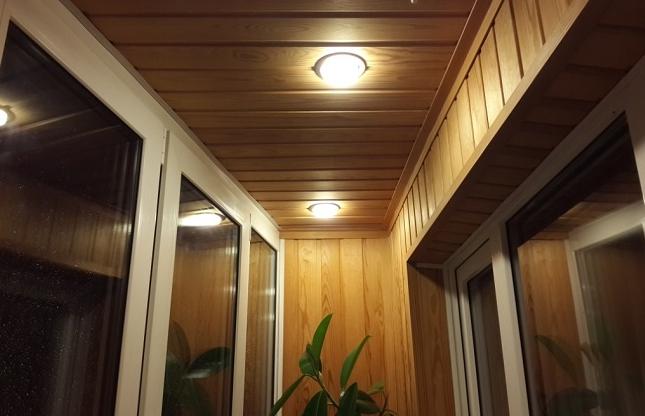
Backlighting on the balcony can be done using LED strip. This is a simple solution that consumes little electricity and allows you to highlight individual elements, giving a soft diffused light.
Types of fixtures
To decorate the balcony correctly and provide comfortable lighting, you need to choose the right lamp. This affects not only the light, but also the design of the room, so when choosing, you need to take into account several recommendations:
- Spotlights hidden under the ceiling surface, therefore suitable for wooden lining, plastic panels, drywall and stretch ceiling. There must be a void of at least 7 cm so that the case fits and does not overheat during operation. They look modern and concentrate the light in a small area, you can put it every meter or more, it all depends on the required level of lighting.
- Overhead options are used for ceilings without voids. These are spotlights in a beautiful case, which are attached to the surface. Another interesting view is track systems, when a tire is attached along the balcony, on which shades are placed in the right places.
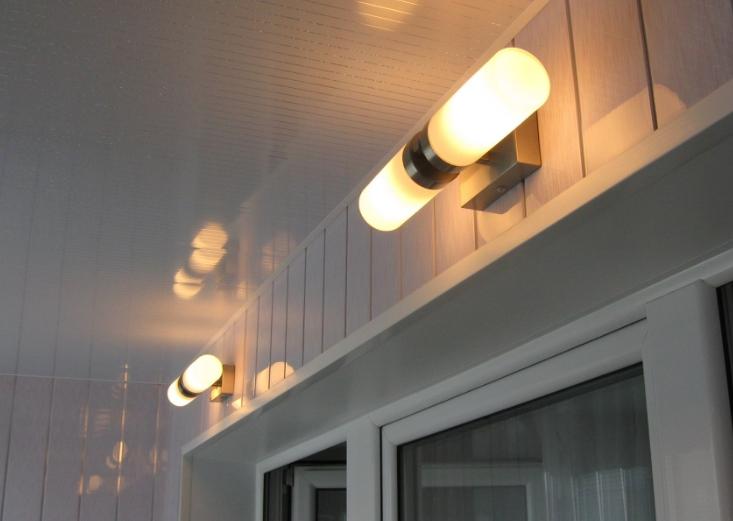
- wall models provide diffused light and can highlight a small space (for example, a table). The first type is sconces with lampshades, they are best suited to a classic setting. Lamps with diffusing shades are well suited for modern interiors, there are a lot of models.
- Ceiling structures suitable for general lighting. It is better to use compact chandeliers in which the horns diverge parallel to the ceiling surface so as not to take up space. Another option is large ceiling lamps or light panels that give even diffused light and can illuminate the space with high quality.
- LED strips used to illuminate individual structures or to create a soft background, if placed along the perimeter of the ceiling or in a specially prepared niche. Can be mounted anywhere on the ceiling or on the wall due to the adhesive layer on the back.
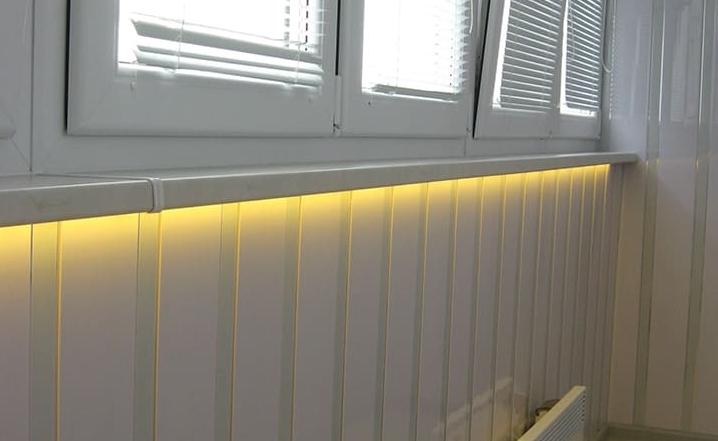
You can combine different solutions to achieve the desired effect and highlight individual zones.
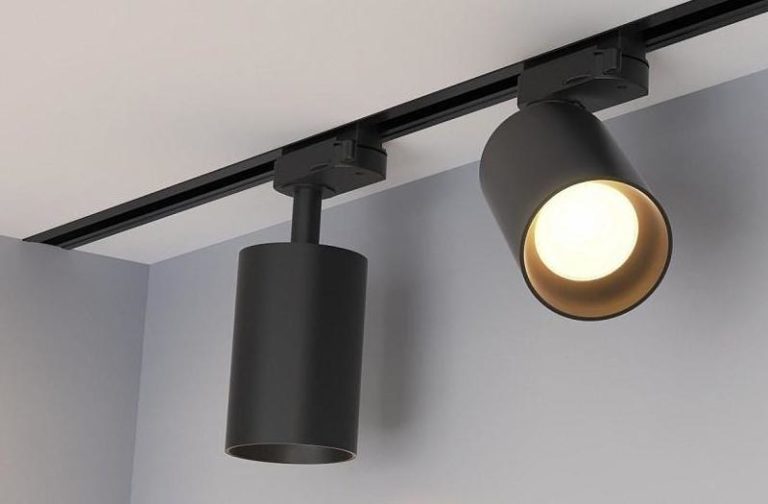
How to connect the light yourself
The work is simple, but requires accuracy and strict adherence to all recommendations. To simplify the process, the process is divided into small steps that must be performed in order.
Choosing a connection point and drafting a project
Power for lights and sockets (if available) on the balcony can be supplied from different locations. You need to proceed from the situation and select what suits you best:
- Connection from the switchboard of the apartment. The best solution, since you can put a separate machine and power the system separately. But the wiring will have to be done from afar. Therefore, it is best to immediately lay the cable during the repair, when all the wiring is done. If the finish is already finished, it is better to choose another method.
- Junction box connectionif it is located in a room adjacent to a balcony or loggia. Another good solution that will provide reliable power. Usually you need to do a lot less strobes. But if the box is located far away and you don’t want to spoil the wall, it is better to choose the following method.
- Connecting wires from the nearest outlet. Most often, it is located closest, so it is more convenient to lay the cable than from the junction box. A strobe is made from the outlet to the balcony, inside the twist should be soldered for reliability.
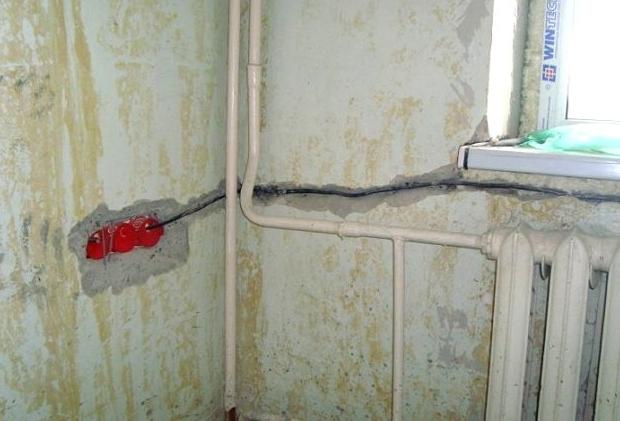
After the connection point is determined, a simple project can be made. It will allow you to present the result well and carry out the necessary calculations.Several points must be taken into account:
- Determine the types of fixtures used and their location. You also need to consider the position of the switch and sockets, if any.
- Draw up a simple diagram indicating the connection point and installation locations of the main elements of the system. The main thing is to observe the basic proportions and provide for everything that is required.
- Calculate the amount of materials. These are lamps, junction boxes, switches and sockets, cables, fasteners.
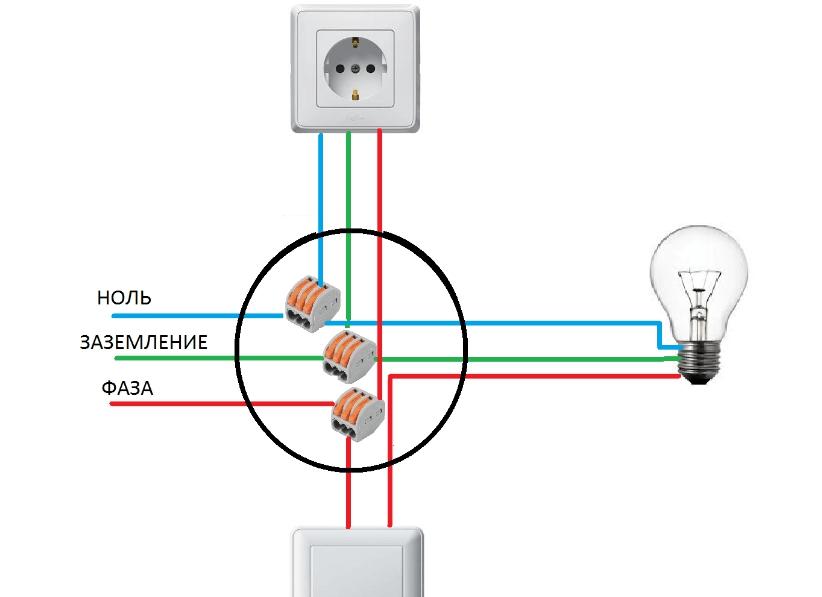
When buying materials and components, give preference to high-quality goods, do not save on the reliability of lamps and switches.
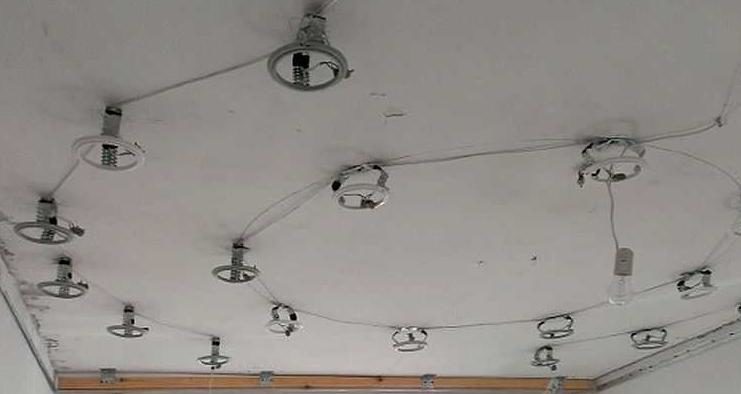
Cable selection and installation
Before choosing a specific option, it is necessary to carry out the simplest calculations. To do this, sum up the power of the lamps and sockets used. You need to know the indicator before buying a wire:
- In the store, orient the seller by power, while it is worth adding a margin of 30% to avoid overloads. You can also choose independently according to the current strength, using the data from the table below.
- It is recommended to use products with copper conductors, since they have less resistance, pass current better and bend easily. Aluminum is inferior in performance, but with a limited budget, it can also be used.
- When buying, always make a margin of 10-15%as the actual consumption may differ from the planned one. You also need to leave ends for connecting to a box, switch, lamp, etc.
Below is a section selection table copper cable for concealed wiring
| Cable core cross section, mm² | Cable core diameter, mm | Current, A | Power, kW at a voltage of 220 V | Power, kW at a voltage of 380 V |
| 1 | 1,12 | 14 | 3,0 | 5,3 |
| 1,5 | 1,38 | 15 | 3,3 | 5,7 |
| 2 | 1,59 | 19 | 4,1 | 7,2 |
| 2,5 | 1,78 | 21 | 4,6 | 7,9 |
| 4 | 2,26 | 27 | 5,9 | 10 |
| 6 | 2,76 | 34 | 7,7 | 12 |
| 10 | 3,57 | 50 | 11 | 19 |
| 16 | 4,51 | 80 | 17 | 30 |
| 25 | 5,56 | 100 | 22 | 38 |
| 35 | 6,68 | 135 | 29 | 51 |
The table will help you choose the cable section depending on the power of the electrical equipment used.
Do not forget about cable fasteners and a corrugated sleeve or cable channel, it all depends on the installation method.
After purchasing the cable, you need to choose the option for its installation. There are two main methods, each with its pros and cons:
- Open laying provides for the use of cable channels suitable size. They are attached to the wall with small dowels, after which the wiring is laid and the outer cover is closed. Everything is simple and fast, but the appearance is not the best. You can use it if the repair has been done recently and you don’t want to spoil the walls.
- Hidden padding is much harder. You will need an angle grinder with a disc for concrete to cut out the strobes, then you need to knock out a recess with a puncher with a spatula, lay the cable in a corrugated sleeve and fix it. Then close up the unevenness with mortar and level the surface so that the laying place is not visible. Next, you can putty and glue the wallpaper.
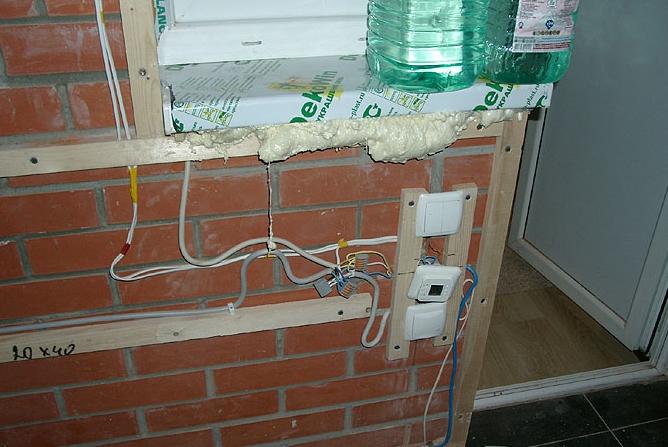
On the balcony, you can carry out hidden wiring by placing it on the frame of the suspended ceiling, in which case you can not attach the cable. In this case, the use of a corrugated sleeve is mandatory.
Recommended for viewing: Professional wiring and connection of lamps on the balcony
Installation of fixtures
The choice of mounting method depends on the type of luminaire and the surface on which it is fixed. Several recommendations must be taken into account:
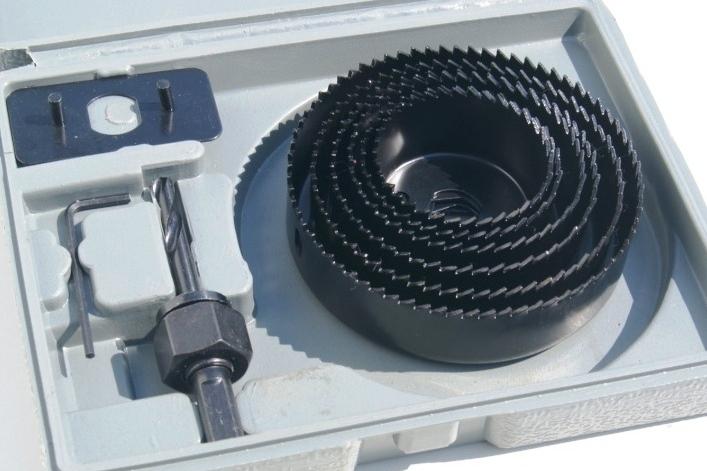
- Before installing recessed fixtures, you need to cut holes according to the diameter of the body, it is indicated on the package. To do this, use a crown or an electric jigsaw. If a tension web is installed, then a special ring is preliminarily glued so that the material does not tear when cutting a hole.
- For wall options, either dowel-nails are used (for concrete and brick), or self-tapping screws (if the surface is sheathed with wooden clapboard). Before drilling a hole, select a drill of a suitable diameter and mark the attachment points by attaching the bracket to the wall.
- Ceiling chandeliers and lamps must be fixed in the same way as when mounting on a wall. If a suspension system is used, then you need to fix the mounting platform above it or purchase a special dowel for hollow structures that can withstand weight up to 5 kg without additional reinforcement.
To connect the wiring, it is better to use special blocks, they can be either standard or snap-in to simplify installation. Connections are additionally protected if the balcony is not heated.
Making light on the balcony with your own hands is not difficult if you understand the topic, think through the idea to the smallest detail and draw up a detailed diagram. When laying the cable, use one of the described options, fix the lamp in such a way as to prevent it from falling under any conditions.