Step-by-step instructions for making a lampshade with your own hands
To update their home and equip it with a convenient source of light, many decide to make a lampshade with their own hands. For this, wire, frames and even plastic bottles are used. Before starting work, it is necessary to study the possible options, choose the best one and read the instructions.
What is a lampshade and why is it needed
Once upon a time, the light from torches was too bright, the same shortcomings were with kerosene lamps. That's why designs appliances were equipped with metal shutters that dimmed the brightness of the light.
Over time, the fire was replaced by electric bulbs, and metal shutters were replaced by different materials: fabric, glass, plastic, wood. There was also a second function of the lampshade - interior decoration.
Types of lampshades
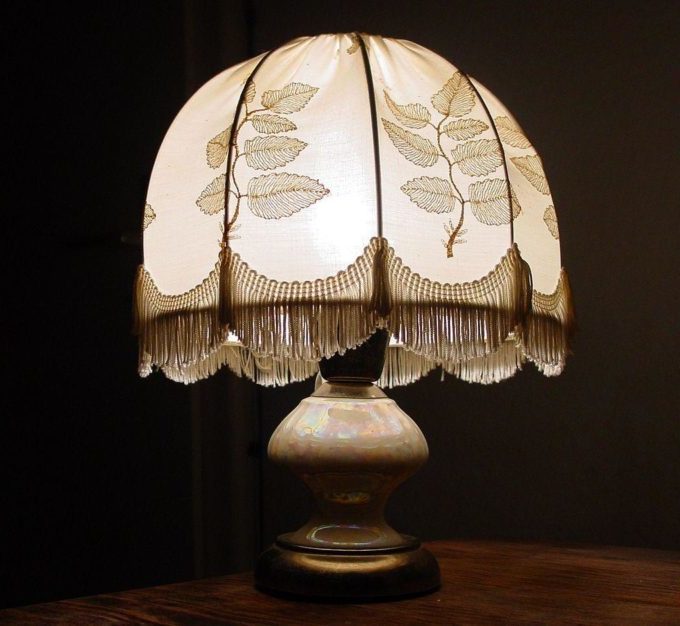
Lampshades vary in size, installation method, design, colors and materials. There are two main types of design: products with a special frame, frameless lampshades.
Frame
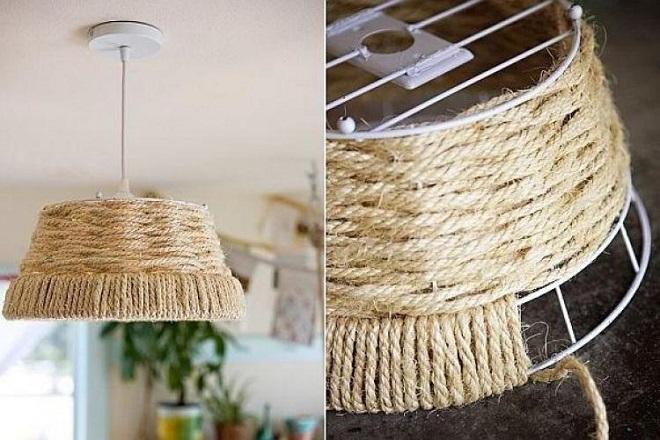
For such a cap, you must first make a frame, for example, from wire, and then stretch a fabric or other material over it. The advantages of the method are the ability to create almost any form.
An additional design feature of the frame lampshade is that at the design stage the distance between the lamp and the material of the lamp will already be clear. Also, products on the frame are durable, they retain their shape for decades.
Frameless
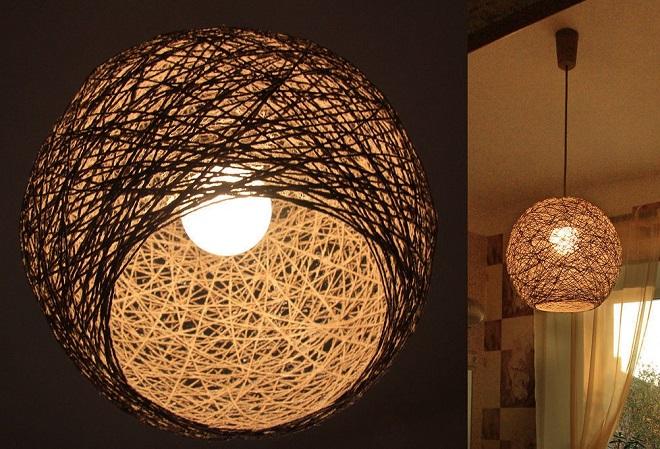
In them, the functions of the frame are performed by the material of the lampshade. During the manufacturing process, a temporary base is made, for example, an inflatable ball, on which jute with glue or any other material is applied, after drying, the temporary base is removed.
This method makes it easier to create round lampshades. Knitting threads can be used as the main material.
materials
for lampshade
A lampshade for a floor lamp or suspended structures is a product for which you can use a variety of components. For reference, it is useful to study the list of the most popular:
- Textile. The fabric is used only for frame options.There are a few things to consider, such as composition: linen or cotton is best, but synthetic fabrics can melt, lose shape, and lose color from heat. Another problem of textiles is the attraction of dust, which can be slightly reduced by treatment with water-repellent sprays.
![Step-by-step instructions for making a lampshade with your own hands]() Using fabric as a finishing layer.
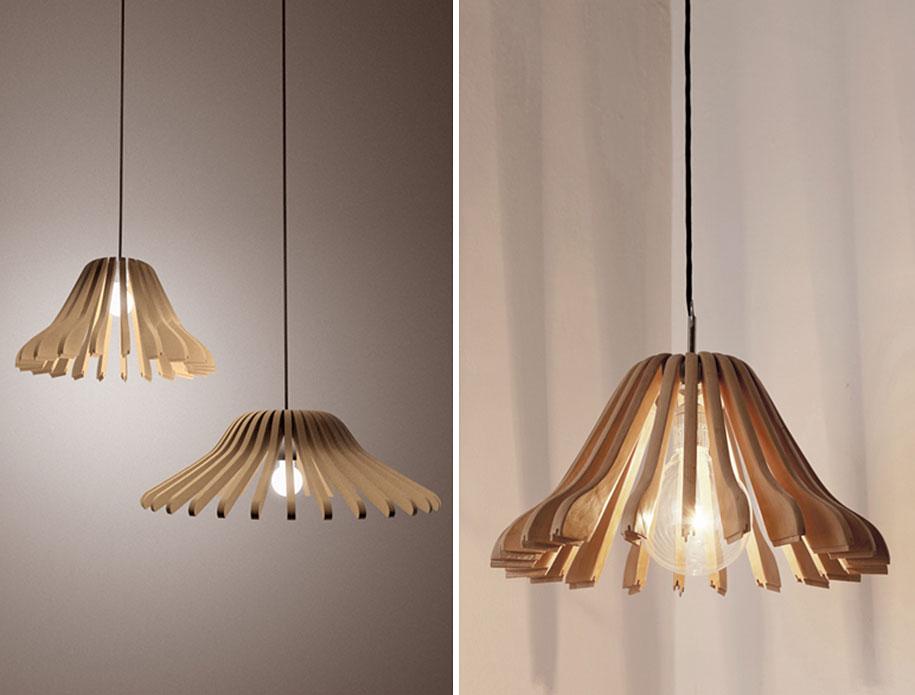
Using fabric as a finishing layer. - Wood. Used for sconce or table lamp. You can use branches or even chopsticks. They are stacked with a palisade on a previously formed body. The strength of the tree allows you to make frameless options from small boards or slats.
![Step-by-step instructions for making a lampshade with your own hands]() Decor from wooden halves of hangers.
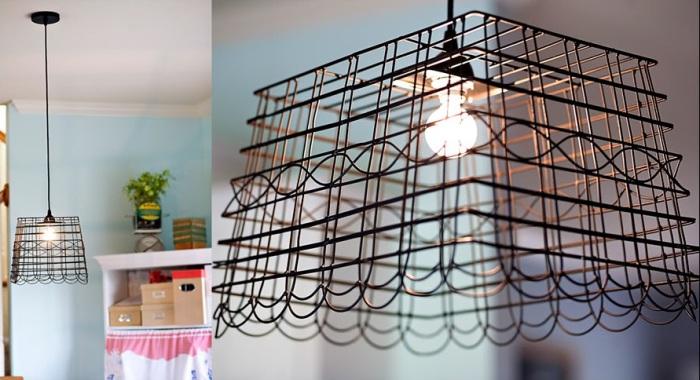
Decor from wooden halves of hangers. - Metal. For chandeliers, they often make a completely closed version of the lampshade, which allows you to direct the light down. There are also options for the frame type, where only the frame is made of metal, painted in the desired light. The loft-style option is especially popular.
![Metal basket for the lamp.]() Metal basket for the lamp.
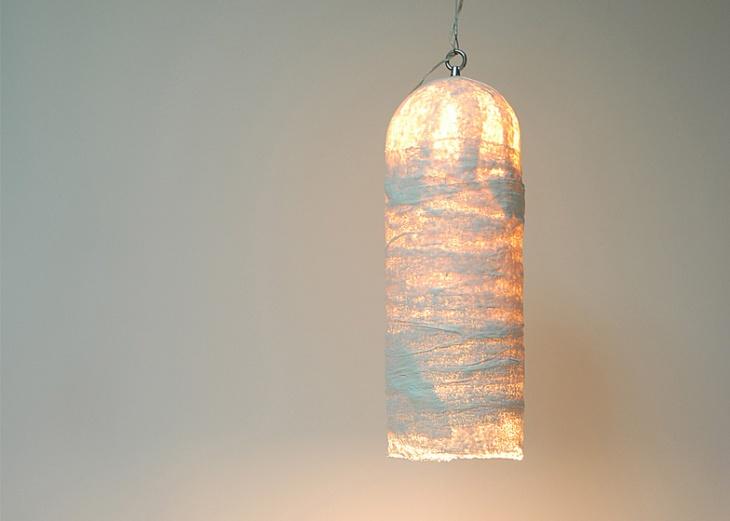
Metal basket for the lamp. - Gypsum. Good material for frameless bases. Pieces of a bandage soaked in a plaster solution are applied to the temporary body. As a result, bases of uneven shape come out. You can leave them as they are, or sand them down with sandpaper.
![Step-by-step instructions for making a lampshade with your own hands]() Gypsum products are suitable for antique style.
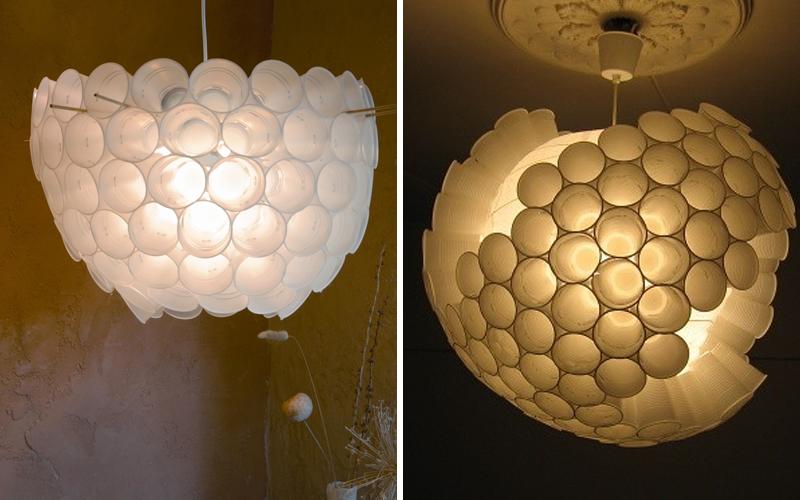
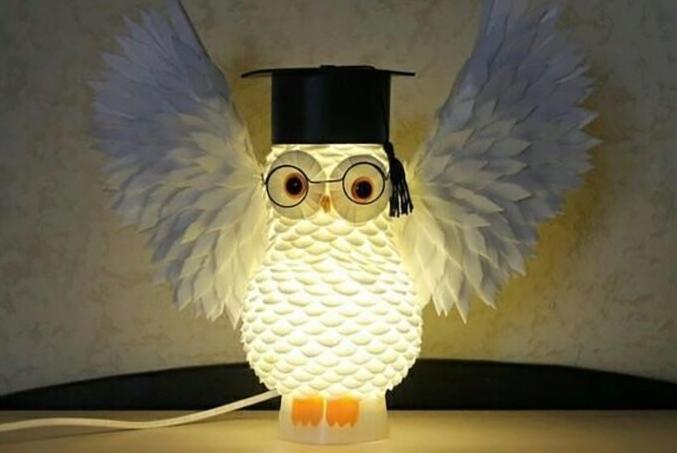
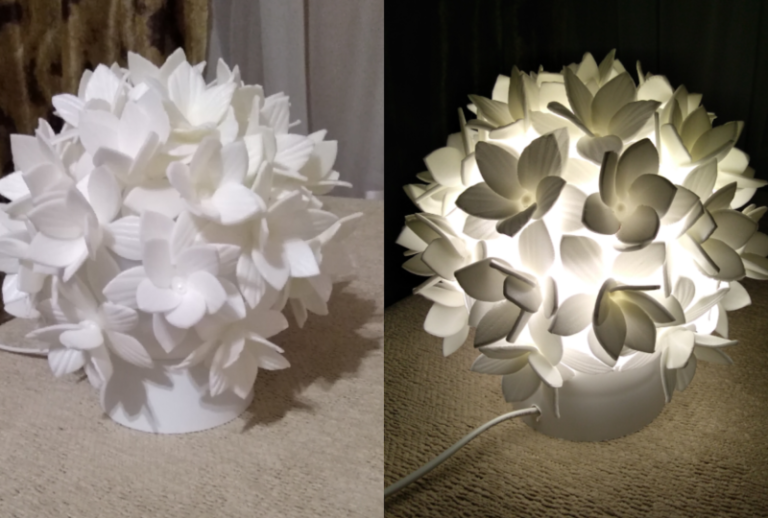
Gypsum products are suitable for antique style. - Plastic. There are many ideas for plastic lampshades. You can use ready-made products in the form of plastic spoons, cut out bizarre elements from bottles. Another way is to use a large bottle as a body, which is later painted or decorated with other materials.
![Step-by-step instructions for making a lampshade with your own hands]() Lamps from plastic cups.
Lamps from plastic cups. - Paper. Available lampshade material. Paper products of different density are used, from parchment paper to cardboard. You can also make a cap using the papier-mâché technique.
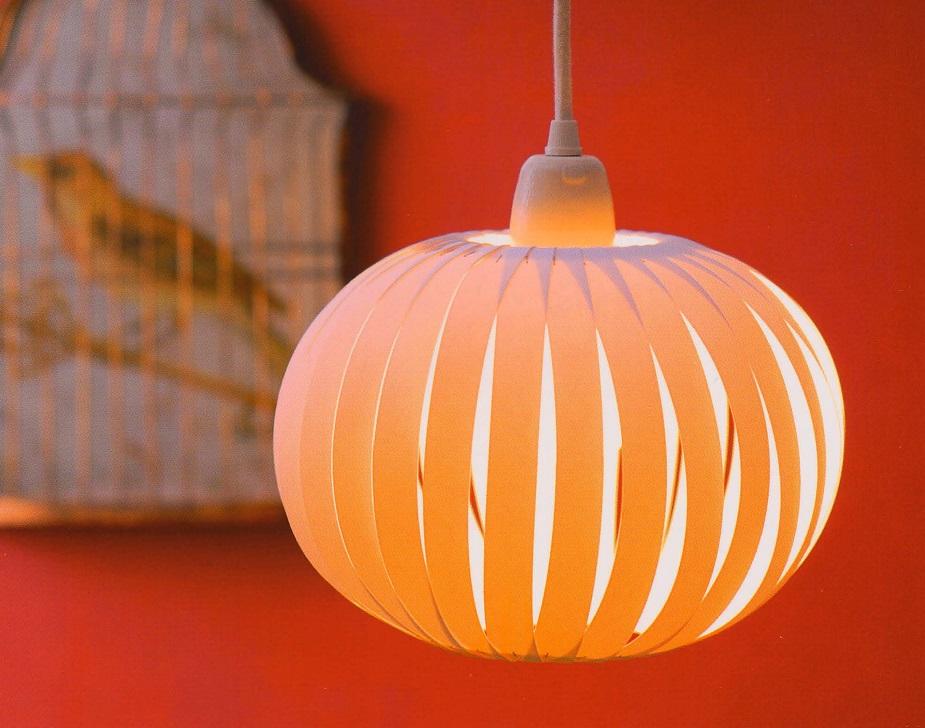
![Step-by-step instructions for making a lampshade with your own hands]() Paper ornament in the form of a pumpkin.
Paper ornament in the form of a pumpkin. - Threads. From threads, you can make a frameless ceiling lamp for a round lamp. To do this, the balloon is wrapped with threads or ropes moistened with glue, and after drying, it breaks through and is removed.
![Thread cap.]() Thread cap.
Thread cap.
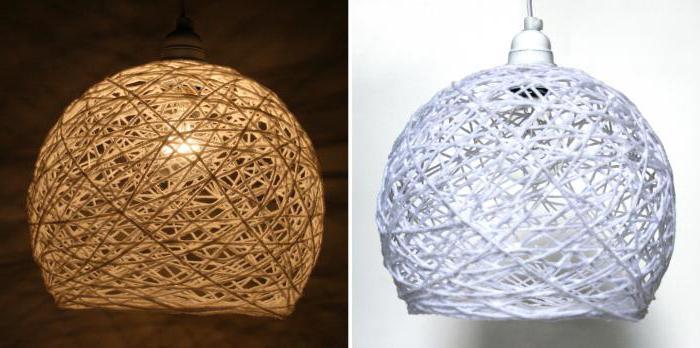
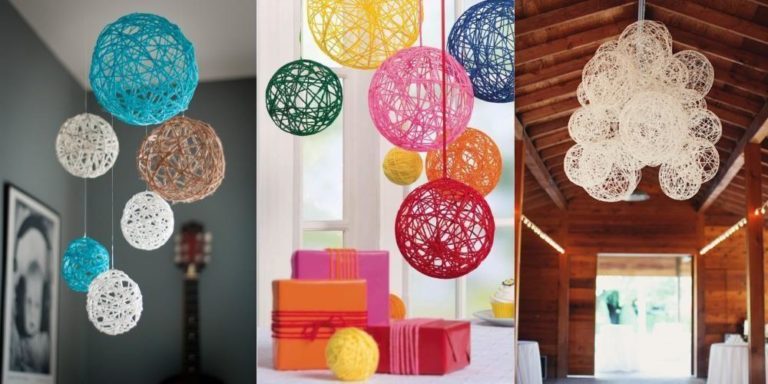
Making a lampshade is not limited to a list of seven materials, in fact, you can use anything. The main thing is that this material should hold its shape or fit well on the frame. It can be beads, various jewelry, cones and more.
Another interesting way is to use things that are not intended for lamps. So a kitchen grater, a mesh bucket or a cake pan can become a lampshade.
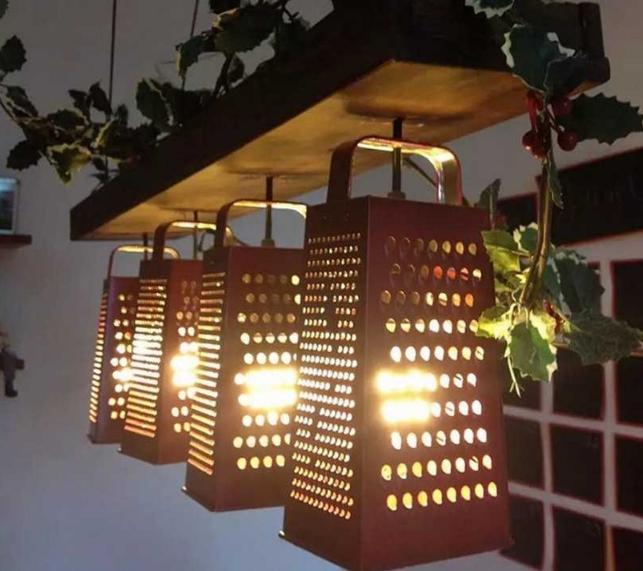
For making a frame
If a frame lampshade is chosen, then for a start it is important to figure out what materials are used for the base. It can be both finished products and home-made designs:
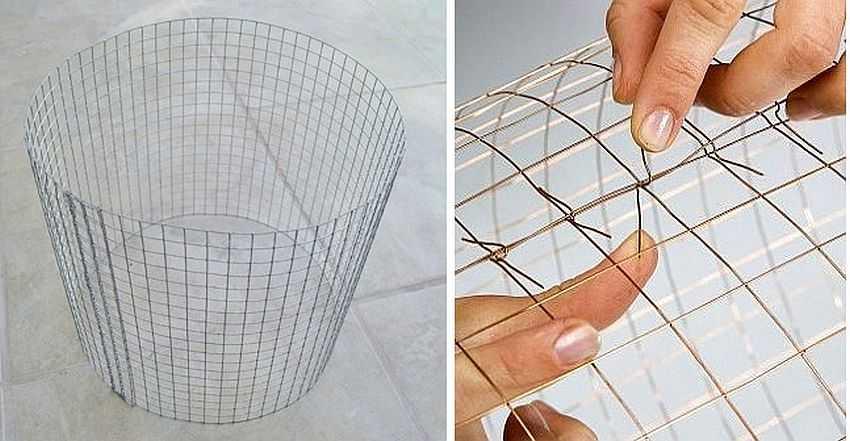
- Wire mesh. Inexpensive and simple material from which you can make a homemade cylindrical lampshade for a chandelier or floor lamp. It is important to cut the mesh so that there are small protruding pieces of wire that will perform the function of fixing the ring.
![Step-by-step instructions for making a lampshade with your own hands]() Creating a cylindrical shape from wire mesh.
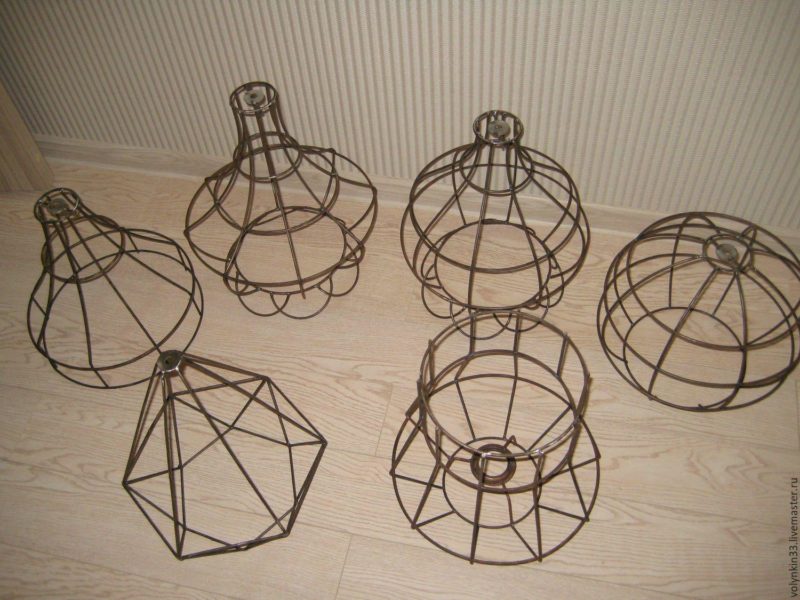
Creating a cylindrical shape from wire mesh. - The use of wire. If you are not satisfied with the cylindrical shape, you can create the desired one from aluminum or steel wire. For work, you will also need pliers and pliers.
![Step-by-step instructions for making a lampshade with your own hands]() A variety of wire forms for the frame.
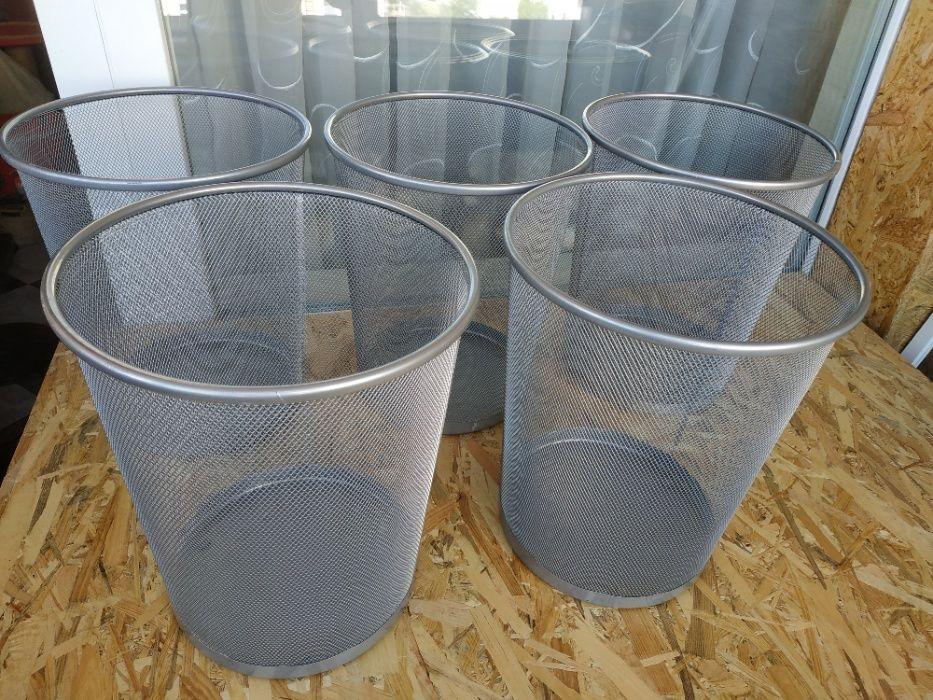
A variety of wire forms for the frame. - Bucket for office waste. The design of the desired form of steel. There are cylindrical, rectangular and other shapes. You just need to make a cutout for the light bulb and trim the top if the bucket is too big.
![Step-by-step instructions for making a lampshade with your own hands]() Office trash cans are a ready-made option for a lamp.
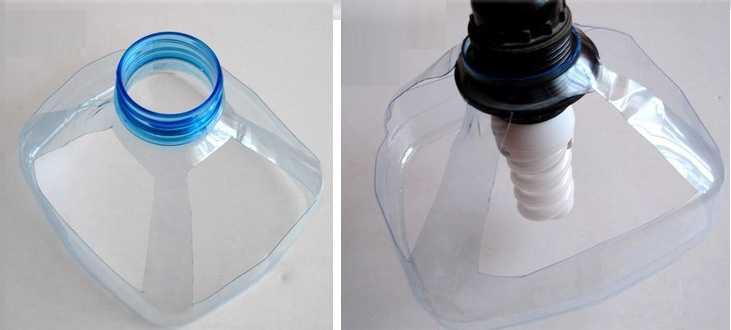
Office trash cans are a ready-made option for a lamp. - Five liter plastic bottle. You just need to cut off the desired part of the bottle. For some cartridges, even the neck of a bottle will do and you don’t have to make additional holes.
![Step-by-step instructions for making a lampshade with your own hands]() Lampshade from the top of a plastic bottle.
Lampshade from the top of a plastic bottle. - Other materials. You can also use plastic buckets and wooden planks for the frame.
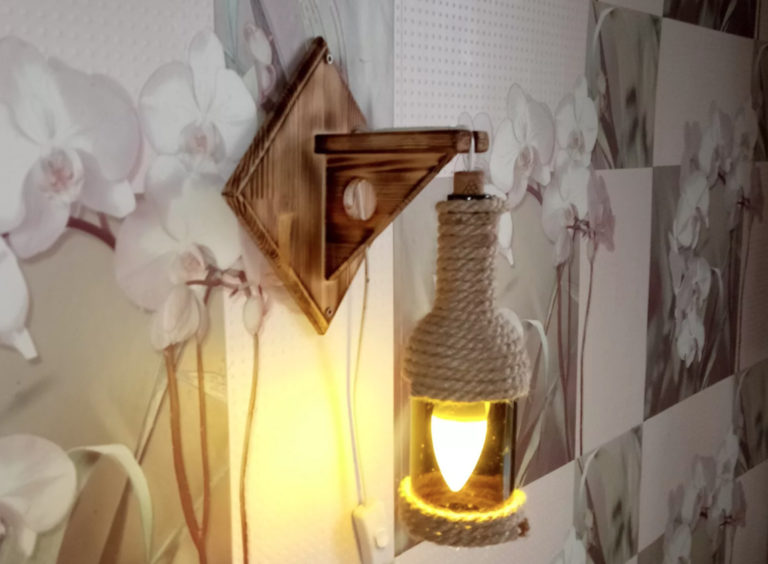
Step by Step Guide for Wireframe View
Making a ceiling on the frame with your own hands is easy. You just need to follow the step-by-step technologies for performing the work.
Step 1. Preparation, selection, schemes
First you need to choose which option will be used. When choosing, personal tastes, ease of use and interior style should be taken into account. For example, paper is not quite suitable for a classic style, but burnt wood for hi-tech.
Also, at the first stage, you need to draw up a frame diagram. It should indicate all the elements and dimensions.
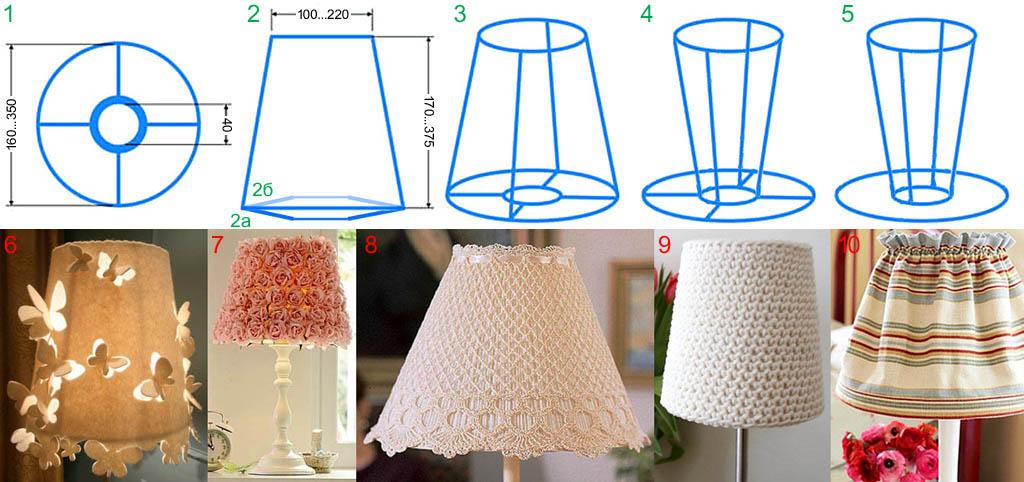
Step 2. Making the frame
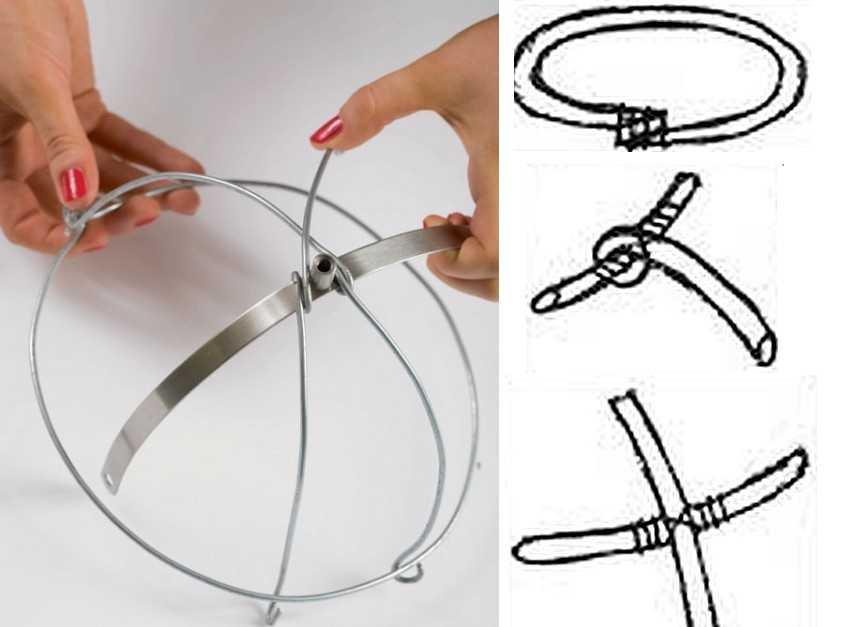
According to the previously prepared scheme, the wire of the desired size is cut. The simplest option is two rings, where the smaller one is installed at the top, and the larger one at the bottom, they are fastened together with straight pieces of wire. If you need a more interesting shape, then you can even make three or four wheels. The elements are fastened with hook-shaped bends.
Step 3. Stretching the finishing material
One of the most popular materials is textiles. But first you need to build a blank from cardboard, which wraps the wire frame, the product is cut to the desired shape. The resulting blank is laid out on the fabric, and it is cut out along its contour. When the desired piece of fabric is cut out, you can tuck the edge and sew with a sewing machine.
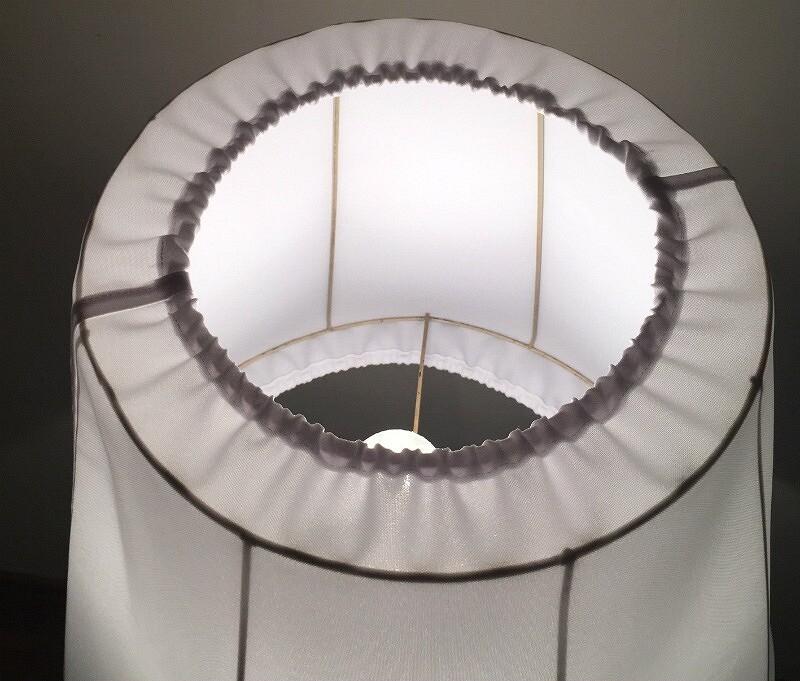
Step 4 Finishing the Edges
If it was not possible to process the edge on a sewing machine, the wire frame is covered with fabric. Everything is fixed with glue. The edge is also folded over and glued to the inside.
Step 5. Decor
You can paint the finished product in different colors, glue cardboard or wooden figures on the inside, make drawings.
Decoration of fabric designs
The simplest are plain fabric lampshades. But there are additional decoration options.
Provencal style
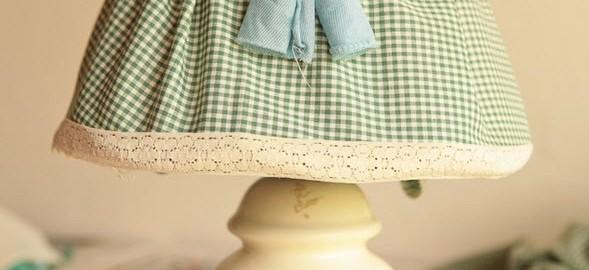
Differs in the use of pastel colors, checkered patterns, lace. For decoration, you can cut a strip of fabric, which wraps the upper part and additionally ties a bow. Another strip can be wrapped around the bottom and attached to it with a fringe.
fabric flowers
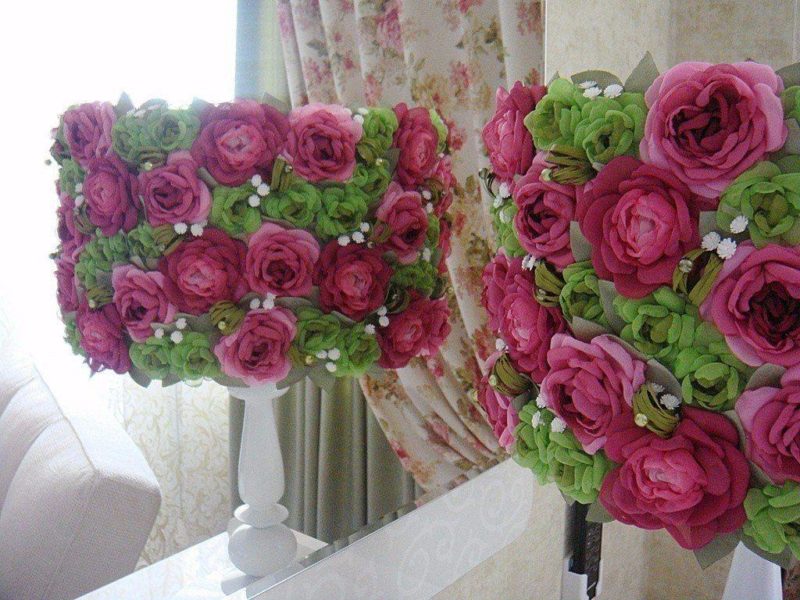
You can make small fabric flowers that decorate the lower part of the lampshade in a circle. If you have the desire and patience, you can cover the entire body of the product with flowers.
shreds
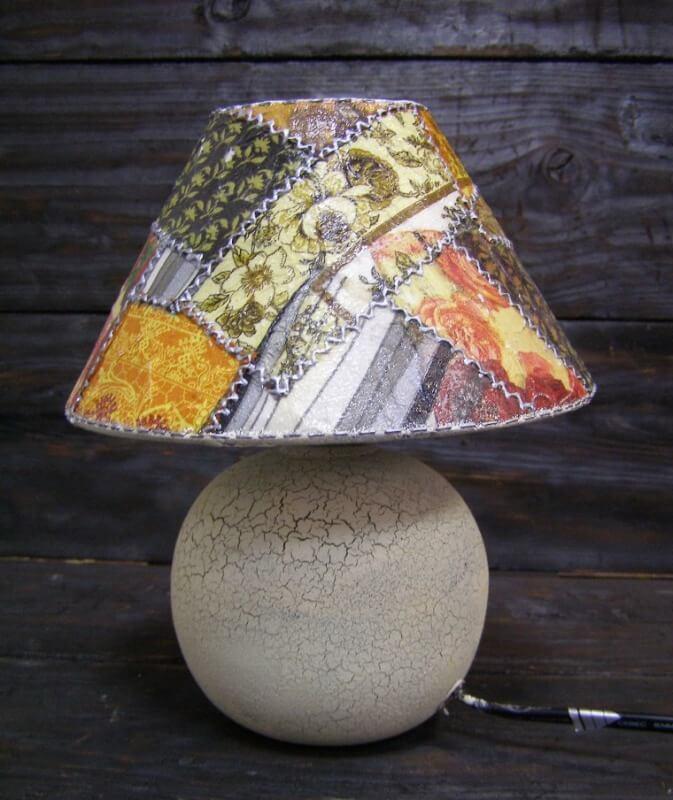
The use of pieces of different fabrics provides an interesting result. You need to take a plain, preferably white fabric for the base, and sew shreds on it. They can be in the form of squares, horizontal, vertical or diagonal stripes. Non-standard geometric shapes can also be used.
Unusual materials
The decor of the lampshade is limited only by the imagination of the master. For the ceiling, you can use different fabrics: burlap, jeans, lace napkins. Additionally, you can decorate the surface with sewn on buttons, pockets, bows.
Variants of frameless lampshades
Frameless lampshades are well suited for suspended structures. They are lightweight and have an unusual look. For their manufacture, different materials are used.
Knitted napkins
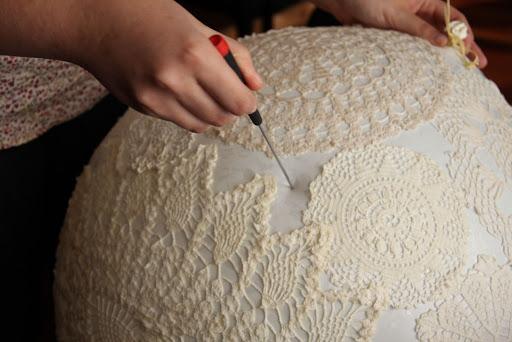
Needed: an inflatable ball, glue, knitted napkins, a plastic bottle neck. Napkins are glued on a flat surface, then the whole composition is moved to the ball. The neck of the bottle is used to fix the cartridge. At the end, the balloon deflates.
Master class: Plafond for a toilet paper chandelier.
Clothesline weaving
For manufacturing you need: a ball, clothesline, glue. The weaving method allows you to get the desired shape and patterns, a rope is woven around a ball that gives shape to the future lampshade. Additionally, you can process the product with glue, it will fix the shape.
Video: 5 homemade linen cord.
Application of threads
For manufacturing you need: a ball, a thread, PVA glue, a bottle neck for a cartridge. Threads moistened with glue are wrapped around the inflated ball. After the glue dries, the ball can be blown off. Density and light transmission will depend on the number of layers of threads.
Vine lampshade
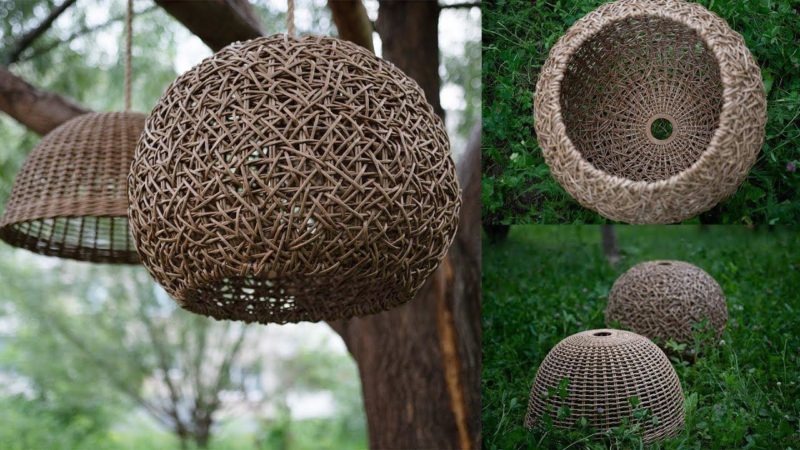
Vine is a durable material with good flexibility, so you can make a lampshade without a base in the form of an inflatable ball. The weaving method is used, which allows you to create almost any shape.
Thematic video.
Rules for the operation of crafts
Homemade products that work with electricity are not always as safe as industrial products. Therefore, in the manufacture and operation, you must adhere to the following rules:
- The light bulb should not touch the frame and coating materials. It should always be at a distance, even if the materials are not combustible.
- Do not use incandescent lamps with flammable materials. Such lighting elements are not suitable for wooden, paper and fabric lampshades.
- It is better to choose LED lamps with a ceramic or metal base. They are economical, practically do not heat up and last longer.
- Do not install homemade lighting fixtures in rooms with high humidity. This rule is important because of the risk of short circuits in contact with water.
- After installation and the first turn on, you need to observe the design a little. If the materials heat up, it is better to change the light bulb to a less powerful one.
By adhering to these rules, it will be possible to make not only a beautiful, but also a safe design for the lamp, table lamp or floor lamp.
