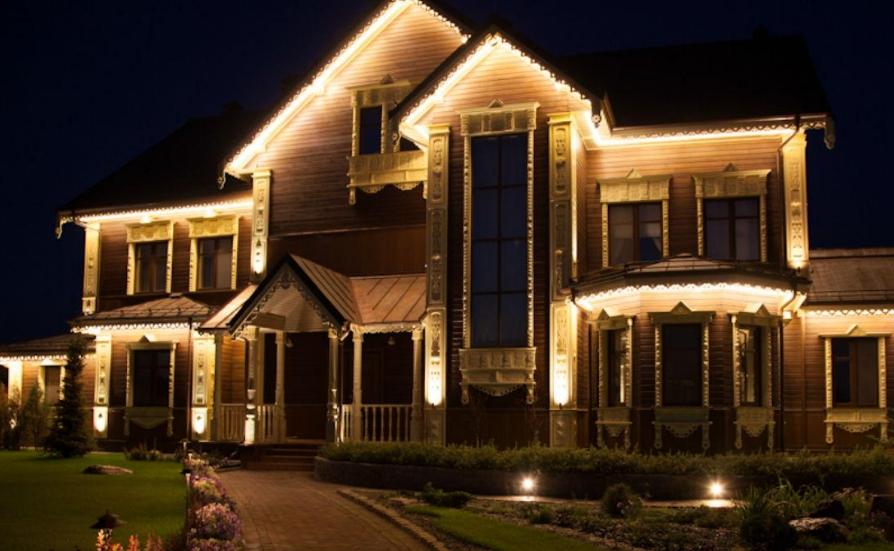
Features of architectural and artistic lighting of buildings
Architectural and artistic illumination of the facades allows you to distinguish the house from the general row and provides its unusual appearance at night. But in order to achieve the best effect, it is necessary to choose the lighting in accordance with the features of the structure and its location.
What is used for
The backlight performs several functions, so when choosing a specific solution, you need to clearly understand what effect is required. The main features are:
- The appearance of the building is improved, it stands out from others. You can make a house expressive, even if it looks so good during the day. The colors are easy to change, which allows you to achieve different decorative effects, and this does not require painting the structure or reworking it.
![you can make the facade bright]() Due to the illumination, you can make the facade bright and eye-catching.
Due to the illumination, you can make the facade bright and eye-catching. - Due to the lighting, structural features are highlighted, you can focus on the advantages and hide the disadvantages.A unique image of the building is created, which will be remembered and will be able to distinguish the house, even if it is located among the same type of houses.
- Illumination of buildings performs not only a decorative function, but also serves practical purposes. Visibility on the site improves and visitors can go to the porch. Lighting serves as an element of protection against intruders, as they prefer not to enter areas that are clearly visible.
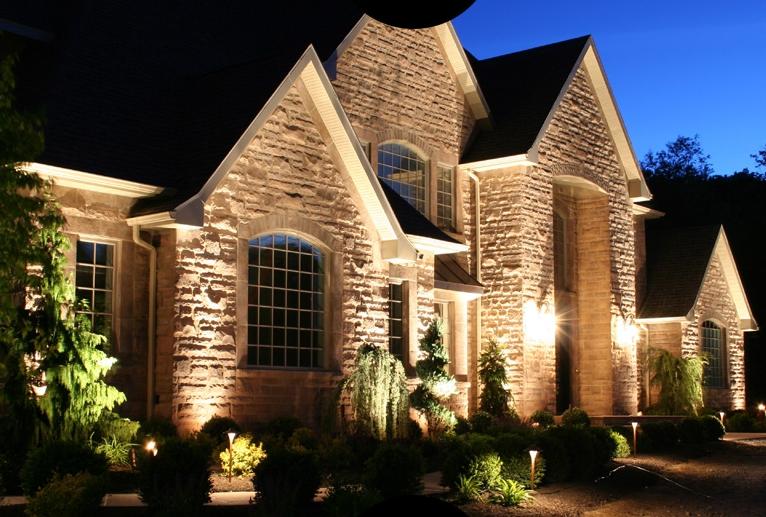
You can combine different lighting options depending on the time of day and purpose of use.
Types of facade lighting
There are several options, each of which has features and gives a unique effect. When choosing, it is necessary to take into account the goals of lighting the building and evaluate the complexity of the implementation of the system.
contour lighting
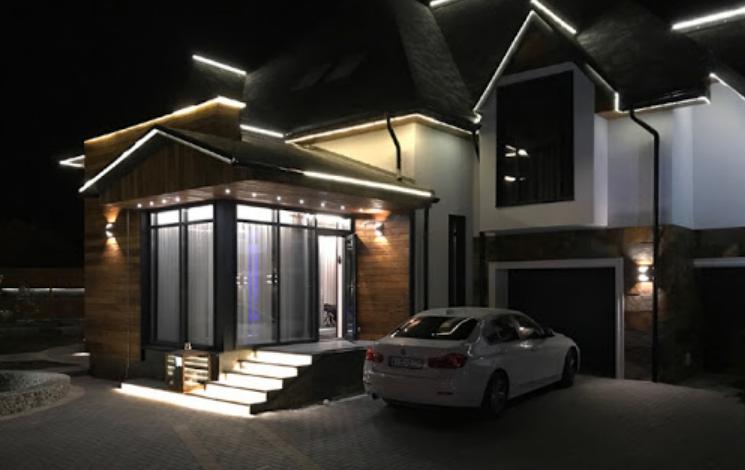
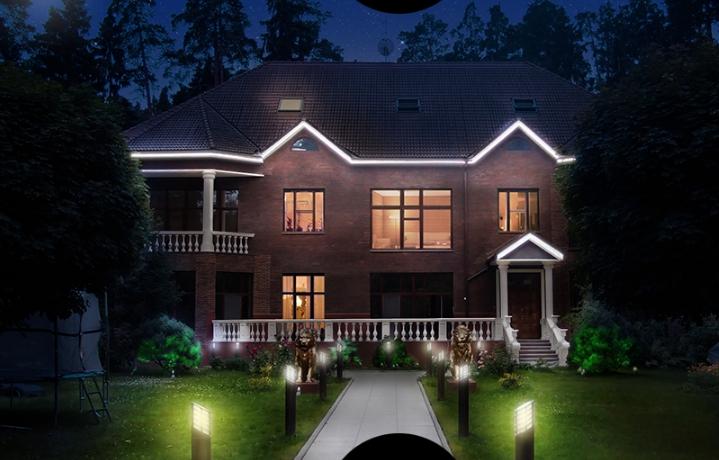
The simplest solution allows you to highlight the outlines of the building due to clear lines that repeat the silhouette and highlight architectural features. Fixing the backlight elements is easy, they usually last a long time, so you can use the result for many years.
use led strip or flexible neon tube. It is more convenient to purchase the first option, it should be weatherproof - in a silicone shell that protects the diodes from all adverse effects. Due to this, contour lighting lasts a long time.
dynamic lighting
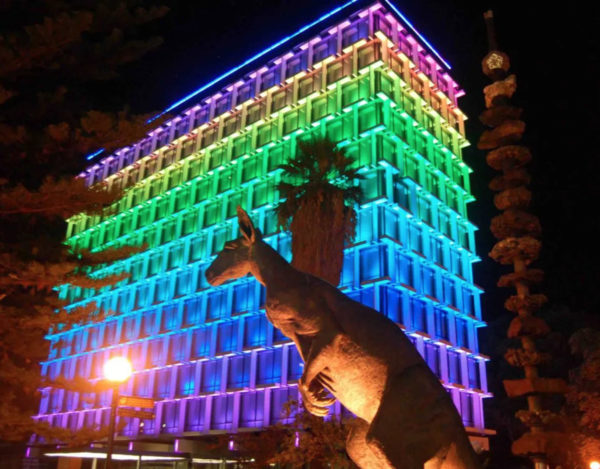
A modern option that allows you to achieve any effects on the facade, including the display of images or even a video sequence. Most often, simple solutions are used, they can vary the color, changing the appearance of the building and giving it different effects.
LED equipment is used that changes colors and their brightness.It can be both full-fledged spotlights, and special lamps, which have the ability to adjust luminous flux.
flood lighting
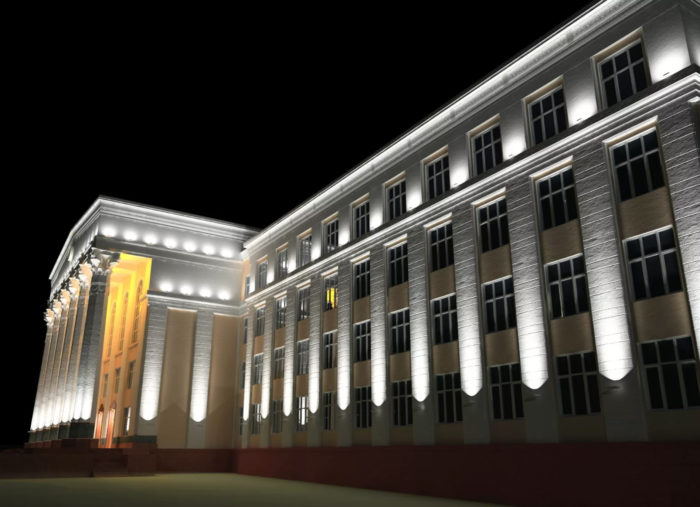
This option allows you to highlight the building against the general background due to the uniform illumination of the entire facade. The house stands out among the plants and neighboring buildings, so the facade must be perfect, without flaws and imperfections.
Used for lighting spotlights and spotlights placed on poles or the ground and installed at a distance from the house. They have one drawback - they illuminate not only the facade, but also the rooms inside, so it can be uncomfortable to relax in them.
To protect rooms from lighting, you can put blackout curtains or blinds.
Light facades
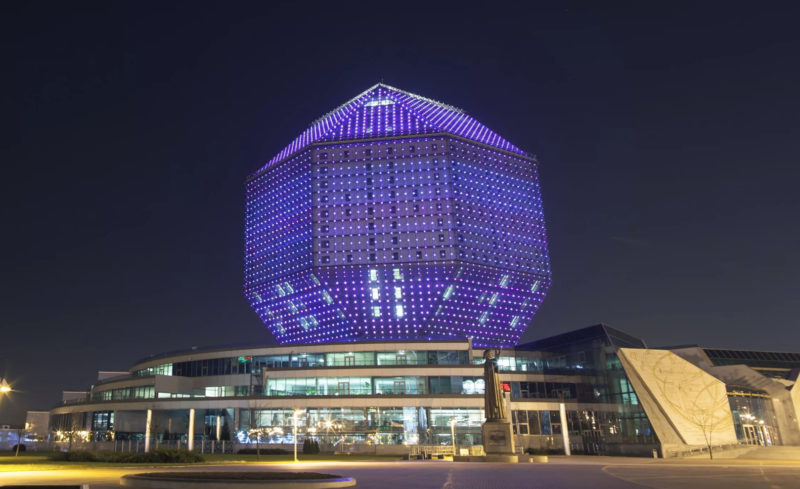
This option is only suitable for buildings with full glazing facades. The backlight is placed behind the glass, so it shines from the inside out and this way you can achieve different effects. It is used in business centers and other similar facilities.
Since the lamps are placed behind glass, they last an order of magnitude longer. When choosing, you need to give preference to options with diffused light that will not blind people or create visual discomfort.
background fill
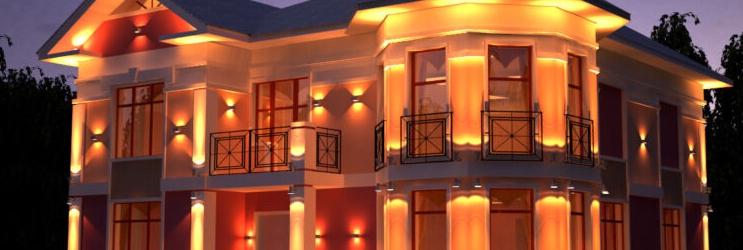
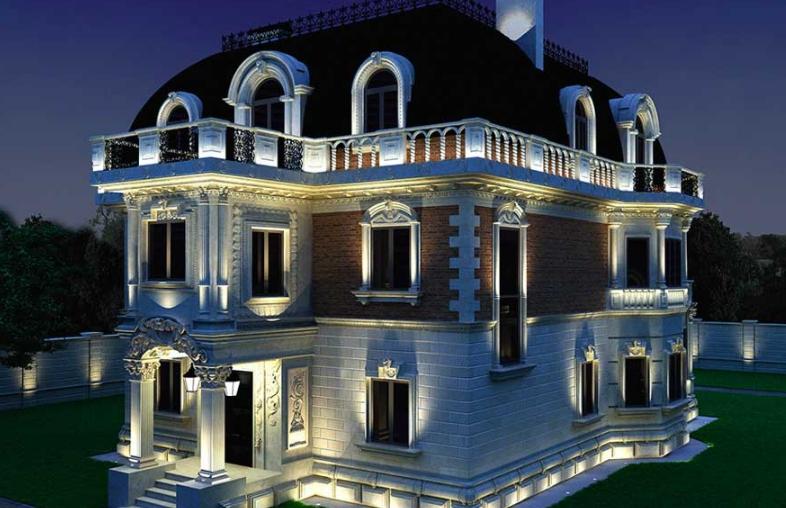
This option assumes uniform illumination of all elements of the facade to create a single composition. A general image of all the details highlighted by illumination is created, while unattractive places can be deliberately hidden.
For lighting, LED spotlights are used, which can be both overhead and built-in. Such architectural lighting is suitable for classical buildings with columns and stucco.
Local lighting
This option focuses on individual elements. At the same time, most of the facade may not be illuminated. Suitable for any building, since it illuminates only what is needed, it is not necessary to bring the entire facade to perfection.
For local illumination, you can use different types of lamps. Most often, these are low-power built-in or overhead models, they can be hidden in niches and behind ledges.
What techniques are used to enhance the effect
If you need to give the facade expressiveness and make it memorable, you should use simple recommendations:
- Apply dynamic lighting that is constantly changing. Facades shimmering with all the colors of the rainbow are rare and therefore attract attention.
- Use a reception with a change in the brightness of the lighting. You can simply highlight individual details or change accents from time to time.
- Combine different backlight options due to different modes, which can be turned on both manually and automatically.
You can use motion sensors so that when a person approaches, the brightness of the facade illumination increases.
What do you pay attention to when creating backlight
There are a number of important aspects to consider when choosing facade lighting:
- The size of the building and its location. If the building is located in the middle of a dense square or garden, then the lighting effect will not be very good due to poor visibility.
- The architecture and features of the house are taken into account. You need to immediately consider which elements should be highlighted and which should be hidden.
- Illumination of adjacent territories is taken into account. In the city, you need to illuminate the facade more brightly, and country houses look great with subdued lighting.
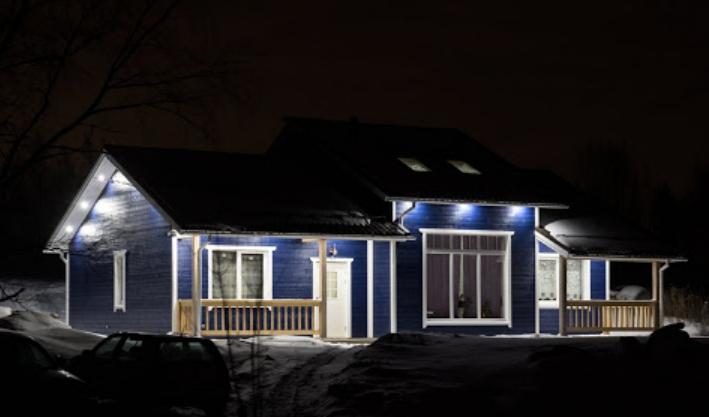
It is important to determine in advance the effect that the backlight should create. Sometimes it is much easier and more reasonable to highlight the contours than to flood the facade with bright light.
Stages of creating a backlight
To achieve a good result and make a high-quality system, you need to properly organize the work:
- Make a draft of the future system. It indicates the location and amount of equipment used.
- Lead the cable to the connection points of the lamps. The easiest way is to lay underground.
- Install the equipment and connect it so that the connections are protected from moisture.
You should always check the operation of the system to make sure everything is working properly.
From this video report, you will understand what modern architectural lighting should be like.
You can make the illumination of buildings if you choose the right lamps and connect them according to the project. It is important to determine the type of lighting in advance in order to purchase everything you need.