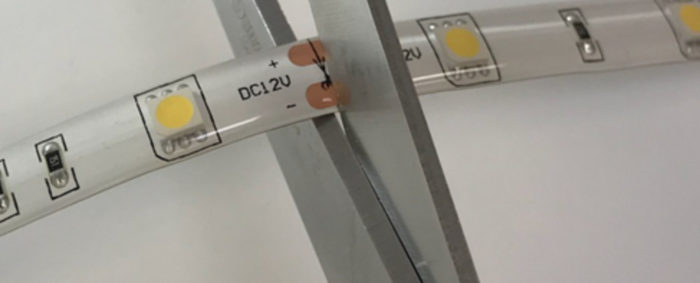
How to cut LED strip
The article tells how to properly cut the LED strip. Depending on the voltage, variety, model of the luminous strip, a different cutting method may be required. Special designations and marks will help with this, but even unmarked tape can be cut into fragments of the desired size without any problems.
Why is it needed
Often, LED filaments are sold in stores in large rolls (from 5 meters), and when buying, it becomes necessary to cut off some part. Depending on the room in which the LED strip will be installed, segments of different lengths may be needed. Therefore, individual pieces of the desired size are cut from the roll so that electricity can be supplied to them from both sides.
Where to cut
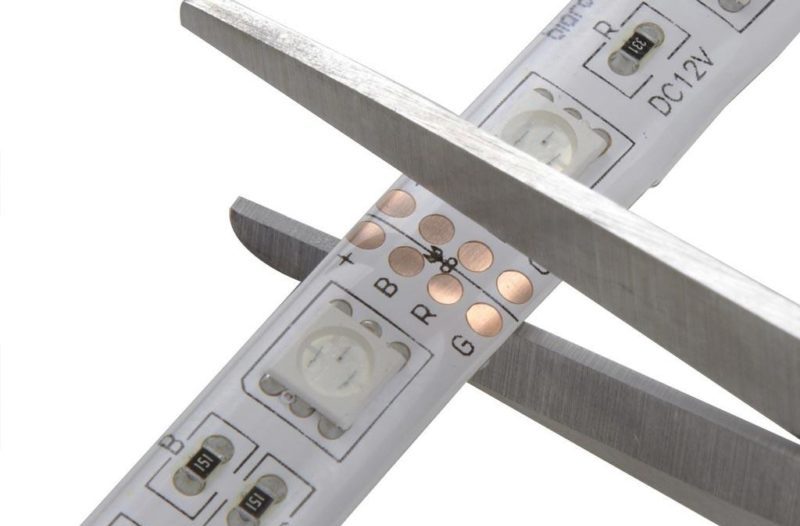
Before proceeding with cutting the LED strip, it is important to understand that the luminous thread can be shortened only along specially marked lines - conductive strips.Structurally, they are made in such a way that they are located between the pads of the diodes. Accordingly, there is no threat of damage to the LED strip. Cutting in the wrong place is almost guaranteed to destroy some diodes. If at the same time the tape is connected to the network, a short circuit may even occur or the power supply will burn out. 2 conductive strips are applied along the low- and high-voltage tapes, 4 along the RGB.
What are the steps of the cuts
Different models of tapes have a different number of LEDs per meter. They can be from 30 to 240. A standard 12-volt LED filament is cut in increments of 3 LEDs, a 24-volt one in increments of 6 LEDs. For a luminous thread with a voltage of 220 V, the range of the cut step ranges from 0.5-2 m. It depends on the brand of the manufacturer.
In metric terms, the cut step will be:
- for 30 diodes - 10 cm;
- for 60 diodes - 5 cm;
- for 120 diodes - 2.5 cm;
- for 240 diodes - 1.5 cm.
How to cut LED strip
Now about how to properly cut LED strips of different voltages and types.
12 volt
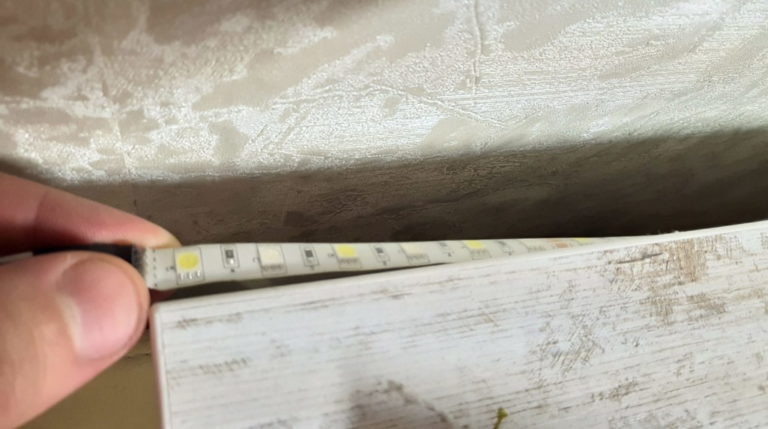
On the 12V LED filament, cut lines are marked between each group of 3 bulbs.
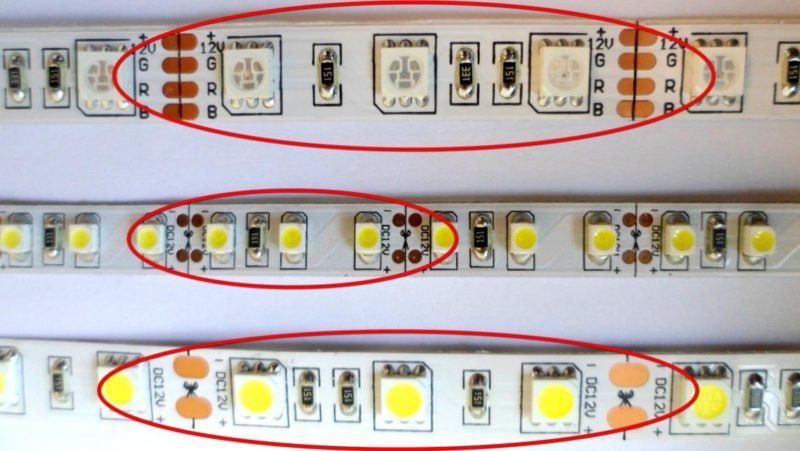
This tape has a thin coating that allows you to use a regular clerical knife or scissors. The main thing is accuracy in work. The tape is cut strictly along the dotted lines, otherwise some of the diodes will fail, and such a luminous device will only have to be thrown out.
220 volt
High-voltage thread has a more resistant coating, which will require sharp scissors.5 different brands of LEDs, chips of different models can be used in a strip with a voltage of 220 volts, but the cutting technique for all types of LED strips will be the same. It is necessary to cut off with scissors along the dotted line of the contact area.
Colored RGB Ribbon
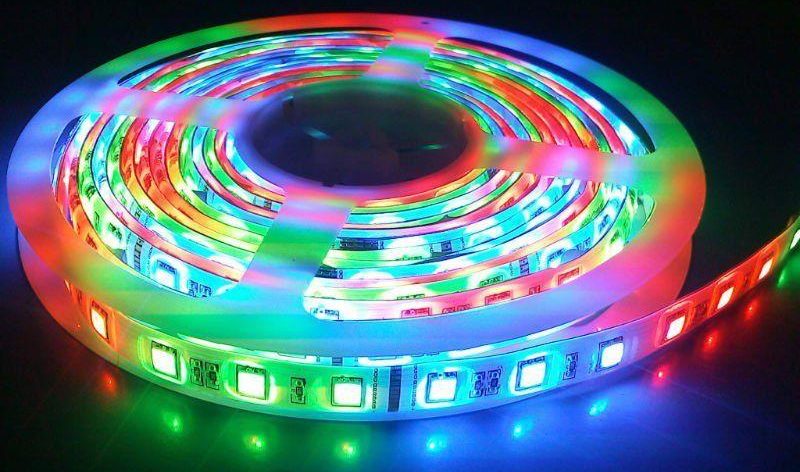
The RGB LED strip is arranged in the same way as the standard one. The only significant difference is 4 conductive strips instead of 2. On a standard low- or high-voltage thread, they are marked with + and - signs, and on RGB - with the symbols R, G, B, -. The cutting procedure is the same: with scissors along strictly marked lines. There is also an LED string RGBW of 5 conductive strips and light bulbs in different colors:
- white;
- red;
- blue
- green.
Important. To keep only the colors of the LEDs that you need, pay attention to which pad the color channel is connected to.
waterproofing tape
There are two types of LED filaments with increased water resistance:
- with silicone coating;
- placed in a silicone tube.
For the first type (with protection class IP54), the cutting procedure is no different from the same actions with a standard tape. Structurally, they are identical, and therefore cut by the same methods. The catch is that the silicone coating can interfere with making an incision clearly in the middle of the pad. It is best to use a sharp knife instead of scissors.
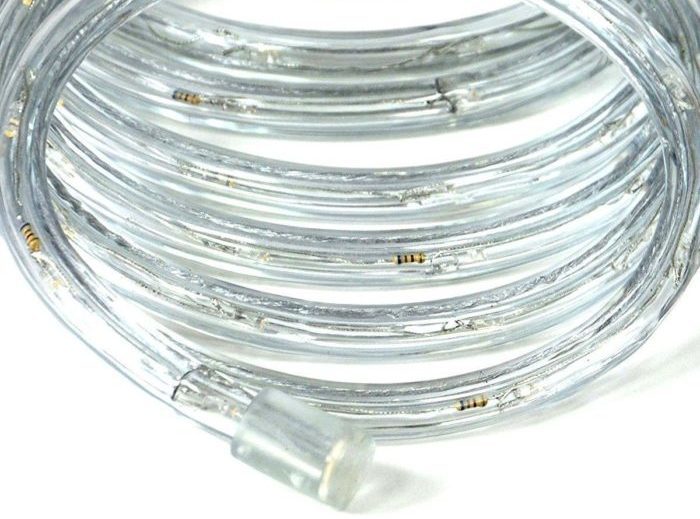
The LED strip with waterproofing, placed in a silicone tube (protection class IP68), is cut like this:
- In the right place, cut the silicone coating with a sharp clerical knife.
- The tape itself can be cut with both a knife and scissors.
- Both ends of the resulting trim must be carefully cut with a knife in order to subsequently connect the connector or solder.
Thematic video:
Installation cutting
Sometimes during the installation of the LED filament, you can inadvertently damage it. In the end, this thing is quite fragile, and sometimes you have to bend it hard. Fortunately, this is not a "death sentence" for the LED strip, such malfunctions are easily fixed. It is necessary to cut off the part that is out of order, and measure its exact length. Then a new fragment of the strip is taken, installed in place of the old one using a connector. To connect these two parts, it is best to use a soldering iron. If the spike is very noticeable, this area (or the entire tape at once) can be isolated.
Advice. So that the LED strip does not fail during installation, you do not need to bend it to a radius of more than 5 cm, wrap it around objects, weave shapes, knots.
No markings: how to cut such a tape
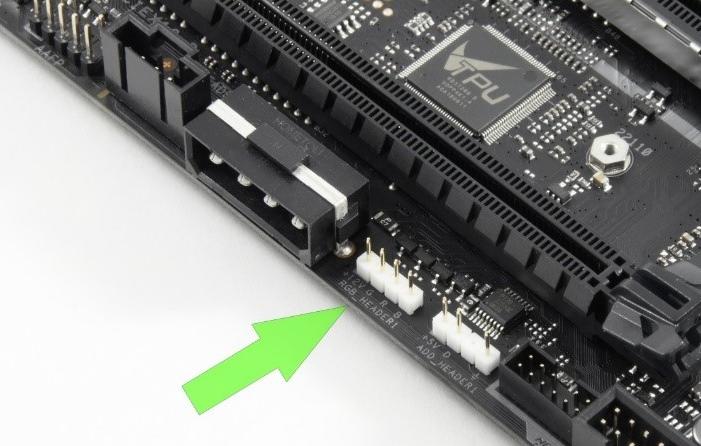
Sometimes LED strips come across on the shelves without marking the conductive strips with dotted lines, symbols, letters and other marks. It is best to refrain from buying them. It's not just the lack of hints. Such a device, most likely, will be of low quality.
If you still have to deal with an unmarked LED strip, do not despair. A reliable reference point will be the contact pad. It breaks the visual "harmoniousness" of the light thread, looks like an extension.
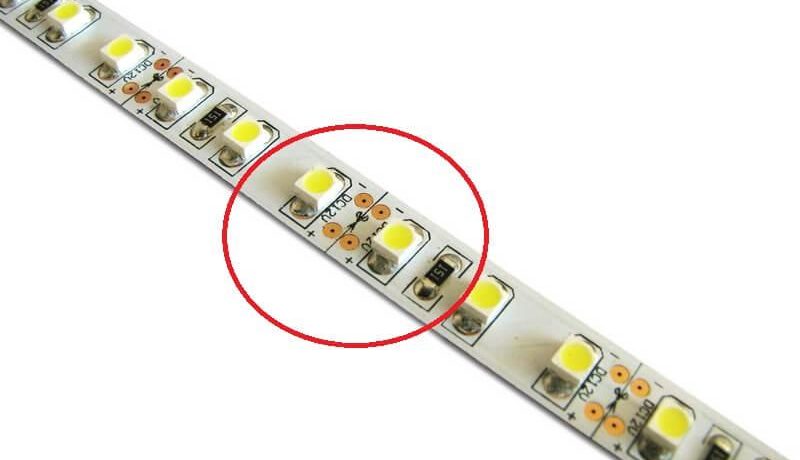
It is necessary to cut exactly in the middle of this section. Again, in most LED strips, a cut is located every 3 diodes - this can also be confidently guided.