Differences between RGB, RGBW and RGBWW LED strips
LED strips are used for different purposes and every year the choice becomes wider. Stores most often offer RGB RGBW RGBWW options - not everyone knows the difference between each type, so you should understand the features in order to buy exactly what suits you best.
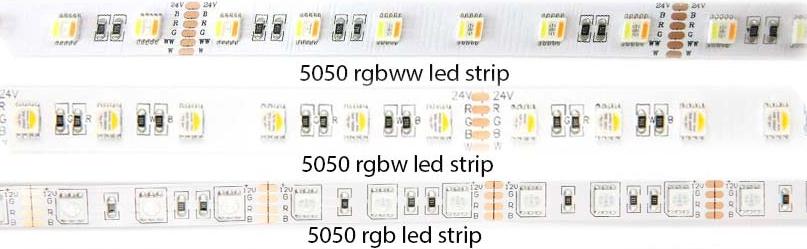
RGB, RGBW and RGBWW LED strips
These options are polychrome, that is, multi-colored and can glow in different shades. Due to this, huge possibilities are provided in the design of rooms and the illumination of various niches or furniture.
In fact, an LED strip is a set of resistors and semiconductors located on a printed circuit board, which is most often white in color to improve reflective properties.
First of all, you need to figure out how multi-colored ribbons differ from single-color ribbons in order to understand the general work principles. In monochrome ribbons, a white glow gives a phosphor - a compound that converts electricity into radiation. The light from this option is soft and uniform.The backlight creates a comfortable atmosphere for the eyes.
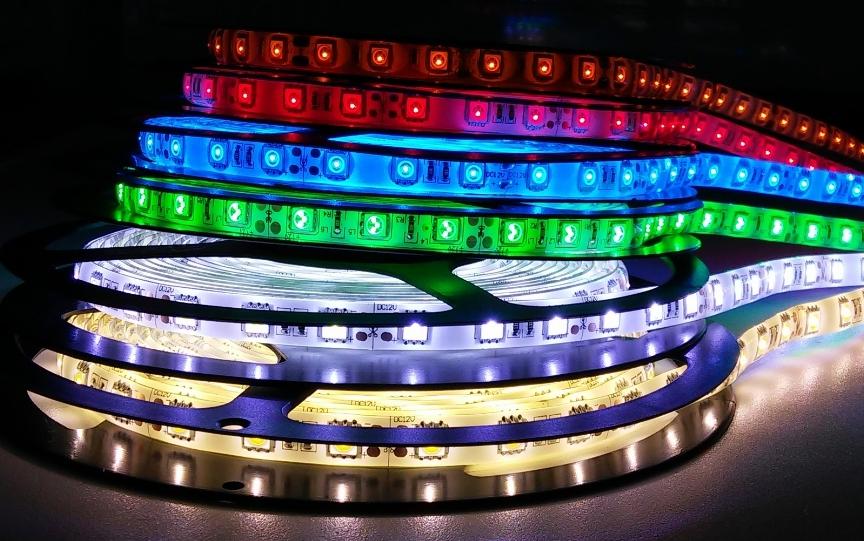
In multi-color versions, all shades are formed as a result of a combination of red, blue and green colors (including white). Since different tapes use different LEDs, whose characteristics may vary, it is difficult to get the same white light as in the monochrome version, but in general it is of good quality.
This video explains the feature of the RGB+W tape.
Decryption
Each type has its own characteristics, which are easy to recognize by marking. Therefore, it is worth understanding the notation in order to navigate the topic and select the variety that suits best:
- RGB - the simplest solution that appeared first and is still used today. It has three colors R - red, G - green and B - blue. A full color system that consists of three monochrome channels connected independently of each other, which provides a wide range of settings and a large number of possible shades.
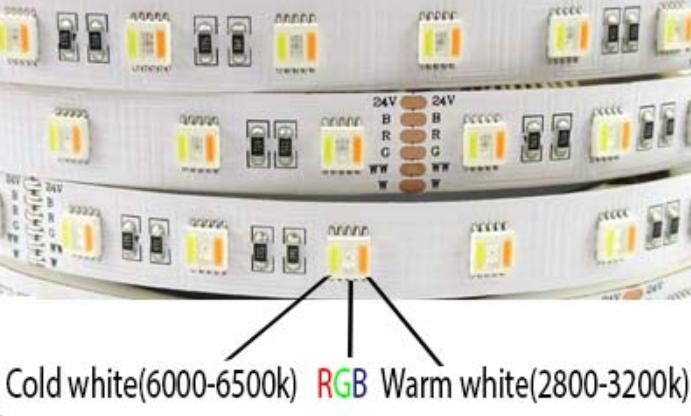
- RGBW is an improved tape in which cold white (White) with a color temperature of 6000 K is added to the three standard colors. If you compare RGB and RGBW, the difference is in one diode, but due to it the number of shades becomes even greater, you can also turn on pure if necessary White light.
- What does RGBWW mean? There is another white LED, but unlike the first one, it has a warm white light with a temperature of 2700-2900 K.
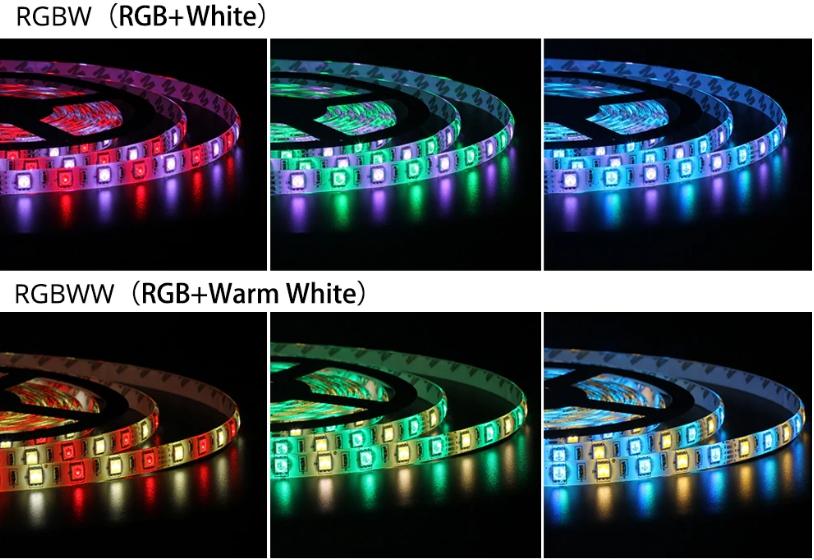
An RGBWWW variant has appeared, but it is not yet on sale, most likely, another shade of white has been added there.
Main differences
Ribbons with three colors are usually single-row and the simplest, have 4 contacts - 1 for each color and a common plus. If one or two white elements are added, contacts are added as well. Therefore, when connecting different types, you should select the necessary connectors, if you take the wrong ones, you will not be able to attach the backlight.
If you look at the appearance of RGBW and RGBWW, what is the difference with standard RGB is immediately visible. In the first version, one additional LED, in the second two. Moreover, they can be arranged in different ways:
- White LEDs and RGB are placed next to each other. Since for uniform illumination it is necessary that they are located close, the tape is often made in two rows. This can cause inconvenience during installation if an aluminum profile is used for a standard width.
- All diodes are located in the same housing, but are separated inside. This option gives a uniform light, and the size of the tape is practically the same as the standard one.
Color features, scope
At choice one of the options you need to understand for what purposes it will be used. The choice depends on this, since the color of each species has features:
- RGB is the simplest solution with a three-color module. Gives many shades, and can also shine with white light. But it does not differ in purity and brightness, it can often be yellowish. Therefore, it can be used for decorative lighting and decoration of rooms, furniture and other structures. If you need white light, it is better to lay a monochrome white option next to it, it will turn out much better.
- RGBW includes cool white light, which increases the number of possible shades and allows you to fine-tune the backlight.And if you need general lighting, you don’t have to install two matrices, there is white light. But you need to take into account that it is cold, and this is not very comfortable for your eyes when you stay in the room for a long time.
- RGBWW with two white light modules is suitable for both general lighting and backlighting. The number of shades is the largest, so you can achieve the perfect result in any room or on the street. But most importantly, you can adjust the temperature of the light in the room and adjust it so that you can work or relax.
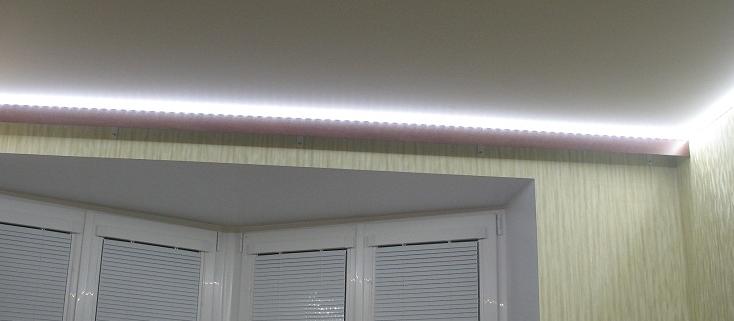
If you need to do outdoor lighting, it is worth choosing models with increased protection against moisture and temperature changes. Usually the tape is in a silicone coating, its price is an order of magnitude higher, so there is no point in buying such a room.
How are these varieties connected?
To plug You can do the tape with your own hands, there are no difficulties in the work. The main thing is to understand the process and follow the scheme so as not to confuse anything and not burn the equipment. First you need to purchase everything you need - the tape itself, the power supply (pick up for tape tension, the most commonly used option is 12 V, less often 24). Also, a controller is needed for operation, and if the length is 5 m or more, then a signal amplifier is installed. Follow instructions:
- The RGB tape is the easiest to connect, since it has only 4 pins. at first cut off along the specified line, then connect the connector or solder the contacts, which is undesirable. From the tape, lead the wires to the controller as shown in the diagram below, and join to the power supply. It is worth checking the work to make sure everything is fine.
- RGBW is connected in much the same way, with the difference that there is an additional pin. The controller is suitable and universal, it can connect different types of tapes.
- RGBWW is connected with a six-pin connector and you should not use a universal controller for it, it is better to buy a specially designed model. It is more expensive, but the effect will be much better.
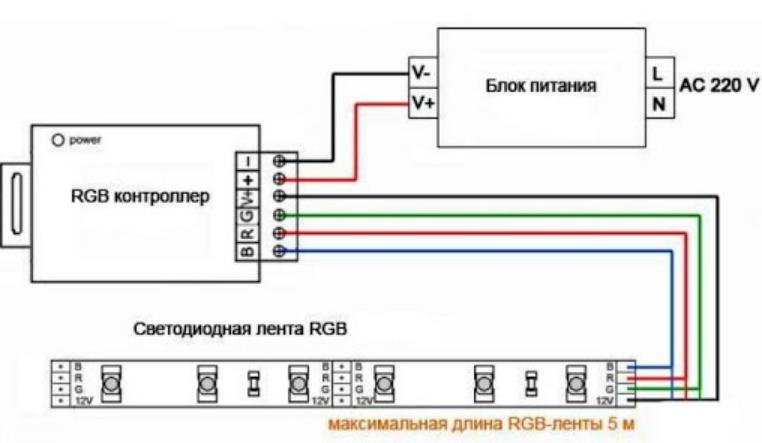
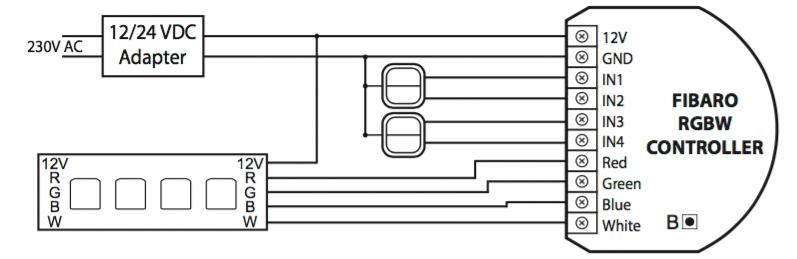
When installing, it is important to be careful, snap the connector tightly. Locate the controller and other controls in an easily accessible place.
Choosing an LED strip is easy if you know the main features of each brand. When buying, pay attention to the quality, the diodes should be evenly spaced, the soldering is always neat and clear, without sagging. It is simple to connect according to the scheme and even an inexperienced person will cope with the work.