What is the color temperature of a light source and how is it measured
The temperature of light reflects the characteristics of the radiation of any light source. It is used in many sciences: astronomy, physics, spectrophotometry, colorimetry, etc. Also, this indicator is important in everyday life, not only the perception of the room, but also the comfort of staying in it depends on the correct choice of lamps.
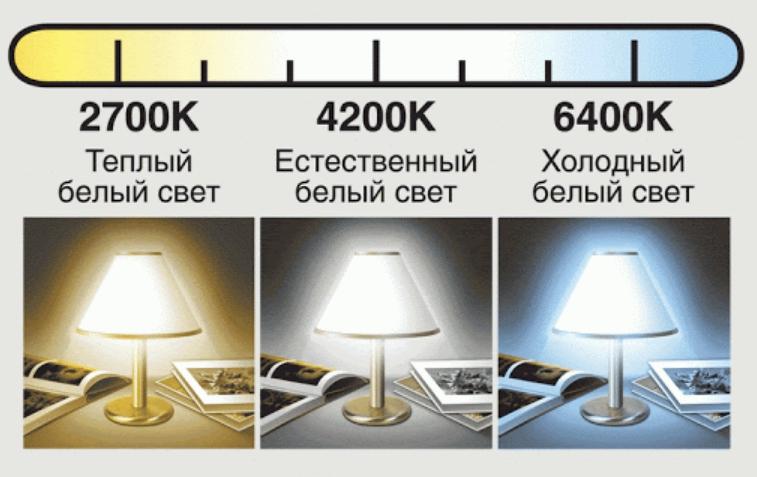
What is color temperature
Color temperature is the temperature of a black body at which it emits light, similar to one or another lamp light. Previously, heating of platinum was taken as a standard. When heated, metals emit a certain light, its brightness and range depend on the characteristics of the element and the degree of its heating.Each color has its own temperature, which made it possible to systematize the data and create a simple, understandable scale.
The color temperature of the lamps shows what wavelength is emitted by the source. That is, a certain color corresponds to a certain wavelength of light. This is the main indicator when choosing lamps for at home, office or industrial premises. There are sanitary standards with recommended indicators, which should be followed.
Color temperature unit
Kelvins are used for measurement - lamps usually have a designation, this is a number with a capital “K” at the end or a certain range. This is the generally accepted option used throughout the world.
By the way! In photography, a special unit of measurement is used, which is called Mired or Mired.
An absolutely black body, taken as a standard, has a temperature of 0 K, that is, it absorbs the light falling on it. When heated to 500-1000 ° C, the element turns red, while the color temperature is from 800 to 1300 K. If the body is heated to 1700 ° C, it will turn orange, and the indicator will increase to 2000 K. As it heats up, the color will first turn yellow (2500 K), and after white (5500 K). There may also be a blue tint (9000 K), but to heat the body to such an extent, a thermonuclear reaction is required.
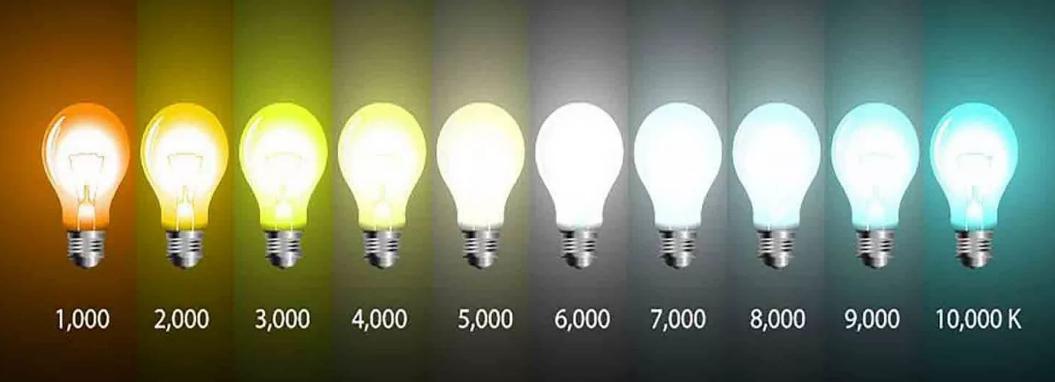
Many options can be seen in natural conditions, just look at the sky:
- Yellow at dawn when the sun is just rising (2500 K).
- At noon, the color temperature rises to 5500 K.
- With moderate cloudiness, the indicator is about 7000 K.
- A clear sky on a sunny day in winter has a color temperature of 15,000 K.
The first to conduct serious research in this area was Max Planck. With his direct participation, a color diagram (XYZ color model) was created, which is used both in lighting engineering and in photography, video recording, and setting up graphic editors.
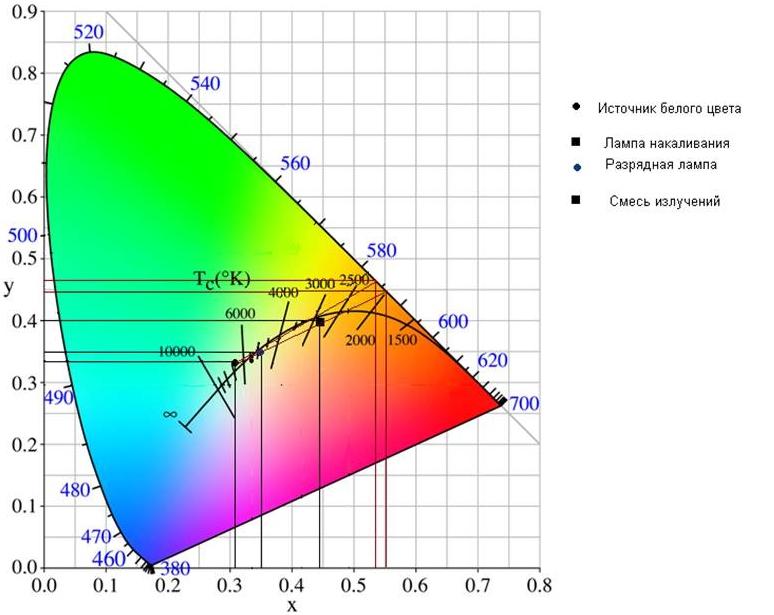
Color temperature scale for light sources
There is a certain gradation that allows you to quickly select the optimal light source without delving into the technical parameters of the lamp. There are five main groups that are most often used in residential or production premises. For each, a certain light temperature in Kelvin is inherent, the table will allow you to understand this moment.
| Temperature range, K | light type | Detailed description |
| 2700-3500 | Soft white light with yellow | Allows you to create a calm, cozy atmosphere, conducive to relaxation. This is how incandescent lamps and some halogen options shine |
| 3500-4000 | white natural light | Provides good color reproduction. In such an environment, vision gets tired the least. Used for general lighting in homes |
| 4000-5000 | Cool white shade | Gives good visibility, suitable for offices, public buildings, work areas in the kitchen, etc. |
| 5000-6000 | white daylight | Allows high precision work. Most often used in industrial premises |
| Over 6500 | Cold daytime with a bluish tint | It is used in rooms with the highest requirements for visibility, for example, in operating rooms. It is also used for video and photography. |
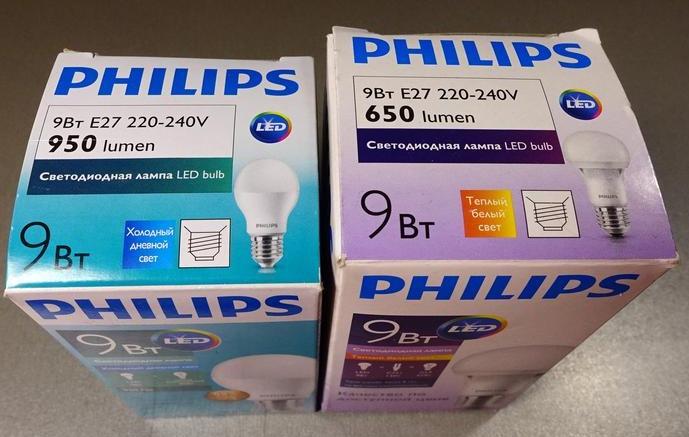
The color temperature data must be on the packaging of the lamps.
Color temperature ranges for lamps
If you need to choose a cold, warm or neutral light, then you should pay attention to lamp type. Different options have their own range of glow, due to the design. The table shows average data relevant for most products. But there may be models with special characteristics, this is always indicated on the box.
| Lamp type | Color temperature in Kelvin |
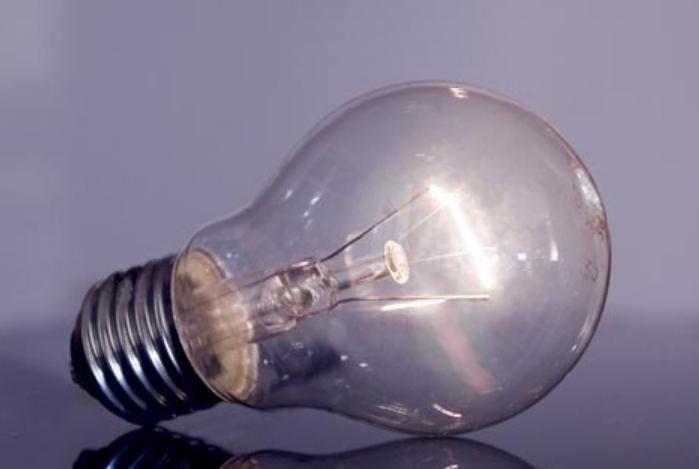
| Incandescent lamps | 2700-3200 |
| Halogen | 2800-3500 |
| sodium | up to 2200 |
| Mercury arc | From 3800 to 5000 |
| Fluorescent (including compact ones) | From 2700 to 6500 |
| Metal halide | From 2500 to 20,000 |
| LED | 2200-7000 |
LED lamps have the largest gradation, since their light properties depend on the characteristics of the diodes used and the design. Moreover, even with the same data, lighting may vary from different manufacturers. There are 8 classes of lamps, each of them can be divided into subclasses. There is no unified system yet, but there is additional marking that will help you navigate:
- WW (warm white). Soft white light with a temperature of 2700 to 3300 K.
- NW (neutral white). Neutral or natural white light from 3300 to 5000K.
- CW (cool white). Cold light, most often gives blue. Temperature from 5000 K and above.
By the way! In order for all the lamps in the chandelier to shine the same, it is worth choosing products from the same manufacturer.
How it works in real life
The indicator under consideration affects not only the quality of lighting, but also the perception of the situation by a person and even his well-being. If you remember a few aspects and stick to them, you can achieve the best effect without any problems.
How does perception
90% of information about the world around a person receives through vision. Therefore, the perception of the situation largely depends on the lighting. The color temperature allows you to arrange the room as it is needed in a given situation:
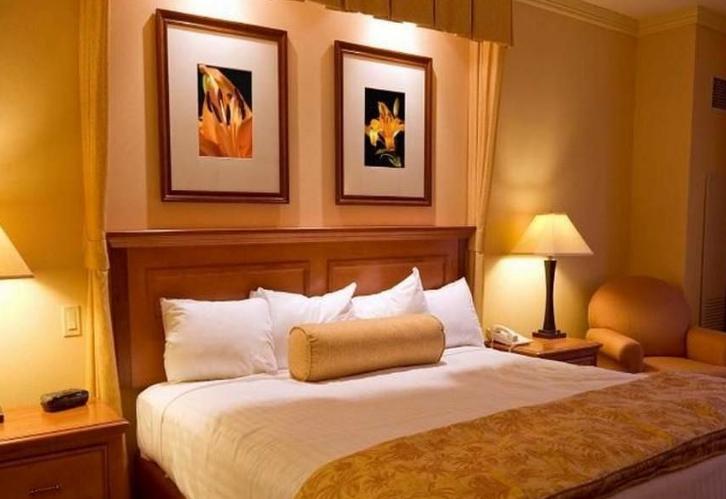
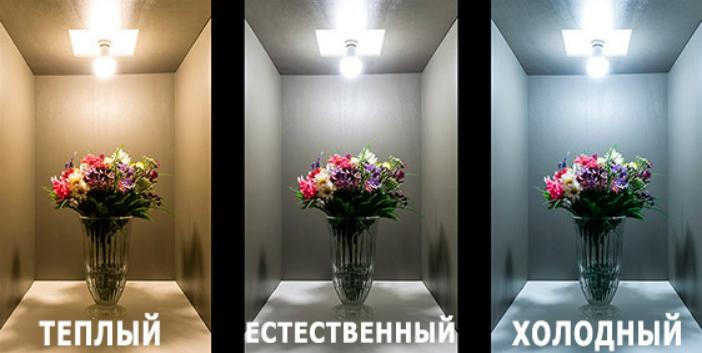
- Warm light, in Kelvin, the figure is usually 2800-3200, ideal for a bedroom or recreation area. It sets you in a calm mood, helps to relax and have a good rest.
- natural shades (about 4000) create conditions under which you can work and relax. The neutral option provides the best color reproduction, while not unnecessarily straining the eyes.
- Cold tones (more than 6000) create good conditions for precision work. But at the same time, a long stay in such conditions is undesirable. This option is often used in window dressing.
Color temperature and our emotions
Lighting affects the well-being and mood of a person much more than meets the eye. If you use it correctly, you can positively influence the body and ensure normal processes in it. We must remember the following:
- Yellowish tones are ideal for the morning hours. They contribute to the rapid awakening, improve mood and stimulate vital processes. The warmth of the light will come in handy in the evening, when you need to relax after a working day and get ready for bed.
- Neutral options can be used throughout the day to ensure good performance. They are used in most areas of the house, as they create an environment close to natural sunlight.
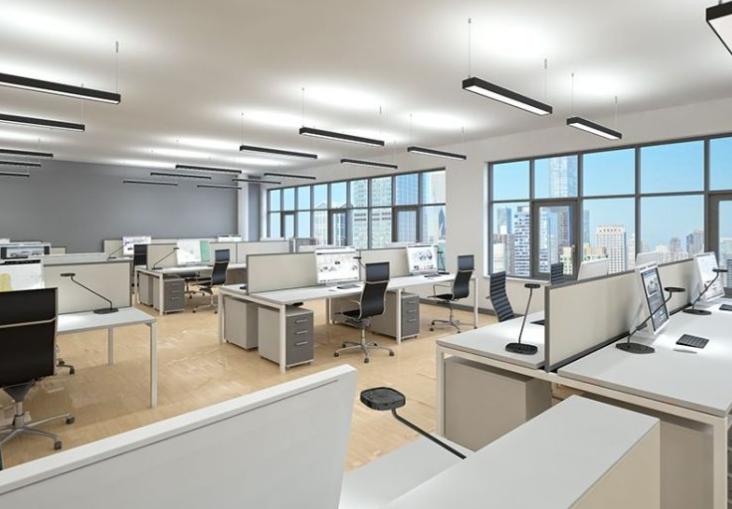
![What is the color temperature of a light source and how is it measured]() Offices use neutral white light.
Offices use neutral white light. - Cold shades have a stimulating effect. They improve performance and increase alertness. But you can’t stay in such a room for a long time, this can lead to stress and the opposite effect - increased fatigue.
If one room is used for different purposes, it is worth considering several lighting modes in it.
What is color rendering index
Lighting affects the perception of colors and their shades. Therefore, all lamps indicate color rendering index Ra, which is measured on a scale from 0 to 100. The reference is sunlight. As for lamps, they can be divided into several groups according to color rendering.
| Category | Coefficient in Ra | Lamp types |
| Reference | 99-100 | Halogen options, filament lamps |
| Very good | Over 90 | Certain types of LED lamps, metal halide, fluorescent with a five-component phosphor |
| Very good lighting | 80 to 89 | LED, fluorescent versions with three-component phosphor |
| good light | 70 to 79 | LED, luminescent LDC and LBC |
| good light | 60 to 69 | LED, luminescent LB and LD |
| Mediocre light | 40 to 59 | Mercury and NLVD (with improved color rendering) |
| bad light | Below 29 | Sodium lamps |
The choice of lighting equipment according to the temperature of the light
There may be different selection criteria. The easiest way to use the functional features of the room.
| Room type | General light, temperature in K | Local light, temperature in K |
| Bedroom | 2400-3200 | 2400-3500 |
| Kitchen | 2800-3200 | 3500-5500 |
| Living room | 2800-4200 | 2400-4200 |
| Children's | 2800-3200 | 2800-3500 |
| General area | 3200-5500 | 3500-5500 |
| Class | 3200-4500 | |
| Office | 4000-6500 | 4000-6500 |
You can convert the power of the lamps into their light flow. But it is impossible to convert to a color rendering index.
What parameters are used in the technical regulation of light
All lighting provisions are in SNiP 23-05-95. There are several criteria, in the list they are listed in order of preference from the most significant:
- illumination, measured in lumens.
- Color temperature, in kelvins.
- Color rendering index.
- Ripple factor.
- The maximum allowed brightness.
- Illumination uniformity.
- Specific power.
Finding the right color temperature is easy. For this, you do not need to carry out calculations, you can take ready-made data that are suitable for a particular room.