Characteristics of a halogen lamp
Every year, electricity prices are rising, so manufacturers rely on economical lighting elements. They cost customers more than incandescent bulbs (LN), but quickly pay for themselves due to energy-saving properties. A halogen lamp is one of the saving options. It does not consume much energy, is durable and tolerates minor voltage surges in the network.
Halogen lamps are actively used for video and photography, offset printing, less often as infrared heating elements. In any of the areas, halogen lamps can replace their counterparts due to their quality, durability and light output.
What is a halogen lamp
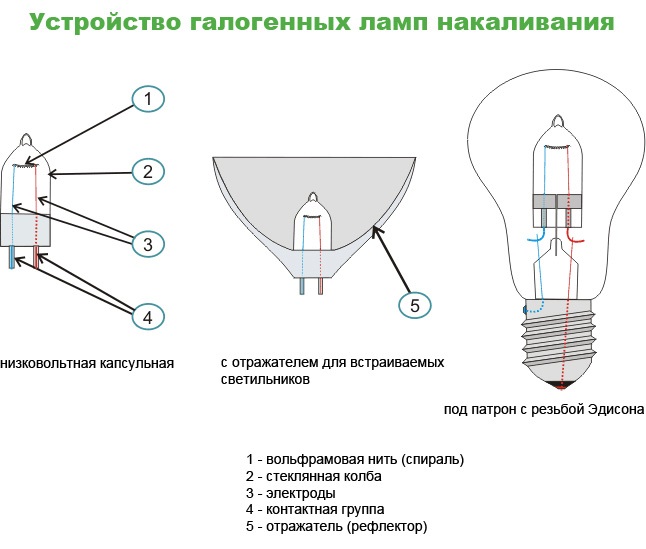
The halogen lamp looks like an ordinary LN. It consists of a flask with a tungsten coil inside.Buffer gas with vapors of bromine, fluorine, iodine and chlorine is pumped into the flask. The vapors suppress the evaporation of tungsten from the coil when heated, preventing the bulb from darkening. They also increase the service life several times compared to LN.
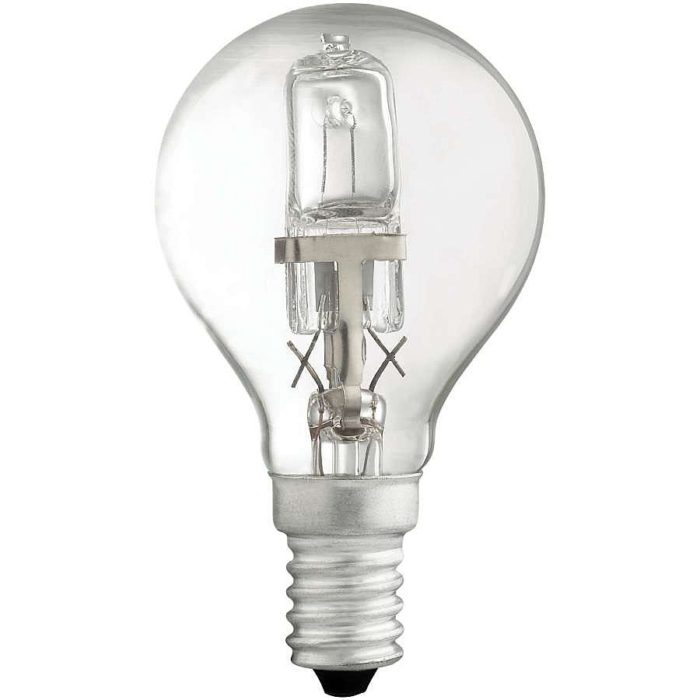
As the chemicals in the flask evaporate, the tungsten particles return to the coil, increasing the heating temperature. This gives the intensity of the glow and high color rendering. The glass of the bulb is opaque or transparent, giving a subdued or brighter light. Today, lamps of different power are produced, including low-voltage voltages of 12 V and 24 V. High-voltage lamps operate directly from a single-phase network.
Varieties
In order for the "halogen" to last as long as possible, it is important to choose it taking into account the parameters and goals. First of all, light bulbs are classified according to the power source:
- incandescent lamps for 220 V;
- low voltage lamps with 12 V drivers.
The low voltage device may only be connected to dedicated power supplies through a step down transformer. It converts the mains voltage to 12 V. By configuration and purpose, halogen lamps are divided into:
- devices with an external flask;
- capsular;
- with a special reflector;
- linear.
Related video: before buying, check out the types of light bulbs
Linear
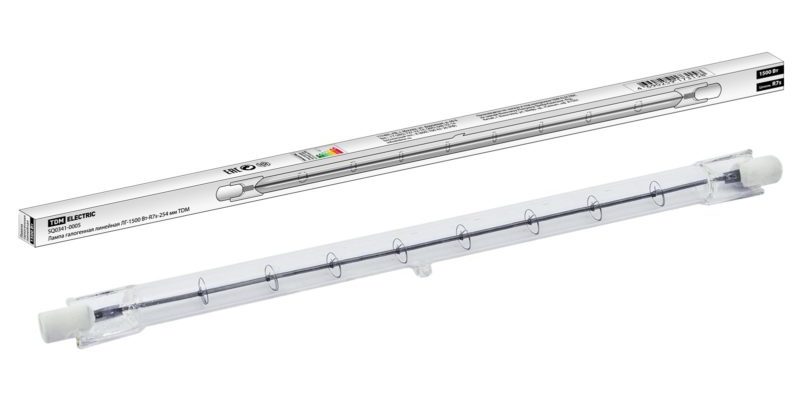
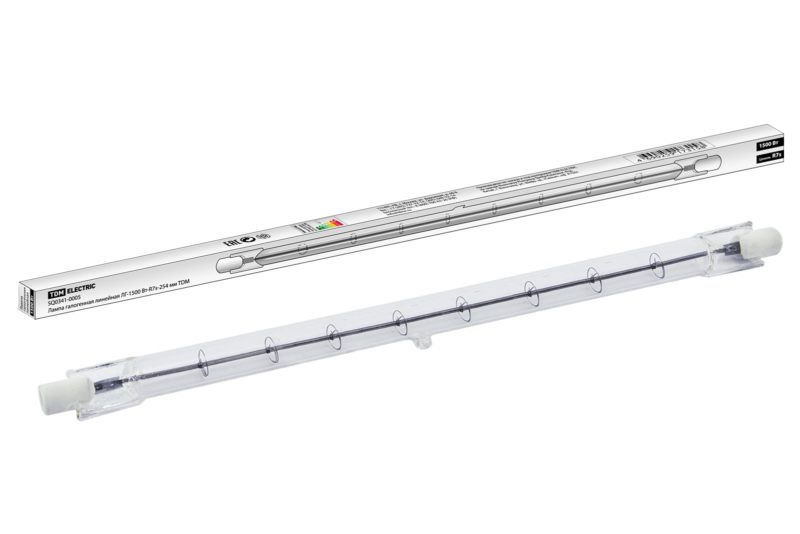
This type of halogen lamp appeared first and is still produced today. The design consists of an elongated flask and two pin holders at the edges. Due to the high power in everyday life, such models are unpopular.
With external flask
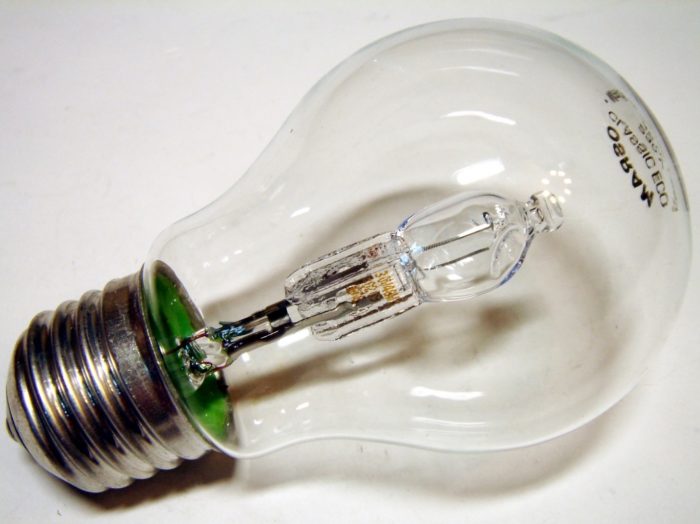
The product looks like a standard incandescent lamp. The flask is protected from darkening in case of overheating. Models are available with two types of base - E27 and E14.Therefore, in everyday life, light bulbs are used as energy-saving, instead of LN.
With special reflector
These halogen lamps are popularly referred to as "directional light bulbs". The body in the form of a hemisphere is covered from the inside with a reflective material that directs the light flux. In the center is an incandescent spiral. The case can be equipped with glass, but not necessarily.
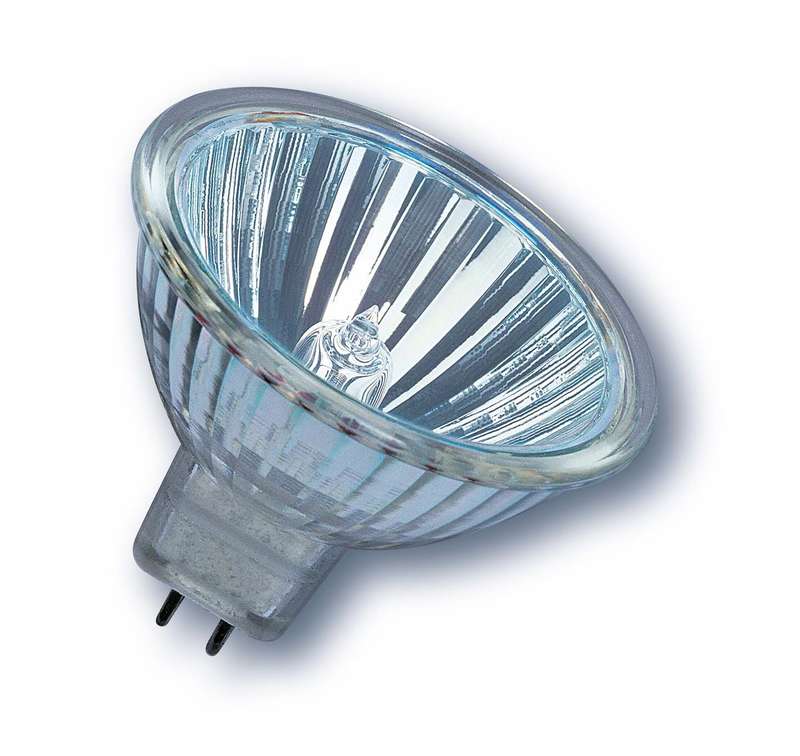
For heat dissipation, interference or aluminum reflectors are installed here. The most reliable are IRC models that do not heat up due to the reflection of infrared radiation back onto the filament. The resource of such a lamp is higher, and the energy consumption indicators are lower. Devices with a reflector are produced for high-voltage and low-voltage lamps.

Capsule
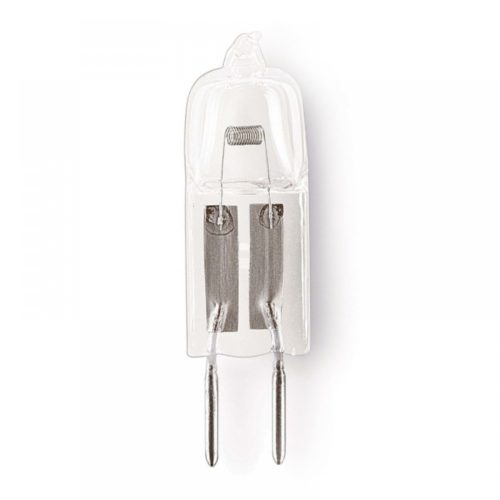
The body of such a lamp is a capsule, inside of which there is a spiral with metal leads to the outside for connection to the cartridge. The devices are divided according to the type of base: G5, 3, 4 or 9. Often, light bulbs are purchased to illuminate the interior, in spotlights built into furniture or plasterboard structures. In rare cases, they are installed in chandeliers and other household lighting devices.
The principle of operation of a halogen lamp
When the current passes through the tungsten filament, it is heated to a high temperature. The thread starts to glow. However, the tungsten atoms, as they heat up, gradually evaporate and accumulate in less hot areas inside the bulb. This process reduces the life of the light bulb.
When heated, iodine vapor interacts with evaporating tungsten atoms, which prevents them from spreading through the flask. This is a reversible process. When heated, near the filament, the vapors break down into constituent substances.
In this way, the tungsten atoms are returned to the filament, raising the operating temperature and extending the service life. Elements are more compact than LN of similar power.
Where are halogen lamps used?
Despite all the advantages of halogen lamps, they are not perceived on the market as serious competitors to other energy-saving light bulbs, including LED models. They can be regarded as an alternative to LN.
Due to their small size and light output, they are often installed in bicycle, car and motorcycle headlights. Sometimes bought for household lighting fixtures. More powerful ones are mounted in spotlights, photo and video equipment.
Operation features
In order for the lamp to last as long as possible, manufacturers advise not to touch the bulb with your hands, even if they are clean. The grease that remains after touching can cause the lamp to burn out. When replacing, it is better to wear gloves. If the temperature inside the flask drops below 250°C, no interaction with tungsten will occur.

As a result, the device will work like an ordinary incandescent lamp. It is also not recommended to install a dimmer. Because of this, the light bulb stops working correctly, since the decrease in brightness is directly related to the temperature of the buffer gas. If, nevertheless, a dimmer has been installed, it should be turned on at full power as often as possible. This is necessary for heating to the required temperature and the interaction of halogens with tungsten.
So the filament coil will be able to recover on its own. It is important to ensure the stability of the mains voltage in order to prolong the service life. If power surges occur, it is better to install a stabilizing protection unit. For suspended ceilings, lamps without an external bulb are not used; a heated element can melt building materials.
How to test a halogen lamp
To test a halogen lamp, you need a multimeter. Set the mode to measure the minimum resistance. Further:
- Place the bulb next to the multimeter without touching the bulb with your bare hands.
- Take the probes and attach to the leads.
- Read the readings, write them down if necessary.
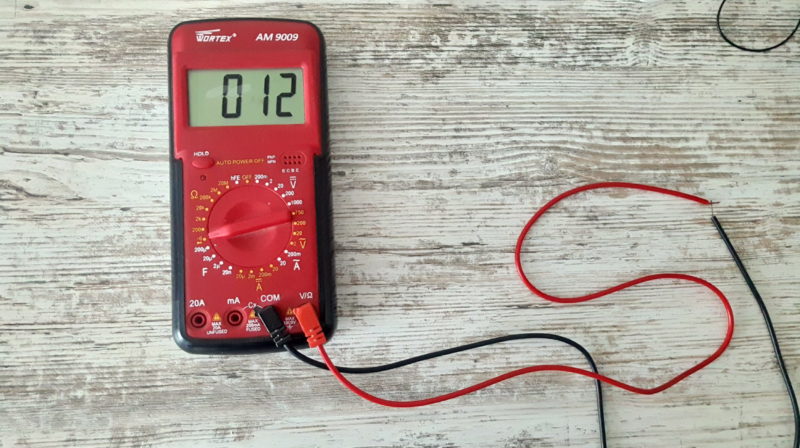
The resistance will be different for a 220 volt car and household light bulb. Indicators should be in the range from 0.5 to 1 ohm. Exceeding indicates a malfunction.
Life time
Halogen lamps last a long time due to the buffer gas inside the bulb. Some types of devices can work from 2000 to 4000 hours. To do this, you must follow the rules of operation, do not touch the product with bare hands, ensure the stability of the voltage in the network. If the conditions are met, the lamp with a dimmer will last 4000-5000 hours.
Be sure to watch: How to handle a halogen lamp to extend its life
Safety
Read the safety precautions before installing or replacing a halogen lamp. It will help to avoid mechanical failure and overheating of the device. Follow the rules for disposal, because. The bulb contains a buffer gas inside.
Why "halogen" can not be touched by hands
On a budget halogen lamp, fingers can leave greasy stains. The temperature on them can exceed the permissible limit.But in expensive models, a double bulb protects the lamp from melting and burning out.
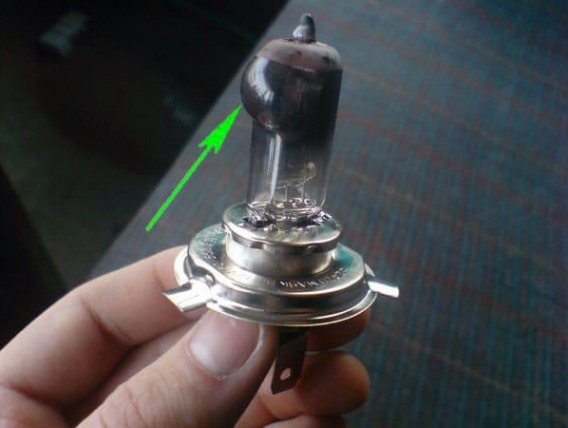
If the integrity of the device is violated, this will lead to instant failure or a reduction in service life.
Proper Disposal
A damaged or broken light bulb should be properly disposed of. It is impossible to throw away "halogens" together with household garbage because of the harmful volatile vapors in the flask. They do not pose a serious danger, however, experts advise collecting damaged products in a separate container and handing them over to special collection points. Their location can be found on the Internet.
How to change a light bulb in a car
Advantages and disadvantages of halogen lamps
Halogen lamps are actively purchased for the home instead of incandescent bulbs and for commercial purposes. Consultants in stores can learn about the advantages and disadvantages of halogen elements. Information is also available on the forums. This will help you make a choice.
Buying a "halogen" is recommended only if its use is justified. Among the advantages of halogen bulbs are the following:
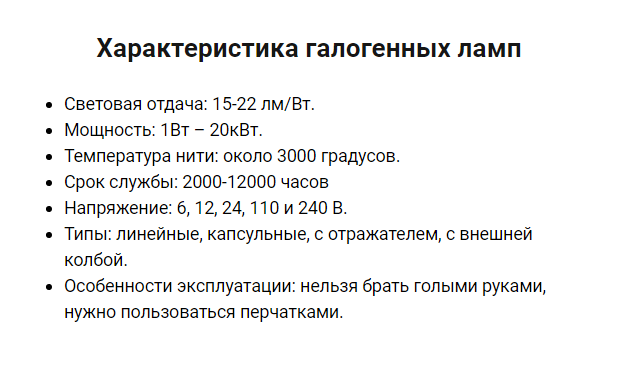
- light output ranging from 15 to 20 lm/W. For incandescent lamps, this is 7-17 lm / W. The value affects the economy and efficiency of lighting;
- dimensions smaller than LN. Therefore, they can be installed in a suspended ceiling with spotlights or furniture. Here, "halogens" beat other energy-saving analogues, which are not installed in all types of ceiling lamps;
- duration of work from 2000 to 4000 hours. This is 3-4 times higher than that of LN. With proper use of soft starters, the service life can be extended up to 11,000 hours.
Studying the reviews, you can see that buyers most often highlight such disadvantages as:
- installation difficulties. Not every "halogen" can be turned on immediately after installation in the lamp. For low-voltage lamps, a step-down transformer is installed in the circuit. In addition, to extend the service life, you can additionally install a dimmer;
- the flask is too sensitive to contamination. When installing, it is important not to touch the glass with your fingers, using a napkin or gloves. Sometimes dark spots may form on the spots;
- heating to high temperature. If there is a risk that a child or adult may accidentally touch a burning lamp, special protection must be installed. You can use transparent plastic. Also make sure that the bulb does not heat other surfaces.
Operational recommendations will negate these shortcomings. Despite the great popularity of other energy-saving lamps, for example, LED, "halogens" are in demand because of the ease of installation in different types of shades.
Conclusion
Halogen bulbs have many more advantages than LNs, but lose a lot to LEDs. Therefore, they should be bought only if the benefits exceed the financial losses. Remember that "halogens" are whimsical in use, do not install them if there are frequent voltage drops in the network, even minor ones.