Description of the lux unit and its relation to the lumen
Lux is the main unit of measurement in the design and verification of lighting standards in all types of premises, as well as on the street. Lux in lighting is used as an indicator with which you can ensure the normal performance of any work. The main thing is to choose lighting in accordance with the standards established by SNiP and SP.
What is luxury
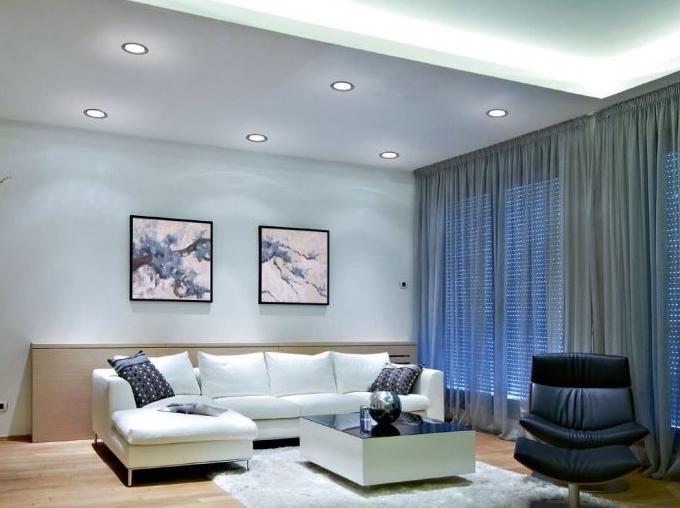
Deciphering Lux in lighting means luxury, it will not be difficult to understand the term. It is used to normalize light. If you violate the recommended rules, it will negatively affect your vision. A person will get tired much faster or their eyes will hurt due to excessive brightness. All key indicators are SP 52.13330.2016, this is the main regulatory document that all Russian designers are guided by.
There are two main indicators - lux and lumens, which few understand the difference, although everything is simple here:
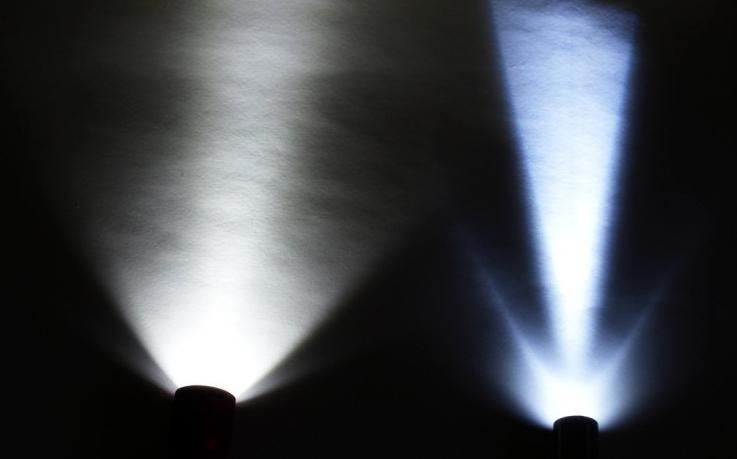
- Lumen (Lm) - unit of measurement luminous fluxused in the international system of physical quantities. It is equal to the flux emanating from a point source with a light intensity of 1 candela. That is, this indicator reflects the total luminous flux emanating from the lamp. It does not take into account the concentration of light due to the reflector or its useless scattering in all directions.
- Suite - illuminance unitincluded in the international system. It is equal to the illumination of a plot of 1 sq.m. With by the power of light in 1 lumen. If a luminous flux of 200 lumens falls per square meter, the illumination is 200 lux. If the light is distributed over 10 sq. m., then the illumination will be 20 Lx.
Illumination standards in Europe is much higher than in Russia.
Illumination standards in different types of premises
The SNiP regulates all the main indicators. You need to find the type of room in order to find out the minimum allowable value, from which you should build on the design. In this case, the range can be quite large, it all depends on the specifics of the work performed and other features. Below is the illuminance in lux - the table shows the values for the main types of rooms.
| room | Illumination standard, in Lux |
| Office space for working at computers or with documents | 300 |
| Meeting rooms, conference rooms | 200 |
| Stairs, escalators | 50-100 |
| Corridors, halls | 50-75 |
| Storerooms, utility rooms | 50 |
| Premises for drawing | 500 |
| Living rooms and kitchens | 150 |
| Children's rooms, play areas | 200 |
| Libraries, classrooms | 300 |
| Bathrooms, corridors in apartments | 50 |
| Saunas, baths, pools | 100 |
| Training classes | 400 |
| gyms | 200 |
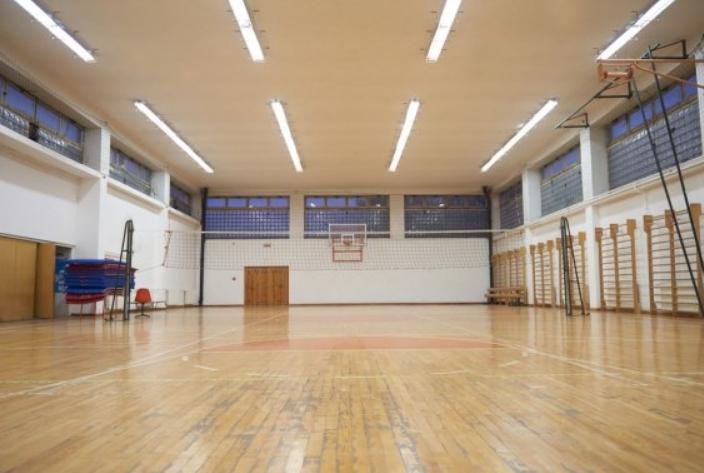
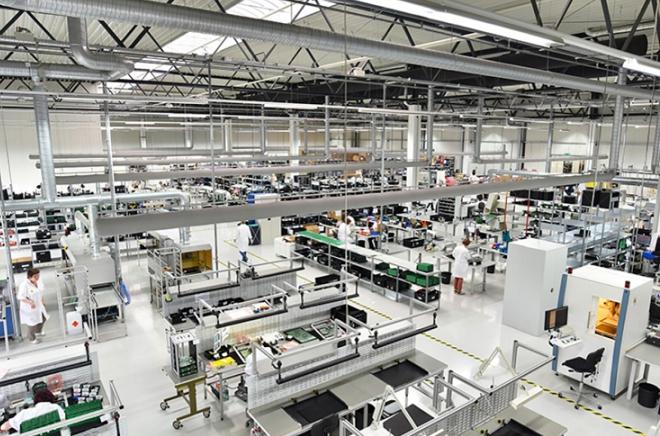
There are also indicators for other areas. As for production facilities and workshops, there is a gradation in terms of the degree of accuracy of the work performed. Depending on this, the illumination may vary from 50 to 5000 lux and even more. Moreover, there are requirements for both local and general lighting, both parameters are equally important.
Illuminance scale in lux
To determine the appropriate light mode, you can use another option - the light scale. It sets recommended values depending on the activity performed.
| Occupation | Recommended light level |
| Places with dark surroundings | 30 to 50 |
| Sites and premises where permanent work is not performed | 100-200 |
| Places with limited eye strain | 200-500 |
| Objects with an average level of visual work | 500-1000 |
| Works with high lighting requirements | 1000 to 2000 |
| Carrying out precise work | 2000-5000 |
| Ultra-precise work | From 5000 to 10000 |
| Rooms requiring special lighting conditions (for example, operating rooms) | 10000-20000 |
There can be several different zones in one room, if this is required for the normal performance of work.
Minimum illumination in lux
If specified lamp power in watts, it is necessary to convert the indicators to lux, since the standards are indicated specifically for them. There is information about how many Lux in 1 W of different light sources, so it will not be difficult to make calculations. As for the minimum illumination, the data indicated in the SNiP is precisely the lower indicator that you should focus on.
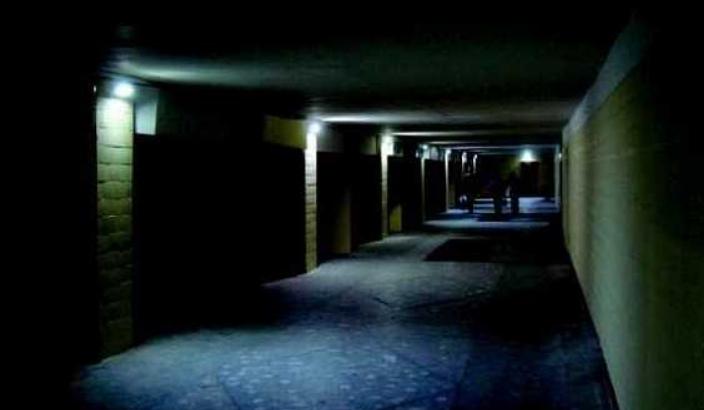
The light can be brighter than the established norms, there are no special restrictions on this. The main thing is that there is no discomfort for the eyesight. But as for indicators below the set value, the allowable difference is no more than 10%. This is the absolute minimum below which it is impossible to fall.
How to determine the illumination in lux
Calculations do not take much time if at least the lamp power in lumens is known. It differs for different light sources. And if the packages of LED and luminescent products have all the necessary information, then incandescent lamps may not have it. But it is not difficult to calculate the luminous intensity in lumens - the power in watts is multiplied by 12. So, the 100 W option produces approximately 1200 Lm.
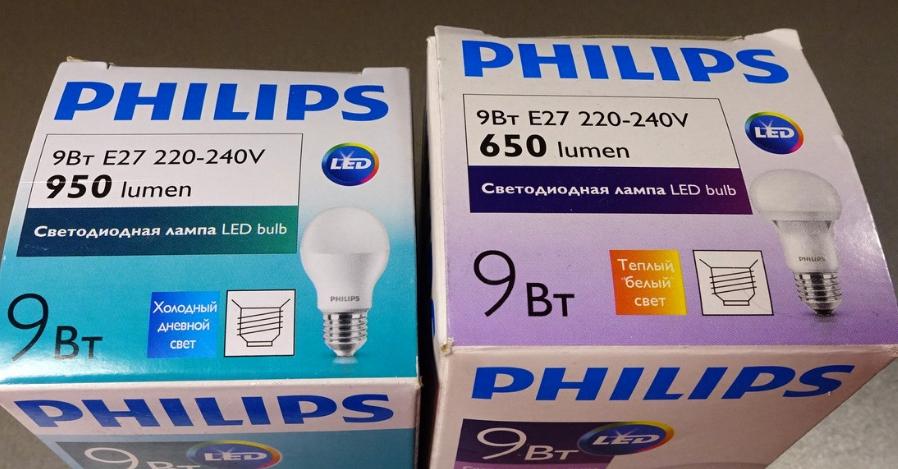
For determination of illumination without using equipment, you need to know the total power of the lamp and the area over which the light spreads. Based on this, it is not difficult to calculate the approximate value. At the same time, it should be understood that the result obtained is approximate, since it cannot take into account the loss of the luminous flux and the features of its distribution by the diffuser of the ceiling.
It must also be remembered that in the daytime natural light through window openings. This affects the illumination, the performance will be much higher even on a not very sunny day.
Unlike artificial light, natural depends on a number of conditions - cloudiness, region, location of buildings and trees nearby.To assess the quality of lighting, KEO (natural light factor) is used, which is measured at floor level at a distance of 1 meter from the wall opposite the window openings.
Instruments for measuring illumination
Measurements are made using luxmeter. This is a special device with a photocell, the conductivity of which depends on the strength of the light falling on it. To carry out checks, it is necessary to use equipment with an error of no more than 10%, this requirement is established by GOST standards.
The device usually consists of an electronic module with a screen and a settings unit and a photocell attached to a flexible wire. This design allows you to check the performance anywhere, just reach out.
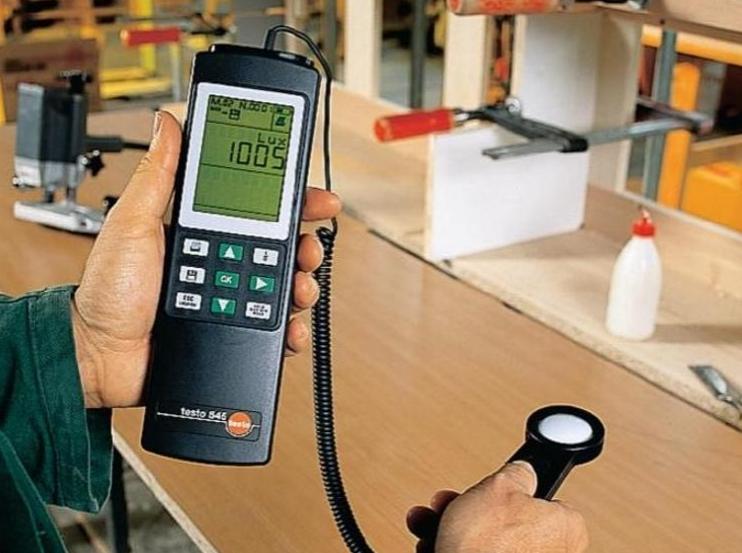
By the way! It is important to observe the measurement conditions. If we are talking about an office, classroom or other similar places, then you need to check the illumination at about the level of the table, usually 80 cm from the floor. For stairs, corridors and roads, measurements are taken at ground level.
You can check the illumination with a camera by photographing a white sheet and checking the aperture and shutter speed settings.
In the video, the lighting designer will talk in detail about such concepts as "Illumination" and "Light flux".
Lux is used in the assessment of the illumination of all rooms, as this is the easiest way to check if the light meets the established standards. If everything is designed correctly, the best conditions for human vision will be created.