Electronic ballasts for fluorescent lamps
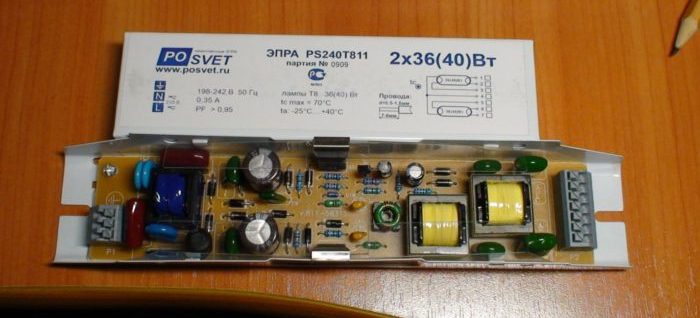
One of the main elements of a large number of lighting devices is a ballast, abbreviated as electronic ballast. The component has features that are best known before connecting to a luminaire. Consider the electronic ballast circuit.
What is EPR
Electronic ballasts are electronic ballasts that can significantly extend the life of lighting fixtures and make their work more efficient. The component represents a module with contacts to which the input voltage terminals are connected, as well as a load in the form of lamps.
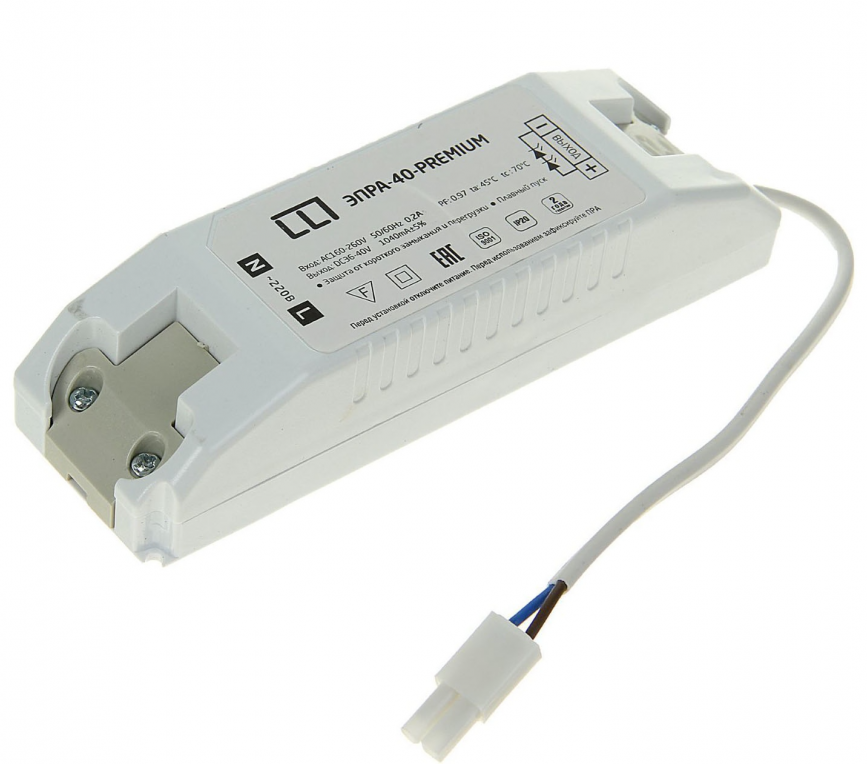
The electronic ballast unit has become an effective replacement for obsolete stabilizers using chokes and starters. It is the electronic module that is installed in all modern devices.
Advantages and disadvantages
Considering the electronic ballast, we can highlight some features. There are both advantages that distinguish the block from competitors, as well as disadvantages.
Pros:
- Using electronic ballasts in wiring diagrams fluorescent lamps significantly extends the life of the elements.
- High efficiency, losses during operation are minimized by eliminating the throttle.
- Saving electricity.
- There are no surges or noise in the power supply and connected equipment.
- The lighting device works stably without pulsations.
- In the event of a lamp failure, the system immediately stops supplying voltage to the contacts.
- The electrodes heat up smoothly, without sudden jumps or temperature drops.
- Even serious voltage fluctuations in the supply network do not affect the stability of the luminous flux.
- Some models can operate on direct current.
- Reliable protection against short circuit or breakdown is provided.
- During operation, the circuit does not emit extraneous sounds.
- With the help of electronic ballasts, you can start the lighting device even at low temperatures.
Not without cons:
- There are many cheap low-quality devices with a short service life on sale.
- Good models are expensive.
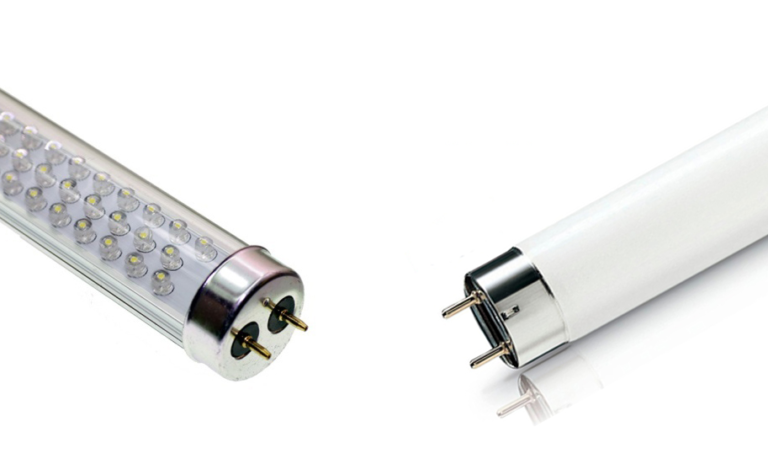
- A significant part of the models cannot be used with LED lamps.
The design and principle of operation of electronic ballasts
Any electronic ballast consists of elements:
- device for rectifying current;
- electromagnetic radiation screening filter;
- circuit power factor correction unit;
- voltage smoothing filter;
- inverter;
- choke or ballast for lamps.
The design can be bridge or half-bridge. The first option has improved characteristics and is used in high power luminaires, from 100 watts. The circuit effectively maintains the indicators of the glow and the voltage applied to the cathodes.
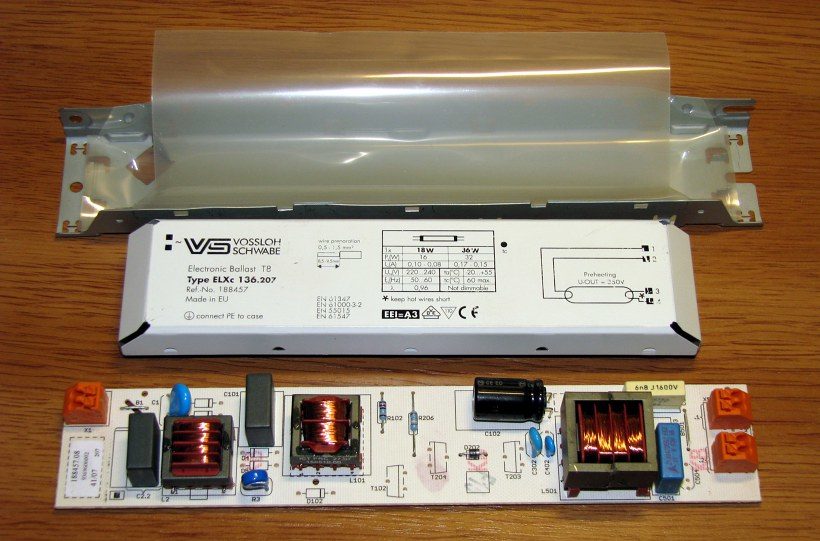
Half-bridge circuits are more popular, because.Suitable for most household fluorescent lamps up to 50W. Designs marked 2x36 support the connection of two lamps with a power of 36 V.
The operation of the device consists of the following steps:
- Turning on and preheating the filaments. This is an important manipulation that significantly extends the life of light sources. Without preheating, the lamp will not turn on at low temperatures.
- Generation of a high-voltage impedance pulse with a voltage of about 1.5 kV, which causes a breakdown of the gaseous medium inside the flask and the start of glow.
- Stabilization of voltage and maintaining it at the required level. The voltage to support combustion is small, making the circuit safe.
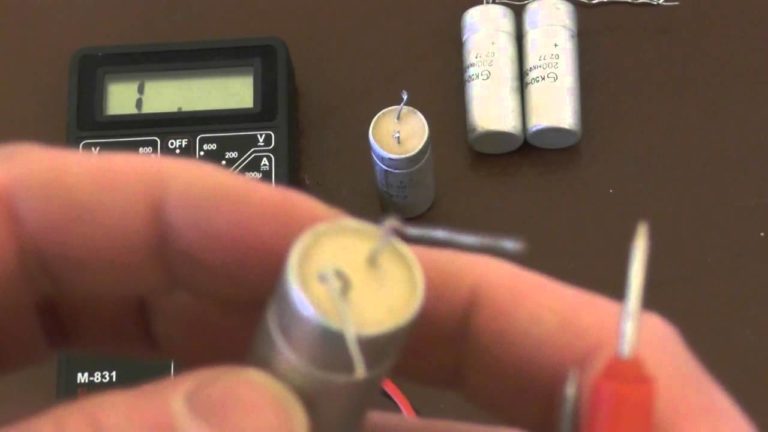
Electromagnetic device of the old type
For a long time, electromagnetic assemblies were used in the circuits that regulate the glow indicators. They were quite effective, but they were distinguished by increased sensitivity to voltage drops and bulky dimensions.
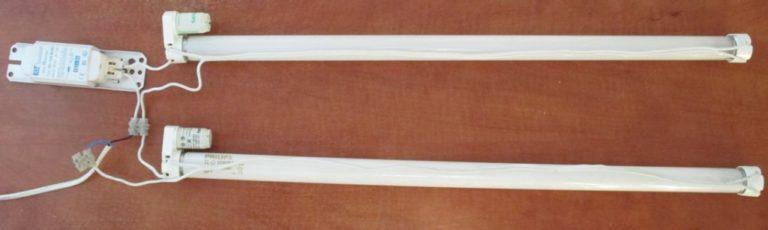
The old-style module included two components: throttle and starter. The throttle was responsible for the load and voltage reduction, the starter formed a discharge.
The inductor acting as a ballast took up a lot of space and did not allow the creation of compact light sources.
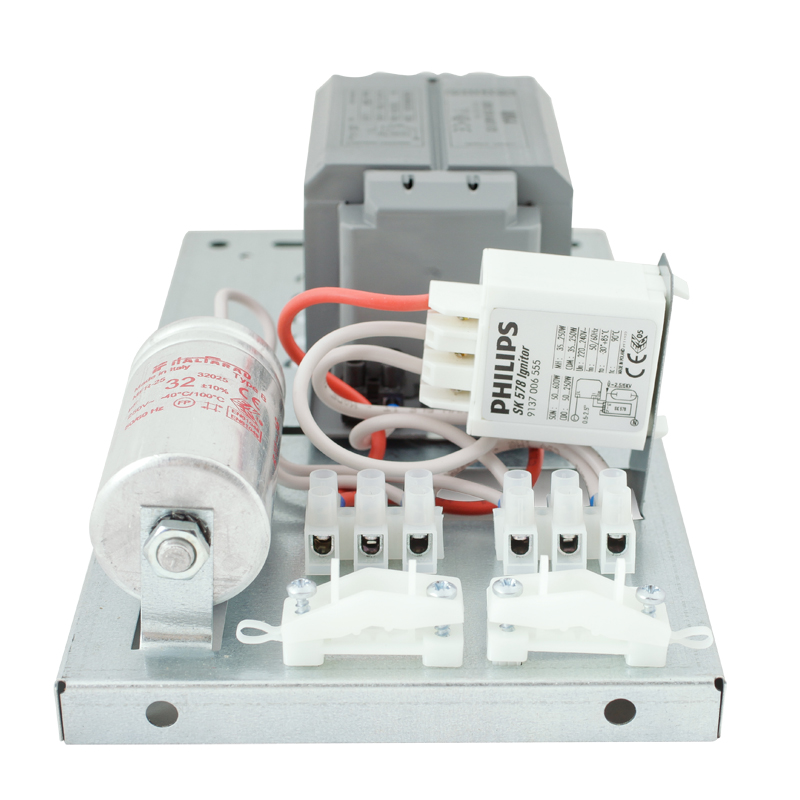
The circuit included one or two starters. The durability of the lamp depended on the quality and efficiency of the starters. Starter failures caused a false start and significant overcurrent.
One of the disadvantages of old-style ballasts can be considered the effect of strobing in the form of flicker. Pulsations of light adversely affect human vision and bring discomfort.
Significant energy losses were present, reducing the efficiency of the lamp.
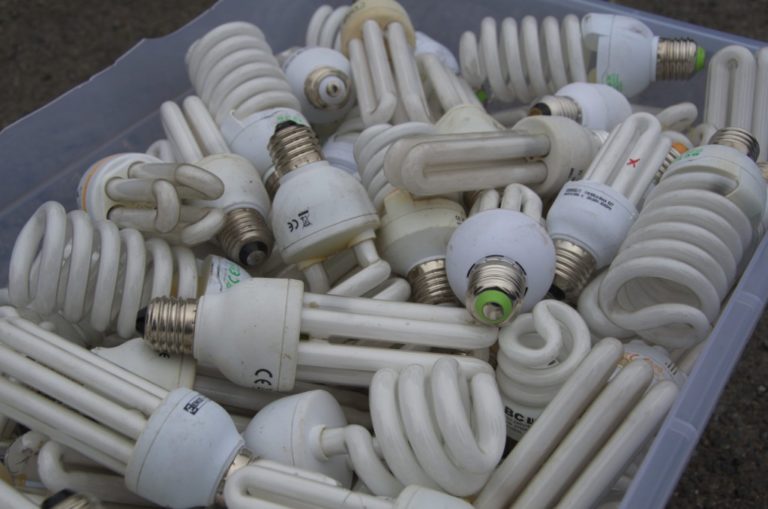
Design upgrade to electronic ballast
The improved design of the ballast for fluorescent lamps began to be massively integrated into electronic circuits about 30 years ago.
The new device was a complex of semiconductor devices, more compact than traditional circuits. At the same time, the quality of voltage stabilization has risen to a higher level.
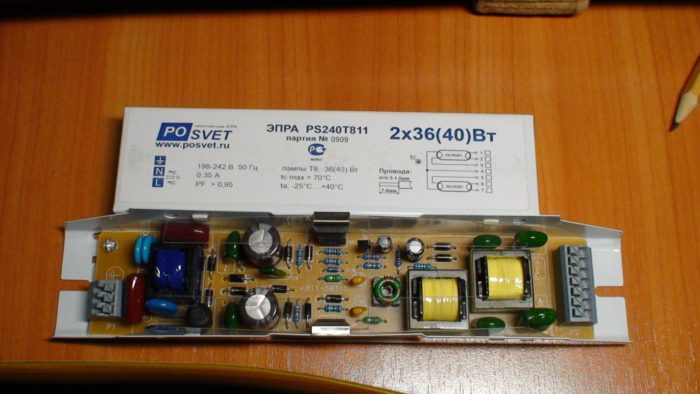
Electromagnetic regulators have been replaced by more advanced semiconductor components, with which you can precisely adjust the parameters of the glow.
Wiring diagram
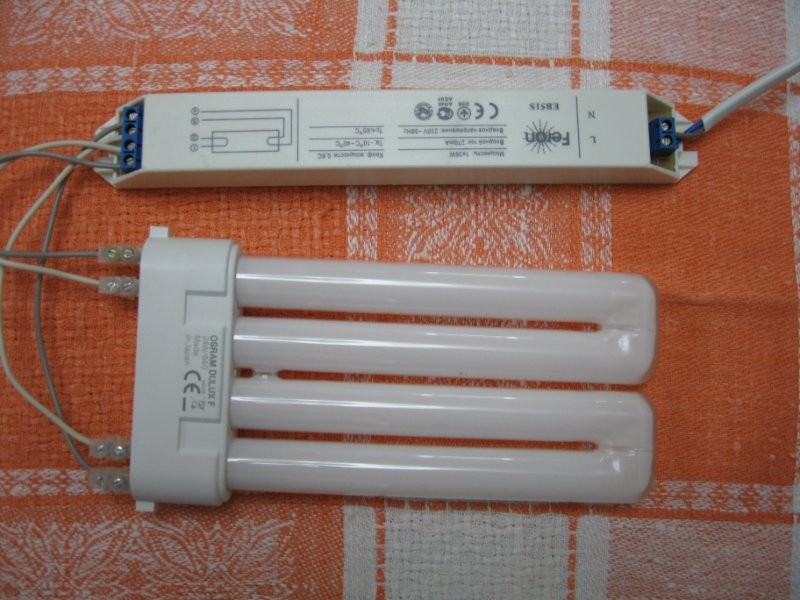
Electronic ballasts have become an effective replacement for traditional circuits with chokes and starters, reducing the design of the lamp and expanding the capabilities.
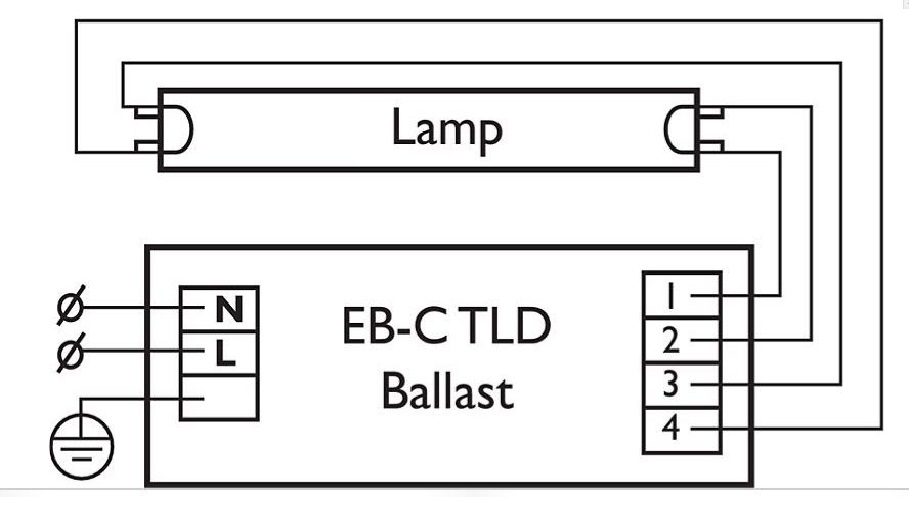
All the minuses of the chokes in the electronic ballast are absent. More than one lamp can be connected to one electronic ballast, and up to four in some models, without additional elements. The design works with standard light sources with a power of 18W, 36W, etc.
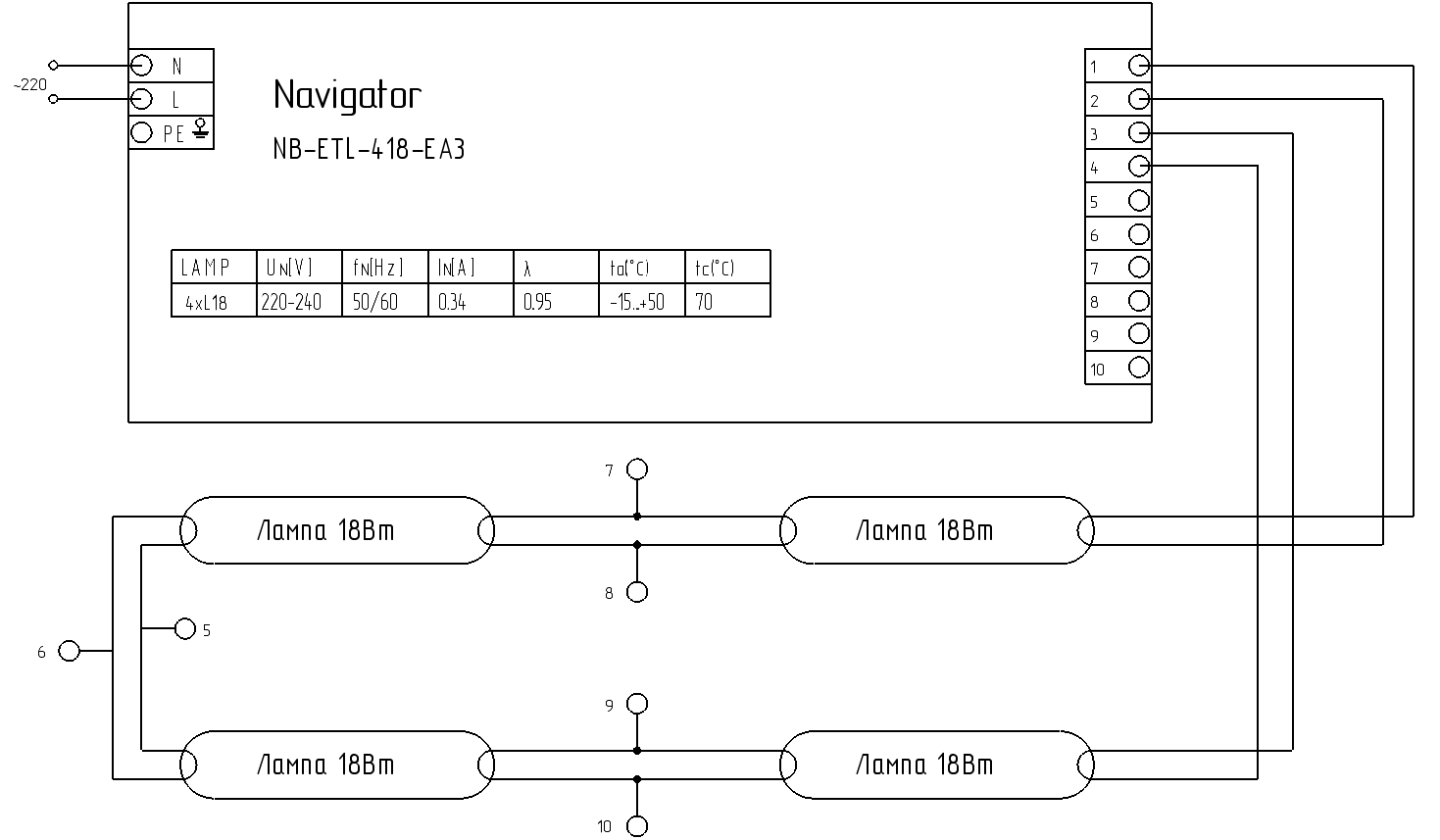
It is better to put the block on the phase wire. In the presence of zero, the potential is preserved, which is expressed by small flickers of the light source when the power is turned off. The phenomenon is typical for cheap ballasts.
To smooth out flicker, the capacitor is shunted with a 100 kΩ resistor.
Electronic ballast repair
If the ECG stops working, repair can be done by yourself. Requires basic knowledge of electronics and a multimeter to measure parameters.
If there is no confidence in the skills, a complete replacement of the ballast is done. You can contact repair shops.
It is not easy to fully describe the repair process, but some features of the process stand out.
Any repair begins with an inspection of the existing board. Burnt out elements are usually visible in black marks. The cases of parts darken, there may be blackout on the board at the fault site. It is especially important to pay attention to the current-carrying paths, the presence of alien shades indicates the absence of contact.
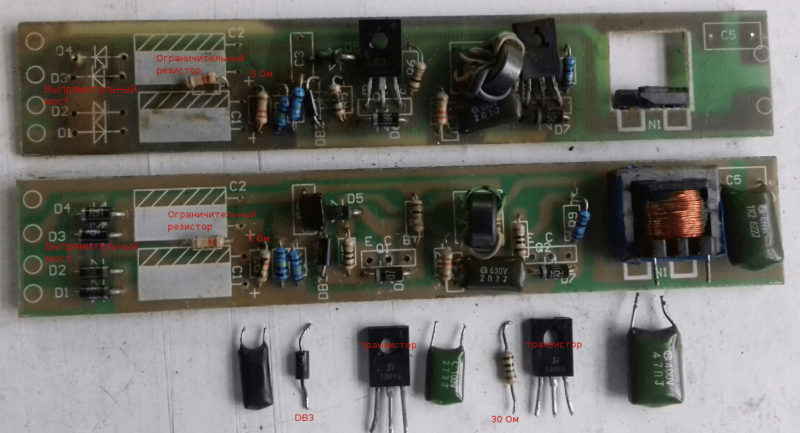
First, the fuse is checked, marking the letter F and numbers. Then capacitors are studied. If the element is swollen or deformed, it must be replaced. Use capacitors with a voltage not less than that indicated on the old one. Leave the container as is. When installing, observe the polarity, the violation will damage the element when voltage is applied.
Thematic video: A fairly simple and quick way to check the performance of electronic ballasts after repair
All diodes and transistors on the board must be carefully ring with a multimeter. There should be no breakouts. All contacts should ring without characteristic sound signals.
The masters say that the repair of the ballast is justified only when replacing one element. If there is more damage, it is better to purchase a new block. It's easier and sometimes cheaper.