How to dispose of energy saving light bulbs
Energy-saving lamps (ESL) are efficient lighting devices that can be dangerous to humans and the environment. Their disposal must ensure the complete removal of harmful substances.
The composition of energy-saving lamps
In any ESL there are three elements:
- base with contacts for connecting electricity;
- a flask with an inert gas or mercury vapor;
- ballast (electronic ballast).
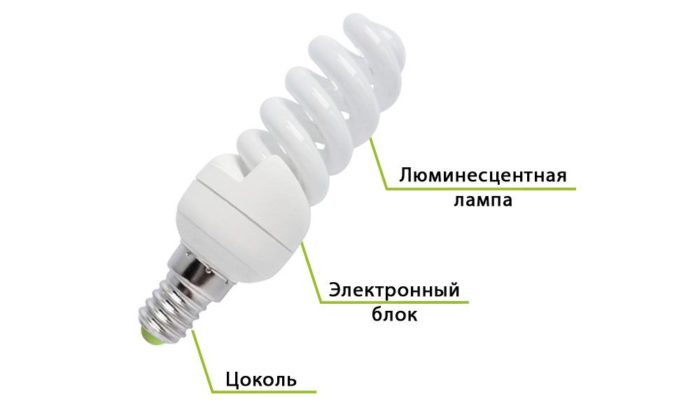
The type and size of the plinth affect the installation in a particular luminaire. Flasks also come in different shapes: in the form of a spiral, tube, ball, candle or pear.
The inner surface of the flask is coated with a phosphor, which produces the necessary glow under the influence of ultraviolet radiation. Ultraviolet radiation is created by electrons moving under voltage, interacting with mercury vapor.
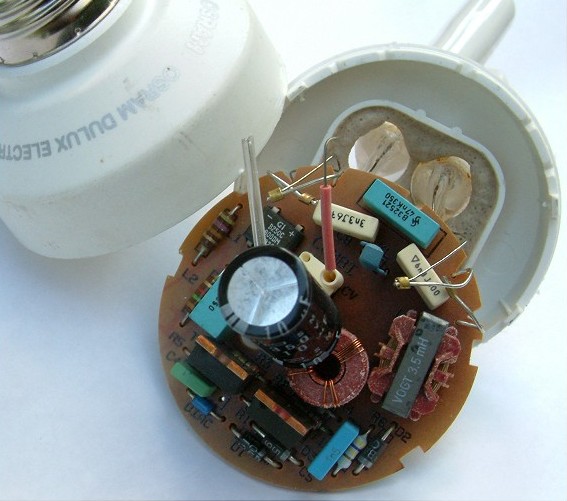
The ballast is installed in the cartridge and is a board with a diode bridge. The circuit rectifies the AC mains voltage and boosts its performance for starting. electronic ballast responsible for a uniform glow of the desired brightness without flickering and unpleasant ripples.
ESLs are quite durable and can operate for 15,000 hours. However, improper operation and significant voltage fluctuations can shorten the life of the product.
Harm and danger of lamps
The danger of energy-saving lamps is the strain on the eyesight and the presence of harmful substances inside the bulb.
ESL is not recommended for use in table lamps, especially for children. The glow has a detrimental effect on the retina and can lead to a significant deterioration in vision. In addition, all devices emit harmful electromagnetic and ultraviolet radiation.
Such shortcomings can be mitigated by following the recommendations. Buy quality electrical appliances from reliable manufacturers. Chinese counterparts will quickly fail and are more harmful to the eyes.
When installing the device in the base of the lamp, do not hold it by the bulb, since this part is the most fragile.
If the device starts flashing, immediately check presence of faults, repair or replace.
Dispose of all energy-saving light bulbs according to the rules. Neglect of the recommendations can lead to an environmental disaster (with a large amount of waste). The ingress of mercury from ESL into water bodies causes toxic poisoning of water and all living organisms.
It will be useful to know: from 2020 there will be a ban on fluorescent lamps
Violation of the tightness of the flask in a living room leads to poisoning of the surrounding space and damage to the internal organs of a person. The nervous system and gastrointestinal tract are especially affected.
Why should you recycle energy-saving lamps?
All ESL inside the flask contain mercury vapor, which emits radiation and belongs to the 1st hazard class.
In liquid and solid states, mercury is practically not dangerous. However, the low boiling point leads to a very rapid transformation into vapors that easily penetrate into the body. Treatment of poisoning is extremely difficult, since mercury lingers in the body for a long time and is poorly excreted.
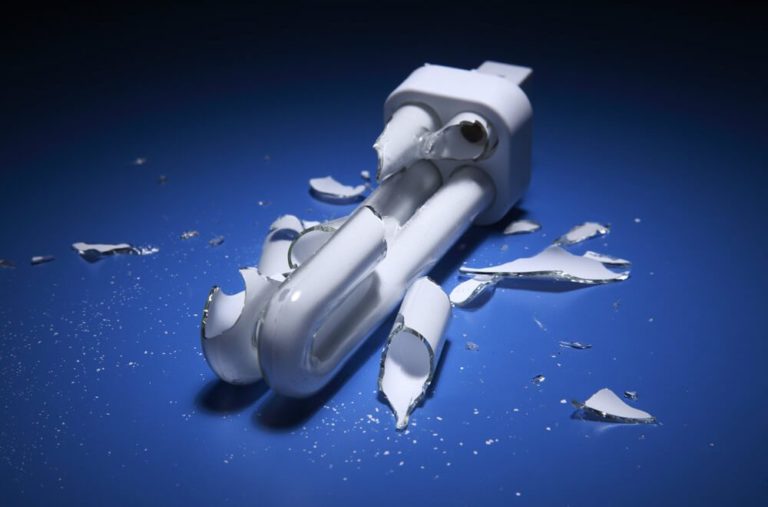
You can't just throw out the ESL. Harmful substances from a broken flask can poison water, soil, upset the balance of the ecosystem and harm all living things. Therefore, the devices must be disposed of by the developed methods.
How to properly dispose of lamps
Disposal of energy-saving lamps must be carried out in strict accordance with government regulations. These regulations require such waste to be collected separately from other waste.
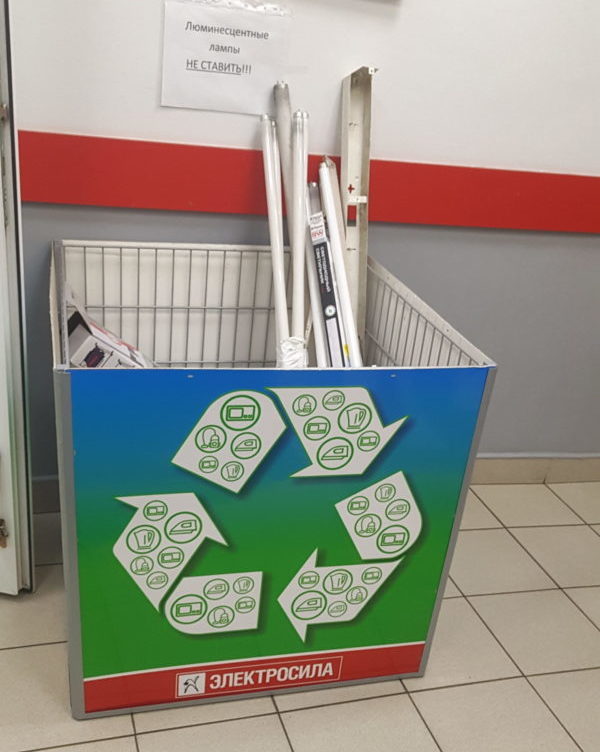
After collecting a certain amount of hazardous waste, they are transported to the appropriate organizations for subsequent demercurization, which involves the complete removal of mercury.
Utilization of ESL is carried out by mechanical and mechanical-chemical methods. Mercury is exposed to heated cement dust for 12 hours. The result is a safe sediment, which is buried in a special place.
Can be disposed of thermally. Faulty lamps are loaded into a furnace and heated to 400 degrees Celsius. Mercury is converted to gas and removed to the designated area through the hood.
The thermal vacuum method of disposal is characterized by the highest efficiency and increased rates of mercury vapor capture. The process consists of the following steps:
- Faulty light bulbs are crushed in the chamber.
- It heats up to 450 degrees.
- Mercury gas passes through the hood and is captured by a trap.
- The vapors are cooled with liquid nitrogen.
Separated from broken electrical appliances, mercury can be used to make new energy-saving lamps, making the recycling process profitable.
Where can I sell energy saving lamps?
Faulty energy-saving lamps collect:
- ZhEK or REU;
- IKEA stores with ESL containers installed;
- street tanks that have the appropriate designation and are painted yellow or orange (found in large cities);
- firms for the production or maintenance of electrical equipment;
- organizations that collect hazardous waste from the public.
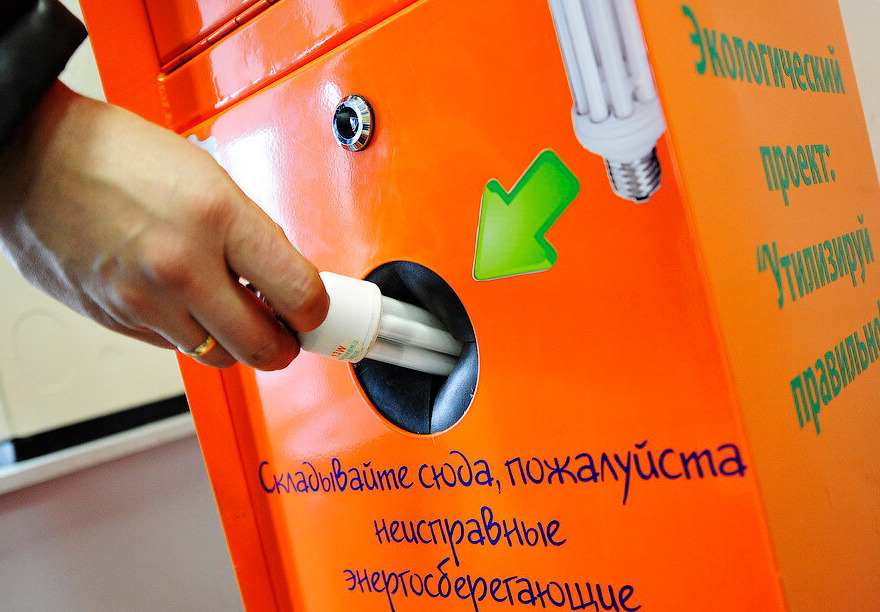
Reception of mercury lamps can be combined with the reception of used batteries and power supplies. Sometimes hazardous products are handed over to the electrician of the house management company.
Rules for storing light bulbs
ESL storage rules are prescribed at the legislative level and must be observed by all recycling companies. Storage, collection and processing of devices are carried out by companies that have the appropriate permission.
Storage areas should be large, well ventilated and equipped with protective equipment. Especially important is the availability of means to remove mercury.
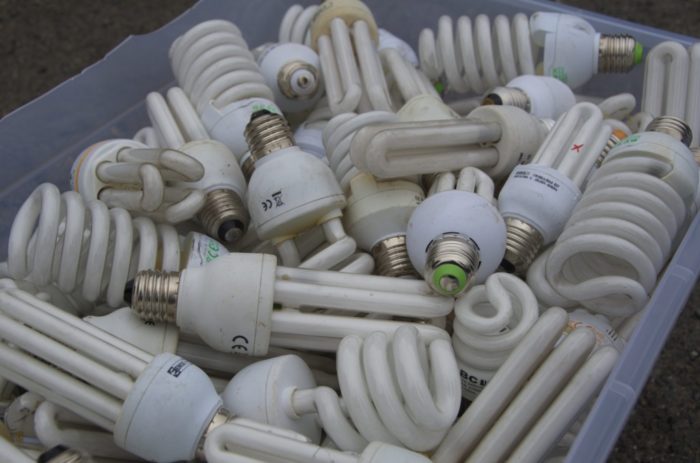
Transportation of waste lamps is carried out in accordance with all the rules for the transport of dangerous goods. Companies must make sure that the flasks do not break during the movement.
Already broken ESL are collected and stored in containers that do not let harmful substances through. Usually, thick-walled sheet metal drums are used, equipped with carrying handles. It is impossible to store whole lamps with broken ones.