How to make a phytolamp for plants with your own hands
It is not difficult to make a phytolamp with your own hands, if you understand the features well and select components with suitable characteristics. For work, you can use different types of lamps, which depends on preferences and wishes. All of them, when used correctly, give a good effect.
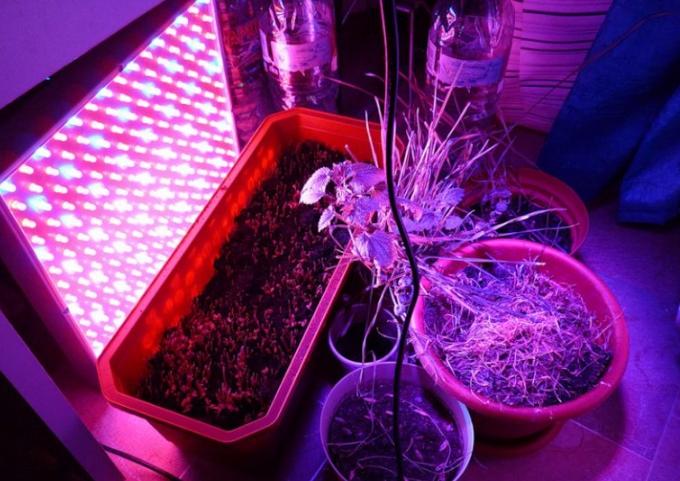
Why do you need plant lighting?
Almost all plants grown at home need additional lighting for the following reasons:
- For normal processes of photosynthesis and metabolism, crops need sunlight for a long period. So, for tomatoes, daylight hours should be 14 hours, for cucumbers - from 13 to 15, for peppers 9-10. For indoor plants, periods are selected from reference books. Since the daylight hours are short in winter, it is necessary to illuminate all crops.
- In phytolamps, such a spectrum is selected that is necessary for plants. Nothing superfluous - just what you need, so blue and red radiation prevail. Constant supplementary lighting will improve growth, increase disease resistance and yield.
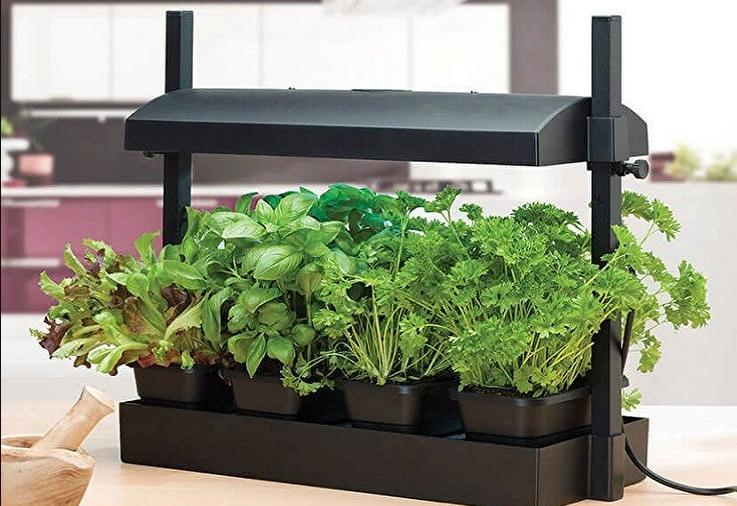
If you replace a factory-made phytolamp for plants with a home-made option, you can save significant money.
Main options and their features
For home use, it is worth choosing one of the two options, as they have proven to be the best and can be bought in most stores. Features of each type:
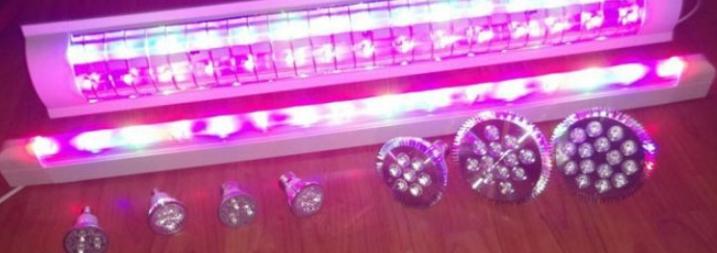
- Fluorescent sources of light. A time-tested type that was the only one a couple of decades ago. They can be both tubular and under the standard E27 cartridge. At the same time, the light power is not very high, but the lamps do not heat up during operation and provide optimal performance. Service life - no more than a year due to phosphor burnout and spectrum distortion.
- LED options allow you to choose the optimal radiation and its power, which will simplify the manufacture of a home-made phytolamp. At the same time, diodes consume the least amount of electricity, have a huge service life, during which the spectrum is practically not distorted. The products are easy to install, they do not get very hot during operation and do not pose a danger to humans, as they operate from low-voltage power.
How to calculate the optimal luminaire parameters
It is impossible to give exact instructions, since each plant has its own preferences and light standards. But if you take into account a few simple tips, you can choose the parameters without problems:
- Lighting norm for a particular culture.The indicators are in the reference books on crop production, as well as on specialized resources. You can simply enter a query into a search engine and study the results.
- Location of plants. If they are on a windowsill on the south or east side, they will receive the maximum amount of natural light possible. If you are in the back of the room or on the north or west side of the world, you will need more.
- Calculation of the illuminated area most often determined by the size of the container. It also depends on the type of lamp, for options for cartridges a circle is illuminated, for ribbons and tubular lamps, calculations are made for a rectangle.
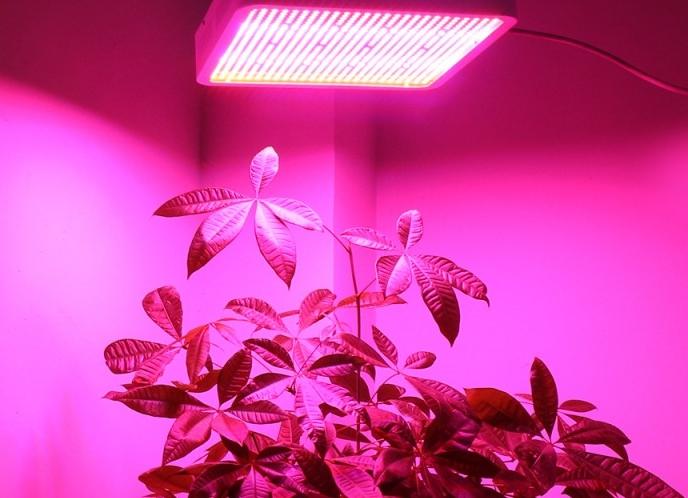
It is important to correctly select the height of the lamp - the larger it is, the larger the area of the illuminated area, but the lower the efficiency. For an ideal result, the lamps should be placed at a height of 20 to 30 cm.
Making a phytolamp for seedlings from an LED strip
Do-it-yourself LED phytolamp is the best solution for today, which is the easiest to implement. The work is carried out according to the following instructions:
- Red and blue LED strips are purchased. Or you can immediately order an option for plants, in which the necessary diodes alternate, such are sold on Aliexpress and specialized sites.
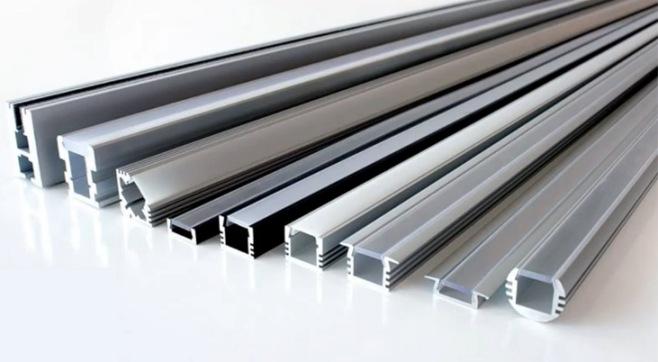
- You will also need a special aluminum profile, it serves as a reflector and a heat sink for cooling the diodes, and is sold in electrical stores. Power supply, connection cable and plug are mandatory elements. To work, you will need a soldering iron, a knife and other tools.
![aluminum profile options]() Various aluminum profile options
Various aluminum profile options - To install at the right height, it is worth considering a bracket, you can adapt any suitable solution or make two posts with slots to insert the aluminum profile at the right height.
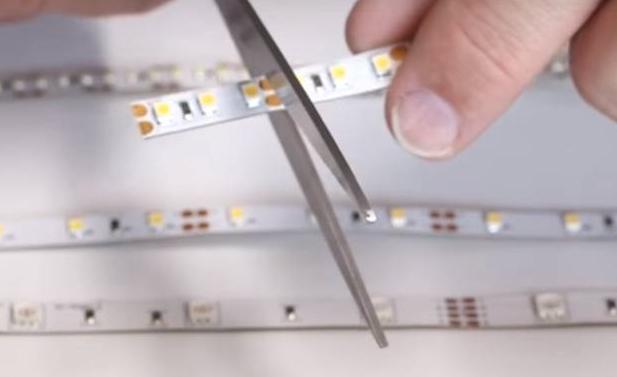
- Cut the LED strip into suitable size pieces. At the same time, it is possible to cut only in specially marked areas, this is important. Then the tape is glued to the aluminum base with a self-adhesive layer.
![Tape cutter]() You can only cut in designated areas.
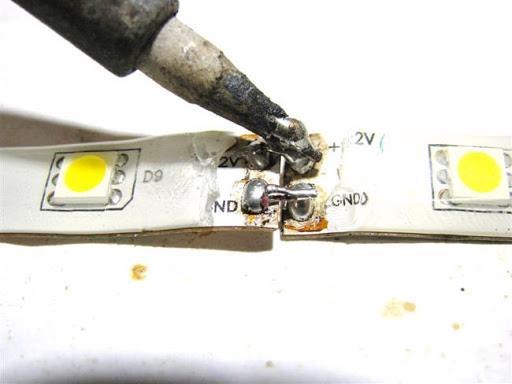
You can only cut in designated areas. - Next, the contacts on the tape are soldered to the cable, it is best to use a two-core copper version of a suitable section, its ends are pre-stripped. The wires are located on the contacts and carefully soldered, it is important to ensure reliability. After finishing work, a piece of heat shrink tubing is cut off, put on and warmed up so that it fits snugly around the joint.
![How to make a phytolamp for plants with your own hands]() Wireless soldering of different parts.
Wireless soldering of different parts. - The power supply is connected, most often you also need to solder the wires. After that, the performance of the lamp must be checked. If everything is fine, it can be put in place and used for its intended purpose.
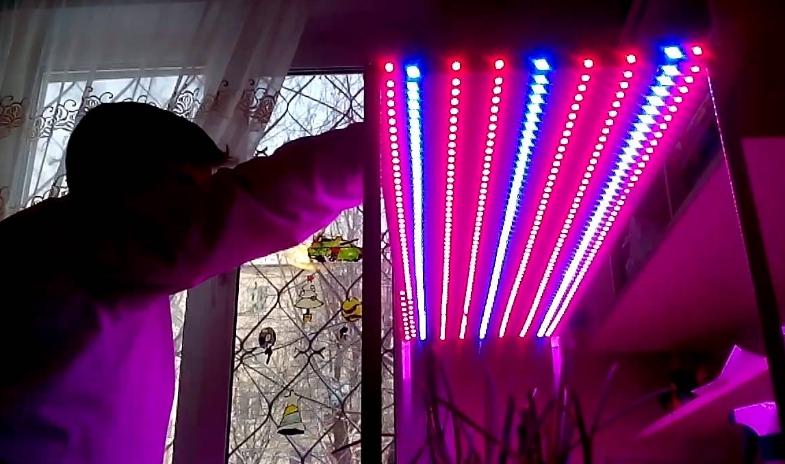
Alternatively, you can use a housing from a lamp with a reflector, in which a tape wound around a tube of a suitable diameter is placed.
How to make a phytolamp from an ordinary fluorescent
You can also use fluorescent lamps. In this case phytolamp for plants is done like this:
- First you need to choose the lamps that will be used. These can be tubular or chambered models. Based on this, the remaining components are selected - either mounts for tubes (or rather a lamp with a reflector), or a cartridge with a ceiling. You also need a cable, preferably in good insulation, and a power plug.You can immediately attach it to a piece of wire of a suitable length.
- Next, the system is assembled, for this, the cartridge or lamp must be attached to the ends of the pre-stripped cable. The connection is made through a special bus, you do not need to invent anything. It is important to ensure reliable contacts and avoid shorting the bare ends of the wires.
- The design is mounted on a suitable bracket, for this you can adapt any improvised elements of a suitable size. Ultraviolet light is ideal for seedlings, so it is most often used for such purposes.
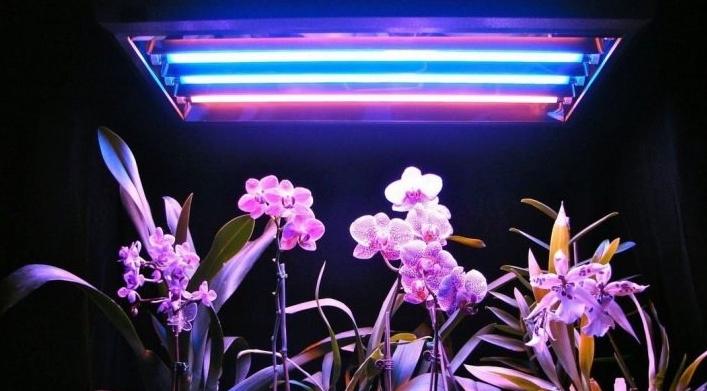
Fluorescent lamps have a short life, so they need to be changed periodically. The exact dates are indicated on the packaging or on the accompanying sheet.
Thematic video:
It is not difficult to assemble a phytolamp with your own hands if you choose light sources and correctly calculate their power for a particular plant. The main thing is that blue and red colors prevail in the spectrum, and distance from the lamp to the plants was not too big.
