History of electric lighting
The history of electric lighting goes back to the century before last. Scientists in the early 18th century discovered that by heating various materials with electricity, bright light can be obtained. But the development of technology was at a low level, so the development of a durable and safe light bulb took almost a century. During this time, many experiments have been carried out. Nowadays, work is also underway to improve the lamps, not so long ago, new options have appeared that are becoming more and more popular.
Light sources before electricity
Man from the earliest times tried to provide lighting in the dark. Moreover, at first it also served as protection against predators. As for the development of light sources, several main stages can be distinguished:
- Bonfire. The very first and simplest option, which was kindled in a cave or a makeshift shelter and constantly maintained, since they still did not know how to make fire on their own at that time.
- Luchiny. Over time, people have noticed that some resinous woods burn much brighter and longer than others.They began to be used for lighting, splitting into small torches and set on fire as they burned, which made it possible to save material and provide light for a long time.
- The first lamps were primitive in their design. A small wick fell into a container with oil, natural resin or animal fat, which burned for a long time. Over time, refined petroleum products began to be used, which further increased efficiency. There were torches and other variants impregnated with combustible substances.
- Wax and paraffin made it possible to make candles that helped to illuminate the room for a long time. Most often, the wax was collected and used in the re-making of candles.
- The next stage of development was oil, and then oil lamps. The design was a wick, which was impregnated in a container and, due to a special system, was gradually removed for uniform combustion. To protect the flame and make the light more even, protective glass was used on top.
![]() Kerosene lamps were among the most efficient and safe.
Kerosene lamps were among the most efficient and safe. - Gas lamps were widely used for street lighting in the UK and some other countries. Due to the convenience of gas delivery and ease of connection, it was possible to obtain a sufficiently powerful light source that is easy to light and extinguish.
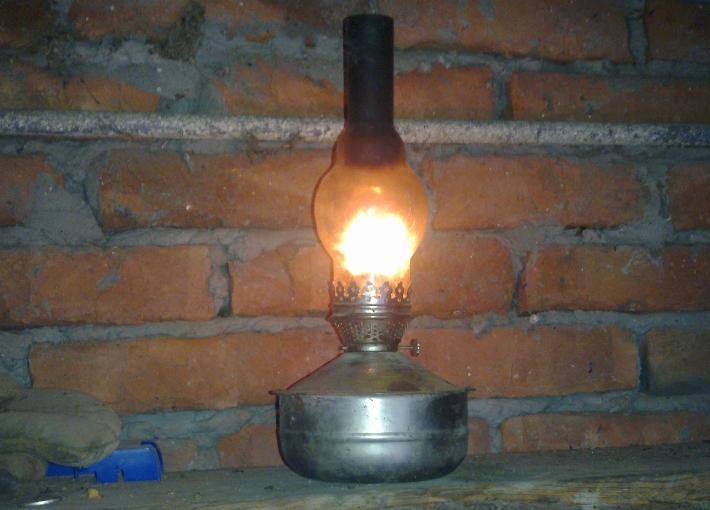
By the way! All sources of lightthat preceded electric were unsafe. Therefore, they often caused fires, sometimes even a significant part of the cities burned out.
Stages of lighting development
After the invention of electricity, many scientists realized that in order to increase the efficiency of lighting, it is necessary to increase the temperature of the heated element.The easiest way to do this is with electricity. The current allows some materials to be heated to such a temperature that they begin to glow, and all such options have common features:
- The brightness of the glow is directly proportional to the degree of heating.
- The radiation has a continuous spectrum.
- The maximum saturation of illumination depends only on the temperature of the heated body.
The first electric arc for lighting was proposed by a Russian scientist V. Petrov in 1802. In the same year, the British explorer G. Davy proposed his own version of the light source, which worked by supplying electricity to strips of platinum.
Work continued for decades, but all options were not widely used due to the complexity of the design and the high price of platinum.
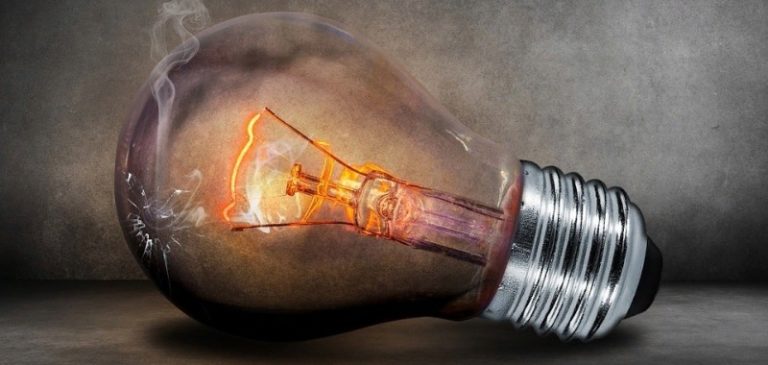
carbon thread
The first scientist to receive a patent for a lamp with an inexpensive carbon filament was an American D. Starr in 1844. He proposed a design that allowed the carbon element to be replaced, since it only worked for a couple of hours. For decades, many researchers have improved the design, while in in 1879 Thomas Edison patented the lampwhich is familiar to everyone. At the same time, many believe that in his research he applied the achievements of the Russian scientist Lodygin.
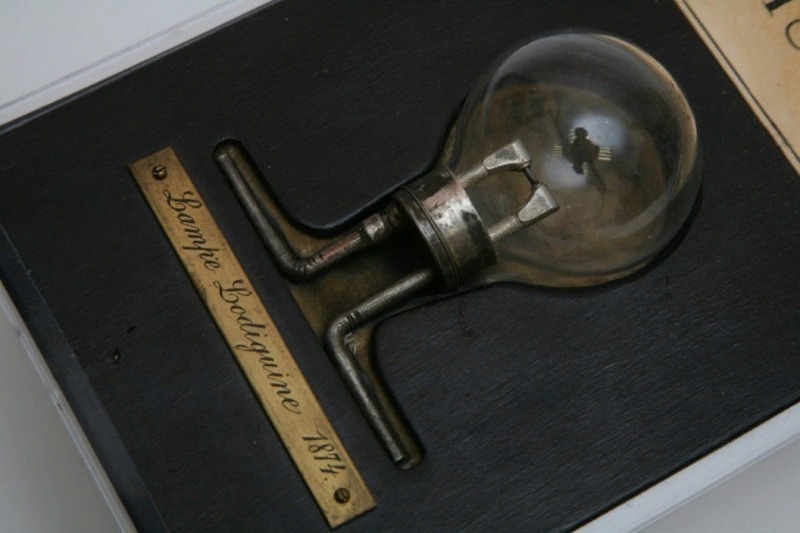
The first options worked for several hours. Then came models with a lifespan of 40 hours, which was fantastic at the time.Edison and a team of researchers continued to improve the light bulb, which made it possible to provide a resource of 1200 hours.
Even more successful was the French scientist Shaye, who at the end of the 19th century developed an even more durable and bright carbon filament lamp. The enterprise, opened in the United States, flourished for a dozen and a half. But Chaie did not have time to rebuild in time and a new generation of tungsten lamps forced the carbon variety out of the market.
By the way! A 113-year-old "eternal" carbon-filament light bulb is burning at the Livermore Fire Department in California, USA.
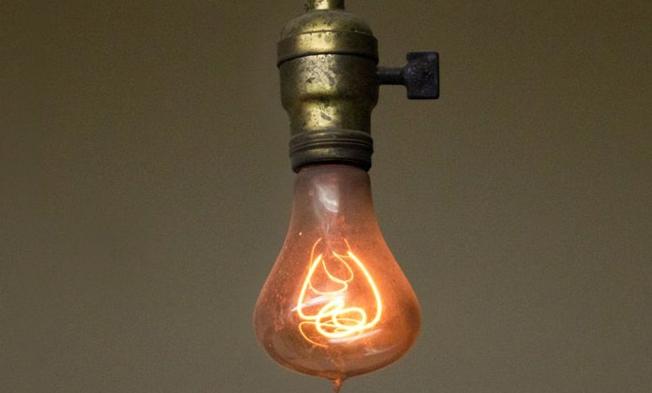
incandescent lamp
At the end of the 19th century, the Russian researcher Lodygin began to conduct experiments using refractory metals - molybdenum and tungsten. It was he who decided to twist the filament into a spiral, as this increased the resistance of the material, increased the brightness of the glow and extended the life. As a result, he sold a patent for a tungsten filament to Thomas Edison's General Electric company, which brought the technology to perfection.
American company employee Irving Langmuir to extend the life of the tungsten filament and improve the luminescence performance, he suggested filling the flask with an inert gas. This provided a great resource and made it possible to produce inexpensive and high-quality products, which have come down almost unchanged to our time.
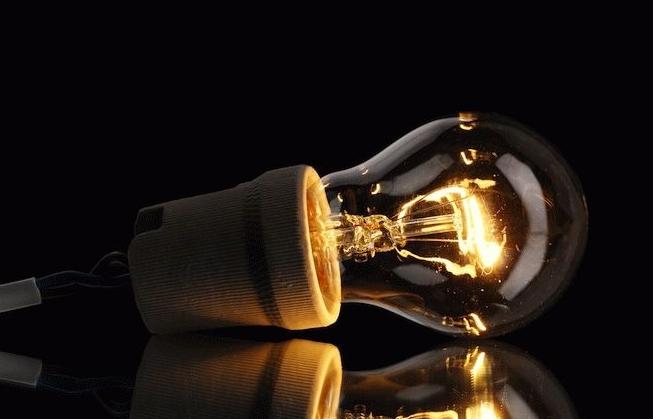
Halogen lamps - an improved version that uses pairs of noble metals. Thanks to them, the brightness of the glow increases, and the service life is also significantly extended.
Fluorescent lamps
The development of electric lighting led researchers to look for other options that would provide good brightness with increased efficiency. After all, in incandescent lamps the bulk of the energy is spent on heating the coil and is released in the form of heat.
The first to propose using the design in its modern form was an American scientist E. Germer in 1926. Later, the patent was acquired by the General Electric Company, which finalized some elements of the device and in 1938 launched this type of lamp into industrial production.
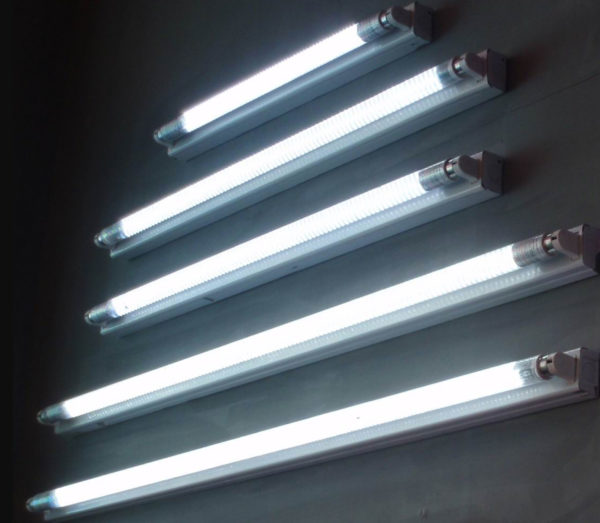
Principle of operation differs from the standard options, here the glow occurs due to an arc discharge formed between two electrodes located at different ends of the bulb. The inner space is filled with a mixture of inert gas and mercury vapor, which produces ultraviolet radiation. To convert it into light visible to the eye, the walls of the flask are coated with a phosphor from the inside. By changing the composition of the coating, you can achieve different characteristics of light.
Due to this principle of operation, the same intensity of illumination is provided as in an incandescent lamp, but the cost of electricity is reduced by 5 times. At the same time, the lighting is diffused, which provides greater visual comfort and better light distribution in the room. With proper installation and operation, the service life is several times longer than that of classic products.
But this option also has disadvantages. the most important is the presence of mercury vapor inside, which creates a danger in case of damage and requires a separate recycling lamps.They do not tolerate constant switching on and off, they are best used in places where lighting works in a constant mode.
Compact fluorescent lamps for a standard socket have all the advantages of standard tube models. They can be used as an alternative to incandescent lamps without any modification of the system.
LED sources
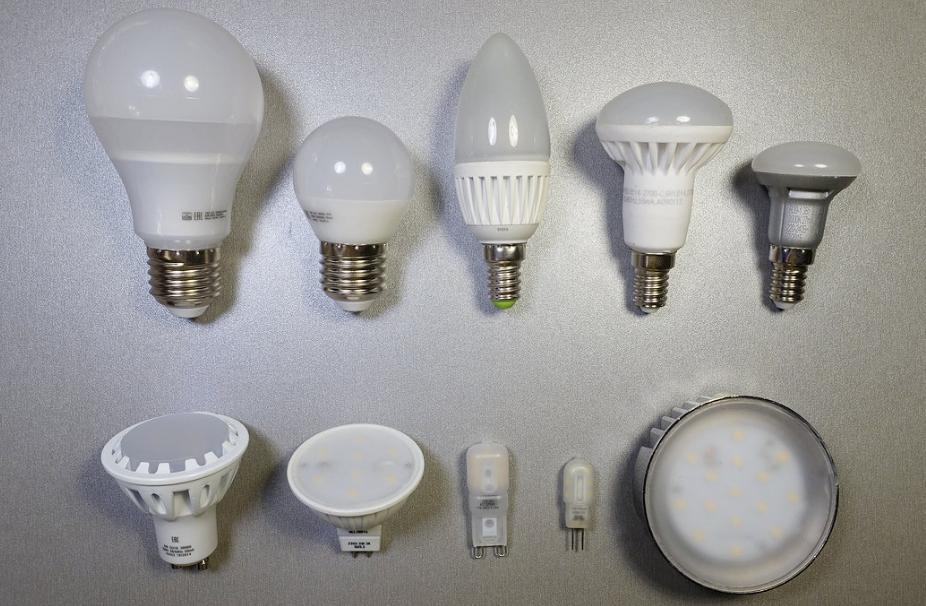
This option appeared relatively recently, but it overtakes other varieties in terms of pace and spreads more and more every year. The light source is LEDs white color, when super-bright options were developed, this direction became promising both for indoors and for street lighting.
The solution has many advantages that make it popular:
- The lowest power consumption. Compared to an incandescent lamp, the difference is almost 90%. By installing LED lighting, you can save electricity.
- The efficiency is much higher, since energy is not wasted on heating the coil or arc discharge.
- The service life under normal operating conditions can exceed 50,000 hours. This is much more than any other species.
- LEDs can produce light with different color temperatures, which allows you to choose the right solution for any purpose. At the same time, there is almost no flicker, which reduces eye strain.
- You can purchase both fixtures and light bulbs under the standard cartridge.
LEDs also have certain disadvantages. First of all, this is the exactingness to the quality of the heat sink. If it cannot cope with the removal of excess heat, the operation of the LEDs is disrupted, and the resource is significantly reduced.On sale there are many low-quality products with diodes that do not provide normal light quality.
The video details the history and evolution of lighting.
Electric lighting has gone through several stages in its development. And it should be noted that all bulb options except for the carbon filament variety, they are still used today. And despite the development of technology and the emergence of LED light sources, incandescent lamps still play a leading role, the volume of their annual production exceeds all others combined.