Types of city street lighting and their features
Illumination of city streets is necessary to improve visibility at night, increase the safety of drivers and pedestrians. High-quality lighting improves the appearance of the city and positively affects the comfort of residents. Drivers can much better control the traffic situation, and pedestrians can walk without fear of becoming a victim of criminals.
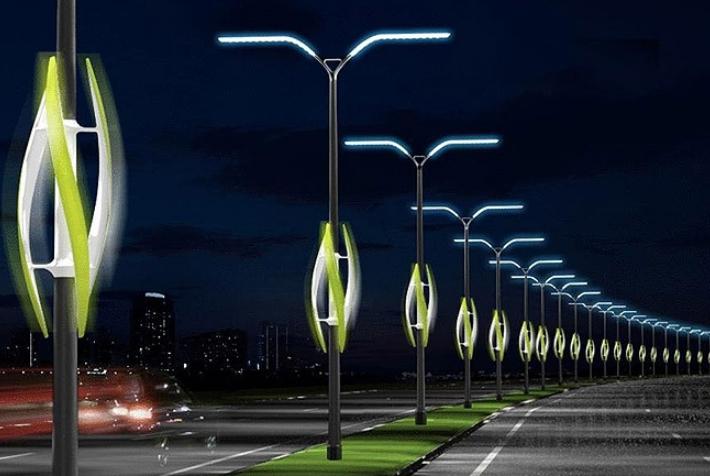
City street lighting concept
Urban lighting is not only about installing lights in poorly lit areas. This part of the work is usually included in the planning of districts and new streets, it is required to conduct wiring and choose options that best suit the environment.
Features and rules of the organization
To ensure high-quality lighting, it is necessary to take into account a number of important aspects.They may vary depending on external conditions and other features. But the basics are always the same:
- It is necessary to think over the prospects for the development of the microdistrict and the emergence of new buildings. Plan at least 10 years ahead so you don't have to redo your lighting plan later.
- The number and features of already operating lighting equipment are taken into account. There can be either an addition to existing systems, both with and without modernization, or a complete replacement if it is not possible to combine new and old equipment.
- Choose solutions that are suitable for performance and energy efficiency. They must comply with the current technical regulations. Technology is advancing and new options are emerging to further increase efficiency and reduce energy consumption.
- Be sure to take into account the features of the streets and objects located nearby. This affects both the method and location of installation, as well as the choice of power and the planning of the correct location.
- Take into account the additional possibilities that lighting can perform. For example, when sidewalks are located next to the carriageway, the lights can simultaneously illuminate the road and the pedestrian zone.
- Choose options that provide the highest level of security. Fault tolerance and working life are of great importance so that the lights do not have to be constantly serviced.
- A comfortable light environment should be created that fits into the overall urban concept. Very often, there is already a ready-made plan that details the requirements for street lighting, which greatly simplifies the design and selection of equipment.
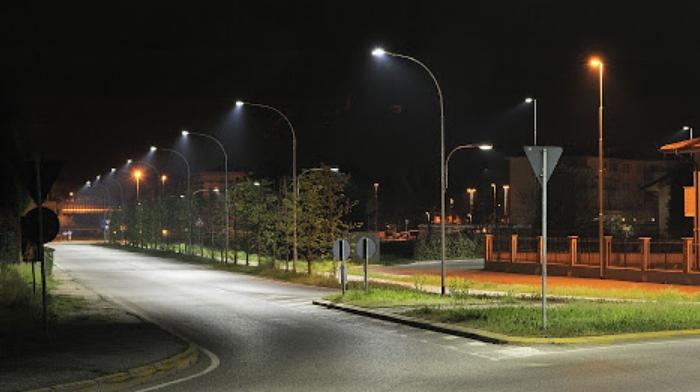
By the way! When organizing lighting, weather conditions must also be taken into account, as they can significantly impair visibility.
Requirements for utility street lighting
Utilitarian urban street lighting involves the use of lanterns for purely practical purposes. They should provide good visibility of the roadway, pedestrian or courtyard area and highlight especially dangerous areas that need to be paid attention to. But you can’t lose sight of the aesthetic side, so the requirements for utilitarian lighting are as follows:
- Graininess and reflectivity of the road surface are taken into account. This affects the choice of the power of the lamps and the determination of the amount necessary to achieve the desired effect.
- The layout of the lamps is selected depending on the width of the roadway. If the road is not wider than 12 meters, it is enough to put lights on one side. In cases where the width is about 18 meters, a staggered arrangement of equipment is used. If there are several lanes and the road is no more than 32 meters in diameter, then a rectangular chess pattern is used.
- With all options for street lighting, it is necessary to take into account the architectural and artistic appearance of the settlement. This requirement is specified in paragraph 10.16 of SNiP 2-4-79.
- To illuminate pedestrian crossings, a lamp is placed on each side. The moment is important here - the lamp should be on the right side of the pedestrian so that the driver can see him better.
- It is important to take into account the amount of precipitation in the region and their nature. Lanterns should provide normal visibility even under the most difficult weather conditions.
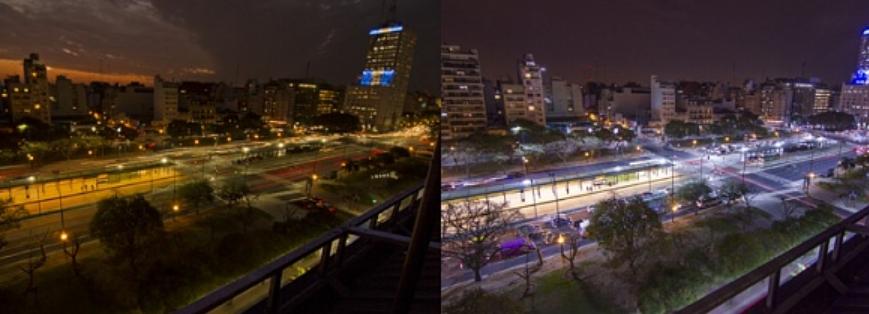
By the way! Light noise should not be overlooked either, as there are a lot of billboards in cities, decorative elements for façade lighting, etc.
Which lighting is better - warm or cold
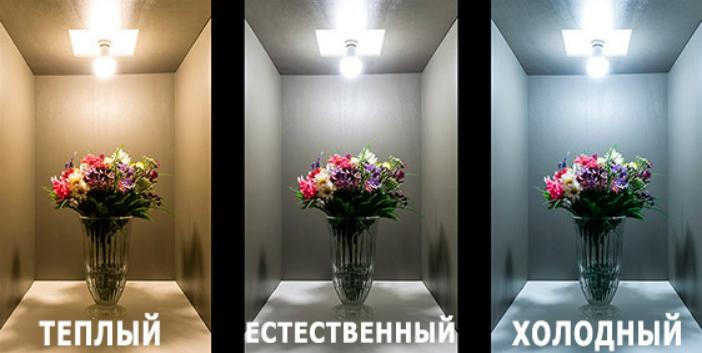
Color temperature is an important aspect, as urban street lighting is selected taking into account its impact on a person. You can achieve this effect:
- Cold light distorts the color reproduction, but it highlights objects much more clearly at night and provides visibility at a great distance. White light improves tone, helps drivers to stay focused and not distracted while driving. It is most suitable for highways and illumination of pedestrian crossings.
- Warm white light has a yellowish tint, which gives the streets a special coziness and tranquility. Such lanterns are suitable for creating a relaxing environment in pedestrian and park areas.
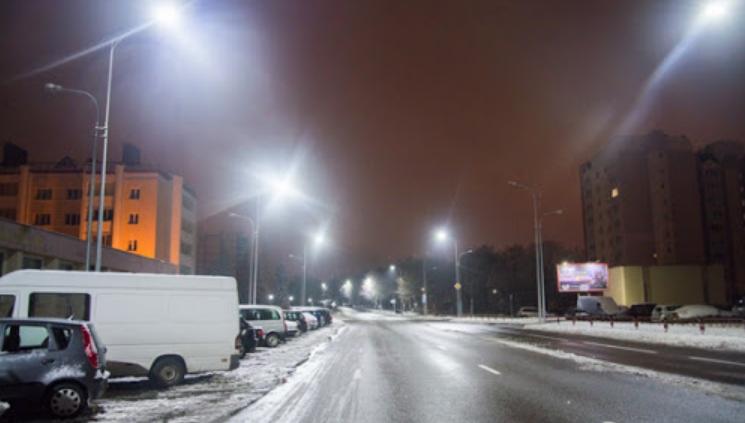
It is not worth placing both options next to each other, as it does not look very good.
Types of street lighting
Types of street lighting are different and differ in several factors. If you study them, it is easy to understand the features of the equipment and choose an option for any locality.
By appointment
Lanterns are used for different purposes. For each, their own options have been developed, and they should be applied:
- Models with a reflector concentrate light on a specific section of the road, helping to use the available luminous flux to the greatest advantage.Due to the location of the lamp at a considerable height, it illuminates a large section of the road and the lamps can be placed at a greater distance from each other. This option is used on highways, city roads and other places with heavy traffic.
- For less busy roads, options are used that combine diffused and reflective lighting. Typically, models are used that have a relief ceiling made of transparent material that scatter light over a sufficiently long distance.
- If it is necessary to illuminate sidewalks, pedestrian and bicycle paths, street areas or public transport stops, diffused lighting is used. Most often, ceiling lamps are cylindrical or spherical in shape.
- Backlighting can be used to illuminate signs, signs and other information objects. Most often, these are spotlights and lamps, the light of which is directed to a specific object.
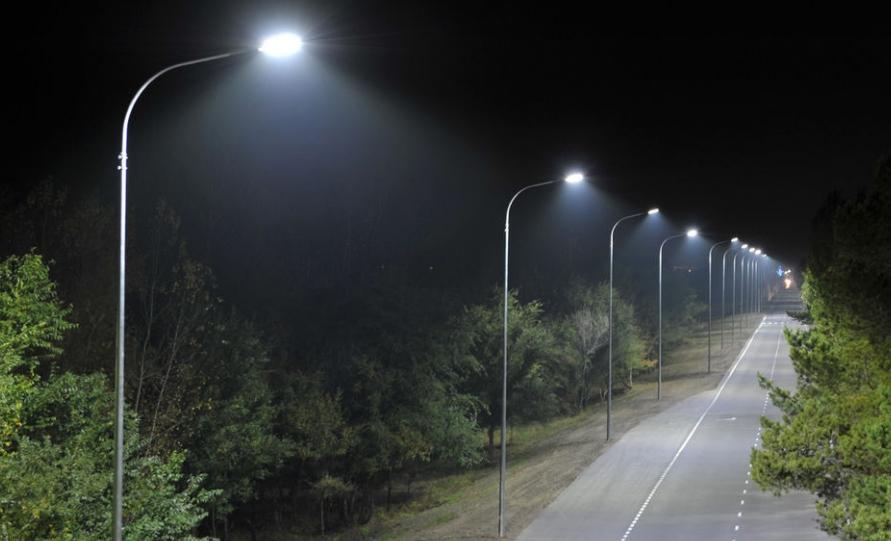
To illuminate other objects, lanterns are selected according to the situation, depending on the requirements of the project.
By type of light source
Types of street lamps are different, as they use several types of lamps. Each of the options has its own characteristics that you need to know. The most numerous and common group is gas-discharge lamps, they come in three varieties:
- Mercury lamps operate by means of an electrical discharge in mercury vapor. To work, you need a launcher; when starting, it takes a certain time to warm up and stabilize. During operation, the flask is very hot, the device requires high voltage. If it goes down, the lamp will not start.The glow occurs due to the phosphor, which covers the inner walls of the flask.
- Metal halide lamps are distinguished by the presence of metal halides in mercury vapor. This ensures high brightness of the lamps and they can illuminate large areas, therefore they are used mainly on open sections of the road. The light temperature is close to natural, this option is used more and more often instead of traditional mercury models.
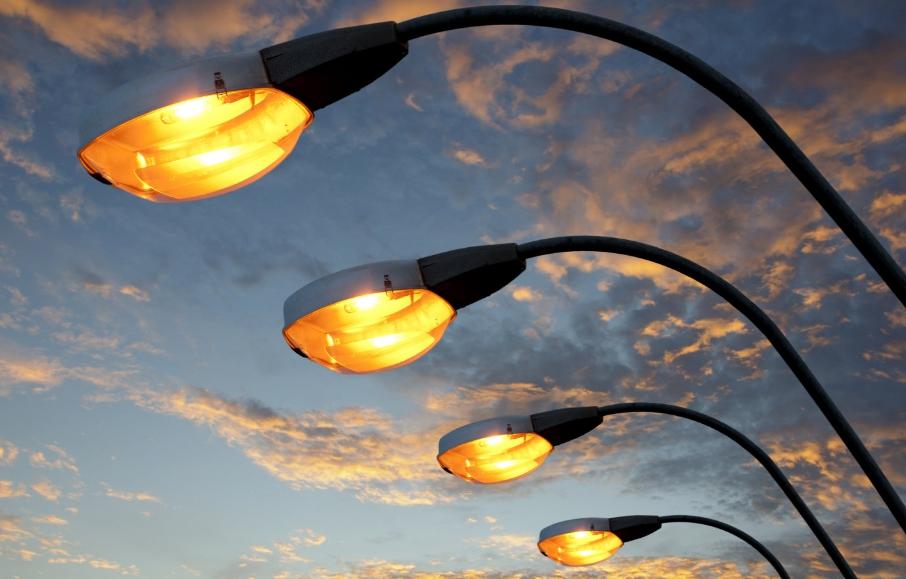
- Sodium lamps. They work due to the fact that when energy is supplied in sodium vapor, a gas discharge is formed. The equipment provides a warm yellowish light, suitable for the decoration of city streets. With high efficiency, this type requires the creation of optimal working conditions and does not tolerate temperature changes. Therefore, sodium lamps are placed in flasks made of borosilicate glass.
The video will tell about the varieties of street lamps
In addition to gas discharge, many other options are used:
- Incandescent lamps. A traditional solution that is also used for street lighting. Its main advantage is low price, but at the same time the service life is the shortest, and electricity consumption is high.
- Halogen lamps - an improved type of incandescent lamps, in which halogen vapors are pumped inside to improve performance. This improves performance - the light is brighter, and the service life is about 2 times longer.
- Xenon options work due to an electric arc that occurs when electricity is supplied to tungsten electrodes. Various compositions are pumped into the flask - from vapors of mercury and sodium salts to inert gases or metal vapors.Characteristics vary depending on the filler. Models are distinguished by good light, which provides visibility even in difficult weather conditions.
- Fluorescent models are distinguished by high efficiency and low power consumption. Due to the appearance of electronic control units, this type began to work much more stably, while the consumption of electricity decreased even more, and the service life increased. Worst of all, they tolerate frequent switching on and off, therefore they are suitable for outdoor lighting, where the lights are launched once a day.
- Induction lamps are gas-discharge lamps. But at the same time, there are no electrodes in the design, which prolongs the service life of products, and they retain their original parameters for the entire service life. Light comes from plasma, which is formed when a high-frequency field is applied to a gas. An inductor is attached to the lamp to ensure normal operation.
- LED equipment. Lamps of this type consume a minimum of electricity, while the light is of high quality and even. Light temperature can be any, it all depends on the diodes used. The lamps are compact and fit into small shades, while the quality of lighting is excellent, the only problem is the high price of equipment.
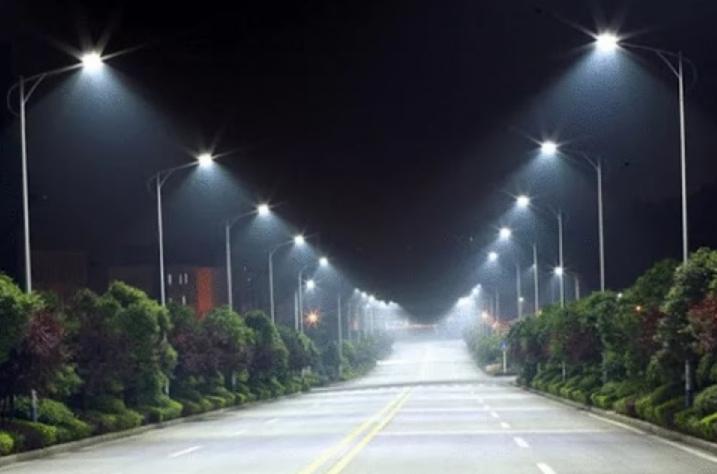
Usually one type of lamp is used on the street so that the lighting is uniform.
By type of supports
Lanterns can be mounted on different structures, so there are several main types:
- Concrete poles are the most common solution used most often. The elements are made of concrete reinforced with metal.A tubular rack or several are usually placed on top for attaching ceiling lamps.
- Metal structures are also well suited for mounting lamps, as they have high strength and low weight. There are different types - for roadways they use more stringent options, for pedestrian areas they use supports with forged elements and other decor, they can be either steel or cast iron.
- Wooden poles are almost never used, since the material is not very reliable and serves less than analogues. But in some old areas, as well as in villages, they have survived to this day.
- Products made of composite materials have appeared recently, but they are being installed more and more often. Such poles are not afraid of moisture and frost, are light in weight and serve for decades.
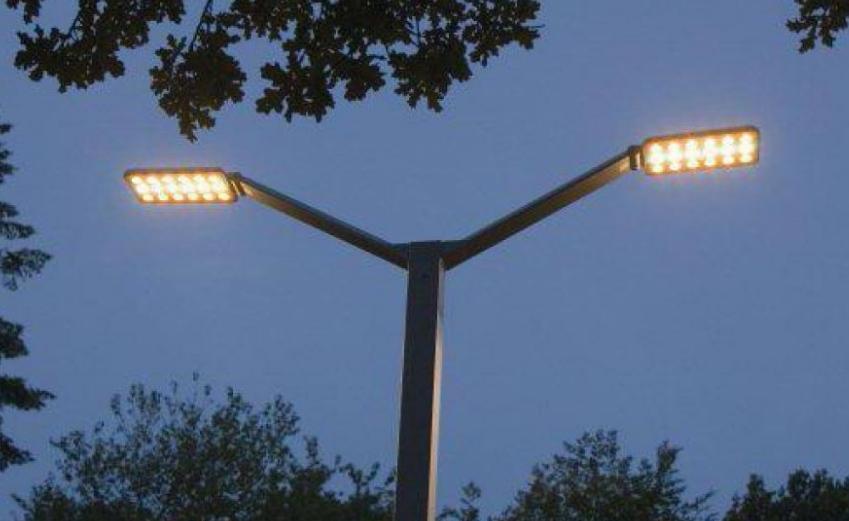
A separate type of lighting is lanterns on cables stretched between two supports, or on metal crossbars, which are fixed between poles on opposite sides of the road. In some cases, the equipment is mounted on the walls.
By way of power supply management
You can control street lighting in different ways, you can distinguish the following types:
- Manual control. In this case, switching on and off is done manually by the operator on a special console.
- Automatic control units. With their help, you can program the time to turn on and off the equipment. You can also adjust the brightness of the lighting to dim it during certain periods and save electricity.
- Photorelays allow you to turn on the lights at dusk. The system is completely autonomous, it does not need to be adjusted to the seasons, as it reacts to the actual situation.
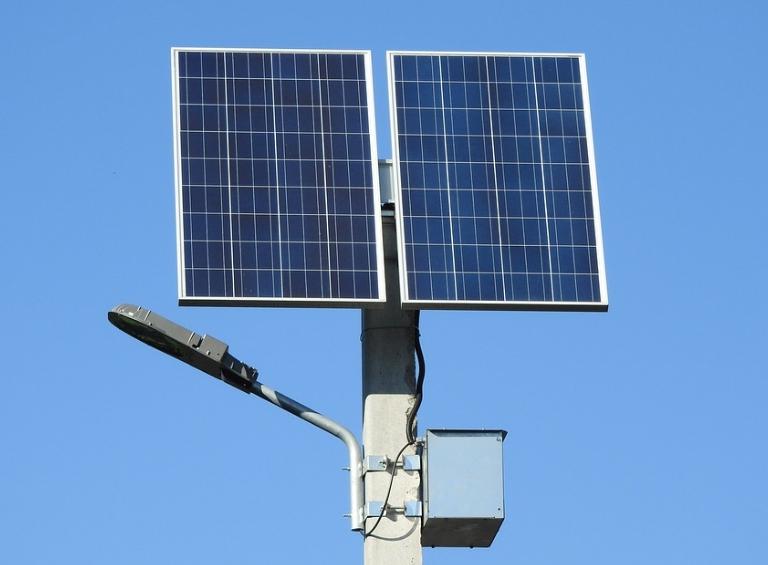
Now there are fully autonomous solar-powered options. They do not even need to be wired, the system accumulates energy in the battery during the day, and at dusk the photocell turns on the lighting, which lasts until the next morning.
Recommended for viewing:
Features of lighting city parks and other recreation areas
In this case, the lighting requirements differ from the standard ones. The main attention is paid to the aesthetic side. Light should not only provide good visibility, but also highlight individual elements and emphasize the beauty of nature. Here are different solutions:
- Pavement lights can be in the form of columns of small height or be built-in to illuminate the surface. This is a beautiful solution that highlights the walkways.
- LED strips and hanging garlands can be mounted both on supports and on trees or any other elements. Not only do they provide good lighting, but they also make the park or recreation area spruce up.
- Suspended lanterns can be mounted on any poles, stretched cables or other structures. Well suited for installation on the walls of buildings.
- Floodlights located at a height of 3 m and illuminating the site or a separate area in the park. Also, such equipment can focus on certain places.
- Lanterns with plafonds of diffused light. Most often these are decorative elements with round shades and yellow light, creating a comfortable, calm lighting.
- Various equipment that highlights individual objects.
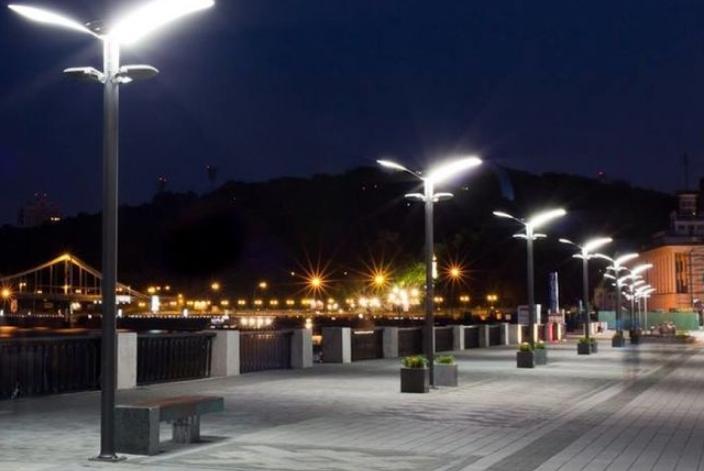
Street lighting has specific features, but if you consider them in detail, then it is not difficult to understand this type of equipment. It is worth choosing lanterns for specific conditions and taking into account the requirements prescribed in the SNiP and project documentation of the settlement.