How to make a lava lamp at home
A DIY lava lamp is a lot easier than most people think. Knowing the principles by which the device works, and using suitable materials, you can achieve the same result as in finished products. Moreover, you can make a lamp in different ways, the main thing is to study the features of each type and choose the one that suits you best.
Invention history
The authorship belongs to the British engineer Edward Craven Walker, who noticed an interesting effect observed when mixing oil and paraffin. When the mixture was heated, the paraffin bizarrely rose up. The invention was called Astro Lamp and patented in 1963.
In 1965, businessmen from the United States, having seen an unusual lamp at an industrial exhibition in Germany, became interested in it and acquired a patent. Products began to be manufactured in Chicago and called the Lava Lamp. It was very popular and today is associated with the period of the 60s.
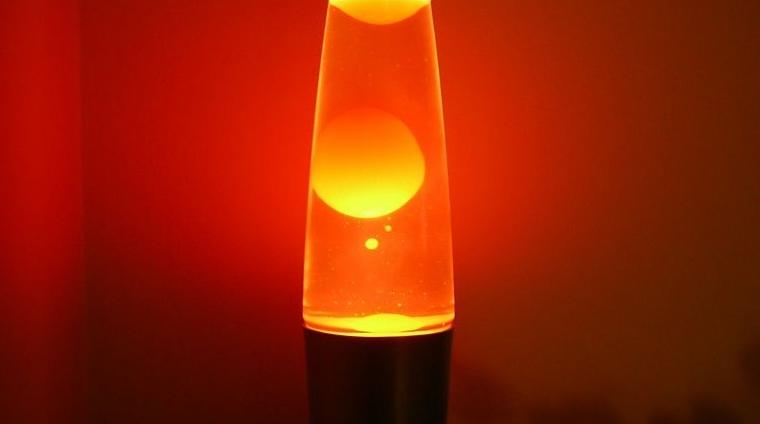
How to make a lava lamp yourself: step by step instructions
There are three main options that you can do at home. Each has its own characteristics, so you need to proceed from how the lamp will be used.
Lava lamp with oil balls
Making a lava lamp of this type is not difficult, but work should be carried out in compliance with safety regulations. The stand and the container itself should not overheat, so a number of recommendations should be followed in the manufacture:
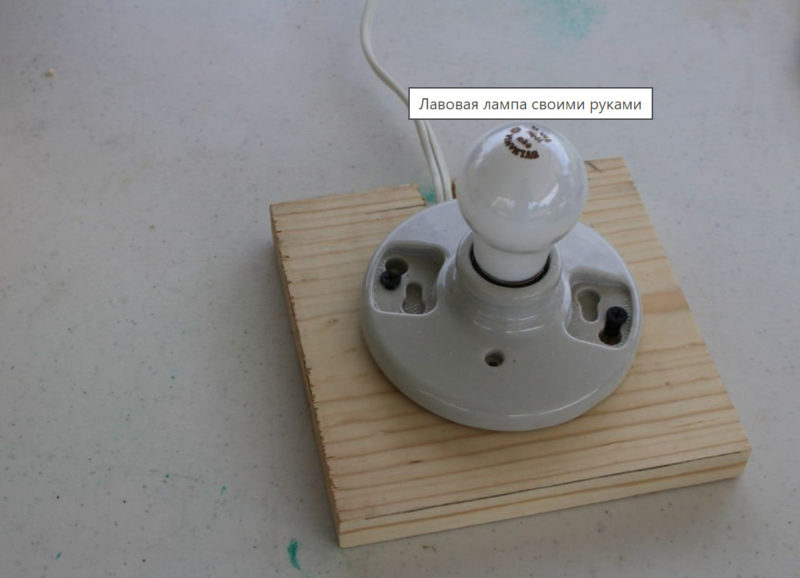
- First of all, the base is made, its size is selected for the container that will be used in the lamp. You can make a structure with your own hands, using wood, plastic, or metal, or choose a ready-made solution if one is at hand. Another option is to adapt a ceramic pot, it is good because it is not afraid of overheating.
![How to make a lava lamp at home]() The basis for the future lamp.
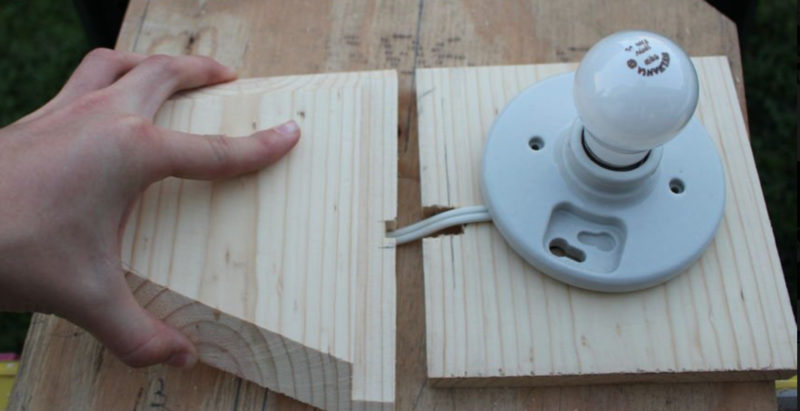
The basis for the future lamp. - Inside it is necessary to fix the cartridge under the incandescent lamp with a power of 25 watts. This option is needed, since LED and fluorescent light sources do not heat up. The easiest way is to use a drywall plate or hangers to attach the backlight.
- It is thought out how the wire will be connected, you can make a hole anywhere in the base. The system is then assembled and tested. To do this, the lamp is turned on and left for half an hour to an hour to make sure that the base does not overheat.
![How to make a lava lamp at home]()
- A piece of rubber is glued to the top of the stand to stabilize the container, which must be cylindrical or conical.
- A mixture of distilled water and alcohol is poured inside the vessel. Castor oil is dyed in a separate container (food coloring of any shade is used). Water can also be colored.
- The oil is poured into the vessel, if it does not sink to the bottom, you need to add alcohol. The lamp is turned on and its operation is checked. You can change the speed and nature of the movement of the oil by changing the proportion of distilled water and alcohol.
![How to make a lava lamp at home]() As it heats up, the oil begins to move up.
As it heats up, the oil begins to move up. - When the mixture has optimal characteristics, it is necessary to close the container. It is best to use an appropriately sized glass or plastic lid. It sits on a sealant to prevent water evaporation. In addition, if you subsequently need to drain the liquid, the sealant is not difficult to cut with a regular knife.
- The container is also glued to the base using a sealant. A small amount of the composition is simply applied and the bottom is pressed tightly. You can not move it until the silicone hardens.
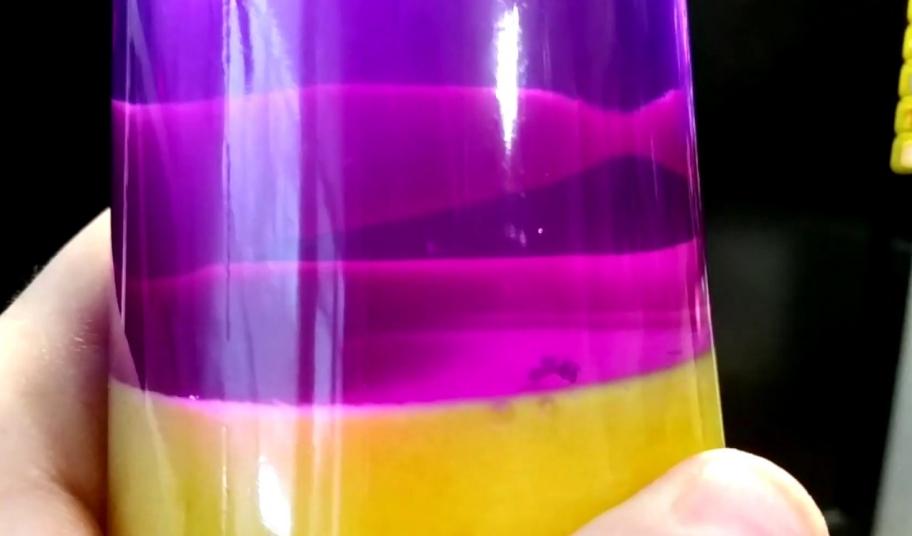
You can not fill the container to the very top. When heated, the liquid expands in volume, so you need to leave a small margin.
Video tutorial: 3 methods for making lava lamps.
Lava lamp with paraffin
This solution is different in that the effect will be achieved by melted wax or paraffin. This solution creates bizarre shapes that are different every time. The work is done like this:
- The base is selected or manufactured according to the same recommendations as described above. It is necessary to make an element that provides a strong fixation of the cartridge with a light bulb in the desired position and at the same time will not overheat much during prolonged operation.
- The container must be conical or cylindrical, any suitable size can be adapted. Before use, it must be thoroughly washed and dried.
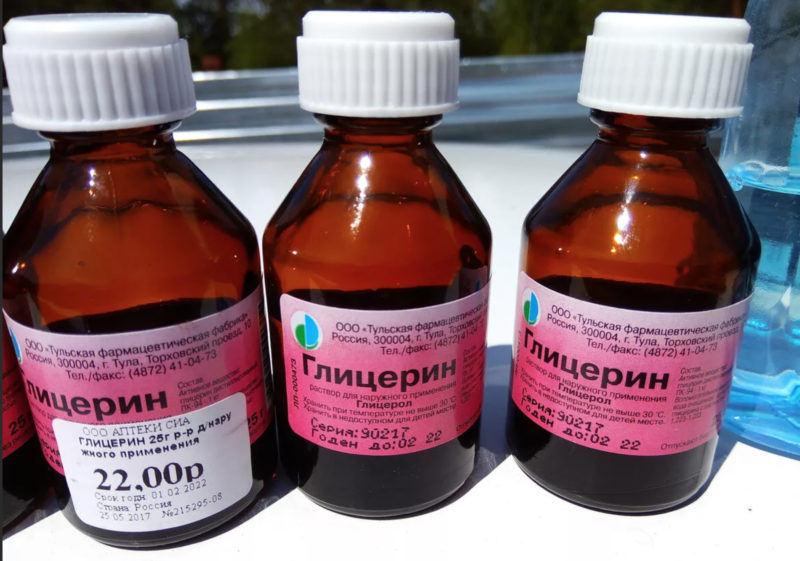
- Distilled water at room temperature is mixed with glycerin, it can be bought at a pharmacy.The composition is poured into the prepared container so that it fills approximately 3/5 of the volume. If desired, water can be tinted with any dye - from special formulations to conventional ink.
![How to make a lava lamp at home]() The cost of glycerin is quite low.
The cost of glycerin is quite low. - 1-2 teaspoons of salt are added to the mixture, depending on the volume. It is necessary to mix the composition until the crystals are completely dissolved. After that, beads are added (they will give a decorative effect), but you can not use them.
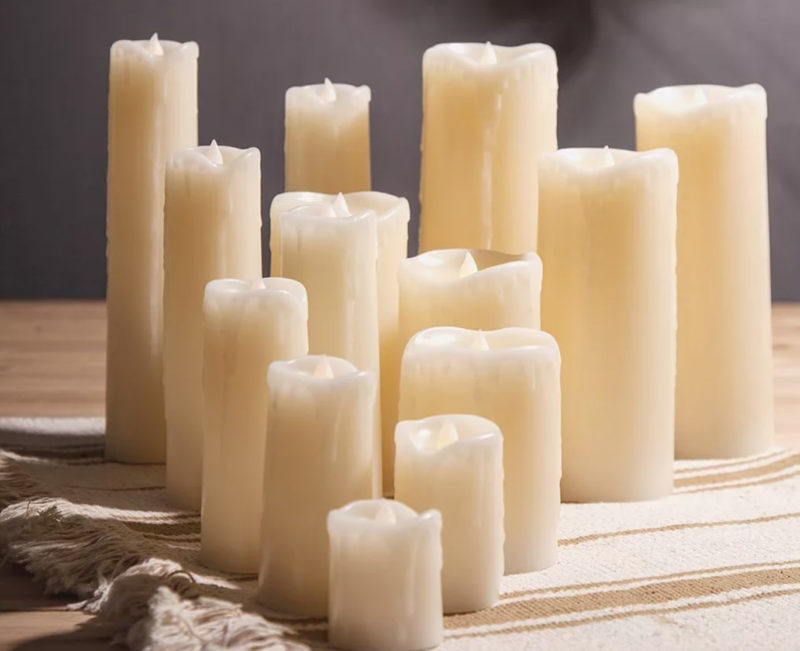
- Paraffin is melted to a liquid state in a water bath. At home, the easiest way is to insert one pan into another and gradually heat up. After melting, the dye of the desired color is added. The intensity of staining depends on the amount of pigment, it is better to add it gradually.
![How to make a lava lamp at home]() Paraffin - the basis for the production of candles.
Paraffin - the basis for the production of candles. - The top must be sealed. For this, a sealant or any other composition is used. After drying, the lid is checked - you just need to turn the container over. If everything is fine, it is glued to the base.
You can change the degree of heating of the liquid by moving the light bulb closer or further away. But at the same time, it should not touch the bottom.
Recommended for viewing: Lamp from the available means: oil, salt, water.
Chemical lava lamp
This option differs from the previous ones in that the bubbles rise in it not due to heating, but due to a chemical reaction. Such a lamp does not work very long, but it can be done as an experiment with children. The work is done like this:
- The easiest way is to use a regular half-liter jar. It does not need to be cooked, the main thing is to wash and dry it well. A tablespoon or a little more baking soda is poured onto the bottom and evenly distributed along the bottom.
- Vegetable oil is poured into the jar, this is done carefully so as not to blur the soda at the bottom and not move it to one side. It should fill the container almost to the top, as this is the main component.
- Vinegar is poured into the cork from the bottle and stained with any food coloring. The brighter the color, the better the effect, so there is no need to spare the pigment.
- It is best to put the jar on a small LED lamp or illuminate the bottom with a flashlight. So the view will be much better.
- Vinegar is carefully poured into the container. You can enjoy the sight of colored bubbles that rise up and then gently fall down.
The process can take from a few minutes to half an hour. It is based on the fact that when baking soda reacts with vinegar, carbon dioxide is released, which raises the bubbles up. When the vinegar reaches the surface, the carbon dioxide evaporates and it settles back to the bottom.
Master class for children: Mini lava lamp.
Features of use
Lava lamps are different from conventional light sources. Therefore, when using them, you need to remember a few important points:
- The surface of the base may become very hot during operation. Therefore, it is better to place the lamp where small children cannot get it.
- It takes time for the lamp to start working. Until the paraffin or oil warms up, there will be no effect.
- It is better not to keep the equipment turned on for more than a few hours. And do not leave it working if no one is at home.
You can make an original lava lamp with your own hands, if you collect everything you need and follow the instructions. The main thing is to follow the recommendations and use high-quality components.Particular attention is paid to the tightness of the clogging, otherwise you will often have to add water.
