Types of LEDs that are used in 220 volt lamps
Every year, LED devices are becoming more popular. Diode light sources do not heat up, consume a minimum of electricity and last more than 3-5 years, are not as fragile as incandescent lamps. Consider which LEDs for a 220 V lamp can be used, how they differ and how they work.
Types of LEDs
Diodes are distinguished by form factor, brightness of the glow, type of light beam, power, dimensions. But it is inconvenient to classify them according to such criteria, since there can be many modifications. Therefore, LEDs are divided into classes:
- Indicator;
- Lighting.
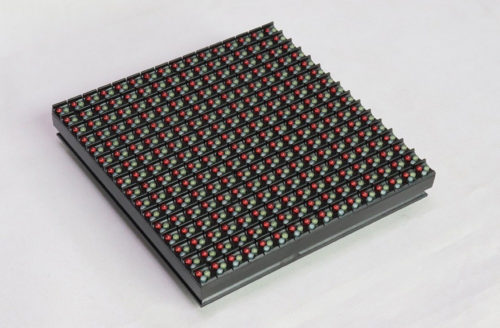
indicator are used for color highlighting, accenting and indication. The LEDs of this group are characterized by a moderate brightness of the glow, low power - no more than 0.2 W. They are used to illuminate dashboards, displays, electrical appliances.
Lighting LED sources are used for the production of LED bulbs powered by 220 V.They are suitable for ceiling and wall lights, car headlights, table lamps and lanterns. Their distinctive feature is impressive power (up to tens of watts). A powerful luminous flux allows the use of such products when illuminating interior spaces and territories.
It is lighting LEDs that are placed in 220 V light bulbs. They are produced in two color temperatures (mainly) - cold and warm white. They are supplemented with a shock-resistant case for surface mounting, and also divided into subspecies.
Types of lighting LEDs
The main types include:
- high-brightness low-current SMD diodes (modules or clusters can be supplemented with a lens to increase the scattering angle) - the characteristics of the luminous flux depend on the number of LEDs used in the module;
- COB-clusters (linear, round or square design, characterized by a large number of crystals) - are widely used for the production of street lighting devices: lamps, spotlights;
- Filament (a rod made of a large number of LED crystals, can be up to 20 cm long) - used to make light bulbs that mimic incandescent lamps, suitable for industrial premises;
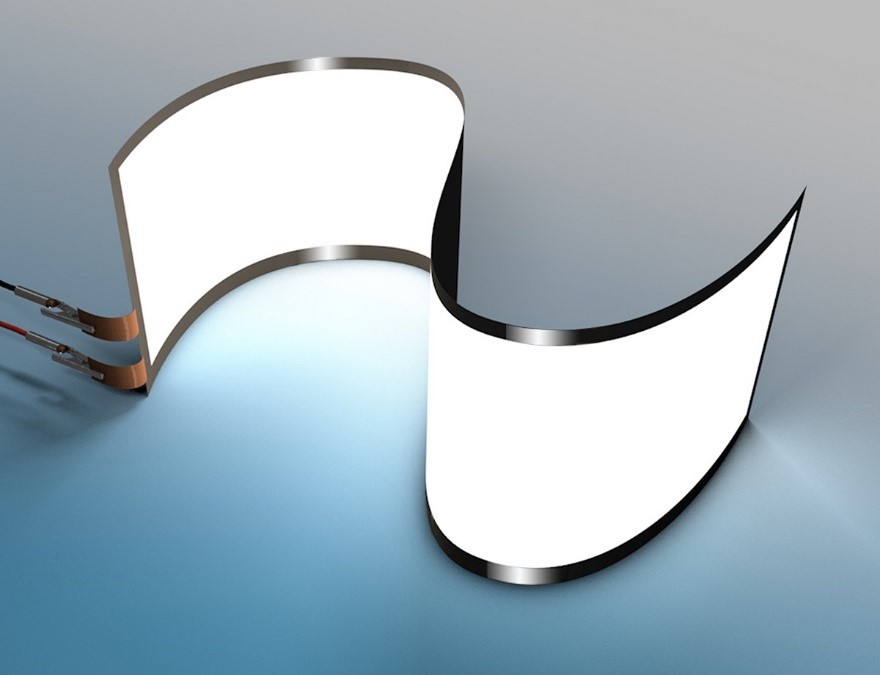
- OLED-light-emitting diodes (have a display type, an organic thin-film structure) are innovative light sources used in designer chandeliers and decorative lamps.
Despite the technological differences between the types of LEDs, their operation is based on the general principle of the radiating crystal - the conversion of electrical energy into a luminous flux. The crystals themselves are made from semiconductors with specified conductivity parameters.
Characteristics and features of assembly methods
When assembling lighting components, several technologies can be used, each of which has its own characteristics. Let's consider them.
Type of shell COB
The most perfect type of LED assembly. The element is a plate (board) with a large number of diodes, each of which is placed on a base using surface mount technology (SMD). On one board use from 20 crystals. To ensure a glow in the white spectrum, they are coated with a phosphor.
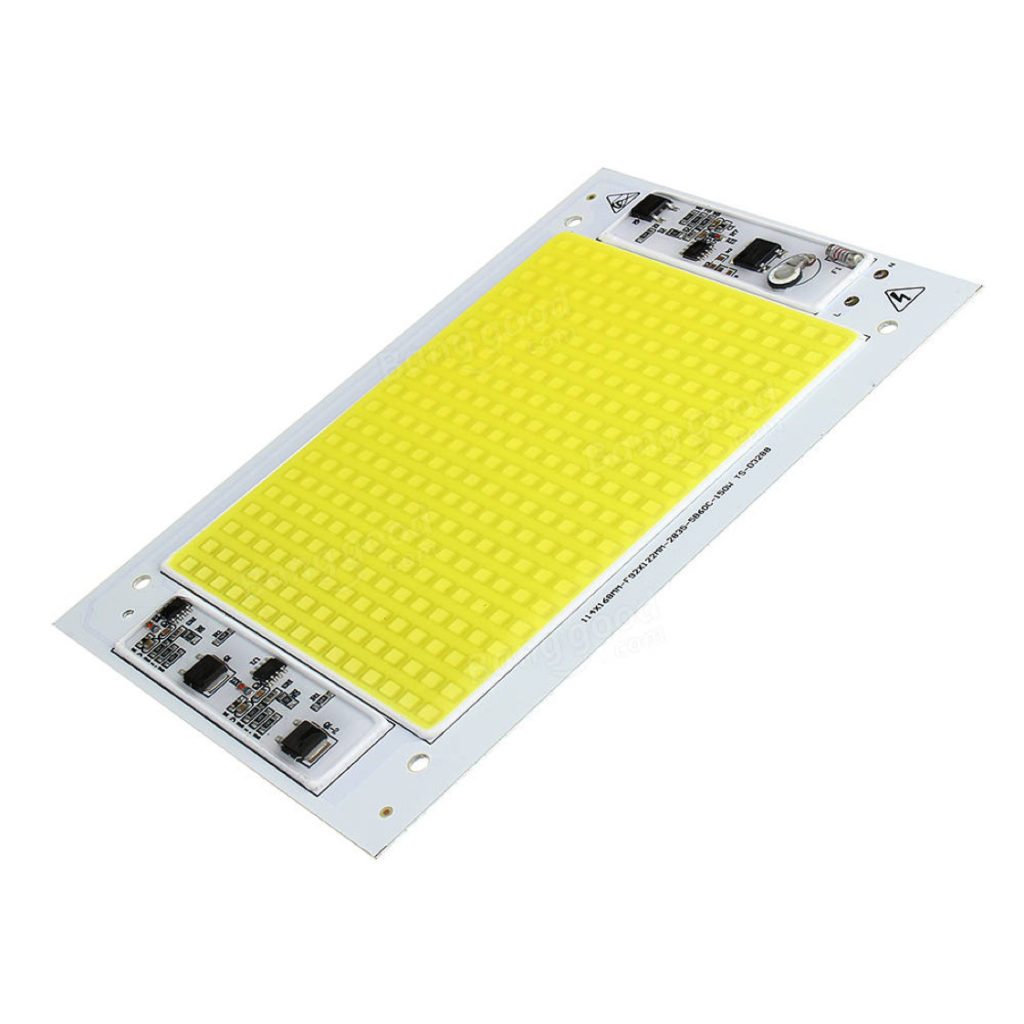
Such matrices are not used for illumination or decoration. They are suitable only for lighting rooms, open spaces. The reason is the scattering angle of the light beam is 180 degrees. The use of lighting elements of the COB type is justified in street lamps, chandeliers or table lamps. The intensity of the glow depends on the number of crystals.
Peculiarities:
- no ceramic substrate;
- case, lens is not used;
- increased power indicators;
- minimum glow area;
- high density of diodes;
- uniform glow.
When choosing lamps of this type, you need to pay attention to the requirements for lighting the room. Elements with a small number of diodes are not suitable for large spaces.
Type of shell smd
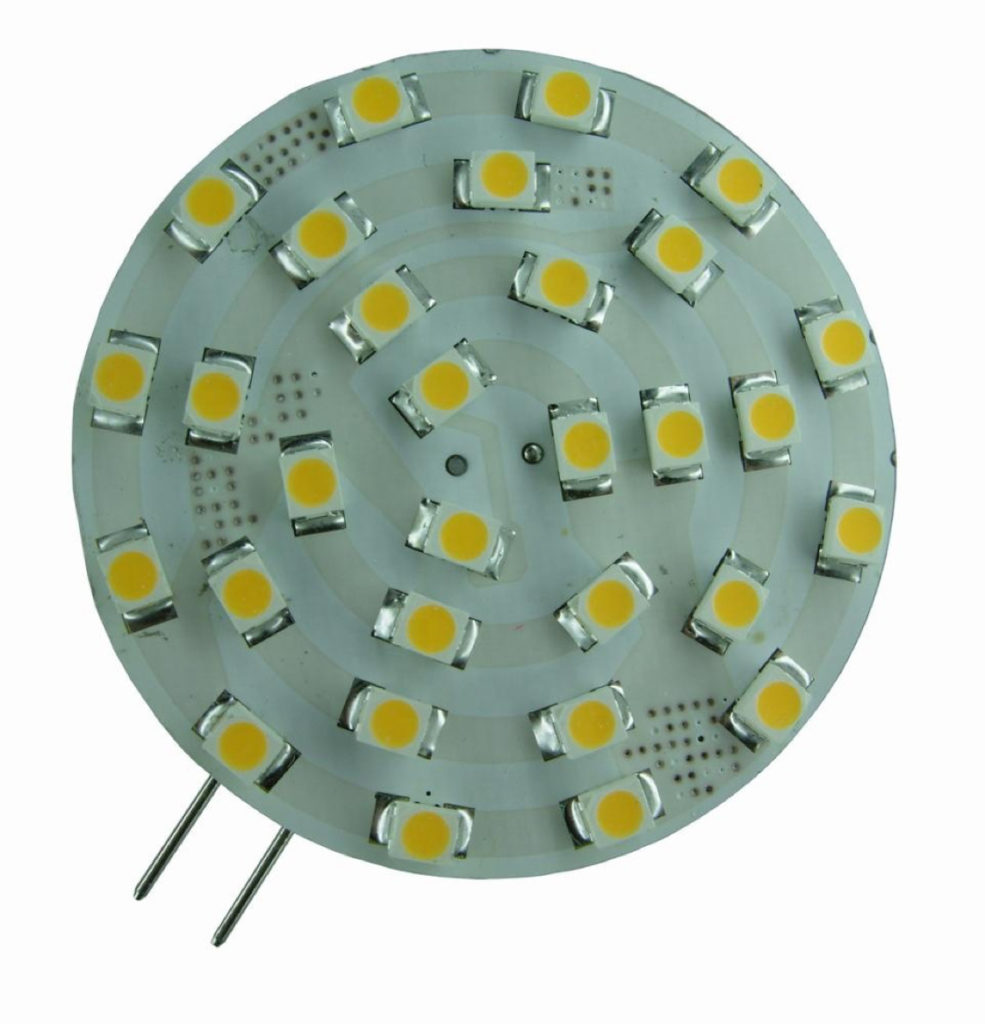
The most common light source assembly technology. Finished lamps have a power in the range from 0.01 to 0.2 watts. The diode is attached to the base, can be supplemented with a diverging lens. 1-3 LEDs are used on one substrate. To make a light source with a powerful luminous flux, such SMD elements are combined.
Peculiarities:
- there is a ceramic base;
- give directional light emission without a lens - 1000-1300 (with lens up to 1700);
- each diode is coated with a phosphor separately;
- increased element thickness;
- a heat sink is used.
Among the disadvantages - for uniform illumination of large areas, an increased number of lamps will be required. This type of source is suitable for portable lamps, sconces, night lamps, table lamps. These cases are not repairable. If one crystal fails, you will have to change the entire matrix.
Type of shell DIP
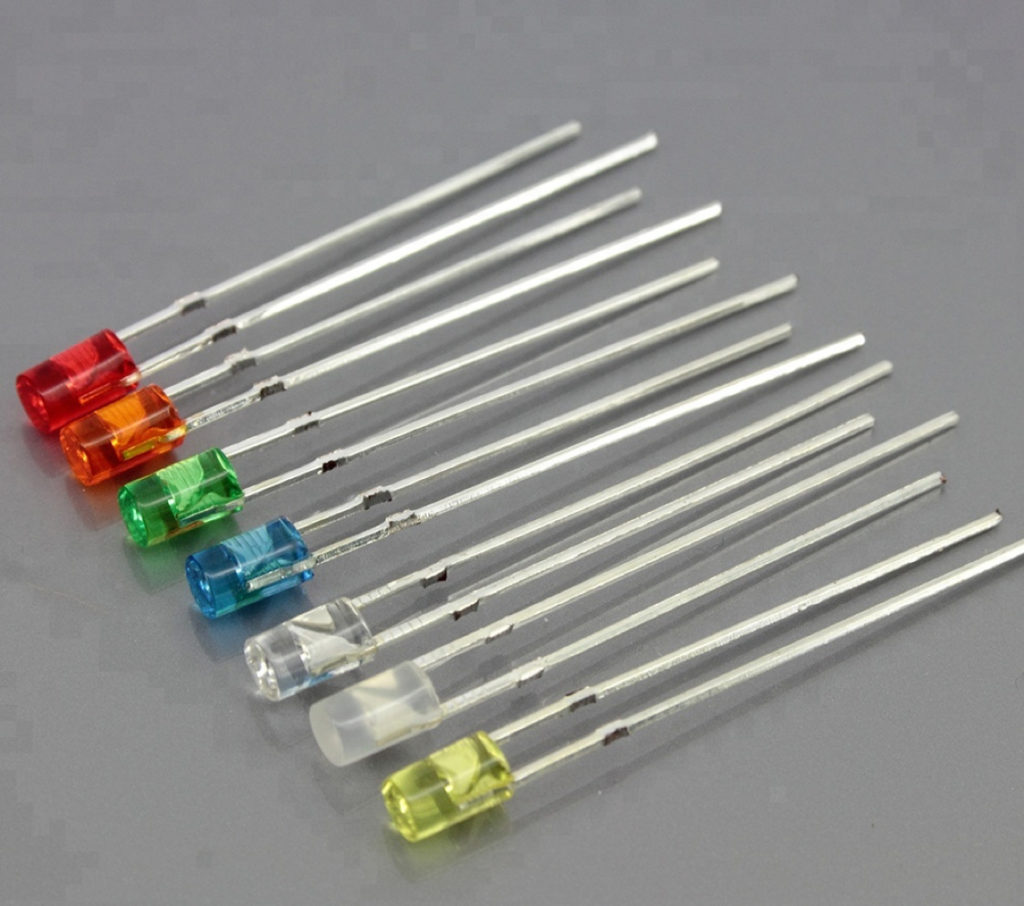
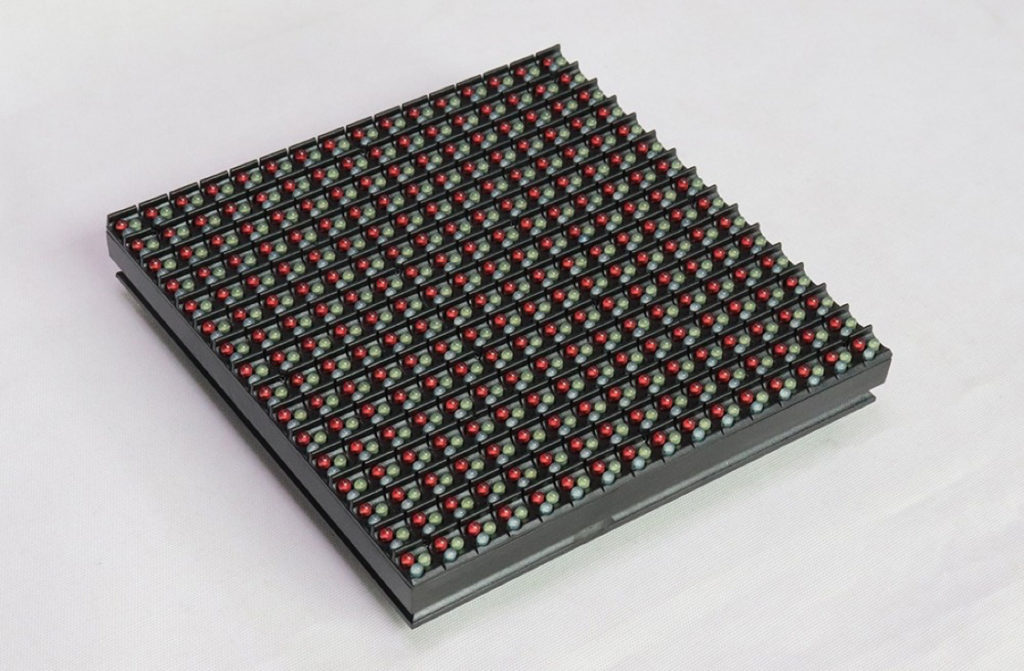
The oldest and rarely used assembly technology today. The design consists of a crystal, which is placed on an output housing with two contacts and covered with a dissipating bulb (cylindrical or rectangular). Diodes with a diameter of 0.3, 0.5, 0.8 and 1 cm are used.
Peculiarities:
- weak heating;
- various colors of the flask;
- low brightness of the glow;
- low power.
Used only as a backlight.
Type of shell "Piranha"
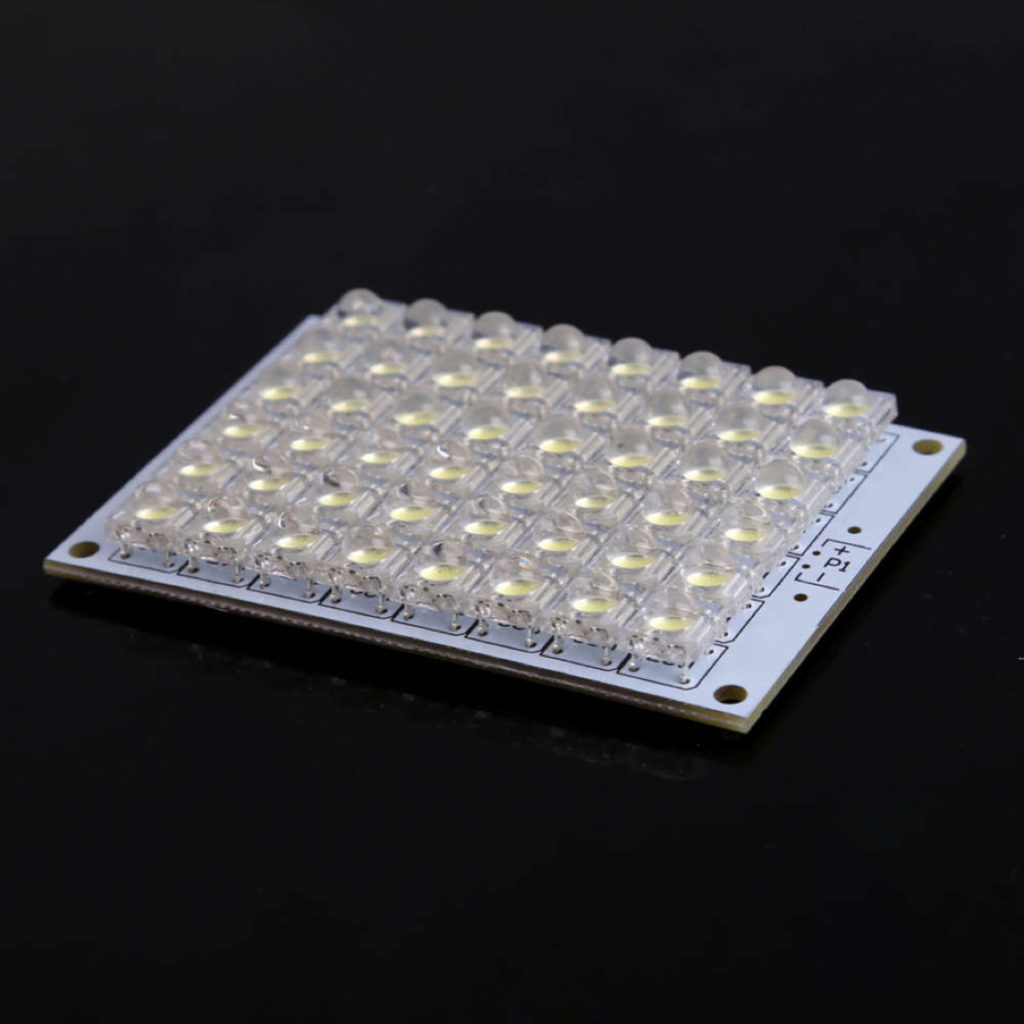
An analogue of the previous technology, only with 4 contacts. The design allows you to securely fix the emitting crystal on the board, which ensures a long service life. They produce products with and without a lens in different colors: green, blue, red and 3 white (glow temperature is different).
Peculiarities:
- sufficient intensity of the glow;
- weak heating;
- good dispersion of the beam of light.
We advise you to watch the video: Piranha LEDs. Application features.
Conclusion
Now it is easy to determine what types of diodes are used in LED lamps. These are SMD and COB light sources. The first option is more affordable, sold more often, the second is more expensive, less common on the shelves. When choosing light bulbs, you should pay attention to the manufacturer.The market is filled with inexpensive Chinese options, which often lack a driver, and use a low-quality element base. The service life of such LED lamps does not exceed 8 months-1.5 years, while high-quality products are used for more than 2-3 years.