Varieties of cartridges for lighting lamps
If you decide to make repairs or upgrade the lighting in the house, you need to figure out what types of bulb holders there are. It is also useful to learn about the design of this element and performance characteristics.
What is a cartridge, what functions does it perform
The power grid system consists of many elements. These are lamps, connection cables and special installations that are necessary for controlling or connecting different parts. Cartridges are such installations, they perform two important functions:
- Connect the light bulb base to the electrical cable.
- Fix the light bulb in the lighting device.
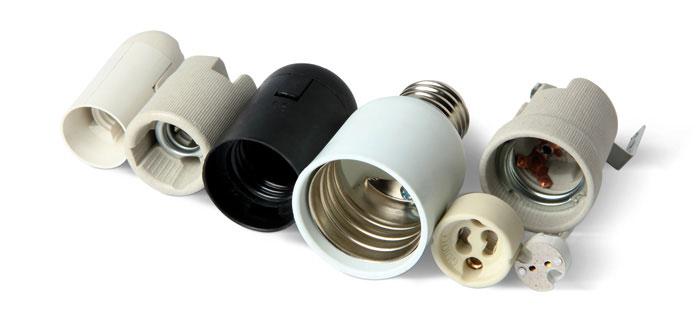
The history of the development of electricity consisted of different stages, but much more convenience was added when the threaded base with a cartridge was invented. The versatility of this connection allows the use different lamps.
A variety of materials are used in the manufacture of cartridges. Usually it is a high temperature resistant plastic, metal or ceramic. There are also unique models made on the basis of silicone.
What parts does a cartridge consist of?
It is a prefabricated structure consisting of several parts. Inside the case there is also a core, a screw-type clamp, a pressure contact and a thread along which the light bulb is twisted.
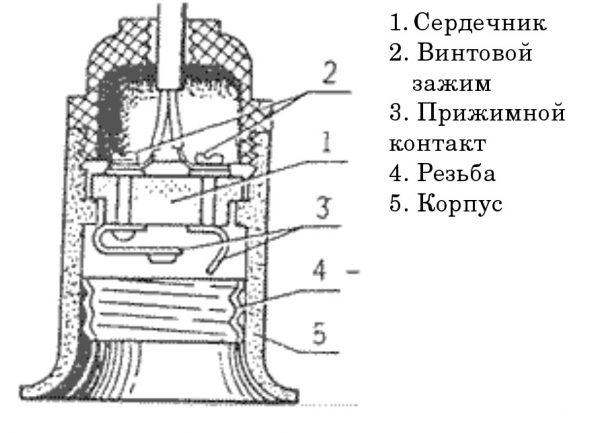
Core
For its production, ceramics, plastic or carbolite are usually used. These materials allow lamps to work, but at the same time electricity costs remain minimal. Depending on the design of the cartridge, the dimensions of the core and its shape may vary.
Screw terminal
Its main function is to ensure the connection of conductor and terminal parts. They are in lamps marked O, U, C. In the design of new models, the terminals can be located outside.
pressure contact
Clamping is the contact that is pressed against the metal or semiconductor. It is made from brass. Some products may have two or four plug-in contacts, in others their function is performed by one spiral.
Thread
It is a necessary element in the design, but it can also be different. There are threads designed specifically for use in industrial premises, and there are also household options. There are models for outdoor installation, they are not afraid of snow, rain and are able to work in difficult conditions.
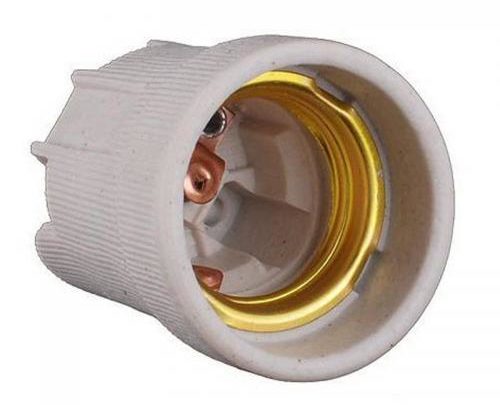
Frame
Modern models of cartridge cases are made of ceramics. This material is able to withstand high temperatures, while it does not melt, deform or break. Also, modern options have a non-separable design with built-in threads.
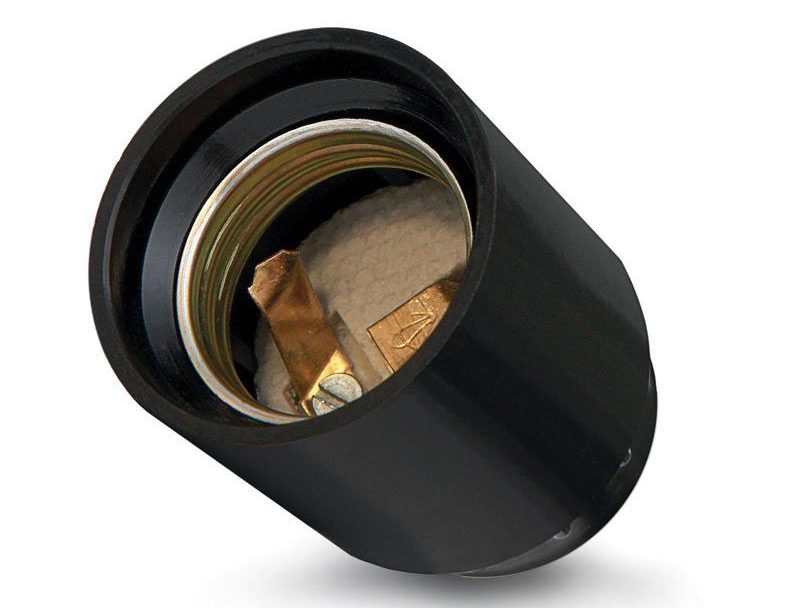
The principle of operation of the screw chuck
All components are interconnected, each has its own task. For current transmission, 2 brass contacts, thread, mounting strips are used. When connected, the contacts touch the lamp base.
Important! According to safety rules, the phase is connected to the central contact of the light bulb base. This will exclude human contact with the phase.
This diagram of the principle of operation of both models E and G, but the latter differ in a simpler design and in the method of transmitting current to the bulb base.
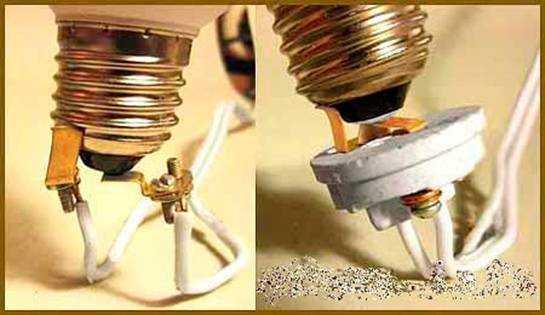
Varieties of cartridges
There are two main types of lampholders on the market today - screw and pin. They differ in design and type of connection, but are universal for different lamps.
Pin
They work from a network with a voltage of 220 volts, they are marked with the Latin letter G. Pin structures are used in spot pendant lights. There are models of different capacities for both industries and homes. Pin options can differ from each other in material, dimensions, fastening elements, and the number of contact parts.
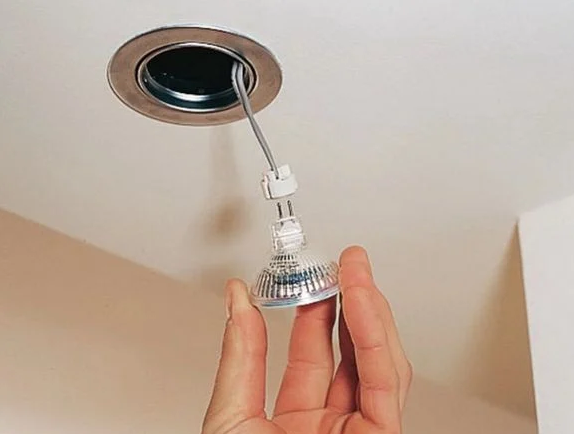
screw
Their design has an internal thread, they are used to connect lamps with a threaded base. Most often use E14 or E27. In addition to the two main ones, there are 6 more varieties of cartridges of this type.An important characteristic is the diameter, the network load and power depend on it.
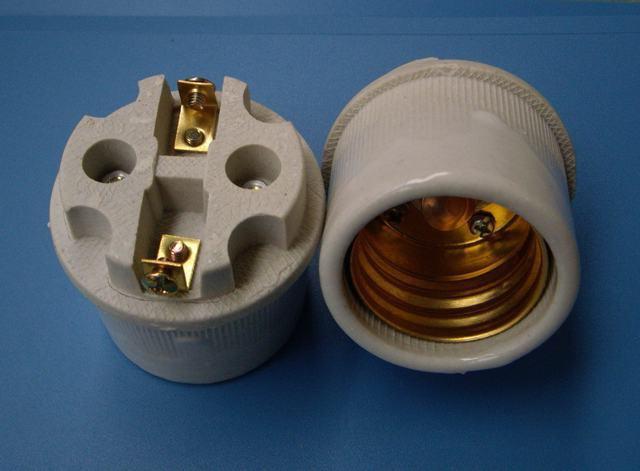
Cartridge adapters
Another, separate type of construction. Its functionality can be understood immediately from the name, it allows you to switch from one version of the base to another. For example, from E14 to E27. This may be necessary during repair work or when buying a lamp with a different base.
There are no problems with the operation of the adapters, but it should be noted that the structure will lengthen. As a result, the lamp will protrude a little more than usual. For some fixtures, this is almost imperceptible, and for some it greatly spoils the appearance.
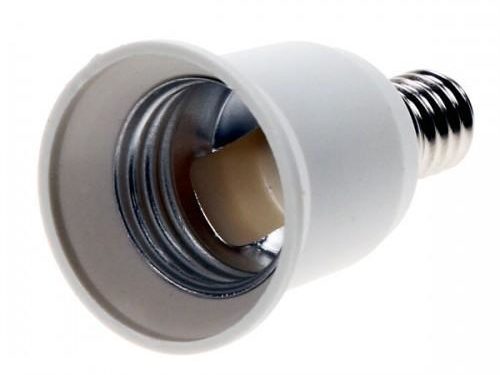
Marking
On the surface of the cartridges there is a marking indicating the main characteristics:
- the letter T indicates the normalized temperature;
- amperes (A) denote indicators of the magnitude of the current;
- voltage is measured in volts and marked with the letter V;
- IPXI symbols are applied on the outside of the product, marking the moisture protection of the product.
Additionally, such data as the type of current (for products with a switch), the emblem or the name of the manufacturer, the maximum operating temperature are marked.
Example! The most popular cartridges of types E14, E27 operate at a voltage of 250 V. In the E14 model, the rated current is 2A, and in the E27 - up to 4A.
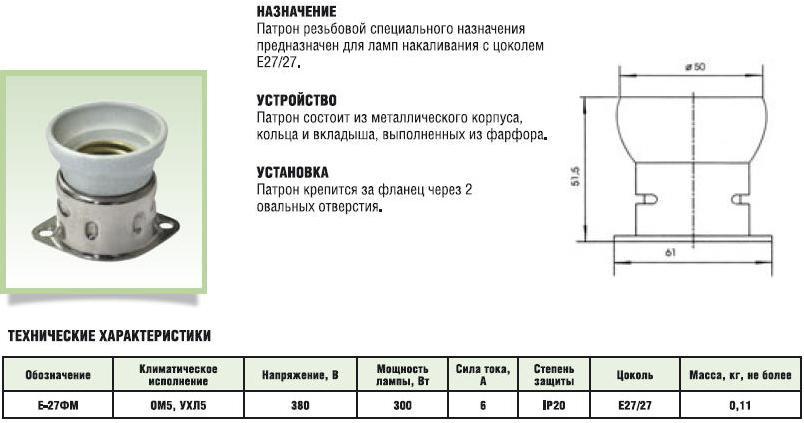
Advantages and disadvantages of popular types of cartridges
Most often, products from carbolite and ceramics are presented on the market. To understand the nuances of operation, you need to study the main advantages and disadvantages of such cartridges.
The nuances of proper installation
According to the standard, the cartridge is attached to the lamp through the bottom, in which there is a hole, through which an electric wire is output. But there are also non-standard designs with their own connection nuances.
It will be useful to read: Connecting the cartridge.
Wire connection
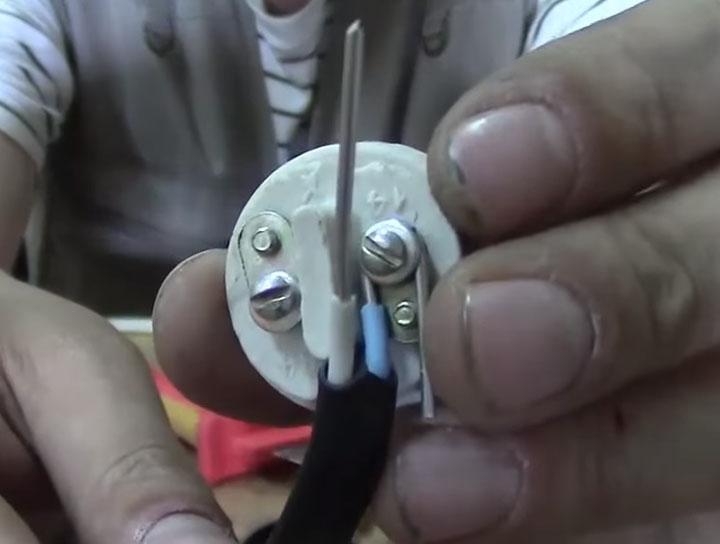
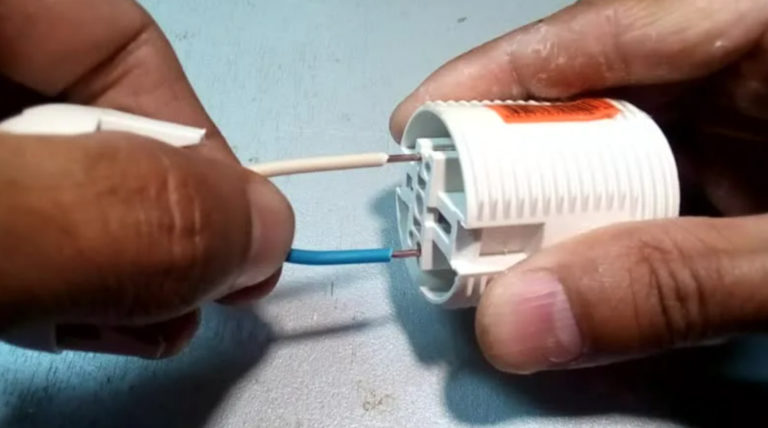
Do not create a direct connection between the cartridge and the cable. Firstly, the cartridge must be securely fixed in the design of the lamp, and secondly, a plastic sleeve with a hole for the wire is added to the design. A plastic screw is attached to this sleeve, providing fixation.
On the tube
There is also a metal tube in the circuit. It increases the strength of the structure and allows you to mount weighty ceiling lamps in a suspended way. Metal nuts should be included in the kit, they fix the fittings for the lamp.As a result, the entire weight load falls on the tube, it is hollow inside, which allows the connection cable to be passed.
bushing
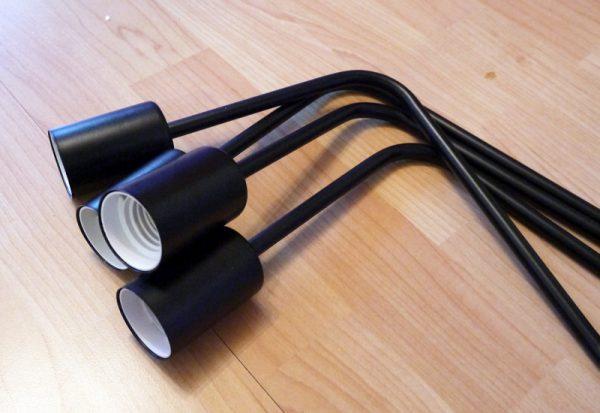
Tubular bushings are used to fix cartridges in the design of wall and table lamps. Typically, these bushings are made from sheet materials. It is only necessary to make a hole through which the cartridge is attached.
There are shortcomings in the operation of low-quality plastic bushings, they melt at high temperatures. In such cases, it is better to replace the part with a metal one.
Screwless terminals
There are also designs with clamping contacts, they are connected by means of a special latch. After that, the bottom of the lighting device is attached to the tube, an electric cable is carried out. The body is usually made in the form of a cylinder, fixed to the bottom.
This version of the product can be repaired, replace failed parts. A screwdriver is used to open it, you just need to bend the latches to the sides. It is important to be as careful as possible so as not to damage the wires.