How to hang a sconce lamp with a switch on the wall
Installing a wall lamp is within the power of even those who are not very well versed in electrics and do not perform complex work. For installation, you will need a set of tools and knowledge of the basic basics of connecting electrical equipment. The main thing is to comply with all safety requirements and follow the simple recommendations outlined in the review.
Training
First of all, you need to prepare for the work and take into account the factors that affect the reliability of installation and the quality of lighting. It should be understood that wall models often act as an additional source of light and allow you to highlight a separate area or create comfortable conditions for reading, needlework, etc. Also, the sconce can be used to illuminate the work area or the dining table in the kitchen, as a lighting for the dressing area, etc. It is important to take into account a number of parameters:
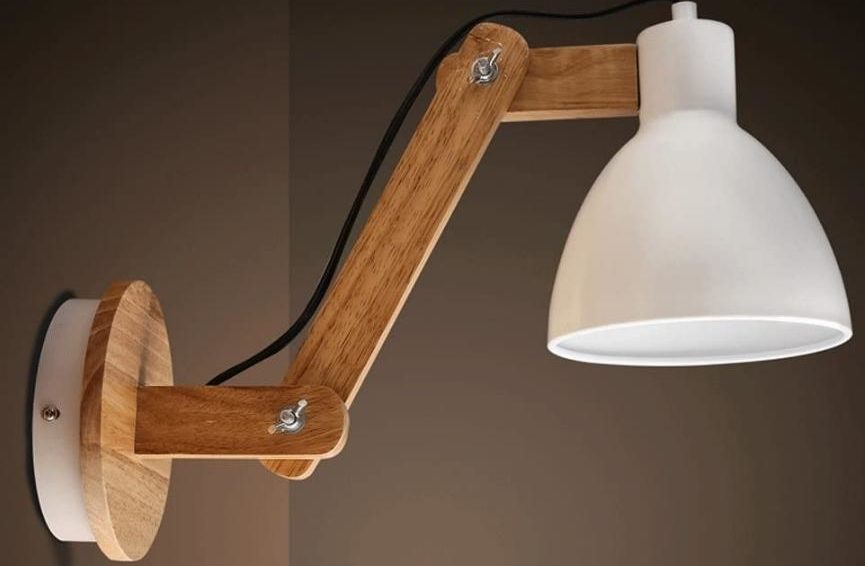
- Purposes of use. Characteristics are selected depending on what the lamp will be used for. The power should be carefully selected so that there is enough light. If you need to highlight a part of the interior or direct the light flux to a certain place, it is better to choose an adjustable model in which plafond can be rotated and adjusted perfectly precisely.
- Location height. The standard range is from 100 to 150 cm, as most often the wall lamp illuminates the relaxation area or is located above the bed. But in the hallways and on the loggias, it is better to place the sconces higher so as not to interfere with movement. Another important point is that a person must reach the switch without getting up.
- Interior design. It is necessary to select a lamp model for the environment so that it matches both in color and in style. Think about whether the chosen place is suitable in terms of design, whether the lamp will look alien.
- Switch type. Most often, models with a rope or a key switch are used. Functionality does not depend on this, proceed from convenience and your own wishes. Another solution is lamps with a plug that plugs into an outlet. Due to the hanging cord, the appearance is not the best, it is worth hanging only where the sconce is rarely used.
- Installation location. Consider the strength of the wall, as it is necessary to fix the equipment, as well as pre-wire, so as not to spoil the surface later. Depending on the base, fasteners are selected, there are many options, it is easy to choose the right solution for any material.
- Bulb type. Do not use traditional incandescent lamps, they get very hot, consume a lot of energy and give off a dim light. Halogen and fluorescent options are way better. But LED equipment will be optimal, its resource is many times greater than that of analogues, the quality of light is high, and the power consumption is the lowest.
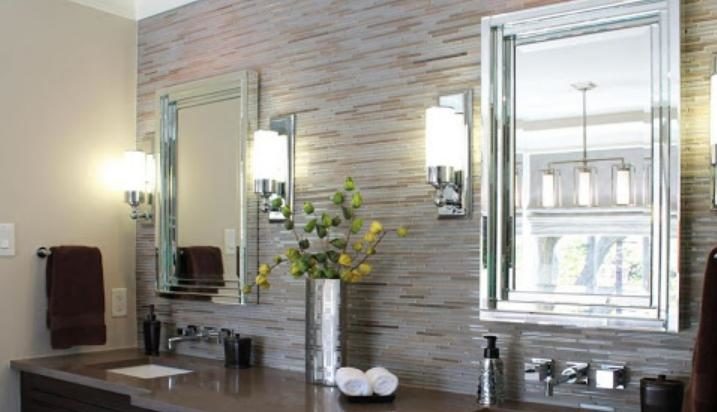
- External conditions. If indoor humidity and temperature change (bathroom, loggia, kitchen), you should hang a model with increased protection against adverse conditions. This is indicated on the packaging or in the installation and operating instructions. Fixtures with protection from splashes of moisture are marked IP44.
Note! If the lamp is located where it is inconvenient to turn it on and off, it is better to buy a model with a remote control. Then you can control from anywhere in the room.
Wiring diagram, what tools will be needed
For installation of wall lamps, you need to study the instructions that come with the sconce. Figure out how to connect the wires correctly so as not to confuse anything and connect the lamp correctly. It is necessary to prepare a set of tools:
- Level for marking holes for mounting, if a plate is used.
- Perforator for concrete, brick and aerated concrete surfaces. For wooden walls, an electric drill or a screwdriver is enough.
- Screwdriver Set.
- Small knife.
- Insulating tape. If a special connector is used, then nothing needs to be isolated.
- Fixture for the lamp. Most often, dowels are included, but they are unreliable, you should use a better option.
In some cases, additional tools may be needed, so you need to think about this point in advance.
Recommended for viewing: Instructions for connecting wall sconces.
How to assemble a sconce with a switch on a cord
In this case, it is necessary to install the lamp taking into account the number of wires. There may be two or three of them, so, depending on the model, select the desired item in order to correctly connect the sconce with a cord switch:
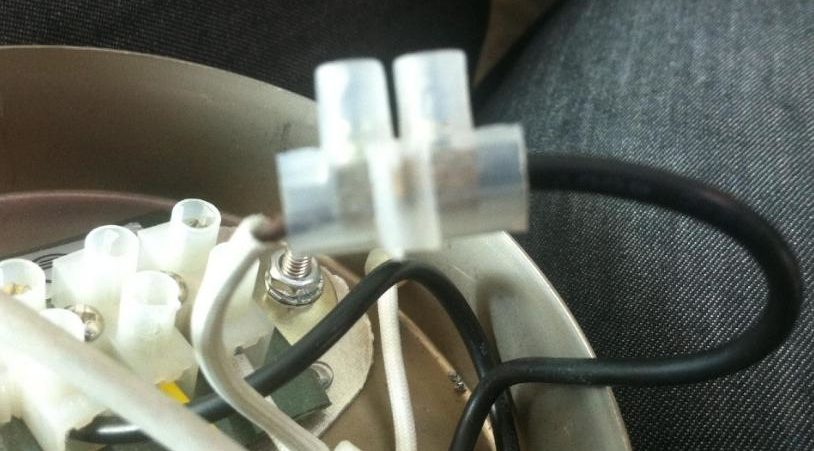
- If there are two wires, then zero must be led directly, and the phase through the switch (or to the corresponding terminal, if the cord is placed in the lamp housing). If there are several bulbs, then the wires will go from each. In this case, connect the contacts using a block or twist and carefully wrap it with electrical tape.
- When there are three wires (there is a core to ground), then you need to connect according to the marking, which is always on the contacts of the lamp. L - phase, N - zero and PE - ground. If there are no letter designations, the instructions should contain a description of the designations by the color of the insulation.
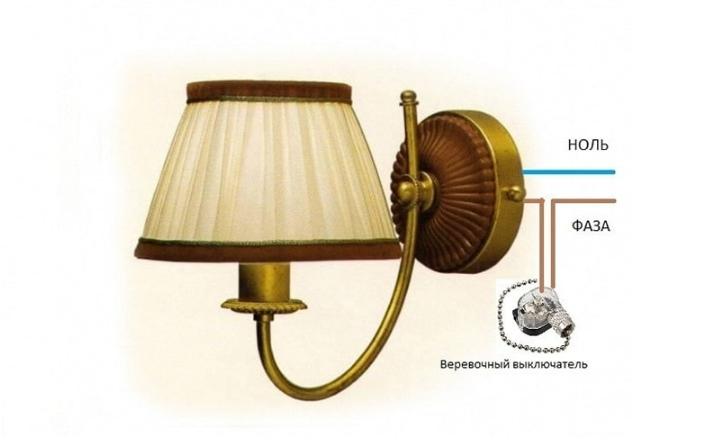
To connect the lamp, you need to follow the prompts of the instructions, there is always a diagram and wire designations. Be guided by it, as the standards in different countries are different.
Model with key
The traditional solution with a switch on the wall is suitable if several sconces are installed or the lamp is located in an inconvenient place. In this case, the equipment should be connected according to a simple scheme:
- Grounding and zero from the junction box should be connected directly to the sconce and connected in any convenient way. The main thing is to ensure safety. The easiest way is to use modern snap connectors.
- The phase must be brought into the switch and fixed to the contact. Next, you need to pull it to the lamp.It turns out a circuit that closes and opens the key. More than one device can be connected if needed.
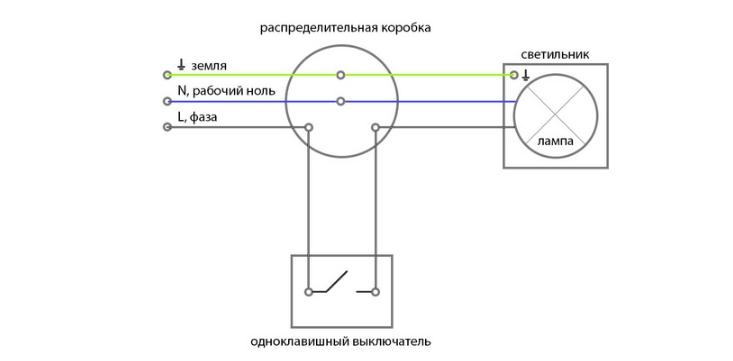
Advice! If in a Chinese lamp all the wires are insulated in the same color, it is better to mark them with pieces of colored electrical tape so as not to confuse anything.
Site marking and preparation for installation
Before starting work, it is necessary to bring the wire. This is done during the repair, as you have to ditch the wall, lay the cable, then putty and level the surface. In extreme cases, you can lay the wire on top using a cable channel, but this does not look very neat and can interfere with the structure when fastening. As for the preparation of the place, it is worth following a simple instruction:
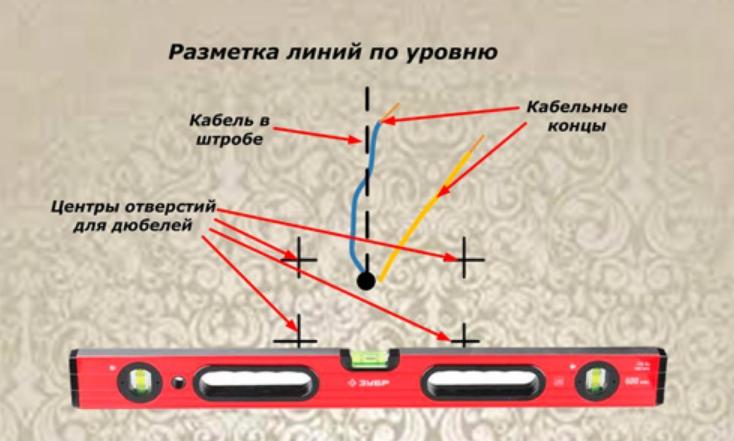
- Unpack the lamp, find the fastener. Most often, this is a plate with two holes through which screws or other fasteners are inserted. Fixation of the sconce occurs due to two protrusions or screws that are threaded into the mounting platform on the base and pressed with nuts. There may be other options, but they are rare. It is also worth clarifying how the bracket should be located - vertically or horizontally (more often the second option).
- Select the height of the location, attach the structure to make sure that the ceiling is in the right place, not shifted up or down relative to the mounting platform. If necessary, amendments are made, at this stage they are easy to make.
- Using the level, draw a clear horizontal or vertical line, which will be a guide. Installing a sconce by eye is not the best solution, since then it will not be possible to correct the situation.Do not draw too long a line so that after fastening it is not visible on the sides.
- Then attach the plate so that the holes are aligned along the line. Make marks with any improvised object. Make sure that the wire is approximately in the middle.
- A drill or drill for concrete is installed on the puncher, which corresponds in diameter to the selected dowels. Work with the tool carefully, constantly make sure that the drill enters horizontally. When drilling, carefully pull off the dust with a vacuum cleaner pipe, then there will be almost no dust.
- Check the depth of the holes and make sure it is slightly more than the length of the dowel. If necessary, deepen further.
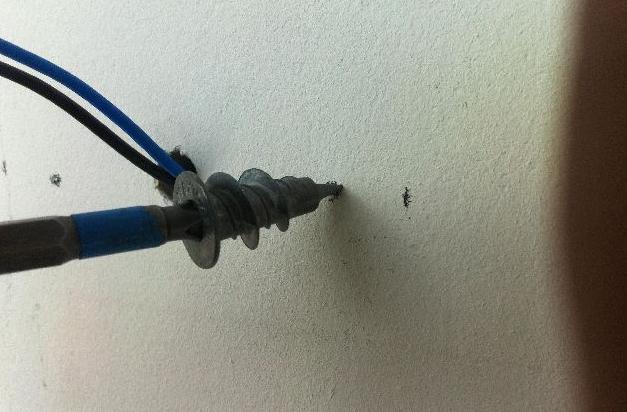
Note! To know exactly how deep to drill and not go too deep, you can stick a piece of masking tape on the drill as a guide.
Methods for attaching the lamp to the wall
There are several mounting options. When choosing, it is worth considering the material from which the wall is made, its features and strength. There are fasteners for any designs, it is worth choosing a specific solution for mounting the lamp on the wall, taking into account the recommendations:
- Self-tapping screws are suitable for wooden walls, dowels are not required in this case. Select the length based on the weight of the lamp, usually 30-40 mm is enough. If the upper part of the wall is sheathed with drywall or other material, use options from 50 mm or more.
- For foam concrete, choose special dowels with screw protrusions around the perimeter. They fit well into the material and do not rotate in it when tightening the fasteners. You can also use options with the so-called "antennae", which are well kept in a loose surface.
- Standard products are suitable for brick and concrete, since the surface is very hard and the dowels do not rotate even with small protrusions. In this case, do not take fasteners longer than 40 mm, so as not to drill deep.
- For drywall and hollow structures, two types of fasteners are suitable - the so-called "Butterfly" and "Driva" (they are also called self-tapping dowels). It is easy to use, the main thing is to drill a hole of a suitable diameter, it should not be too small or large.
- If the wall is very fragile or a large piece has broken off while drilling, then a chemical anchor will be needed. This is a special composition that needs to fill the void. After drying, self-tapping screws are screwed into the surface.
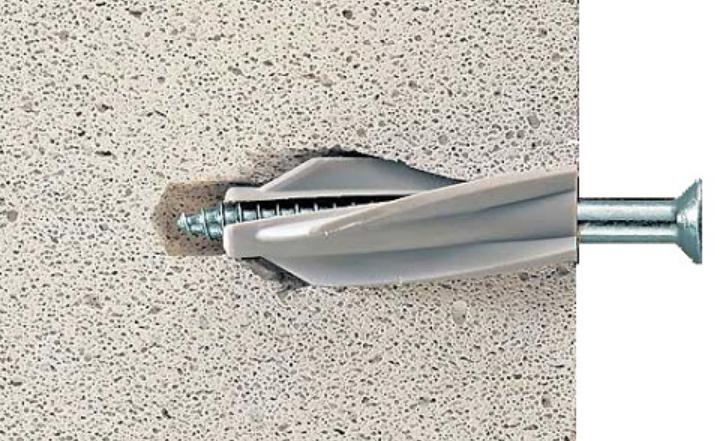
Important! Using double-sided tape as a fastener is a bad idea. It dries out over time and the sconce can fall on your head.
Installation process, step by step description
Before starting work, be sure to turn off the power supply at the panel or meter. Check the voltage with a tester to rule out any risk. Work during the day, so that there is enough natural light, follow the instructions:
- Unpack the sconce, study the documentation, figure out how to fix it correctly and whether it is necessary to disassemble the equipment before installation. Check fasteners, if necessary, buy another.
- Mark the wall and drill holes. Try on the dowel. Sometimes they hang out, so it's better to choose a slightly thicker option to ensure a secure fit.
- Fix the plate on which the sconce will be located. Make sure it is level and doesn't wobble. Tighten the screws not to the end, just enough so that they firmly press the bracket.If you overdo it, you can damage the dowel from the inside.
- Connect the lamp contacts to the wiring. Here it is better to attract an assistant to hold the sconce. Since it is not yet fixed, holding it and connecting it at the same time will not work. The contacts must be reliable, if pads are used - pull the ends of the wires to the stop and tighten the screw so as to prevent the connection from breaking.
- Hang a lamp on the wall. To do this, align the base with the plate and tighten the nuts or snap the tabs, it all depends on the model. Make sure that everything is held firmly and the sconce will not fall over time.
- The operation of the equipment is checked. The above describes how to assemble a sconce with a string and a switch. If everything is done correctly, there will be no problems with the lamp.
Installing a wall lamp with your own hands is not difficult if you understand its design and clearly understand how to connect the wires. It is important to choose reliable fasteners so that the sconce is held firmly, choose a place and pre-wire it.