How is light intensity measured?
Different types of lamps create a light output of different intensity, so the quality of lighting varies greatly. To choose the best option for a particular room, you need to figure out how the illumination depends on the luminous flux. It makes no sense to go deep into the topic, but it is worth learning the basics.
What is the power of light
First of all, it is worth understanding that the radiation from any light source is distributed unevenly in space. To characterize its distribution in different directions, the concept of light intensity is used. That is, this is the spatial density of the light flux, which is determined by its relation to the solid angle, at the top of which is located Light source. The segment within which the luminous flux is distributed is called the luminous intensity - its formula is as follows:
Ф reflects the luminous flux, and ω is the solid angle. The unit of light intensity is the candela. In order not to understand the physical terms further, you can use a more common indicator - 1 candela, distributed within a solid angle is equal to 1 lumen.
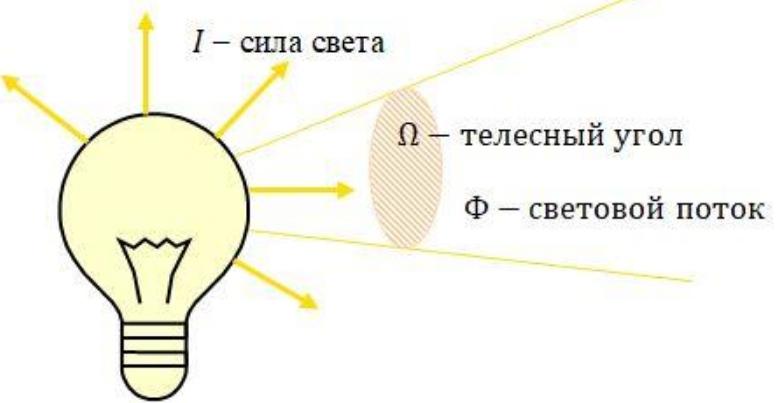
For the applied use of information, it is necessary to touch upon such an indicator as illumination. It reflects the amount of light falling on a certain surface.
How is it calculated
At the household level, the simplest definition of luminous intensity is the brightness of a light bulb. The more powerful it is, the greater the indicator, but as mentioned above, the indicator largely depends on the angle within which the luminous flux propagates.
That is, the light intensity does not depend on the power of the light bulb, but on the distribution angle. To make it clearer, we can consider an example with a flashlight. In models with halogen bulbs, a variant with a power of about 30 watts is usually used. If you simply connect such a lamp in a dark room, it will illuminate it, but the quality of lighting will be far from ideal.

But if you place a light bulb in a reflector that limits the spread of light, then it will not spread in all directions, but will be concentrated in one direction. The intensity of light will increase many times and it will be the higher, the narrower the propagation angle.
That is, with proper use of reflectors or concentration of the light flux in a limited space, you can use less powerful light bulbs, but at the same time achieve better lighting quality.
The indicator in question is never indicated on packages with light bulbs, since it cannot be determined in advance. It all depends on what kind of ceiling will be used and on what area the lighting will be distributed.Therefore, you need to calculate based on the type of lamp and the power of the bulbs installed in it.
Since lighting standards for a home are most often given in units such as lux, you need to remember that lux is 1 lumen divided by a square meter.
By the way! At night, with the moon, the illumination is 1 lux, on a cloudy day - about 100 lux, and on a sunny and clear day - from 10,000 to 25,000 lux.
Video lesson: What is luminous flux and light intensity
Light intensity of the main sources
To select a light bulb in domestic conditions, it makes no sense to delve into physical quantities and use light meters to check the lighting in rooms. It is much easier to proceed from the requirements for the room and the necessary light intensity in a given situation. If we compare different solutions, we can draw the following conclusions:
- Incandescent lamps - traditional options that many still take as a standard when compared with other varieties. Since the glow occurs due to the heating of tungsten, the surface heats up strongly, regardless of power. We take the 75 watt option as a reference. In other types, the power will be comparable to this value. Such a light bulb gives a luminous flux of 700 Lumens.
- Halogen lamps - an improved solution that also uses a filament. But due to the filling with special gases and the use of special quartz glass, the lighting quality of this option is higher. With a power rating of 50 watts, it provides a luminous flux of 800 Lumens. This is an example of how limiting the angle of propagation of light greatly increases its strength.
- Fluorescent lamps They give high-quality light and at the same time heat up much less, which makes them safer in everyday life.With a power of 15 watts, they provide an indicator of 800 Lumens, which allows you to illuminate the room more economically. At the same time, the brightness is an order of magnitude better, which is important, as it affects the quality of lighting.
- LED Options. In them, the power of light in relation to the energy consumed is the highest today. With a power consumption of 7 watts, the source gives a luminous flux of 660 Lumens. At the same time, it is worth noting the excellent quality of lighting, it is uniform and can have different color temperatures, which is important when choosing the right option for a living room, kitchen or bedroom.
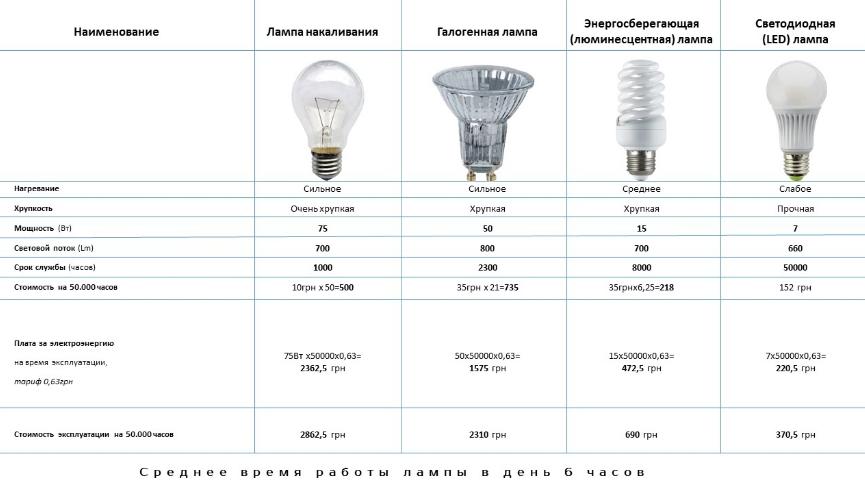
It should also be taken into account that in incandescent and halogen versions, the quality of lighting decreases over time, since the tungsten spiral gradually becomes thinner from constant heating to high temperatures, so when measuring indicators, they decrease month after month.
Differences from the power of the luminous flux
To better understand all the nuances, you should understand how the strength of light differs from the luminous flux. This is easiest to do by analogy with such physical quantities as force and pressure.
So, if you apply a certain force to an area of 1 square centimeter, then the pressure will be distributed evenly over the surface. But if you take a needle and apply the same force to it, the pressure will be concentrated in a tiny area under the point and will be hundreds of times higher. And the effort will remain the same.
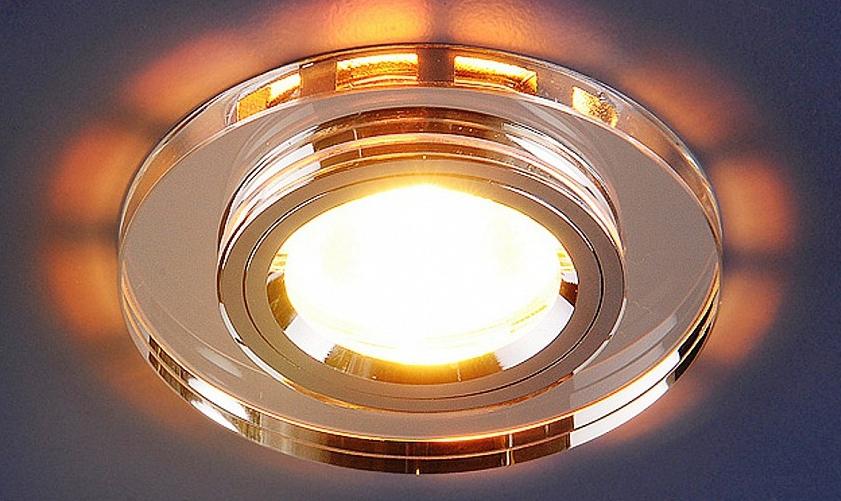
The more the luminous flux is limited in distribution, the higher the indicator of its strength.As for the use of this factor when choosing a light bulb in a room, you need to remember a few simple tips:
- To illuminate a separate part of the room, it is better to use spotlights or track models that can be directed to the right place. This option is much more convenient than a chandelier, as it concentrates the light flux in one area, and does not scatter it around the room.
- The intensity of light largely depends on the shades that are installed on the lamp. Frosted glass and similar materials give a uniform, diffused background. Fabric constructions and other opaque solutions limit the spread of the flow and distribute it over a limited area.
- When using ceiling lamps with a reflector, the illumination will be much higher, so you can install light bulbs of lower power.
You need to select lamps taking into account the quality of lighting that they provide. Different requirements are put forward for different rooms, so it is important to take into account the characteristics of each and select those options that will give comfortable light. Remember that the strength of light depends on the angle of its propagation, so reflectors and spotlights provide an increase in performance at times.