In what units is illuminance measured - a list of basic
When determining illumination, you can use different units of measurement. The option is selected based on the situation. In addition, it often becomes necessary to translate one indicator into another. It is necessary to take into account in what units the illumination is measured in order to correctly calculate it, if necessary.
What is illumination
Under illumination the luminous quantity is meant, which is defined as the ratio of the luminous flux to the area of \u200b\u200bits propagation. This indicator is directly proportional to the strength of the light source from which it comes. As it moves away from the surface, the illumination decreases. This dependence is inversely proportional to the square of the distance (the inverse square law).
The illumination formula looks like this: E=(I*cos)/r2. I is the power of light in candela, r shows the distance from the light source to the surface. Do not confuse this concept with the brightness of light.
What are the units for illuminance?
The unit of measurement of illumination is not one indicator, there are several main options adopted in different measurement systems. For applied use, there is no need to understand complex algorithms and formulas. It is enough to study the features of each of the units and use it correctly, if necessary.
Candela
In the system of measurements, one of the seven basic units that are fundamental. This is the intensity of light emitted by a source of monochromatic radiation with a frequency 540x1012 Hz. Moreover, the luminous flux must propagate in a given direction subject to a number of additional conditions.
The frequency that is used as a reference corresponds to the green part of the spectrum, since it is best perceived by human vision. When using a light source with a different frequency, more intensity will be required to achieve the desired indicator.
Not so long ago, the candela was defined differently. She fit power of light, emanating from a black source heated to a temperature of 2042.5 K (melting of platinum), which was located perpendicular to the plane and spread over an area of 1/60 of a square centimeter. This value is used in astronomy and many other sciences.
By the way! Coefficient 1/683, used by modern scientists is chosen so that the new and old definitions correspond to each other.
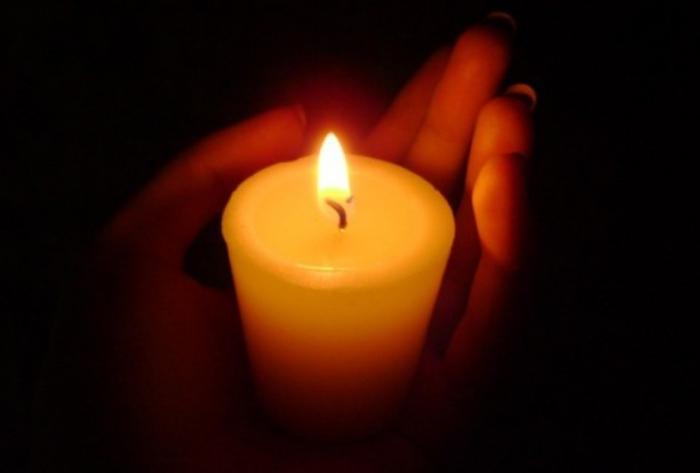
Candela means candle in Latin. It is believed that the light emitted by one candle is equal to 1 candela.
Lumen
It is used in the system for measuring physical quantities and reflects the characteristics of lighting. 1 lumen is light flow, which emits a light source with a power of 1 candela. To make it easier to understand, it is worth considering simple examples:
- Standard incandescent lamps with a power of 100 watts, the luminous flux is 1200-1300 lumens.
- The luminescent light source with a power of 26 watts provides a luminous flux of 1600 lm.
- If we take the sun as a sample, then its luminous flux will be 3.63x1028 lumen.
Lumen shows the total luminous flux that comes from a specific source. But it does not take into account important features - the presence of a lens or a reflector that can concentrate light in a small area and thereby improve illumination significantly. Different lanterns with the same lamp can illuminate both 10 square meters and 100. In fact, this is all the light that the lamp gives, including the one that does not fall on a given surface and is useless.
Please note that the lamp is rated at 1500 lm in a luminaire with a reflector will provide better conditions than the same option in a diffusing ceiling.
If the power exceeds the standard range, special indicators are used:
- Lumen multiples are generated if the value is an integer number of times the set value. They are usually denoted as a power of a number. For the name, set prefixes are used, reflecting the magnitude of the value.
- Longitudinal units of the lumen, on the contrary, are less than the set unit by an integer number of times. Special prefixes are also used here, and the degree is indicated with a minus sign.
Suite
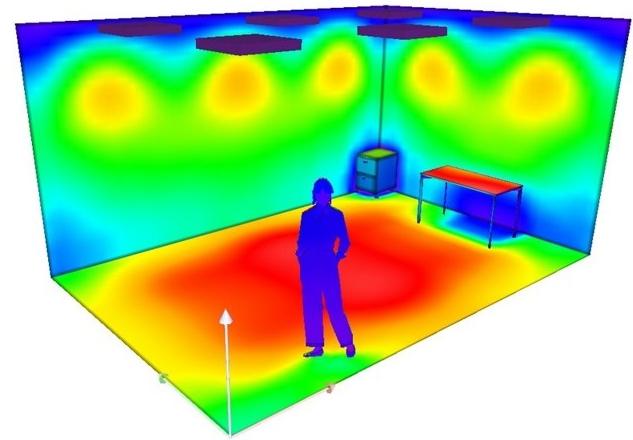
This unit is the most useful, since it is with its help that the illumination in living and working premises is measured.It is equal to the luminous flux of 1 lumen distributed over an area of 1 square meter. The indicator is used to regulate various standards and control illumination where required.
For simplicity, two examples can be considered. If a lamp with a power of 100 lm was directed to an area of a square meter, then the illumination will be 100 lx. And if the same light source is distributed over 10 square meters, then the figure will be 10 lux.
The video talks about the luminous flux and illumination (how they differ, how they are measured)
Lumen and watt
When only incandescent lamps were sold, watts were used as a guide to determine the luminous flux of a lamp. Everyone knew that the more power, the higher the brightness of the light. But with the advent of other types of light bulbs, this characteristic has lost its relevance, since it cannot be used to determine equipment performance. For different options, the ratio of power in watts to the luminous flux is different, so you need to understand the main types of equipment:
- For incandescent lamps, the standard is 1300 lm at a power of 100 watts. For 40 W models, the luminous flux will be 400 lumens, and for 60 W - 800. And remember that over time, the brightness inevitably drops due to the thinning of the filament, so when calculating it is worth laying a certain margin.
- Arc mercury lamps have a ratio of 58 lm per watt, the power is simply multiplied by this figure.
- Fluorescent light sources have a ratio of 60 lm per watt.
- For LED There is no clear standard for lamps with a frosted diffuser, since the characteristics of the bulb and its light transmission may vary. Usually the indicator varies from 80 to 90 Lm.
- Filament (transparent) LED light bulbs have a ratio of 100 lumens per watt of power.
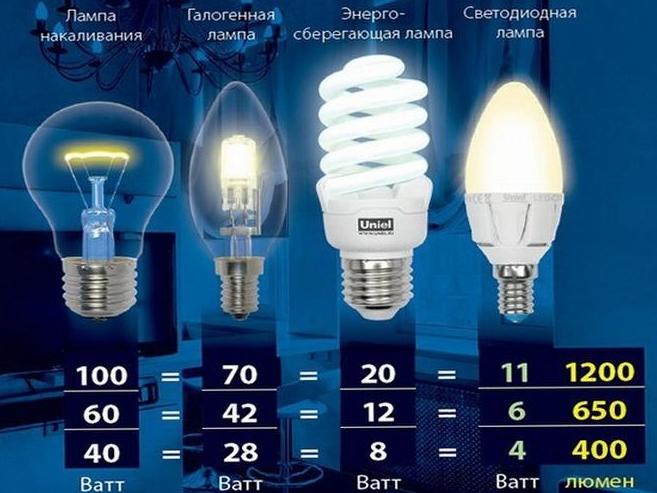
Actual performance may differ from generally accepted if the design of the lamp has features that affect the quality of light.
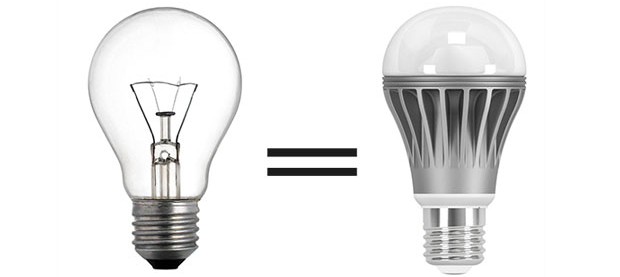
How to convert one unit of illumination to another
Previously, complex formulas were used to carry out calculations, now this is not necessary. The most important thing is to have a value in a certain unit of light at hand so that the original data can be used.
Next, you just need to find any illuminance converter. The values that are available are entered (the corresponding item is selected), and in the second column those illumination units are set to which it is necessary to convert. Calculations take a matter of seconds and are highly accurate, as they are based on proven formulas.
How to determine the illumination
With insufficient lighting, a person gets tired much faster, you have to constantly strain your eyesight, which is extremely undesirable. Therefore, the SNiP establishes norms for the main types of premises, which should be followed when determining the required illumination.
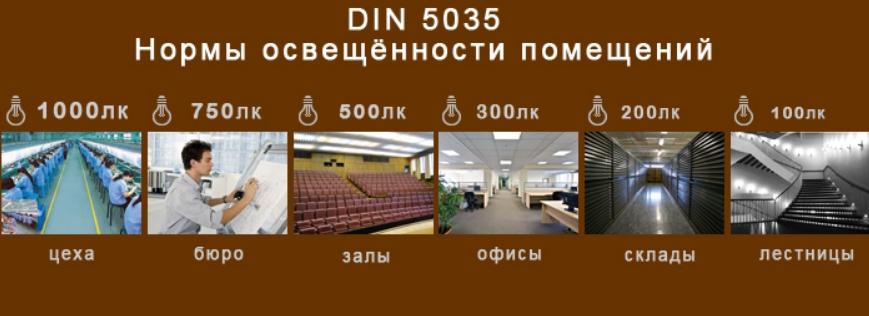
Natural light is taken into account, but the focus is on artificial light, as it can be used to create optimal conditions, regardless of the weather outside. Below are the main values for different rooms:
- Offices, in which they work at computers and draw up documents - 300 Lk.
- Premises for carrying out drawing work - 500 Lx.
- Conference halls, meeting rooms - 200 lx.
- Living rooms and kitchens - 150 Lk.
- Children - 200 Lux.
- workrooms or zones - 300 lx.
- Classrooms and auditoriums - 400 Lux.
- Trading floors - from 200 to 400 Lx, depending on the specifics.
There are special standards for work areas, so they most often use additional lamps that allocate a small part of the space.
As for the determination of illumination, a device called a luxometer is used for this. With its help, measurements are taken at several points in the room, they are indicated in the SNiP, it is important to do everything right. Not only the general indicator can be checked, but also the illumination of a certain surface or equipment, if it is necessary to provide special conditions when performing work.
Related video: How to measure the degree of illumination in a room using a smartphone.
Features of determining illumination for LED devices
This type of equipment is the most popular, so you need to use a few recommendations when choosing equipment and its operation. After the necessary indicators are determined, you should select specific light bulbs or fixtures and calculate the amount needed for the room. It is important to distribute them evenly so that there are no poorly lit areas.
Measurements should be taken after the equipment has been in operation for at least 2 hours. This is due to the fact that the diodes heat up, which affects their performance. Repeat measurements where it is important, it is necessary 1-2 times a year. Over time, the performance of diodes, especially low-quality diodes, can be greatly reduced.
By the way! On LED lamps there is always an indication of the power of the luminous flux, which simplifies the choice.
Understanding the units of measurement of illumination is not difficult, since there are few options. And for practical use, one is enough, so it's easiest to choose the right measurement system and apply it.