Correspondence table of LED lamps and incandescent
The power of an electric lamp is one of its most important characteristics. However, there is some confusion on this issue, created not without the participation of marketers.
Compliance with the power of LED lamps and incandescent lamps
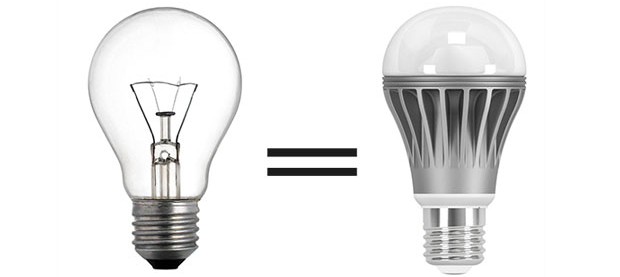
For many years of operation of incandescent lamps, most people have become accustomed to a direct relationship between the luminous flux created by the lamp and its power consumed from the network. With the advent of new devices capable of converting electric current into radiation more efficiently, the established associations were broken. In order to promote the product, for marketing purposes, the so-called equivalent power began to be written in large letters on the packages of lamps.
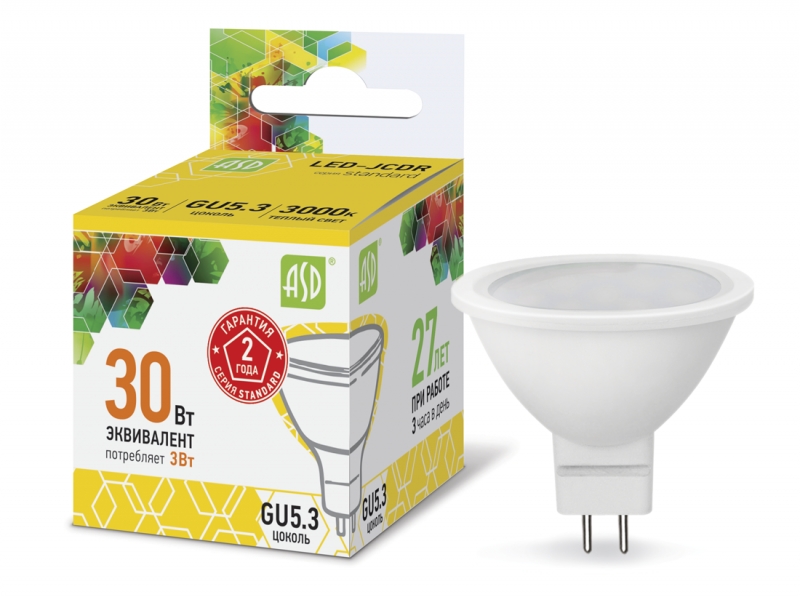
This value corresponds to the power of an incandescent lamp, which is replaced by an LED lamp with equal luminous flux. At the same time, the LED lamp consumes much less from the network due to its higher efficiency.To make it easy to translate "LED" watts into "traditional", a table of correspondence between different types of lighting fixtures is given.
| Power consumption of the LED lamp | Power consumption of a lamp with an incandescent filament equivalent in luminous flux |
| 2-3 | 20 |
| 3-4 | 40 |
| 8-10 | 60 |
| 10-12 | 75 |
| 12-15 | 100 |
| 18-20 | 150 |
| 25-30 | 25-30 |
It is obvious that LED lamps have an energy efficiency much higher than traditional light sources. But it is necessary to take into account the advertising component in the figures given - it is impossible to check the real luminous flux without special devices.
Specification Comparison
To compare the parameters of various types of lighting devices, it is convenient to summarize them in a table. It shows the required electrical power of LED and other lamps to create a certain luminous flux.
| incandescent | LED* | Energy saving* | |
| Service life, hours | 1000 | 50000 | at least 20000 |
| Working temperature, deg.С | above 150 | Up to 75 | above 100 |
| Created luminous flux, lm | Power consumed from the network, W | ||
| 200 | 20 | 2 | 6 |
| 400 | 40 | 4 | 12 |
| 700 | 60 | 9 | 15 |
| 900 | 75 | 10 | 19 |
| 1200 | 100 | 12 | 30 |
| 1800 | 150 | 19 | 45 |
| 2500 | 200 | 30 | 70 |
* - average values are indicated, the actual power may differ depending on the applied production technology.
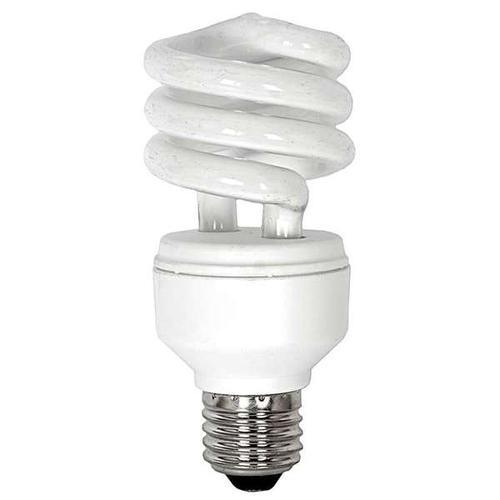
From the table, as a result of comparing the parameters, it is even more clearly seen that LED lighting has no competition from incandescent and energy-saving lamps. The ability of LEDs to convert electricity into light is better than other devices.
How long does it take for LED bulbs to pay off?
LED lamps are more expensive than conventional bulbs with incandescent filament. But they use less electricity.When planning to replace conventional fixtures with LED ones, the consumer is interested in how profitable it is. To calculate the payback time, the following initial data will be required:
- power consumption of a lamp with an incandescent filament P1, W;
- the cost of an incandescent lamp S1, rub;
- power consumption of an LED device with a similar luminous flux Pled, W;
- cost of the Sled LED lamp, rub;
- the cost of a kilowatt-hour for the population Se, $
For 1 hour of operation, the benefit will be the difference in electricity consumed, multiplied by the cost:
N=(P1-Pled)*Se/1000 (transition from kilowatts to watts is taken into account).
This benefit can be obtained for 1 hour of work. The difference in the cost of devices:
D=Sled-S1.
In an hour, the share will pay off as a percentage:
J=(N/D)*100 =100* ((P1-Pled)*Se)/(Sled-S1).
And the total payback time in hours will be:
T=100/J=100/(100* ((P1-Pled)*Se)/(Sled-S1)) = (Sled-S1)/((P1-Pled)*Se).
Obviously, the payback time is shorter, the smaller the difference between the cost of lighting devices, the greater the difference between energy consumption and the higher the cost of electricity.
For example, you need to specify typical data:
- conventional lamp power - 100 W;
- its cost is 15 rubles;
- power consumption of the LED lamp - 12 W;
- the cost of an LED device - the equivalent of 100 W - 200 rubles;
- the typical cost of a kilowatt-hour for the population (depending on the region) is $0.1.
For an hour, the savings will be (100 W-12 W) * 3.5 / 1000 \u003d $ 0.003.
The difference in the cost of illuminators is 200 rubles - 15 rubles = $ 2.
In an hour, the LED lamp “works out” (0.308/185) * 100 = 0.16% of the increased cost, and the full payback time will be 625 hours. Then the LED lamp starts to make a profit.
Calculation in hours is not very interesting for the consumer, data in days or months is much more informative. To do this, you need to know how many hours the lamp burns per day. In summer this figure is less, hardly more than 1 hour. In winter, lighting in apartments can burn for 5-6 hours. If we take the average figure of 4 hours, it turns out that the LED will pay off in 156 days, or about half a year (a little faster in winter, a little slower in summer).
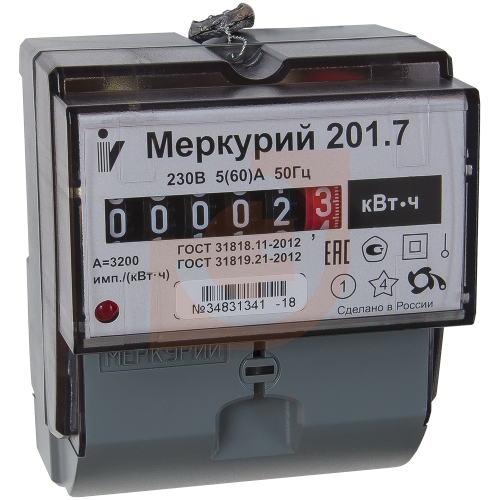
Important! The cost of electricity for industrial enterprises is two or more times higher than for the population (exact figures vary from region to region). It should be borne in mind that lighting in this case can be used for much longer - the whole working day, and sometimes around the clock (for example, in a garage that does not have windows). Based on this, in the production of LED lamps, they pay off twice as fast only at the expense of paying for energy supply, that is, a 100-watt lamp will work out the cost in three months. Given the increased duration of operation during the day, this period can be significantly reduced.
And another moment. LED lighting has a longer lifespan. The claimed service life of LEDs of 30,000 hours, based on operating experience, does not inspire confidence, but even with a cautious figure of exceeding the service life of LED elements over traditional ones by 2 times, this side will provide additional savings in the medium term.
Conclusion
LED lighting systems are rapidly replacing incandescent and energy-saving elements from the market.The economics of LED operation outweigh the even higher investment cost due to low power consumption and long service life. The payback period for new luminaires is several months, and the prices of LED lamps are constantly decreasing as technology develops. This also makes payback periods even shorter.
Energy-saving lamps have lost the competition due to low environmental friendliness and difficulties with recycling. In the coming years, we can expect the complete dominance of LED equipment in the lighting market.