Workplace lighting requirements
The illumination of the workplace is an important factor that directly affects not only the efficiency of employees, but also their well-being. If you do not create suitable conditions, a person gets tired much faster, and performs his duties worse. Lighting requirements are spelled out in a number of regulations, so making it right is not difficult if you understand the topic.
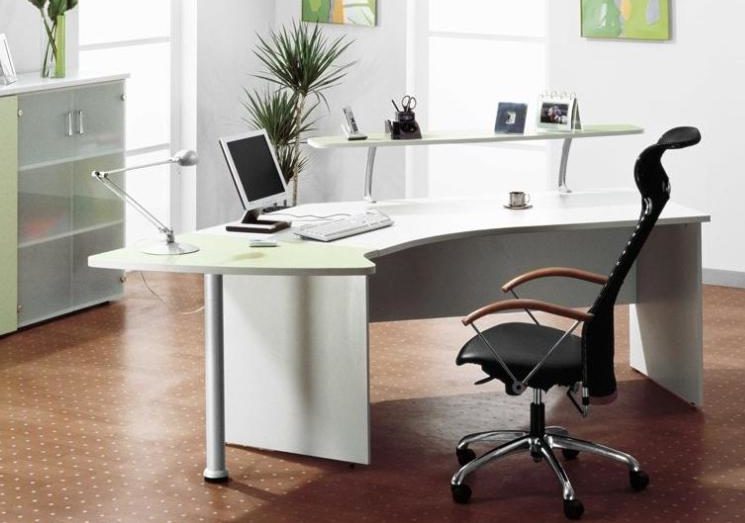
Workplace lighting - how it affects a person
To achieve the ideal result, you need to provide normal natural light during the working day. This is an important point, since it affects not only the performance, but also the state of human health. It should also be taken into account that without artificial lighting it is impossible to ensure normal working conditions, since the daylight hours most often do not coincide with the working day, plus the weather is different. It is important to remember what conditions lighting should create:
- A comfortable environment for vision that reduces eye fatigue. Good color reproduction is important here, optimal light temperature and the absence of glare, so as not to create visual discomfort.
- Adjust the position of the lamp and its brightness if necessary. This will always maintain the optimal level of illumination.
![The luminaire must be adjustable in three planes.]() The luminaire must be adjustable in three planes.
The luminaire must be adjustable in three planes. - Ensuring natural light maximum time to reduce the use of fixtures.
- The use of modern fixtures that not only give high-quality light, but are also safe. Power consumption is also of great importance, the lower it is, the better.
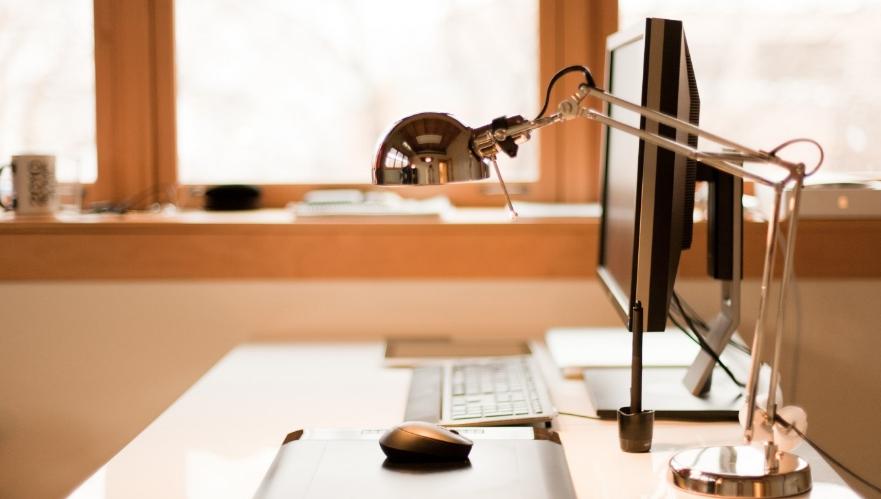
You can not make the light too bright, as it has a stressful effect during prolonged work.
Lighting types
Natural and artificial light is used to ensure normal conditions. Workplace lighting is best organized using the first option, as it surpasses the second in all respects - from color reproduction and eye comfort to minimal eye strain.
Daylight
This type is good because it does not require any costs. The main thing is that there are window openings in the room. The main features are:
- Side lighting is most often used: light enters through windows located in the walls. The larger the window, the better, but at the same time, heat loss increases.
![windows all over the wall.]() In offices, windows are often installed throughout the wall.
In offices, windows are often installed throughout the wall. - Overhead lighting can be made both in the form of openings on the roof, and in the form of a lantern - a special design with vertical windows.
- The combination version combines the two types and can provide perfect light.
- Illumination indicators are influenced by: the geographical position of the building, the location of windows relative to the cardinal points, the season, cloudiness, the position of nearby buildings and trees.
- Coefficient natural lighting (KEO) shows the compliance of the actual indicators with the normative ones. It is calculated according to the formula and is indicated as a percentage, for the middle zone, the minimum KEO is 2.5%, for the northern regions - not less than 2.9%.
- If there are no windows in the working room, there must be a rest room with abundant natural light.
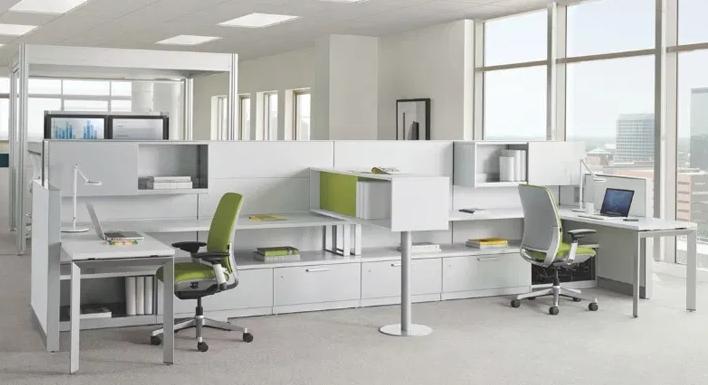
By the way! Windows should be washed periodically, as if the glass is dirty, the KEO can be halved.
artificial lighting
This option is mandatory for all rooms, as it does not depend on the weather and allows you to create optimal conditions regardless of the time of day. Here you need to remember the following:
- The main one is general lighting. It is implemented using fixtures that are fixed to the ceiling and have a design that provides uniform diffused light. The height is selected individually.
- To ensure the desired performance, local lighting is used. It is implemented using desktop or wall adjustable lamps.
![Local lighting in the office]() Local lighting should be such that it is convenient for a person to work.
Local lighting should be such that it is convenient for a person to work. - Most often in the workplace, both options are combined to achieve the best result.
- Rationing of illumination for a particular type of work is regulated by SNiP and other documents, it all depends on the specifics of the use of the premises.
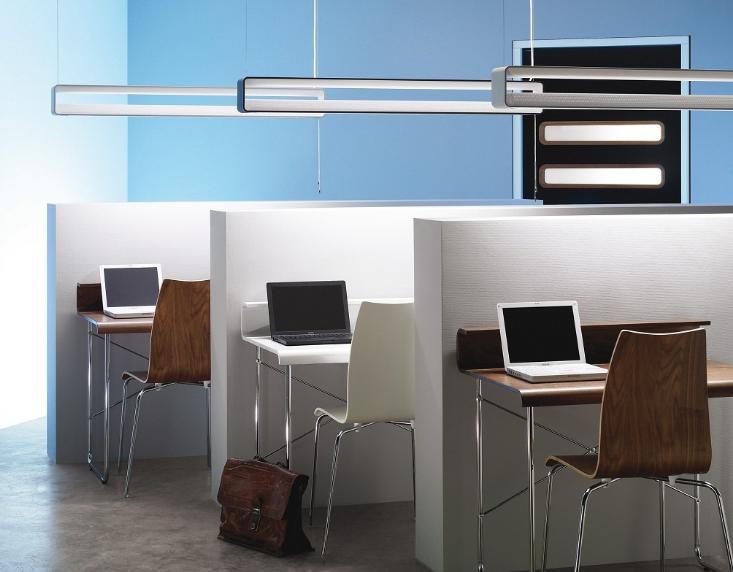
You can not use only local light, general illumination should be at least 30% from indicators at the workplace, so that visual discomfort is not created.
Lighting standards for workplaces
In some cases, industry-specific hygiene regulations or other requirements may apply. For simplicity, all the main standards are collected in the table.
| Room type | Illumination rate |
| Office premises and cabinets with computer equipment | From 200 to 300 lx |
| Offices in which drawing and design work is carried out | Minimum 500 lux |
| Rooms without partitions of a large area | 400 lx and above |
| Conference rooms | About 200 lux |
| Corridors and halls | From 50 to 75 lx |
| flights of stairs | 50 to 100 lux |
Illumination rates can reach up to 5,000 lux for jobs that require the highest precision. As for other important indicators, a few should be highlighted:
- The ripple factor should not exceed 10%. If it is larger, the eyes get tired over time, and the person gets tired much faster. Best to use LED lamp or lamps, in which this figure does not exceed 3%.
- The color rendering index measures how naturally colors appear under artificial lighting. It is best if the indicator is from 70 and above (maximum 100).
![Workplace lighting requirements]() For large office premises, their own lighting standards have been established.
For large office premises, their own lighting standards have been established. - Gloss values should be zero. Therefore, when using directional light, it is adjusted so as not to create glare. And the easiest way is to use diffusing shades.
- The illumination uniformity should not be lower than 0.4. That is, the intensity of the general light is about 40% of the local one.
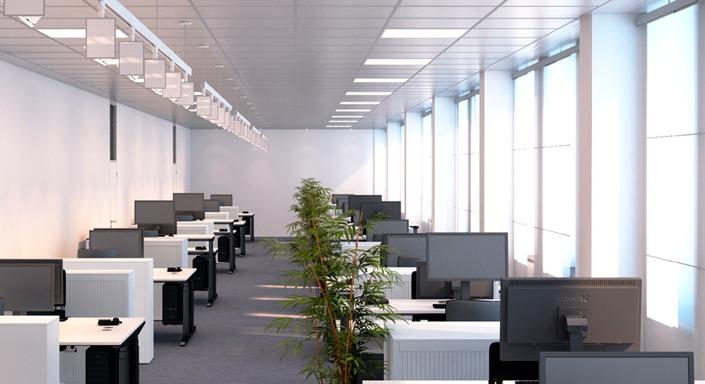
LED lamps are best suited because they consume little electricity and almost do not heat up during operation.
Lighting requirements for computer rooms
If employees constantly work at computers, you need to ensure proper lighting of the workplace:
- You can not put the monitor in front of the window, you need to sit so that natural light falls from behind or from the side.
- It is better to use table lamps that can be adjusted. Light intensity is selected individually.
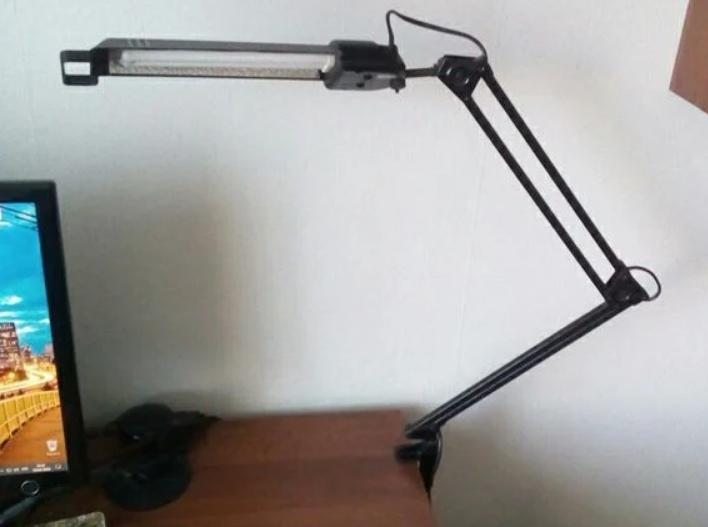
![lamps that are mounted on the edge of the tabletop]() For computer desks, lamps that are mounted on the edge of the tabletop are suitable.
For computer desks, lamps that are mounted on the edge of the tabletop are suitable. - Only lamps with natural light should be used, warm and cold tones will not work.
- Position the light source so that there is no glare on the monitor. This is a very important point.
- It is better to put LED lamps, as they do not heat up and even accidentally touching the lamp, a person will not get burned.
The video explains how to choose the light for productive work. Why is it important to use a neutral or cool glow color in the office or any work area.
Not only visual comfort, but also labor productivity depends on the quality of light in the workplace, since a person quickly gets tired in low light. It is important to comply with established standards and select fixtures that will not give glare.