What are the types of bases for light bulbs
There are different types of lamp bases on the market. They differ from each other in design, scope, materials. To make the right choice, you need to familiarize yourself with the classification, technical and other characteristics of each type.
Device and materials used
To understand the design of the plinths, first you need to find out what functions this part performs and what characteristics it should meet:
- The base acts as a conductor of electricity from the cartridge to the light bulb.
- Used to fix an element.
- Must be able to withstand operating temperature.
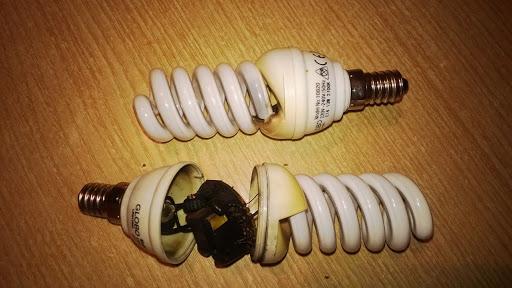
It is the work with high temperatures that is the main task of the base. The electrical contacts in its design must withstand currents and transmit them.Additionally, the element may contain a special part responsible for positioning accuracy; this is important, for example, for a movie projector lamp.
The leads of incandescent lamps are usually fixed with soft solders, the melting point of which is 180 degrees. Accordingly, the conclusions should not be heated to high levels. To compensate for thermal expansion, the cartridges have spring contacts.
In the production of socles of various types, metals and plastics are used. Metal elements are necessary for the connection and transmission of current.
How plinths are marked
The marking of the bases is carried out by a combination of alphanumeric characters. It may consist of two or three parts. Starts with a capital letter, padded with a number, and optionally qualified with lowercase letters.
Primary letter
A capital letter from the Latin alphabet is used. Informs about the type of contact group or the way it is located on the lamp. The main letter can tell about the scope, type of connection.
Plinth designation types:
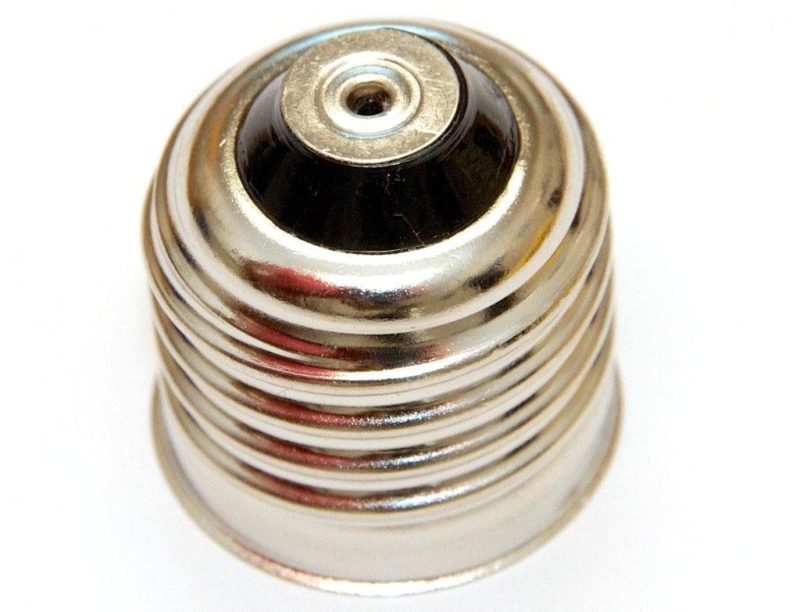
- E - Edison's standard threaded base, used in everyday life for lighting fixtures;
- G - design with pins as contacts;
- R - with a contact recessed in the end;
- B - pin structures;
- S - soffit sample;
- P - flanged;
- T – telephone type;
- H - for xenon;
- W - wire (baseless).
Number
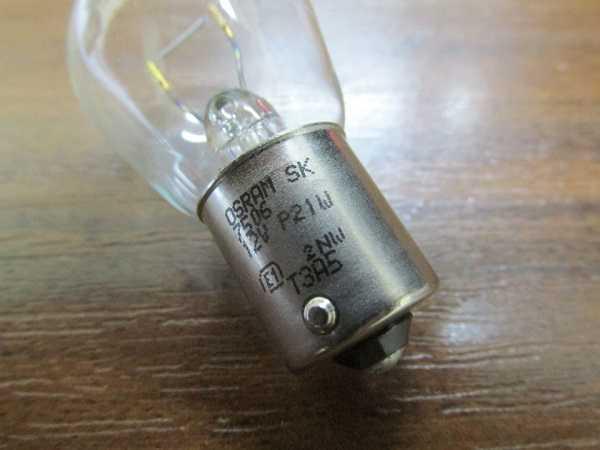
The second mandatory part of the marking are numeric characters, they indicate the size of the product. Different lamps use different measurements, the number may correspond to the diameter or distance. Usually measured in millimeters.
Lower case
Not all designs are used in marking, they provide information about contacts. They are also denoted in Latin, but in lowercase letters.
Marking:
- s - indicates the presence of one contact;
- d – designates devices with two contacts;
- t - for products with three leads;
- q – socles with four contacts;
- p - five plugs.
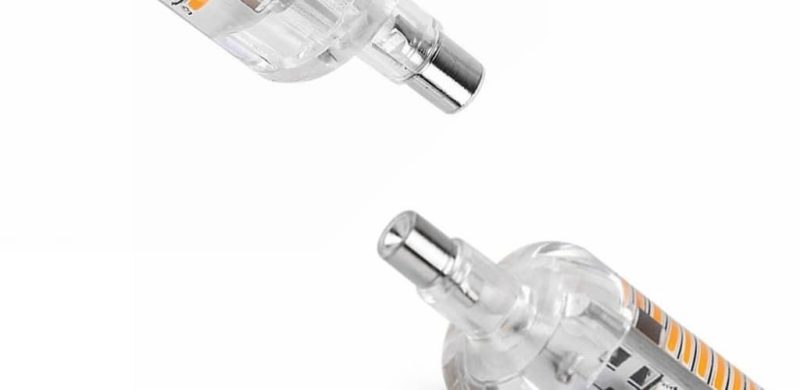
If there is no lowercase letter in the marking of a particular lamp, then this indicates a normal contact group for this type.
The main characteristics of the lamp are voltage, power, type of base. In terms of voltage, the standard option is 220, but there are both devices with a lower value and with a larger one. In terms of power, a model is selected based on the needs and capabilities of the device, and the base is selected according to specific cartridge.
Plinth sizes: applications + photo
The marking will tell only about the belonging of the lamp to one of the types, but complete information can only be obtained by familiarizing yourself with the different options for the socles. In almost every design, there are several more sizes that determine the application.
Threaded (E)
Models with threaded bases are also called Edison lamps in honor of inventor. This is the most common version of the socles, they are used everywhere, and the range of lamps is also wide: from conventional incandescent appliances to modern LED ones.
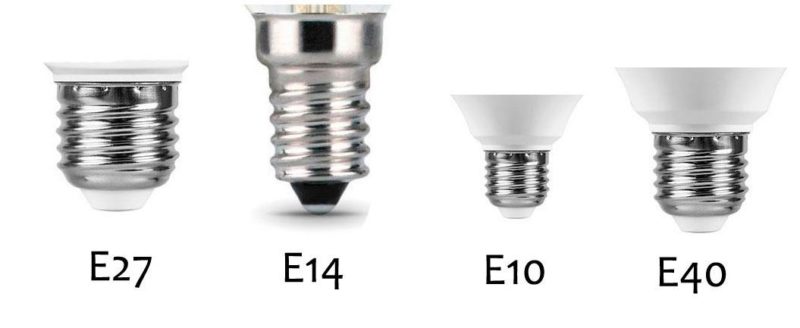
The sizes of threaded bulbs are divided into 4 categories:
- E10 - the smallest option, used in compact lighting fixtures, household appliances;
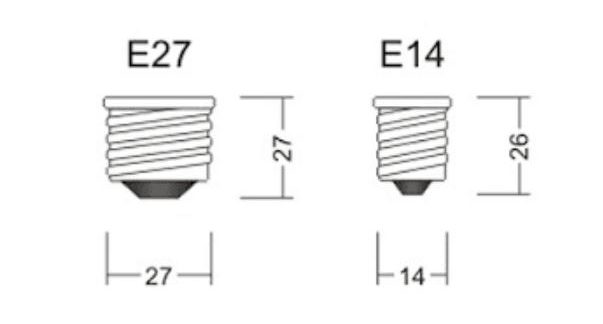
- E14 - a popular household lighting option in pendant, wall, table lamps;
- E27 - the most popular option, also used for medium power lighting;
- E40 - installed in high-power lamps, in particular, in street lamps.
Bayonet (G)
In these devices, the contact connection is no longer a thread, but pins. The simple design ensures reliable electrical conduction, the plinth is used in halogen, luminescent, LED light sources.
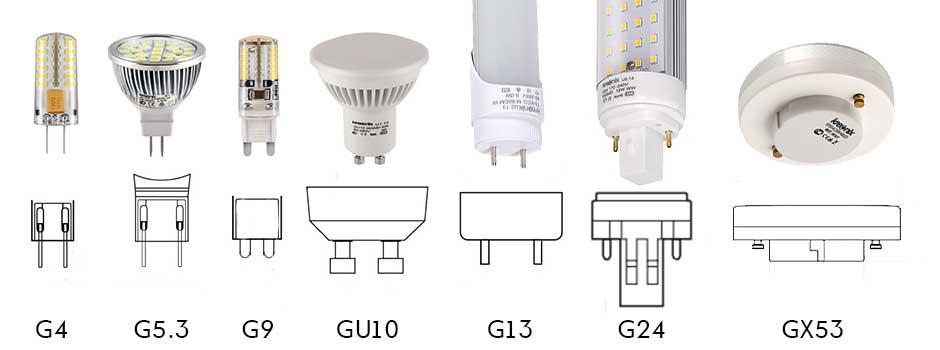
Common pin sizes:
- G4 - they are equipped with miniature halogen and LED lamps, which are used in lighting furniture, shop windows;
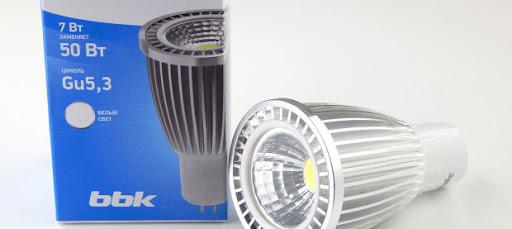
- G5.3 - installed in halogen and LED spotlights;
- GU10 - differ from G in the presence of swivel joints to increase strength;
- G13 - one of the most popular pin bases, used in tubular lighting lamps;
- G23 - installed in pendant and table lamps.
Desktop (2G11)
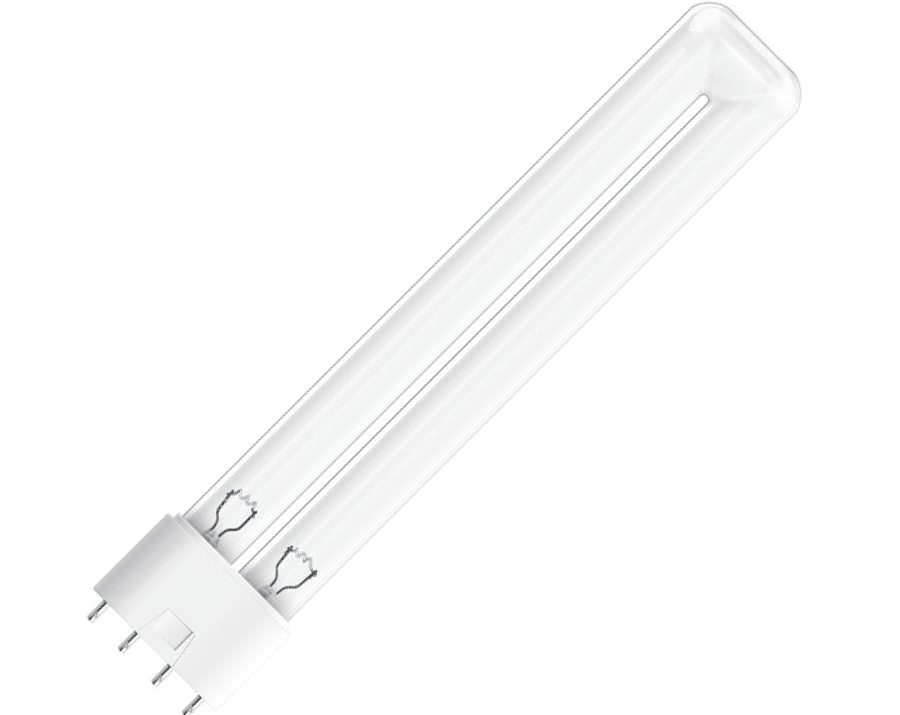
This variety is used in fluorescent table lamps, similar in appearance to the G23. The flask has an elongated U-shape, the design is additionally equipped with a starting starter and a capacitor. 2G11 is used not only in lighting fixtures, but also in disinfectants; bactericidal ultraviolet lamps are produced with it.
Deep contact (R)
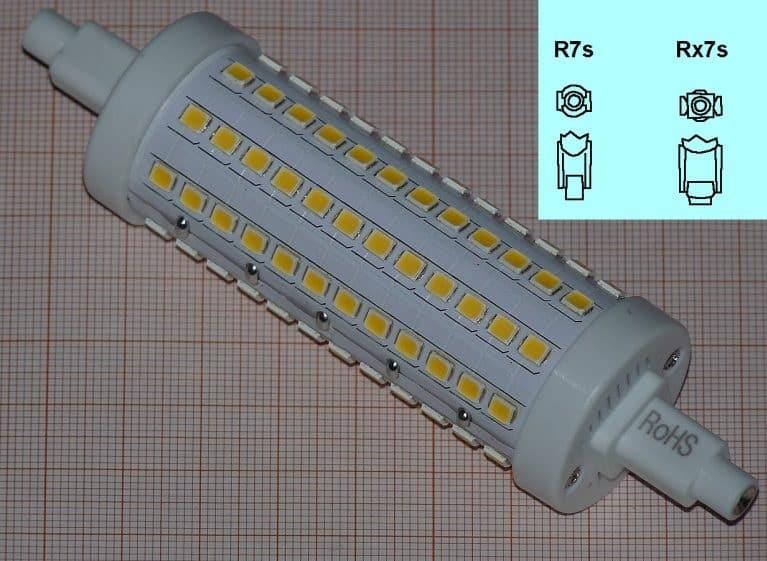
The main difference from other socles in the recessed contact. The most common size is R7s, it is equipped with LED and halogen lamps of spotlights, industrial lamps. Additionally, the marking may indicate a number that indicates the length of the lamp. Another area of application for devices with an R-type base is automotive.
pin (B)
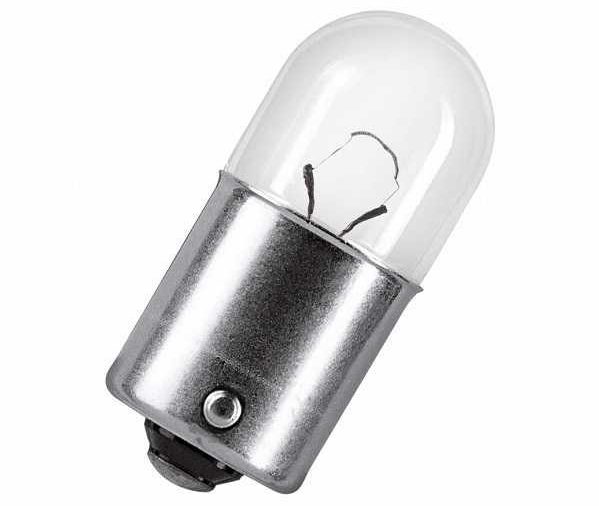
Installed in double helix automotive light sources.The peculiarity is that the lamp is correctly fixed in only one position due to the protruding element. This is necessary for a strictly specified technical characteristic of the direction of light. To fix such a light bulb in the connector, you need to insert it with pressing and turning.
Soffit (S)
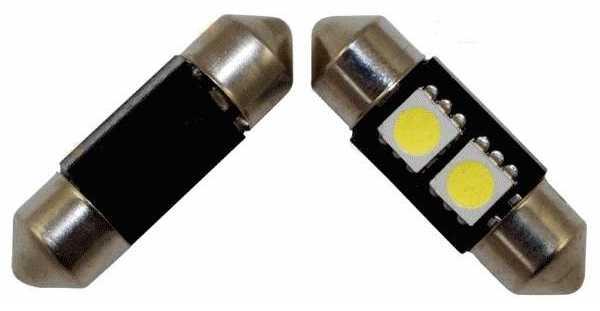
They were used mainly in stage equipment, thanks to which they got their name. Today, with soffit bases, lamps are made for decorative lighting (furniture, mirrors) and functional in cars (interior, license plates).
Focusing (P)
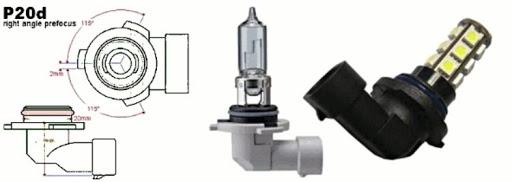
The design of such a base has a prefabricated lens, it is designed to direct the focusing of light. Thanks to this, the lamp is inserted in a certain position and fixed. Focusing light sources are common in flashlights, movie projectors.
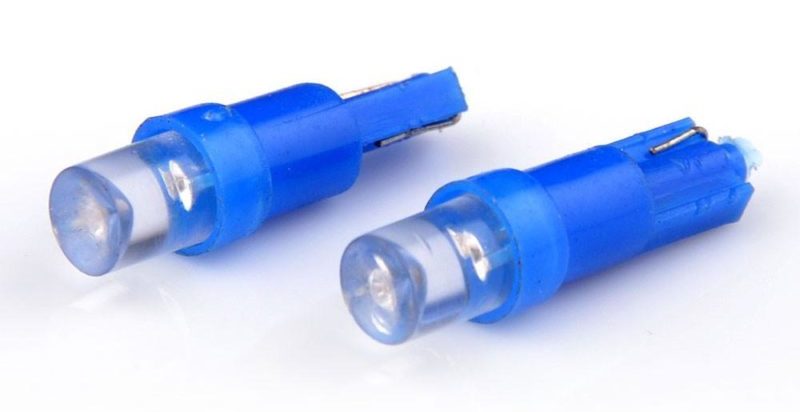
Telephone (T)
Miniature lamps are installed in automation panels, to illuminate panels, in remote controls. The standard number indicates the diameter, but in telephone bases it is measured in inches, so the T5 will have a diameter of 5/8 inch, which is 1.59 cm, and the T10 will be 3.17 cm.
Wire or baseless (W)
The presence of a base as such is not provided for in the design; its functions are performed by contacts emanating from the base of the lamp. The numbers in the marking indicate the thickness of the base with one current input. They are used in festive light garlands, car turn signals.
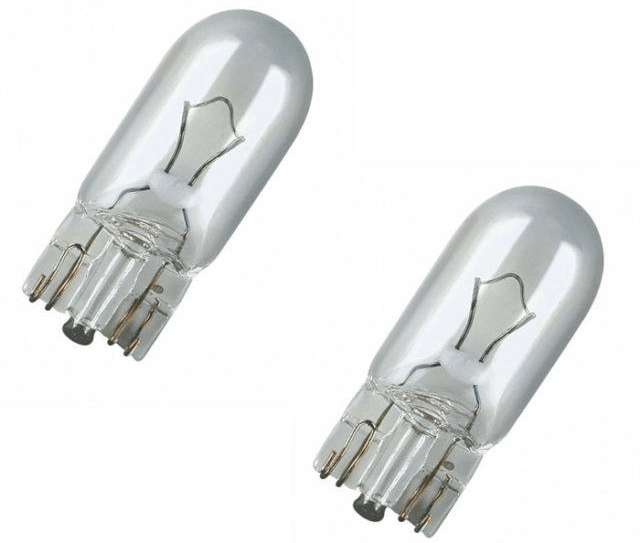
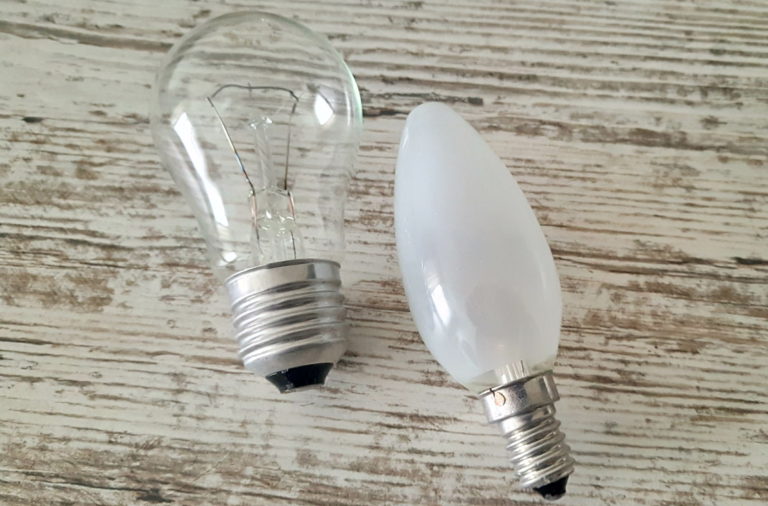
Table with applications
Determining which lamp is used where is not always easy.This will help a table listing the sizes and applications.
| Marking | Application |
| E14, E27 | Household lighting fixtures: floor lamps, chandeliers, sconces |
| E40 | Powerful lighting for large rooms, street lighting |
| G4, GU5.3, G9, G10 | Decorative lighting, spot lighting, interior lighting |
| G13 | Tubular oblong lamps |
| 2G11 | Table lamps for lighting and disinfection |
| GX53, GX70 | Recessed, surface-mounted lamps |
| GX24q-4 | Downlights, table lamps, interior lighting fixtures |
| R7s | Spotlights, floor lamps, floor lamps, downlights |
| B | Double helix automotive lamps |
| S | Illumination of furniture, instrument panel, car license plates |
| P | Flashlights, projectors |
| T | Illumination of automation boards, control panels |
| W | New Year's garlands, turning mechanisms of a car |
The marking of the base size is printed on the packaging of the lamp, it is in the instructions, it is indicated on the flask. Also, information about a suitable light source is indicated in the instructions for each technique.
Foreign marking
The above classification of socles is generally accepted and is used in most countries of the world. But in some areas there are small differences that can be confusing. It is better to familiarize yourself with them in advance:
- Pin connections, which are also called bayonet, according to general standards, are marked with the letter B. Some Russian manufacturers mark their products of this type with the Cyrillic letter Sh.
- In the US, some companies label E27 bulbs with the letter M. Moreover, the standard E27 marking is also on the market.
- Miniature pin bases can be designated not only with the main symbol B, but also with an additional one - a.
- Automotive lamps are a separate subspecies, they are designated by the letter H.
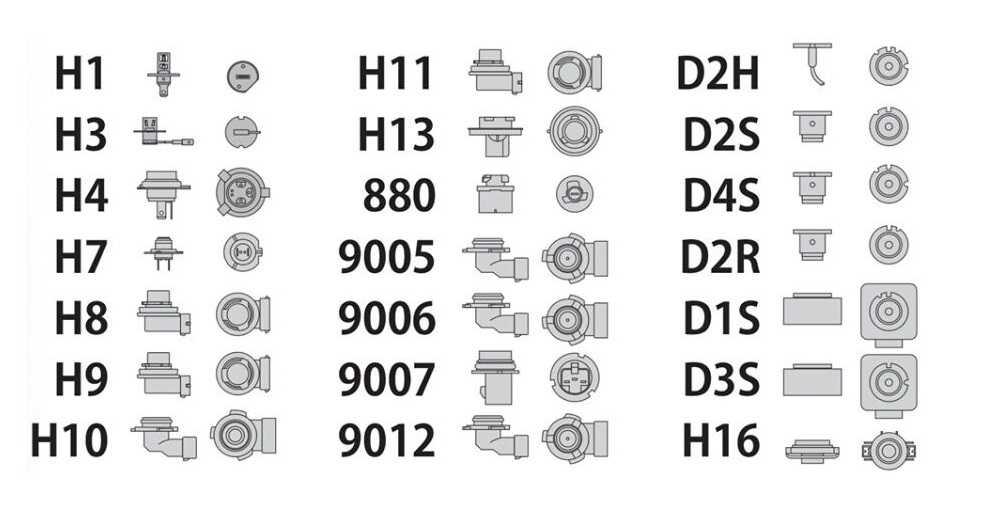
To fix the information of the video.
Application of adapters
It happens that it is not possible to find a lamp of the required design for use. Or repairs are being carried out, there is a lamp at hand, but it does not fit the chandelier cartridge. For such cases, repairmen usually have adapters with them.
Another common situation is that there is not enough light from the E14 even with high-power LED options. But the E27 could do the job. Or one E27 lamp is not enough, but two would be just right.
The following adapters are available on the market:
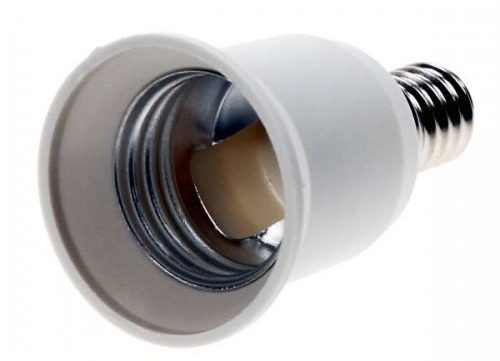
- Interdimensional. The standard option when, for example, you need to switch from screw E14 to screw E27.
![What are the types of bases for light bulbs]() E14-E27.
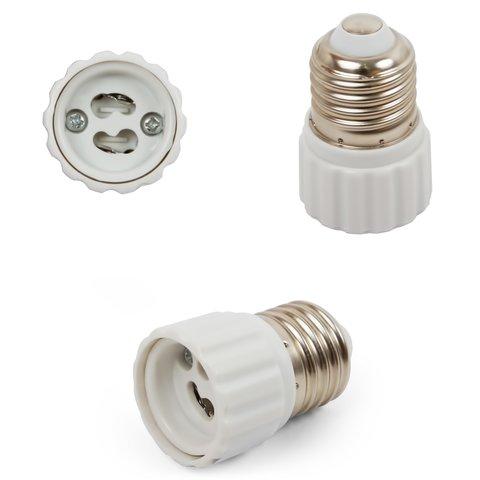
E14-E27. - Intertype. Used to with one design plinth switch to another, for example, the transition of screw E27 to pin GU10.
![What are the types of bases for light bulbs]() E27-GU10.
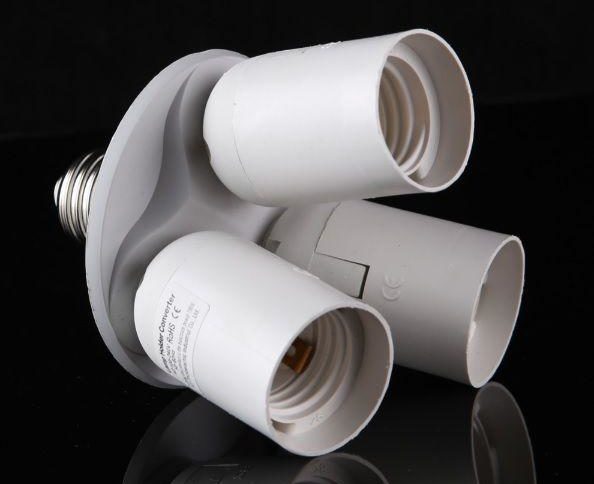
E27-GU10. - Splitters. Two or even three light bulbs can be screwed to one cartridge at once. Such adapters are presented mainly for Edison lamps.
![What are the types of bases for light bulbs]() E27 - 3 E27.
E27 - 3 E27.
Adapters will really help solve certain problems, but they also have one drawback - lengthening the structure. An additional element appears between the cartridge and the base, so the lamp can strongly protrude from the ceiling.