What does ripple factor mean?
Ripple factor illumination - one of the quality indicators used when checking the light in rooms for various purposes. This criterion is not well known, but it has a great influence on a person, if the established norms are violated, fatigue increases and the risk of injury in production increases. Therefore, it is checked with special equipment to make sure that the light meets the established standards.
What is the ripple factor of illumination
This term refers to the relative depth of fluctuations in the illumination of lamps or fixtures that occurs during operation of the equipment when it is powered by alternating current. In fact, this is an indicator of the change in brightness, which is inherent in a particular type of equipment and affects the comfort of the work performed.When regulatory indicators are exceeded, performance decreases, and the longer the pulsation affects vision, the higher the fatigue.
The allowable value depends on the type of work being done and the eye strain required in the particular situation. Most of the standards were set based on the capabilities of lighting equipment used in the middle of the last century. At that time, the norms were 10, 15 or 20%, some of them are still used, others have become tougher and changed downwards.
In all rooms where computer equipment is used or displays are installed, the illumination pulsation index should not exceed 5%.
The coefficient under consideration increases if the brightness of the light is adjusted using dimmers. Moreover, changes are observed only in devices whose operation is based on the principle of pulse-width modulation. The frequency also matters, if it is below 300 Hz, then the effect is especially noticeable.
If the lighting is powered by alternating current with a power frequency of 50 Hz, the ripple frequency is calculated at twice the value, therefore equal to 100 Hz. It is impossible to visually determine the pulsation in this case. Therefore, for control measurements, special devices are used - pulse meters. Most often, this is not a separate device, but a universal equipment combined with luxmeter. In 2012, a number of standards were introduced regarding measuring instruments and their verification, so all devices must comply with established standards.
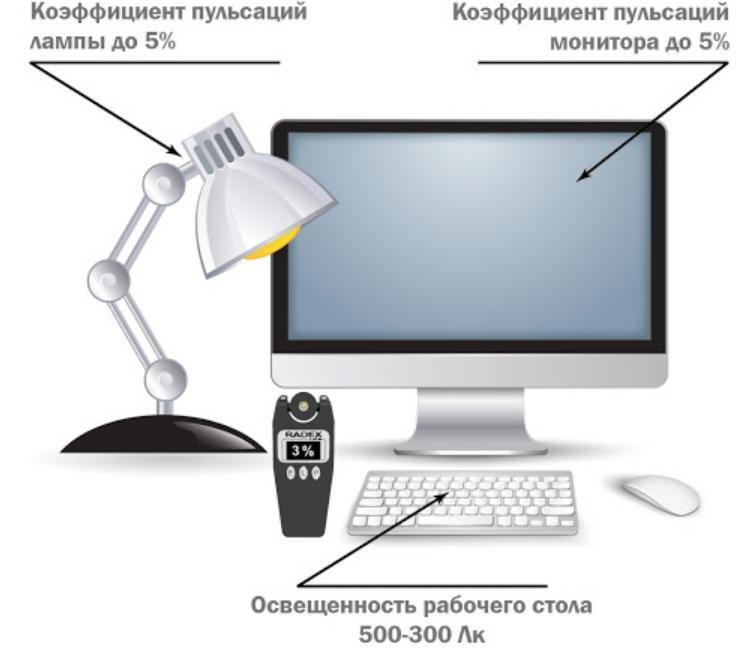
Norms and requirements for pulsation frequency
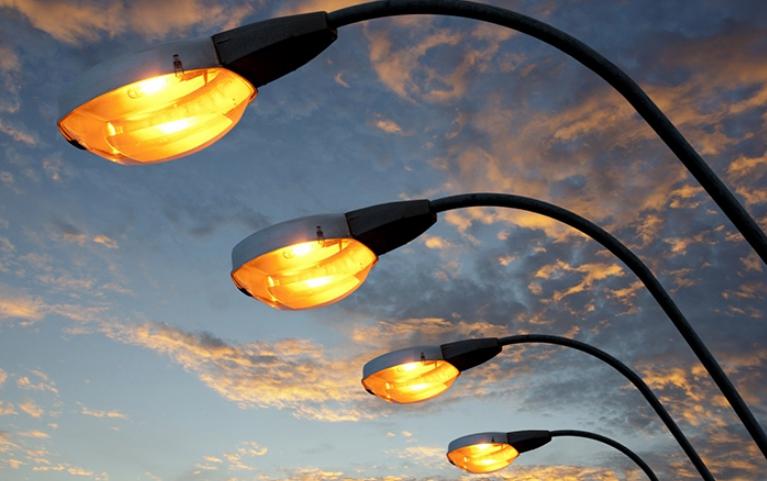
It all depends on the type of equipment used and the features of its connection. It should be noted that the highest rates of light pulsation, exceeding 30%, are inherent in electromagnetic PRA and discharge lampsoperating from a single-phase line. Therefore, they are most often used for street lighting and places where constant eye strain is not required.
By the way! Contrary to popular belief, pulsation is also inherent in standard incandescent lamps. When they operate from a single-phase supply network, the figure can be up to 15%.
Special attention requires LED equipment. The principle of its operation differs from the standard options, the indicator depends on the circuitry features of the power supply used in the system. In order to reduce the cost, many cheap products use a rectified current with a power frequency instead of a constant voltage at the output, which leads to the fact that the ripple can reach the mark at 30%.
At buying LED equipment must be requested from the manufacturer or supplier of technical documentation with all the main indicators, including light pulsation. Moreover, it is necessary to study the data on each product separately, even if they are similar in characteristics. It often happens that the performance of two almost identical lamps differ greatly.
Do not forget that the ripple indicators increase significantly when using dimmers with a frequency of up to 300 Hz in the system. It is better to use options with rates exceeding 400 Hz. It is also worth noting that if the power frequency is more than 5 kHz, then the flicker indicators are reduced to 1%.
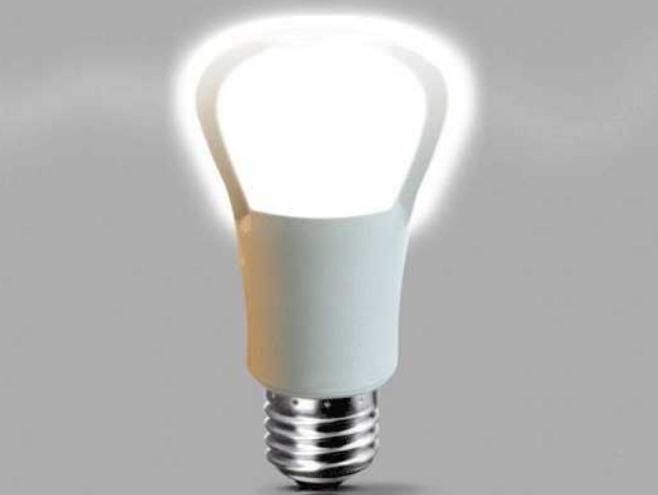
This option works especially well with standard and compact fluorescent equipment. Thanks to modern technology, they can be powered at frequencies above 25 kHz, which allows for minimal light flicker without additional devices.
The rate of illumination pulsation depends on the light source and the number of phases to which the equipment is connected. The main coefficients for the most common lamps are as follows:
- Incandescent lamps when connected to a single-phase line, they must provide a flicker factor in the range from 10 to 15%, two-phase - from 6 to 8%, three-phase - 1%.
- Fluorescent lamps LBoperating from one phase - 34%, two - 14.4, three - 3%.
- Fluorescent lamps LDconnected to a single-phase line - 55%, two-phase - 23.3, three-phase - 5%.
- Mercury arc lamps when operating from single-phase voltage should provide a flicker coefficient of not more than 58%, two-phase - 28%, three-phase - 2%.
- Metal halide light sources when operating from one phase must comply with the flicker coefficient of 37%, two phases - 18%, three phases - 2%.
- sodium high-pressure lamps operating from a single-phase line - 77%, two-phase - 37.7%, three-phase - 9%.
Causes of the stroboscopic effect
The stroboscopic effect is a phenomenon of distortion in the perception of moving or rotating pieces of equipment.This can often be seen on a rotating lathe pulley, under certain conditions it creates the illusion that it is standing still or spinning in the opposite direction. The phenomenon is observed in cases where the frequency of the alternating current supplying the lamp is a multiple of the rotational speed of the equipment or mechanisms.
Most often, such a phenomenon can be observed in industrial premisesilluminated by fluorescent lamps. In fact, due to the variable power supply, it turns out that the period of switching on and off of the lamp is superimposed on the frequency of rotation of the mechanism.
For safety reasons, all production areas were previously lit with incandescent lamps, as they have a much lower flicker index, which minimized the risk of stroboscopic effect. In modern conditions, LED lamps have become the best solution, but only if high-quality equipment is used with power supplies that supply direct current.
The effect of pulsations on the human body
This phenomenon was noticed a long time ago, the most extensive studies were carried out in the middle of the last century. According to the results, any light pulsation with a frequency of up to 300 Hz has a negative effect on the human body.
If you constantly stay in a room with low-quality light, the daily hormonal rhythm will change. In addition, if the flicker has a frequency of up to 120 Hz, the human brain reacts to constant changes and constantly tries to process the incoming information on a subconscious level.
Due to prolonged stress, people get tired much faster and more strongly.. Concentration is lost, mental abilities are reduced.It also affects those who are engaged in intellectual work - due to the high load on the brain, it is much more difficult to make decisions and conduct research, and efficiency decreases significantly.
If the flicker exceeds 300 Hz, it does not affect people in any way and does not overload their brain. It is worth focusing on this indicator when choosing equipment.
How and with what to measure the ripple coefficient
All requirements and regulations regarding the characteristics of light are set out in the standards GOST R54945-2012 "Methods for measuring the pulsation coefficient of illumination". It is this document that guides design and control organizations.
Use of measuring devices
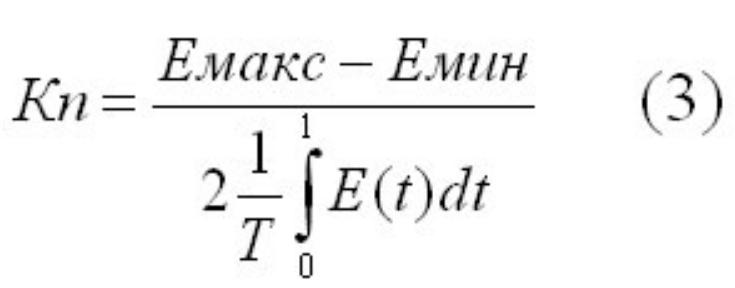
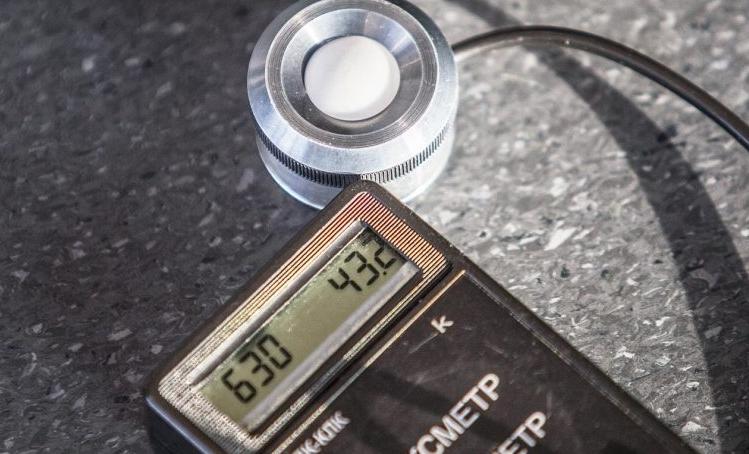
All controlling organizations, as well as enterprises, use oscilloscopes to determine the ripple factor. With their help, you can very quickly and accurately take measurements in a room of any size and shape. Previously, the formula shown below was used for calculations.
You can also use special programs. In this case, all the necessary data are entered, after which the calculations are made.
Only verified equipment is suitable for professional use, therefore a certain list of oscilloscopes or universal devices is used. For the home, you can purchase a simpler model, it will not be perfectly accurate, but it will be able to orient by the pulsation indicator, this is enough to evaluate the lighting.
| An object | Coefficient of natural light, % | Artificial illumination, LC | Pulsation coefficient, % |
|---|---|---|---|
| Living rooms (living rooms, bedrooms) | 2 | 150 | - |
| Children's rooms | 4 | 400 | 10 |
| Working rooms (rooms, offices) | 3 | 400 | 15 |
| PC operator workplace | - | 300 | 5 |
| Classrooms, classrooms | 4 | 500 | 10 |
| trading floors | 4 | 500 | 10 |
| Roads | - | 2-30 | - |
| Pedestrian spaces | - | 1-20 | - |
| Escape and emergency lighting | - | 0,1-15 | - |
Folk methods
If an oscilloscope is not at hand, you can use simple methods that will allow you to determine the flicker, which is not visible under normal conditions. The most popular ways:
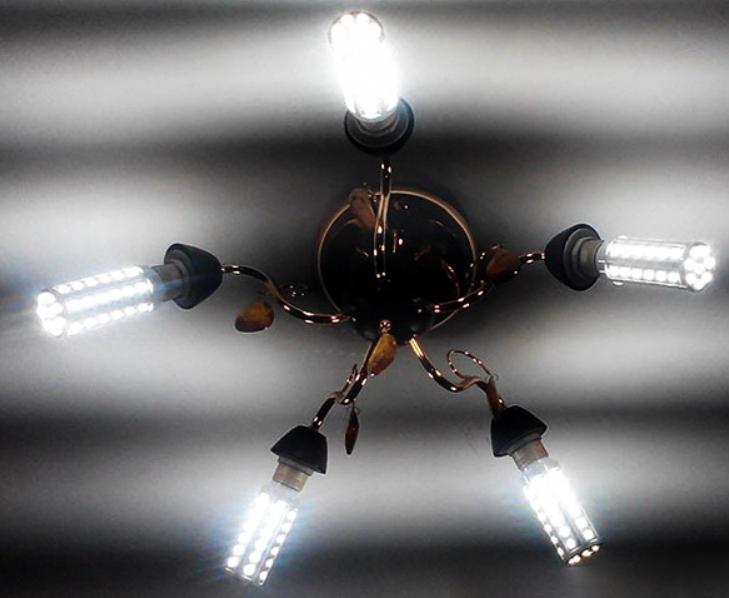
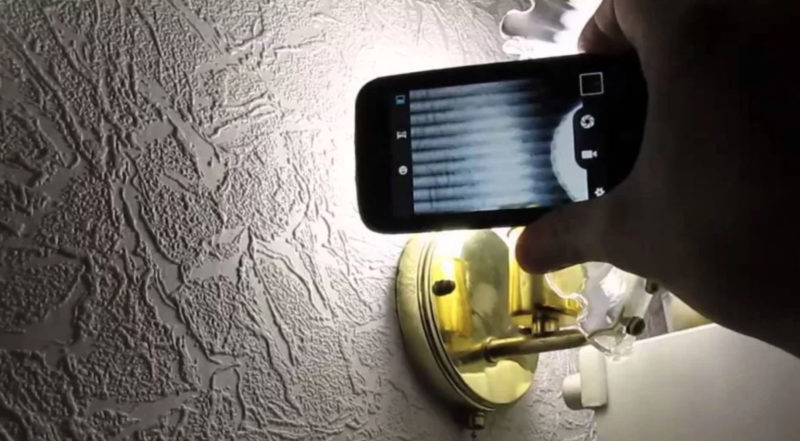
- Smartphone. The camera is turned on and brought up to the light bulb so that the light source occupies the entire space. If there are stripes on the image, then the ripple coefficient exceeds the permissible norm.
![What does ripple factor mean?]() The screen of the gadget clearly conveys the pulsation of the lamp.
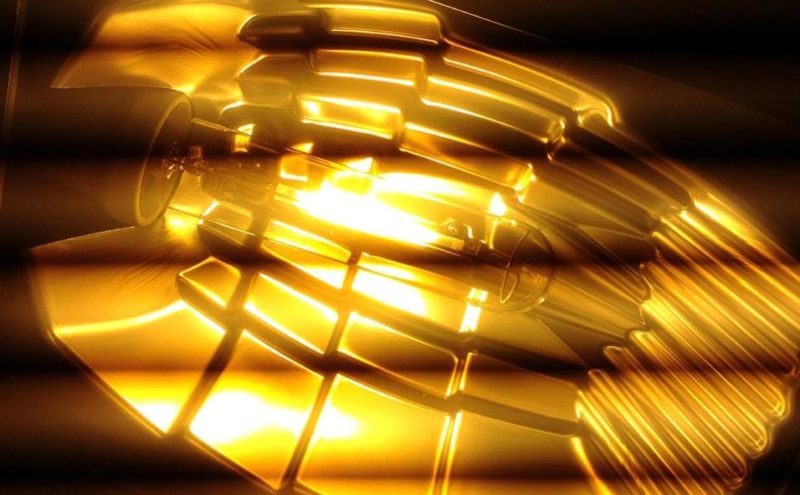
The screen of the gadget clearly conveys the pulsation of the lamp. - Camera. The device must be used without a flash. A photograph is taken of the lamp from a short distance. If it flickers, then the stripes will be clearly visible in the photo.
![What does ripple factor mean?]() The pulsation of light is clearly visible in the photographs.
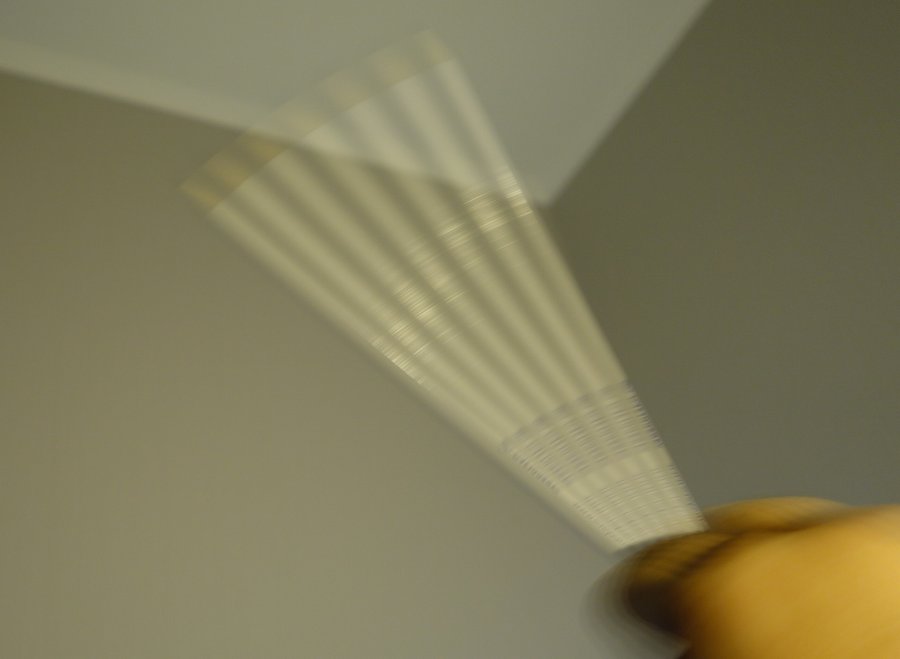
The pulsation of light is clearly visible in the photographs. - Pencil. You need to take it with two fingers, bring it to the lamp and wave it back and forth for a few seconds. If you see the effect of a "frozen blade" with the outlines of a pencil in several places, then the lamp flickers too much. And the more distinct the outlines of the bands, the higher the ripple coefficient.
![test in the presence of a flickering lamp.]() Stroboscopic effect when checking light with a pencil.
Stroboscopic effect when checking light with a pencil. - Yula. You can simply spin a children's toy right under the lamp. If a stroboscopic effect occurs during its rotation, it is better to replace the light source.
Some smartphones have a flicker suppression function, so you won't be able to check the ripple.
Ways to reduce lighting ripple
There may be several solutions to this. It all depends on the characteristics of the room and the type of devices used, the most commonly used methods are:
- Connection of fixtures to a two- or three-phase line alternately. Due to the shift, the voltage is applied unevenly and flicker is reduced.
- When powered from a three-phase line, the number of fixtures must be a multiple of three, two-phase - two.
- Replacement of obsolete equipment with modern LED.
- Uses fluorescent lamps with a modern 5 kHz power supply or higher.
The video discusses the effects of light pulsations on the safety of road users.
It is necessary to control the pulsation of lighting. It affects the comfort of a person’s stay, his fatigue, and in industrial premises safety depends on this indicator.