Characteristics of discharge lamps
All lamps, the action of which is based on the transformation of the properties of a gas, are called gas discharge lamps. They come in different types and are used in many industries. Differ in efficiency, reliability and good color rendition.
What are gas discharge lamps
A gas discharge lamp (GRL) is a small electrical device that emits visible light in a given spectrum.
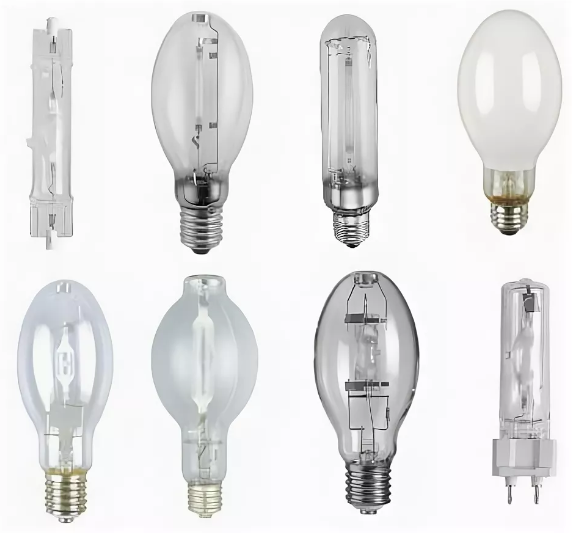
Each device includes the following components:
- a glass bulb with electrodes filled with gas;
- control equipment in the form of an electronic module or a limiting resistor;
- plinth for embedding in equipment.
Varieties
Discharge lamps are divided into GRL low and high pressure. Each of the groups has its own characteristics, which affects the choice in a particular case.
Low pressure discharge lamps
The most famous representative of low pressure GRL is a fluorescent lamp. It is a tube coated from the inside with a phosphor. The electrodes receive a high voltage pulse and heat up.
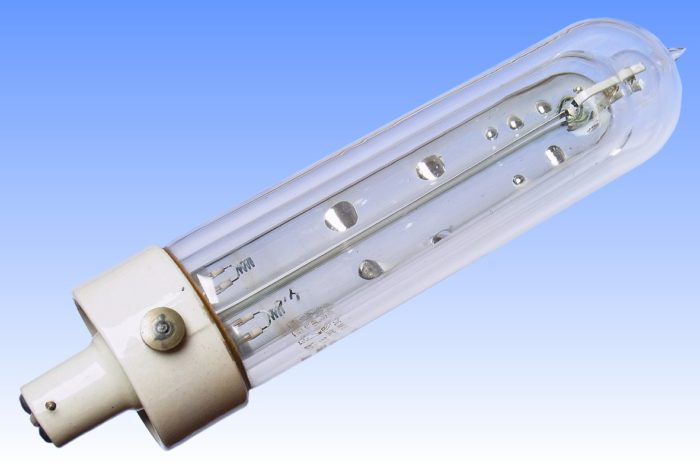
When heated, a glow charge is formed between the contacts, UV radiation arises in the gaseous environment of the flask, which, acting on the phosphor, causes a glow.
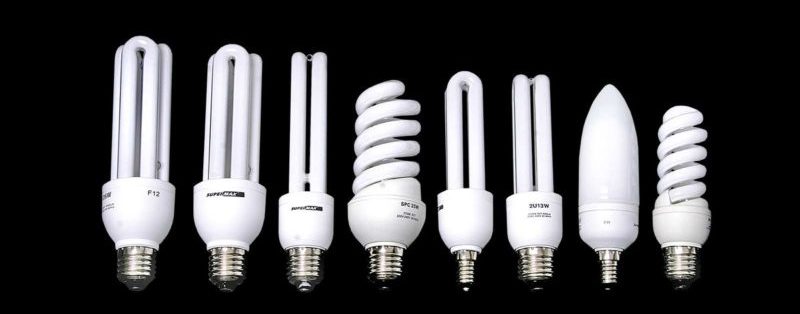
A variety of fluorescent lamps (LL) are compact devices that are marked with the abbreviation CFL and do not differ in anything from the previous model except for the size. All devices have a control element built into the base.
Separately, it is worth considering induction lighting devices. They do not have any electrodes in the inner part, and ionization occurs under the influence of a high-frequency magnetic field. Usually, a mixture of argon and mercury vapor is used in the flask, which acts on the phosphor.
High pressure discharge lamps
Elements whose pressure inside the bulb exceeds atmospheric pressure are called high-pressure lamps.
Representatives are arc mercury lamps (DRL). Not so long ago, they made up the majority of all street lighting. Now they are trying to replace them with metal halide and sodium sources, which have a higher efficiency.
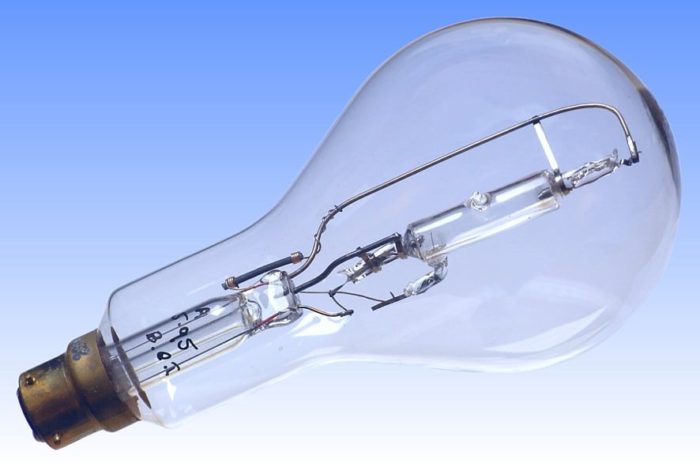
If iodides are connected to the device, it is marked DRI. The device contains a quartz glass burner in which the electrodes are located. A mixture of argon, mercury and some metal iodides is used as a functional substance. The burner is located in a rarefied space and allows you to create strong radiation, which is enough to illuminate large areas. DRI can have power from 250 to 3500 watts.
Another example of a high-pressure GRL is the arc sodium tubular model (DNaT). It is characterized by very high light output and relatively low power consumption. The light has a pronounced golden hue.The disadvantages of the device include a long shutdown, which can take about 10 minutes.
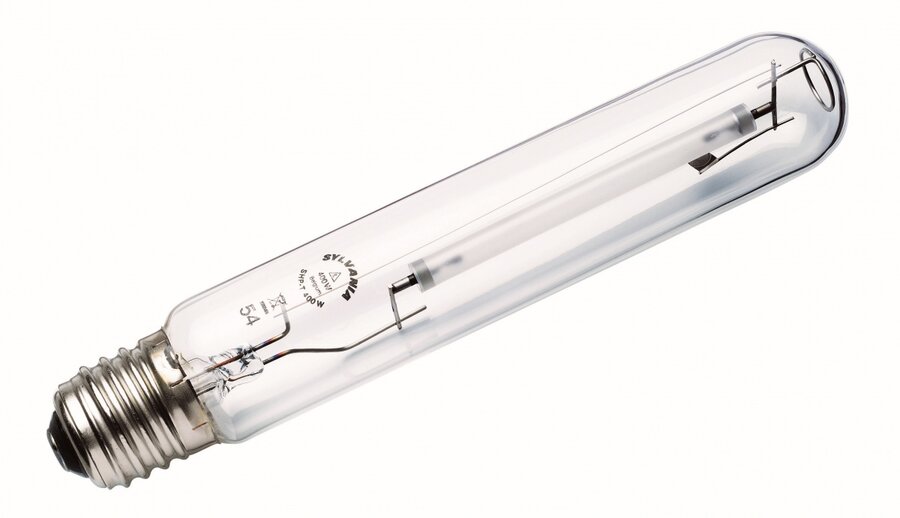
If you need white lighting, as close as possible to daylight, it is better to select arc xenon devices. The maximum power can reach 18 kW. Tungsten electrodes are alloyed with thorium and are able to withstand high loads. Sapphire glass is used if UV output is required.
Metal halide discharge lamps (MHL) are compact, reliable and powerful light sources, which are a burner placed in a vacuum flask. The burner is made of quartz glass or ceramic. The interior is filled with mercury vapor and metal halides. Radiation occurs when a plasma appears between the electrodes during power supply. The power of the devices in some cases can reach 3.5 kW. Designed for 12,000 hours of operation. Turning on to full power takes approximately 10 minutes.
The principle of the lamp
The principle of operation of the GRL is based on the effect of an electric discharge on an ionized gas. Most often, devices use argon, neon, krypton, xenon, as well as various mixtures. Often sodium or mercury is added.
Related video: Device, principle of operation and features of operation of DRL lamps
As soon as the contacts are energized, an electric field is generated in the tube. It provokes the movement of electrons and their interaction with gas particles. When particles collide, energy is released, which is then converted into radiation of a certain spectrum. The specific spectrum depends on the composition of the gas and the specifics of the operation of the equipment.
The phosphor coating on the bulb helps convert UV radiation into visible light.
Sometimes there are models with a built-in source of beta radiation. It provides ionization of the gas inside the flask, which minimizes the glow charge.
How to choose a gas lamp
When choosing a gas lamp, it is worth considering its type, power and shade of the emitted light. Popular metal halide lamps, which boast high pressure, as well as a powerful and bright glow. Borosilicate glass completely removes UV light, making light safer.
The glow of the gas discharge element will be close to white daylight, however, depending on the filling, there are different shades. Sodium is yellow, thallium is green, and indium is blue.
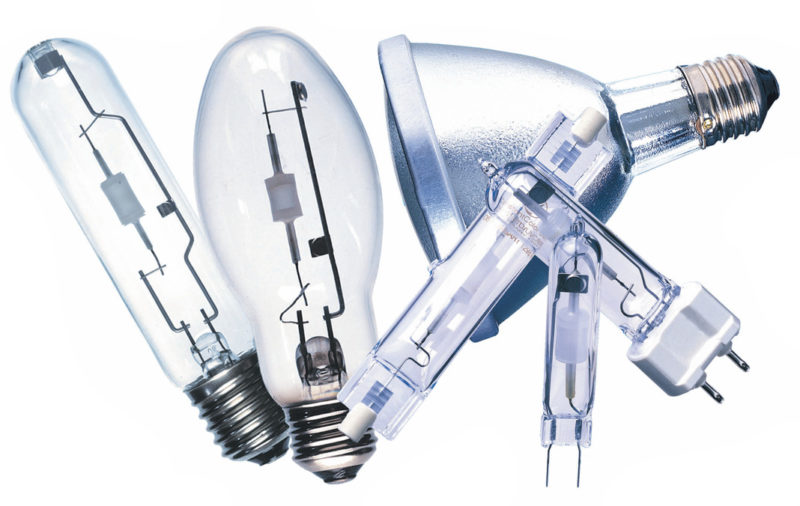
On sale there are lamps for illuminating aquariums or greenhouses. They have a special spectrum that is more environmentally friendly than that of standard fluorescent or sodium lamps.
Sodium lamps are capable of operating for about 25,000 hours, which is comparable to LED elements. At the same time, the emitted white glow is as close as possible to daylight and allows you to examine objects in detail without color distortion.
Luminescent models used in industry and in everyday life are popular. Inside these elements is mercury. When choosing, it is important to take into account the long start-up and significant heating during operation.
Application area
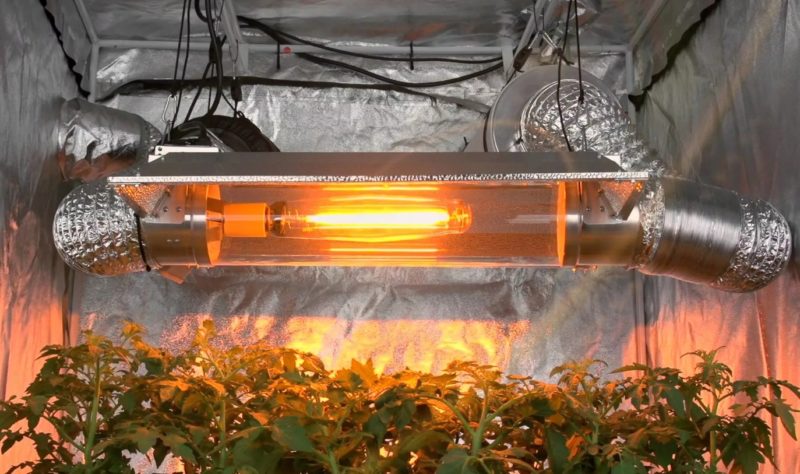
Discharge lamps have become widespread in various industries. Xenon car headlights stand out in particular. They are used by the most famous car manufacturers (Toyota, Opel, BMW).
Devices are effective for lighting large warehouses, industrial workshops and streets, lighting billboards and building facades.
Advantages and disadvantages
Like other lamps, gas discharge lighting devices have advantages and disadvantages. For the proper organization of the lighting system, it is recommended to consider each item.
Advantages:
- models are quite durable and have a significant watch resource;
- devices with different spectral parameters and power indicators are available, which allows you to easily select a device for solving a specific problem;
- The power of gas-discharge lamps is much higher than the power of other devices.
Disadvantages of traditional gas discharge lamps:
- for operation, the device requires control equipment;
- lamps are difficult to assemble, which makes repairs difficult and increases cost;
- models are sensitive to changes in ambient temperature and power surges;
- some lamps take a long time to start;
- mercury appliances need to be recycled.
There are disadvantages, but the power and efficiency of gas discharge lamps allow them to still maintain a reliable position in the market.