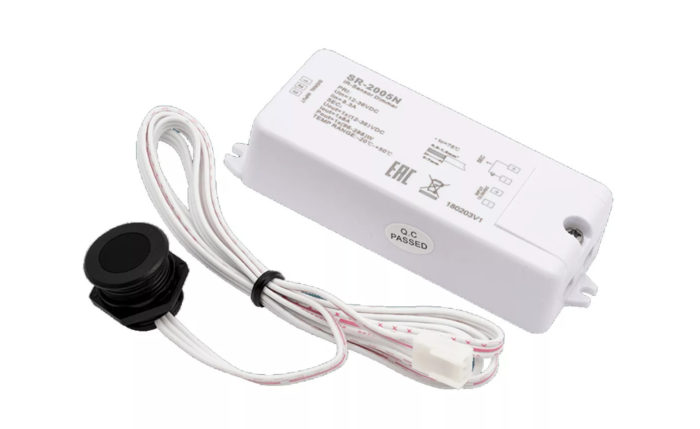
Connecting a dimmer to an LED strip
Dimming (English to dim - dim) is the process of dimming - manually or automatically. For lighting devices of different designs, this procedure is carried out in different ways.
Adjusting the brightness of LED illuminators
The parameter that determines the intensity of LED light sources is the current. Therefore, dimming LED devices is reduced to changing the current flowing through the light emitting elements.
Features of dimming LED lamps
LED lamp built according to different schemes. The difference comes down to ways to stabilize (or simply limit) the current through the LED. The approach to adjusting the intensity of the glow also differs:
- For simple inexpensive lamps, the current through the radiating element is limited by a resistor. In this case, dimming is easily done by changing the magnitude of the external voltage.The larger it is, the more current through the LED, the brighter it glows. Another way to adjust is PWM. Here, the average current through the crystal per unit time is regulated.
- Many lamps have an electronic current stabilizer built in - driver. Its task is to keep the current through the LEDs constant, despite changes in the external voltage. It is obvious that dimming here by adjusting the input parameters is pointless: the driver will still try to keep the current stable.
- There are lamps in which the dimming function is assigned to the driver. It can change the current through the LED depending on the external command.
Therefore, it is important for the consumer to know how to control the intensity of the glow of such a lamp. On the packages you can find the marking "dimmable".

LED strip brightness control
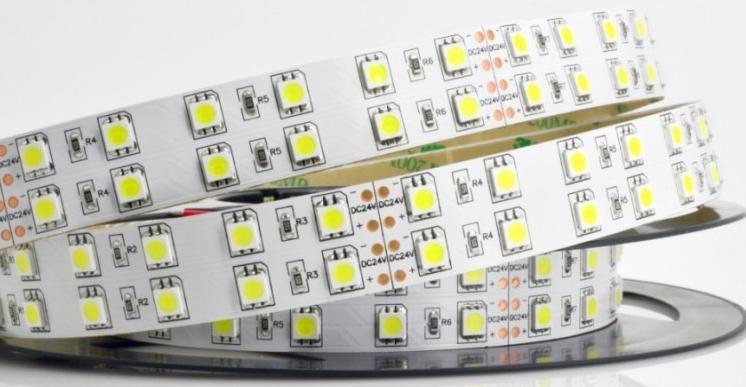
LED strips are built in the form of segments-modules, each of which contains one or more LEDs and a ballast resistor. Such segments can unite parallel. There are no electronic devices to stabilize the current, so the brightness can be controlled by changing the current through the LED, adjusting the supply voltage. Therefore, there are no non-dimmable tapes. Although the specifications of the lighting fixture often say "dimmable LED strip", this is just a marketing ploy to attract consumers.
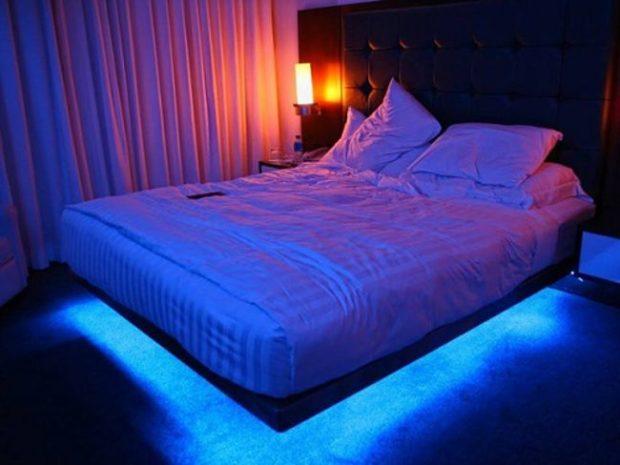
Ways to adjust the brightness of the LED strip
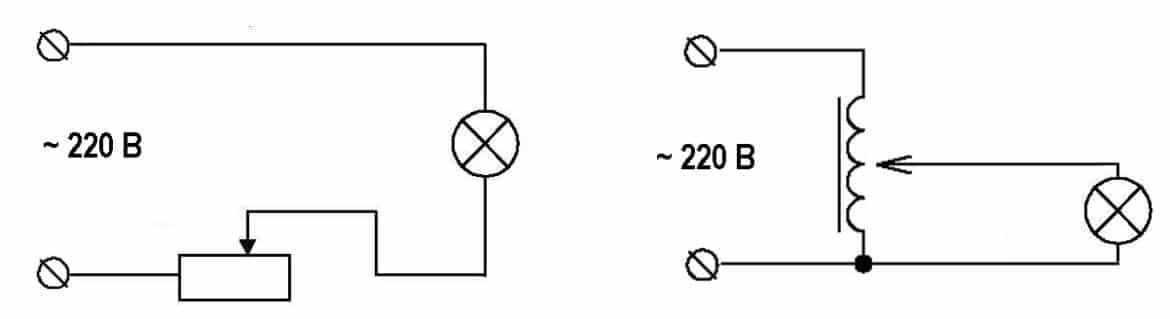
The easiest way to control the brightness of a fixture is to turn on successively with him variable resistor. It will redistribute the voltage drop between it and the tape, thereby regulating the current through the elements.This method is cheap and simple, but a large amount of power is wasted on the potentiometer.
Another method is to install an autotransformer on the 220V side of the power supply. This transformer is bulky, expensive and unreliable.
The most common way to control the intensity of the glow is the use of special devices - dimmers. They regulate the average current through the LEDs by adjusting the average voltage using pulse width modulation (PWM).
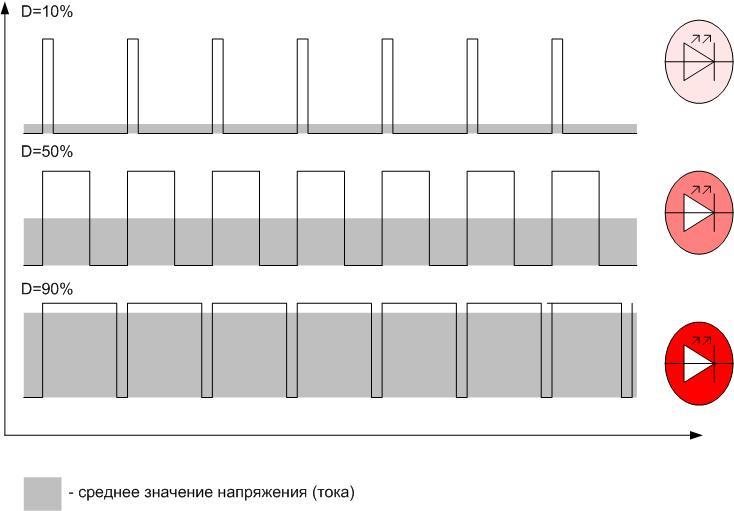
A feature of this path is the lack of redistribution of power between the key element and the load - energy is supplied in dosed portions. Brightness is averaged due to the inertia of human vision.
Low voltage tape management
The impulse voltage for lamps is 12..36 volts, modulated according to the pulse width, is formed using microcircuits. Timers are used for manual dimmers. For example, the widespread microcircuit 555. With its help, a sequence of pulses is generated, the duty cycle of which can be adjusted with a potentiometer. The pulses drive a powerful FET switch that regulates the average current through the LED strip.
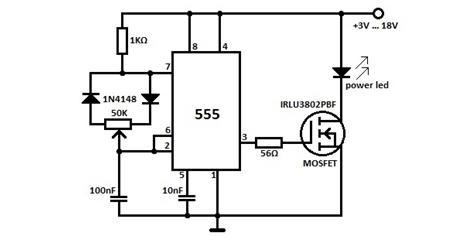
If the dimmer requires a higher level of service, the average current regulator is built on a microcontroller or a specialized microcircuit. This is how devices with remote control or adaptive lighting, which changes depending on the ambient light, perform.

Important! When choosing any dimmer, you need to pay attention to the defining parameters - the operating voltage and the maximum load capacity of the dimmer. They must match the characteristics of the lighting device that is supposed to be connected.
The operating voltage for common types of lighting devices is indicated in the table.
| Device type | RT-5000 3528 | RT-5000 2x3528 | ULTRA-5000 5630 | ULTRA-5000 2x5630 | RS-5000 335 | RS-5000 2x335 |
| Supply voltage, V | 12 | 12, 24, 36 | 12 | 24 | 12 | 12, 24 |
Adjusting the brightness of tapes for 220 V
The dimming of LED equipment powered by 220 V is based on the same principles, but the implementation is somewhat different. More powerful and high-voltage elements, including triacs, are used as control keys.
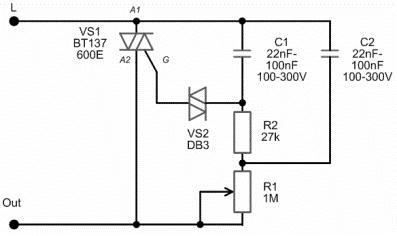
Connecting such a dimmer to the LED strip and adjusting is done before straightening. The control circuit "cuts" the pieces of the sinusoid of the desired width, forming an average voltage. Then it is straightened, filtered (averaging takes place in the filter, so there is no need to take additional measures to reduce flicker) and fed to the LED strip.

Types of dimmers and installation options
The average consumer is not very interested in how the brightness control process works. Most users need information about the consumer properties of dimmers, about the level of comfort that they can provide and how they fit into the interior. According to these properties, dimmers are:
- Devices with manual control. Looks like a regular mains light switch, only equipped with a rotary knob. Installed on the wall in place of the light switches.
- Manually adjustable dimmers with touch control and LCD display. They have advanced service capabilities - timers, preset scenarios, etc. They are noticeably more expensive.
- Dimmers with remote control. Adjusted with a remote control (similar to a TV remote control, etc.). Communication takes place via infrared or radio. Dimmers according to the second option are easier to hide behind interior elements. For example, mount behind stretch ceilings, and then connect an LED lamp to them.
- Dimming RGB-tape occurs in the process of adjusting the color and creating special effects using controllers.
In most cases, dimmers are combined with power switches for LED lamps.
In conclusion, the video: Modern methods of dimming LED strips.
Installing and connecting the dimmer yourself is easy. But we must remember that for different types of lighting devices, different methods of adjusting the brightness are used. Dimmer designed for halogen appliances, not suitable for adjusting the intensity of the glow of LED strips.