Light Intensity Measurement - Description and Meaning
Light intensity matters in both work and living spaces. A person perceives the main part of the data about the world around him through vision. Therefore, the speed of assimilation of information, as well as the comfort of staying in the room, depends on high-quality lighting. If the light is too dim, the eyes get tired quickly, and if it is too bright, it creates discomfort for the eyes. When choosing the optimal intensity, it is necessary to take into account a number of parameters, it is also important to control the indicators using special equipment.
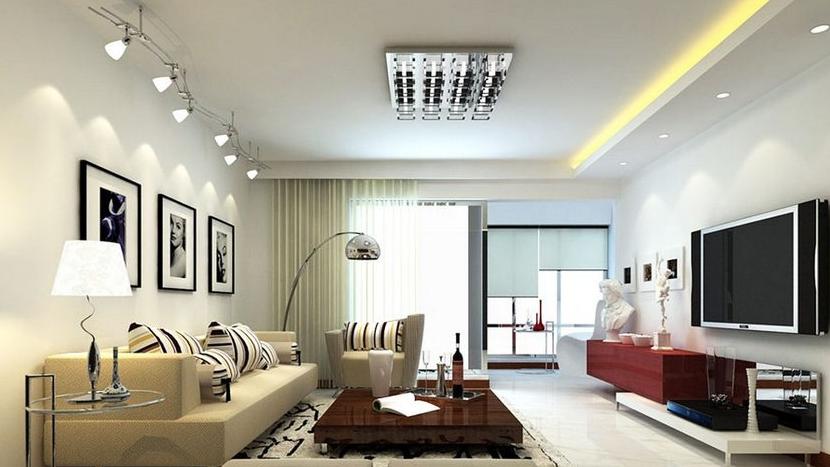
What is light intensity
Determining the parameters is complicated by the fact that the light intensity formula is difficult to calculate and cannot be used as the only indicator. Therefore, several important aspects must be taken into account at once in order to obtain data that will help determine the compliance of the lighting with the established parameters.At home, you can proceed from your own preferences to create a comfortable environment. In the workplace, it is necessary to strictly observe the rules in order to create comfortable working conditions.

Light intensity is a term that combines light flow, brightness, light intensity, color temperature etc. In this case, each value can be calculated separately.
For the standard, you can take a certain intensity of lighting, which creates ideal conditions for work or leisure. In this case, when checking the light, you must proceed from the selected option.
How and in what light intensity is measured
Since the intensity of the incident light is evaluated by more than one criterion, it is necessary to understand the most important indicators. There is nothing difficult in this, the main thing is to determine the main characteristics that are of the greatest importance. The following parameters are used:
- The power of light - light energy that propagates from any source in a certain direction. This indicator is used in physics and other sciences when conducting experiments with light waves. The unit of measurement is the candela. The flame of one burning candle is taken as a standard; its luminous intensity is approximately equal to 1 candela.
- Lighting brightness is another important criterion that differs for different light sources. The creation of comfortable conditions depends on this. It is measured in candela, in addition, there are other units of measurement - lambert, apostille and stilb. Brightness is important in video and photography, and in order to get high-quality images, polarizers are used in poor lighting conditions.
- Illumination - the ratio of the luminous flux emanating from the lamp to the area of \u200b\u200bits distribution at a certain angle. Most often, horizontal illumination is regulated, since it is of the greatest importance for comfortable working and resting conditions. At the same time, the density of lighting is also of great importance, that is, it should be distributed equally over the entire area, without darkened and too bright places. The basic unit of measurement is lux.
The most important is the last criterion, since it most of all affects human vision. To determine the indicators, a device such as a luxometer is used.
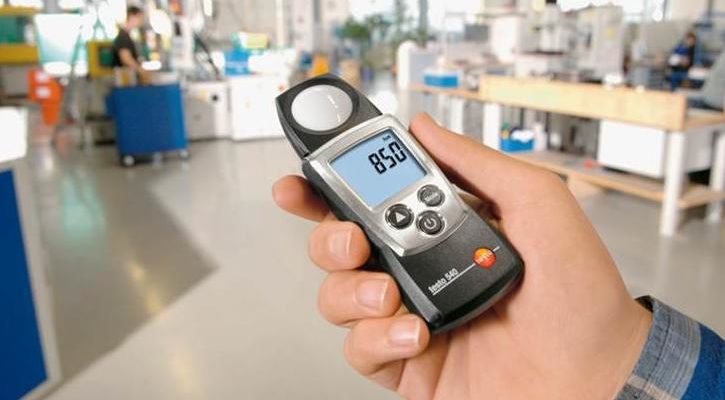
It consists of a light receiver and a measuring module, which can be either analog or electronic. The light receiver uses a photocell that perceives waves of a given amplitude visible to the human eye. It converts them into an electrical signal, which is displayed on the screen.
In fact, this is a photometer with a well-defined range of spectral sensitivity, which responds only to certain wavelengths. The analyzer can measure both ordinary light and infrared radiation, it all depends on the settings.
When carrying out measurements, it is important to observe certain conditions. So, at the workplace, the illumination is checked at the level of the countertop. General lighting should be controlled in several places in the room or workshop to ensure that it is evenly distributed.
Density and power of the luminous flux
These terms are often used to define the quality of light. Since the interpretation is different, sometimes there are difficulties with what is meant by these indicators.Everything is quite simple here:
- Light density is the ratio of the luminous flux to the area of its distribution. This parameter is also called brightness and it is measured in candela per square meter. The indicator affects the visual perception of the situation in the room, since it is important that the lighting is comfortable, for which the density must fall within a certain range. At the same time, the luminous flux with a brightness exceeding 500 cd / m.kv. creates visual discomfort.
- The power of the light flux determines the effect of visible radiation on visual perception. The unit of measurement is lumens, and the total indicator is taken into account, regardless of the direction of illumination. That is, a lamp with the same luminous flux can illuminate an area of 10 and 100 sq.m. Therefore, it is much easier and more convenient to judge by the indicators of illumination, since when using structures with a high-quality reflector, you can create comfortable conditions at a lower energy cost.
To provide the required power, luminaire structures are often equipped with diffusers, and the surfaces inside are made reflective. This allows you to direct the entire luminous flux to a limited space, which increases its intensity and saves electricity. The Fresnel lens operates on a similar principle, as does the optics used in projectors and other equipment.
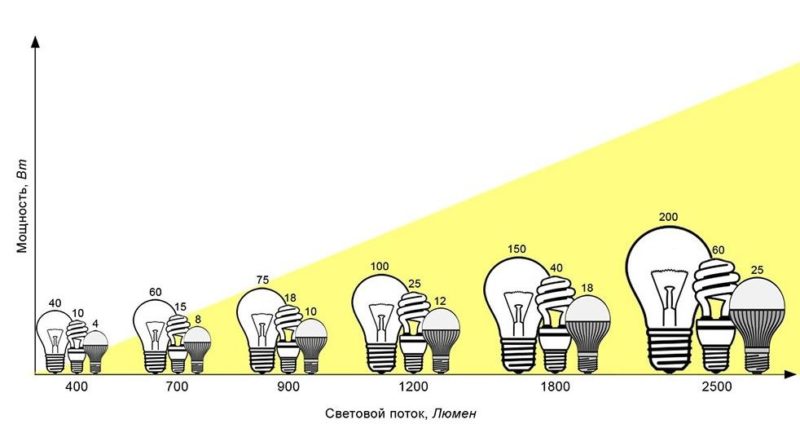
By the way! A standard 75 watt incandescent lamp has a power of 935 lm, a 75 watt halogen version has 1100 lumens. Fluorescent equipment with a consumption of 35 W produces 3300 lm, and LED at 9.5 watts - 800 lumens.
Comfortable light intensity
The comfort of lighting requires compliance with a number of requirements. At the same time, this parameter cannot be unified, since people have different preferences, and the performance of different types of work requires different conditions. The most comfortable for any person is the light of the sun, it is on this spectrum that they are guided when planning artificial lighting.
Closest to natural radiation is the light of ordinary incandescent lamps, which is formed due to a hot spiral. But due to high power consumption, strong heating during operation, short service life, they are used less and less.
An important indicator is light temperature, there are three varieties:
- Warm light has a yellow tint and is suitable for creating an environment conducive to relaxation and rest. Most often it is used in residential areas.
- neutral light distinguished by great brightness, it is also called white. Suitable for workplaces and areas where good visibility is important, such as the work area in the kitchen.
- cold lighting distinguishes the predominance of blue rays in the spectrum. It is suitable for places where precise work is performed. You should not use it at home, because when you stay in a room with cold light for a long time, your eyes begin to get tired.
Related video: How to measure the degree of illumination in a room using a smartphone.
In order not to measure illumination indicators, when choosing lamps and light bulbs, it is easiest to be guided by established standards. In residential premises, it is worth adhering to the following indicators:
- Corridors and hallways - 50 Lk.
- Bathrooms, showers, bathrooms - 50 suites.
- Kitchens – 150 Lx.
- Children's rooms and play areas - 200 suites.
- Residential premises (living rooms, bedrooms, etc.) - 150 Lx.
At choice of fixtures it is necessary to pay attention to the features of the propagation of the light flux. The most comfortable is diffused or reflected light. To highlight functional areas or provide high-quality lighting of the workplace, it is better to use additional lamps.
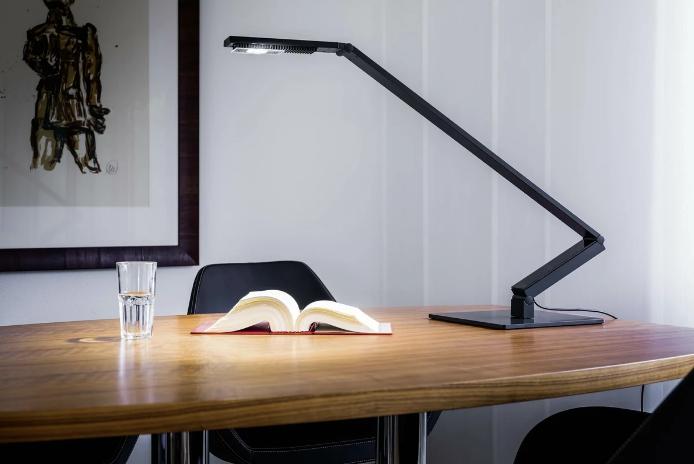
You can change the intensity of light by replacing lamps or installing new fixtures. You should not save on the quality of lighting, as this affects not only the perception of the premises, but also the comfort of staying in them.