LED voltage in detail - how to find out the operating current
Often, LEDs fall into the hands of a repairman or a radio amateur without technical documentation. For the correct use of semiconductor devices, it is necessary to know their characteristics, otherwise the early failure of the light-emitting element is inevitable. Although the control parameter for an LED is current, knowing the operating voltage is important - if it is exceeded, the life of the p-n junction will be short.
How to find out which LED is in the lamp
The easiest option is if the lamp is fully functional. In this case, you just need to measure the voltage drop across any of the elements. If, when power is applied, one or more elements do not shine (or all), you must go the other way.
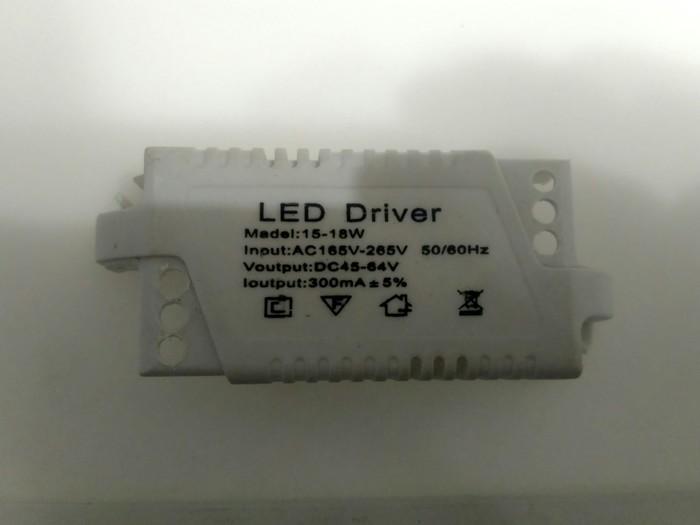
If the lamp is built according to the scheme with a driver, then the output voltage is indicated on the driver in the form of upper and lower limits. This is due to the fact that the driver stabilizes the current. To do this, he needs to change the voltage within certain limits.The actual voltage will have to be measured with a multimeter and make sure that it is normal. Next, visually (along the tracks of the printed circuit board) determine the number of parallel chains of LEDs in the matrix and the number of elements in the chain. Voltage drivers must be divided by the number of series-connected elements. If the voltage on the driver is not indicated, then it can only be measured in fact.
If the luminaire is built according to the circuit with a ballast resistor and its resistance is known (or can be measured), then the LED voltage can be determined by calculation. To do this, you need to know the operating current. In this case, you need to calculate:
- voltage drop across the resistor - Uresistor \u003d Irab * Rresistor;
- voltage drop across the LED chain – Uled=Usupply – Uresistor;
- divide Uled by the number of devices in the chain.
If Iwork is unknown, it can be taken equal to 20-25 mA (a circuit with a resistor is used for low-power lamps). The accuracy will be acceptable for practical purposes.
How many volts is the forward voltage of the LED
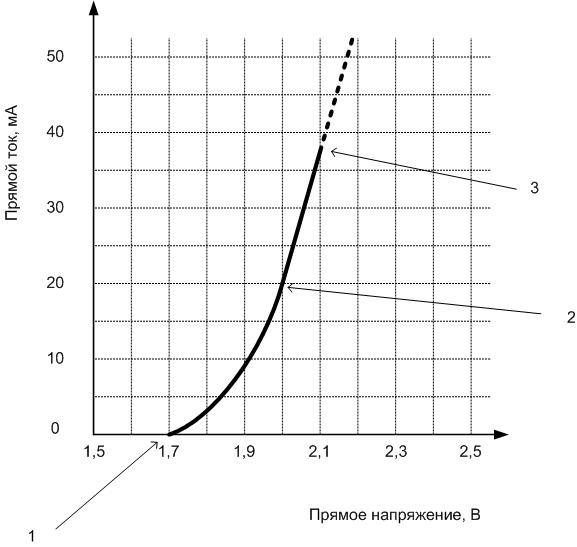
If you study the standard current-voltage characteristic of the LED, you can see several characteristic points on it:
- At point 1 p-n the transition starts to open. Current flows through it and the LED starts to glow.
- As the voltage increases, the current reaches the working value (in this case 20 mA), and at point 2 the voltage is working for this LED, the brightness of the glow becomes optimal.
- With a further increase in voltage, the current increases, and at point 3 reaches its maximum allowable value. After that, it quickly fails, and the CVC curve grows only theoretically (dashed section).
It should be noted that after the end of the inflection and reaching the linear section, the I–V characteristic has a large steepness, which leads to two consequences:
- when the current increases (for example, if the driver malfunctions or there is no ballast resistor), the voltage rises slightly, so we can talk about a constant voltage drop across the p-n junction, regardless of the operating current (stabilization effect);
- With a small increase in voltage, the current increases rapidly.
Therefore, it is impossible to significantly increase the voltage on the element relative to the working one.
How many volts are LEDs
The parameters of LEDs mostly depend on the material from which the p-n junction is made, although some of the characteristics still depend on the design. Typical operating voltage values and glow color for low-power elements at a current of 20 mA are summarized in the table:
| Material | Glow color | Forward voltage range, V |
|---|---|---|
| GaAs, GaAlAs | Infrared | 1,1 – 1,6 |
| GaAsP, GaP, AlInGaP | Red | 1,5 – 2,6 |
| GaAsP, GaP, AlInGaP | Orange | 1,7 – 2,8 |
| GaAsP, GaP, AlInGaP | Yellow | 1,7 – 2,5 |
| GaP, InGaN | Green | 1,7 – 4 |
| ZnSe, InGaN | Blue | 3,2 – 4,5 |
| Phosphor | White | 2,7 – 4,3 |
Powerful lighting LEDs operate at high currents. Thus, the crystal of the popular LED 5730 is designed for long-term operation at a current of 150 mA.But due to the steep CVC that stabilizes the voltage drop, its Uwork is about 3.2 V, which fits into the value indicated in the table.
How to determine the voltage
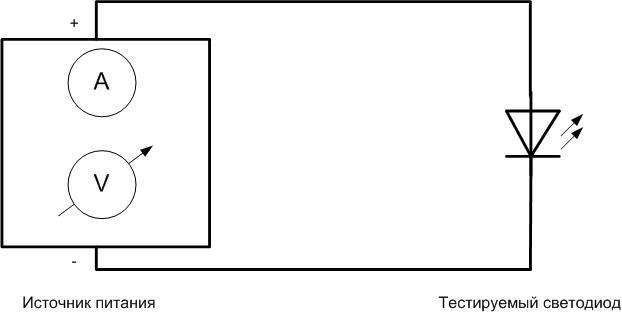
The most obvious method for determining the voltage of a semiconductor device is to use a regulated power supply. If the power supply is regulated from scratch and at the same time current control is possible (and even better - its limitation), then nothing else is needed.
Necessary connect LED to the source, strictly observing polarity. Next, you need to smoothly raise the voltage (up to 3..3.5 V). At a certain voltage, the LED will flash in full force. This level will roughly correspond to the operating current, which can be read on an ammeter. If the device does not have a built-in ammeter, then it is highly desirable to control the current using an external device.
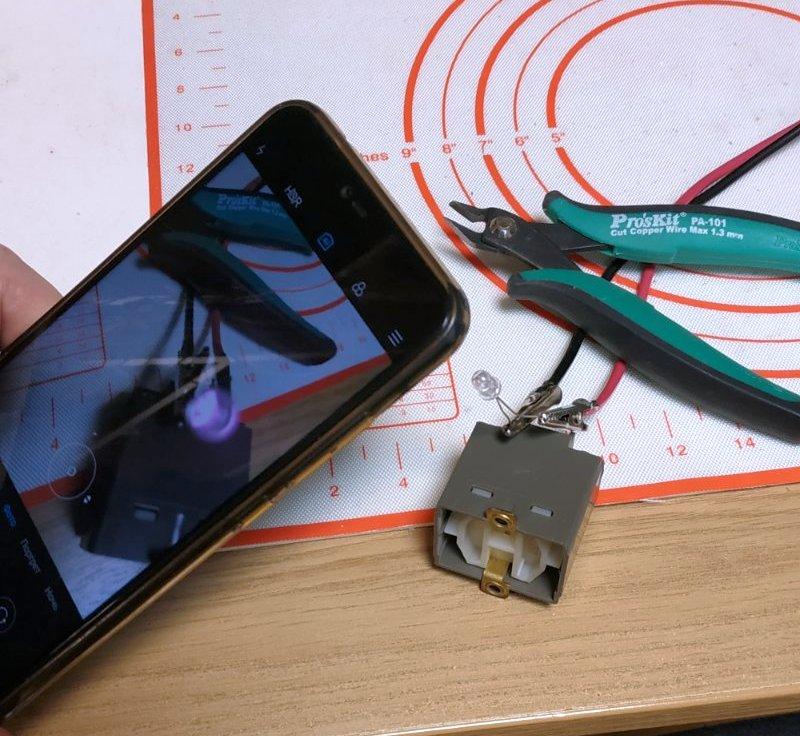
This method is applicable to devices in the optical range. The glow of UV and IR LEDs is not visible to human vision, but in the latter case, you can watch the LED turn on through the smartphone's camera. In this way, the appearance of infrared radiation can be tracked.
Important! When the voltage rises, do not exceed the limit of 3..3.5 V! If the LED does not light under these conditions, the device may be connected in reverse polarity. It may fail due to exceeding the reverse voltage limit.
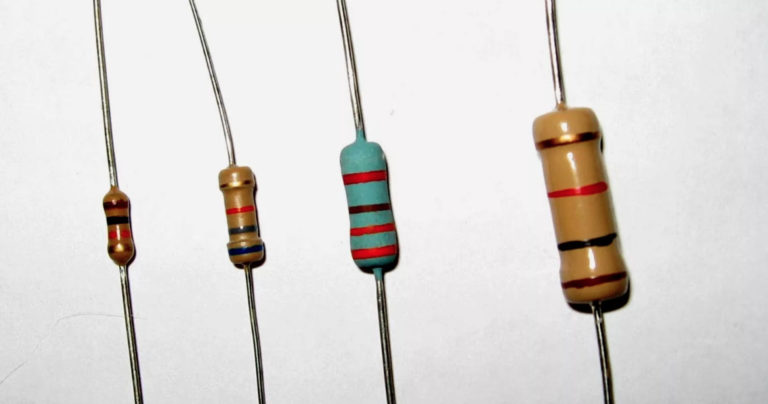
If there is no regulated source, you can take a conventional power supply with a fixed output, which is obviously higher than the expected LED voltage. Or even a 9 V battery, but in this case it will be possible to check only a low power LED.A resistor must be soldered in series to the light-emitting element so that the current in the circuit does not exceed the upper limit. If it is assumed that the LED is low-power and operates at a current of no more than 20 mA, then for a source with an output voltage of 12 V, the resistor should be about 500 ohms. If you use a powerful lighting fixture (for example, size 5730) with a current of 150 mA (the battery will not always provide such a current), then the resistor should be about 10 ohms. It is necessary to connect the circuit to a constant voltage source, make sure the LED lights up and measure the voltage drop across it.
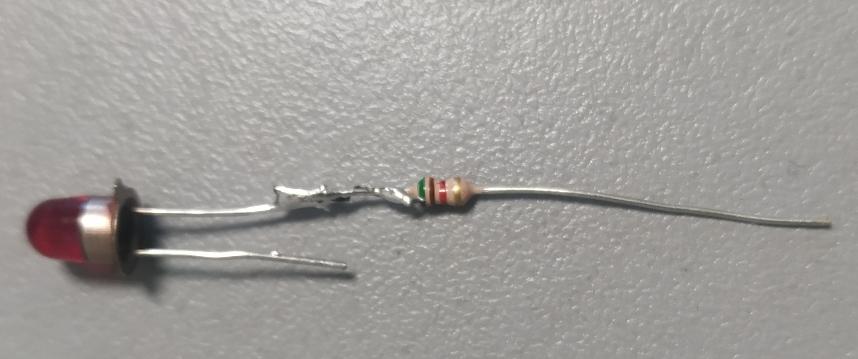
There are alternative ways to find out how much volt calculated LED.
multimeter
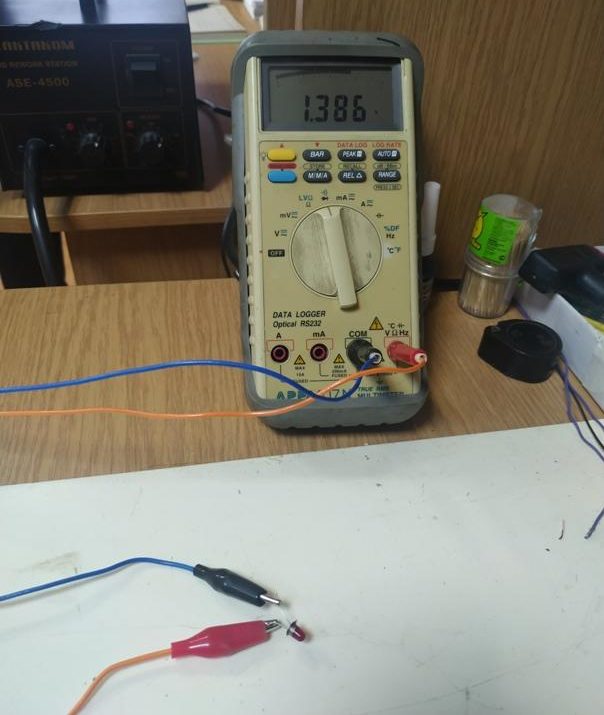
With some multimeters, the voltage applied to the terminals in diode test mode is high enough to light the LED. Such a measuring device can be used to determine the operating voltage of the LED, while simultaneously checking the pinout of the semiconductor element. If the p-n junction is connected correctly, the junction will start to glow, and the tester will show some resistance (depending on the type of LED). The problem with this method is that a second multimeter is required to measure the actual U working value at the LED pins. And another point: the measuring voltage of the multimeter is unlikely to be enough to bring the LED to the current operating point. Visually, this is noticeable by the insufficiently bright glow, and for measurements this will mean that the LED has not reached the linear part of the CVC and the actual value of the operating voltage will be higher.
By appearance
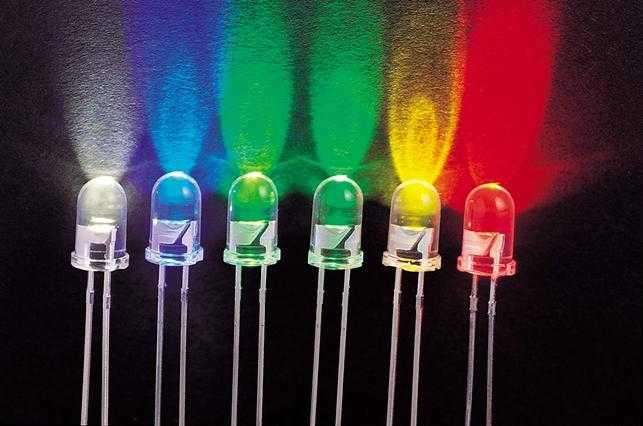
The operating voltage can be approximately estimated by the appearance and color of the LED glow (sometimes the color can be determined even without powering the device). To do this, you can use the table above. But it is impossible to unambiguously determine the voltage by the color of the LED glow. Often, manufacturers tint the compound so that the color of the radiation of the p-n junction is formed with the color of the lens and a new shade is obtained. In addition, even within the same color, there is a scatter of parameters (see table) for LEDs of different types. So, for a white LED, the voltage difference can reach more than 50%.
How to find out what current an LED is rated for
All of the above applies to ordinary LEDs that work without additional built-in elements. Existing technologies allow you to embed additional components in the device case. For example, quenching resistors. This is how LEDs are obtained for a higher voltage - 5.12 or 220 V. It is almost impossible to visually determine the ignition voltage of such devices.. Therefore, there is only one way.
If the previous methods did not work and you are sure that the LED is working, you should try to apply increased voltage to it. First, 5 V, then increase the voltage to 12 V, if there is no result, you can try to increase further, up to 220 V. But it is better not to experiment up to such values - this voltage is dangerous for humans. In addition, in the event of an error, you can get the destruction of the LED housing. In this case, a small pop, melting of the wire insulation, fire, etc. may occur.At present, technology has stepped far forward, and the LED is not so expensive as to risk equipment and health because of it.
Reinforce knowledge with videos.
