How to choose a phytolamp for growing plants
To choose a phytolamp for indoor plants, it is worth considering the characteristics of a particular culture. In addition, it is necessary to take into account the technical indicators of the equipment, power consumption, the location of the fixtures, the shape of the diffusers and other important points.
Lighting Requirements
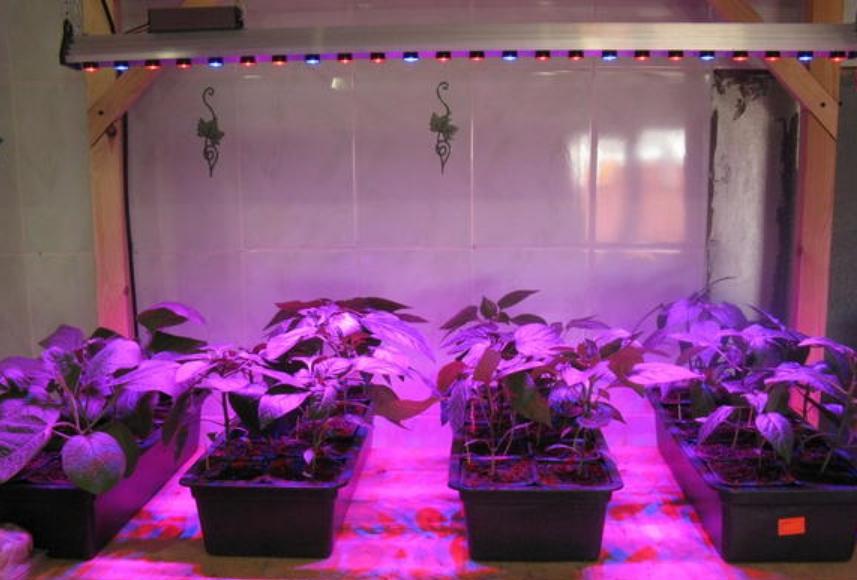
If you need additional lighting for plants, you can’t just take the lamp that is at hand and use it for these purposes. A number of requirements must be met:
- For the normal growth and development of plants, radiation of a certain spectrum is required. Most often blue and red waves are important, therefore, special equipment is used, and not ordinary lamps that are used to illuminate rooms.
- The brightness of the lighting may vary for different crops, so before choosing, you should study the recommendations for a particular plant. An excess of light is just as undesirable as its lack., therefore, it is impossible to strongly violate the established indicators.
- Illumination time is another point that must be taken into account. It depends on natural light and cultural preferences. Artificial light is best used as a supplement to natural, it is worth using only lamps in cases where there is no other way out.
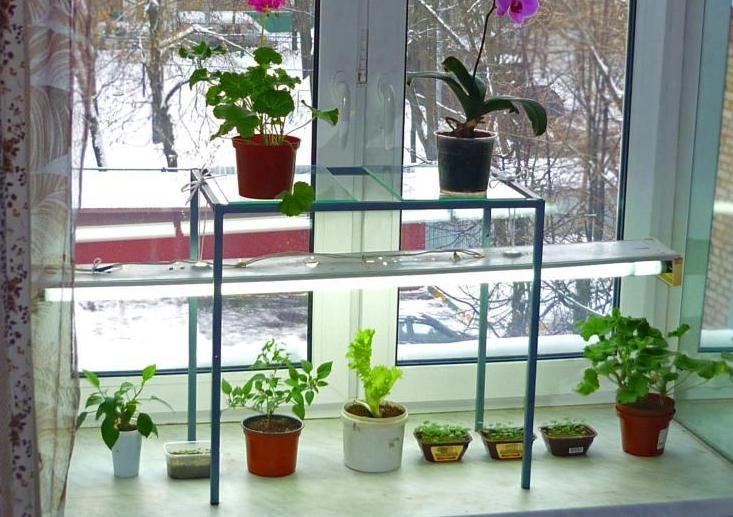
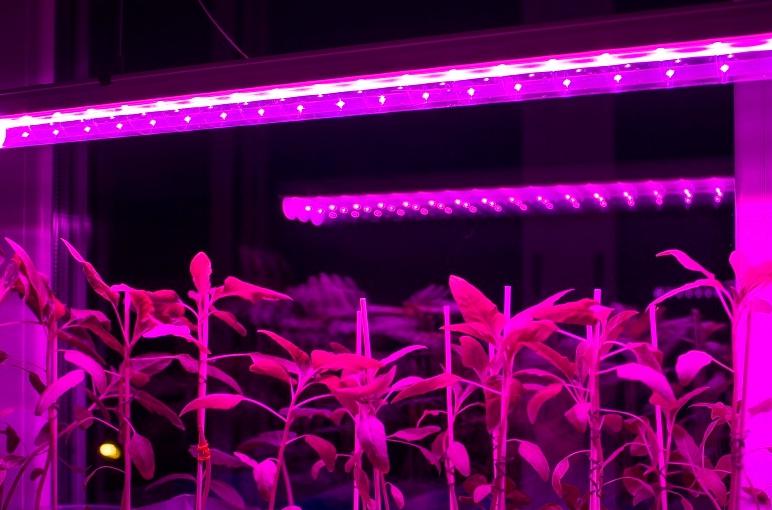
![Additional lighting on the window allows you to increase the length of daylight hours]() Additional lighting on the window allows you to increase the length of daylight hours for indoor plants.
Additional lighting on the window allows you to increase the length of daylight hours for indoor plants. - Equipment must be safe, especially if it is constantly running unattended. It is better to choose low-voltage lamps that consume the least electricity, even when shorted, they are not dangerous and cannot cause fatal injury to a person or pet.
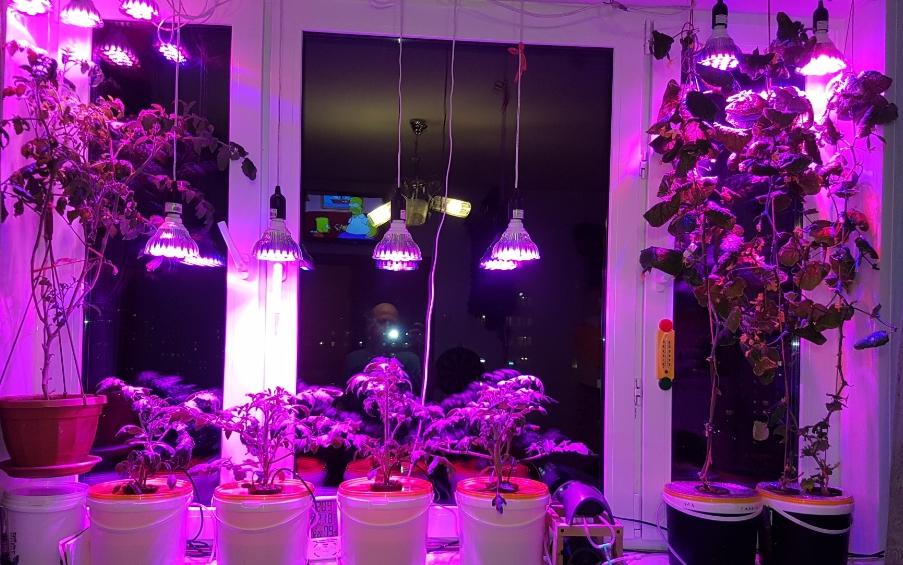
By the way! When using low-voltage equipment, an additional power supply must be installed.
General tips for choosing fitolamps
To select equipment with the desired characteristics, you need to consider a few simple recommendations. Even those who have never touched this topic can cope:
- Lighting area. It depends on the power of the light source and the shape of the diffuser. Hanging lamps without an element that directs the light is not worth it, since most of it will be spent uselessly. Therefore, it is necessary to determine in advance the shape and size of the ceiling, which is suitable for the containers used and the number of illuminated plants.
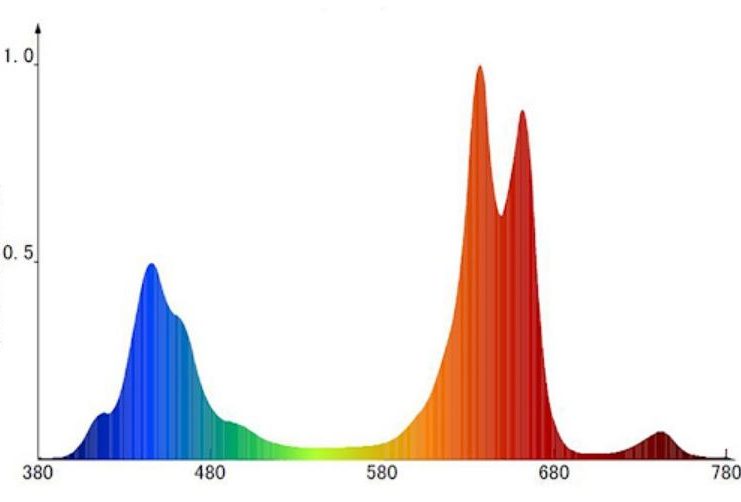
- Peak indicators of the spectrum of the lamp. For plants, blue (440-460 nm) and green (640-660 nm) are the most important, they are responsible for the growth rate of plants, as well as for the normal processes of photosynthesis and metabolism.But there must be other colors in one quantity or another, they are especially important if the plants grow without natural light. In this case, it is best to use full spectrum equipment that can serve as a substitute for natural sunlight.
![spectrogram on the package]() This is what a spectrogram looks like on a package with a phytolamp, it will not be difficult to understand the indicators.
This is what a spectrogram looks like on a package with a phytolamp, it will not be difficult to understand the indicators. - Energy consumption. The more economical the lamps, the lower the electricity costs and the cheaper the supplementary lighting will be. It is better to buy lamps that are more expensive, but economical, than cheap, but consuming a lot of electricity.
It is necessary to remember which light is best for plants - the closest to the natural version has a light temperature of 6200 to 6400 Lm.
The video will tell you more about the luminescence spectra of phytolamps.
Types of phytolamps
Several types are used, each has pros and cons that must be taken into account:
- Incandescent lamps are the worst option, they do not give normal light and consume the most electricity. In addition, conventional light bulbs get very hot during operation, which is why they are placed at a high height, which reduces efficiency. They give mostly red light, almost no blue.
- Halogen can provide good brightness and the right spectrum, their light is close to natural sunlight, so they are suitable for indoor plants. But at the same time, the bulb heats up a lot, which creates a danger to plants, and the lamps themselves consume a lot of electricity, and with long work, the costs will increase markedly.
- Fluorescent well suited for plants if the option with the right colors of the spectrum is chosen.The light is bright and of high quality, although there is flickering in it, the lamps can be either in the form of tubes or compact, for standard cartridges. The surface almost does not heat up, the power consumption is small. The main drawback is the mercury vapor in the flask, which is why you need to handle it carefully.
- Fitolamp LED for plants on the windowsill is best suited, as it consumes little electricity and gives light of different brightness, which allows you to choose the right solution for any plants. Also, the LEDs heat up slightly and operate at low voltage, which makes the system safe.
By the way! You need to purchase not only a lamp, but also a stand for its installation.
Choosing an LED phytolamp
It is better to use the LED option as the safest and most economical, when choosing, pay attention to such points:
- What crop will be grown under the lamps. The optimal spectrum and the height of the rack on which the lamp is mounted depend on this.
- container shape. The type of ceiling depends on this, it can be round, square or rectangular. The better the ceiling fits the container, the more rationally the light is used.
![Round ceiling]() Round shade is great for lush single plants.
Round shade is great for lush single plants. - Calculation of the power of LED lighting. First of all, you need to know the norm of illumination for a particular culture, usually it is 100-150 watts per square meter. Then the area of the tank is determined and the height of the location is calculated. Based on the result, it is easy to calculate how many lamps are needed.
- The choice of power supply, it is better to buy it after calculating the power of the lamps, as it is selected for specific conditions. It is better to take the option with a power reserve of 30%so that it does not work under full load.
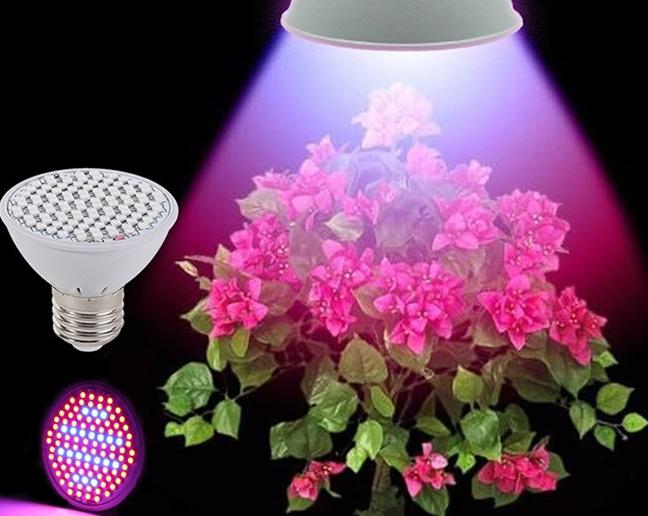
Remember that with an increase in the height of the ceiling above the plants, the light is scattered over a larger area, so the power must be increased by 20-30%.
Are these lamps harmful to the eyes?
Many people believe that plant lamps pose a danger to humans due to their radiation. But in fact, this is just speculation, since the equipment does not differ much from the standard one. It can emit ultraviolet light, but its spectrum is so mild that it does not harm people. And blue and red radiation can only cause discomfort to the eyes, it is not able to harm them.
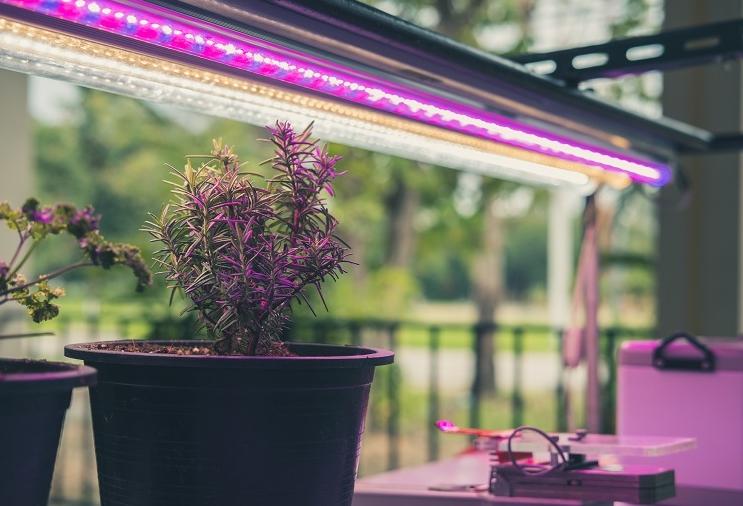
Since the light is directed at the plant by a reflector, it hardly enters the room, which eliminates any problems. The only dangerous situation that can arise is damage to the flask in a fluorescent lamp and the ingress of mercury vapor into the room.
At the end of the video: Test of six spectra of phyto-lamps on flowering.
Choosing a phytolamp for indoor plants is easy if you use the recommendations from the review. It is better to buy LED equipment powered by 12V, as it is the safest and most economical. When choosing, take into account the type of plants, the area of \u200b\u200blighting and the growing conditions in the house or other room.