Features of a lamp for growing seedlings at home
Phytolamps for seedlings provide optimal conditions for the growth and development of plants. With their help, you can maintain the desired length of daylight hours so that the crops are less sick and better adapted after transplantation. Different crops have different lighting requirements, so the mode is selected individually according to the recommendations on the package with seeds or from the gardener's guide.
Illumination for seedlings - which lamp to choose
First of all, you need to understand the features of the lamps in order to understand what characteristics are important and how they can differ. Since sunlight consists of waves of different lengths and spectra, it is necessary to select lighting taking into account these moments, since it depends on them what effect the backlight will have on the plant.
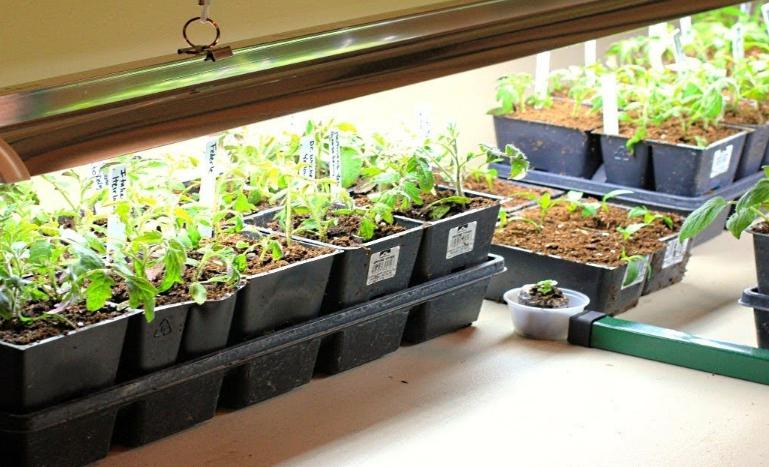
The most important for most types of seedlings are red and blue spectra. The processes of photosynthesis in cells, as well as photomorphogenesis, which is responsible for normal growth, the formation of flowers and ovaries, and the size of the crop in the future, directly depend on them. The situation is complicated by the fact that the ratio of the spectrum varies depending on the stage of development, so you need to remember the following:
- Blue (440 to 485 nm) very important after germination, the rate of growth and development depends on it. Due to this part of the spectrum, the cells divide much more actively and at the same time do not stretch, which ensures the growth of a strong stem, and not a thin, stretching window. Constant lighting ensures the growth of strong seedlings that do not outgrow for a long time and adapt well after transplanting.
- Red (625 to 730 nm) is of great importance for the normal process of photosynthesis in cells. It also affects the rate of seed germination, stimulates the increased formation of root shoots. At the stage of growing seedlings, future flowers are also laid, so the red color also affects future yields.
- Orange (590 to 625 nm) not so important, since it most of all affects the increase in the number of fruit set. It also accelerates the ripening of vegetables and berries.
- Far Red (730 to 740 nm) may inhibit seed germination. After the emergence of seedlings during the development of seedlings, this part of the spectrum affects the formation of leaves - their number, shape, size.
- Yellow-green (500 to 590 nm) does not directly affect the processes of growth and development of seedlings.But at the same time, with its help, the light gets much better on the lower leaves, which are not directly illuminated, thereby improving the processes of photosynthesis and ensuring the uniform development of plants.
- Ultraviolet radiation (from 320 to 395 nm) is also needed, but only in small quantities. This part of the spectrum has a bactericidal effect, destroys many pathogenic microorganisms and strengthens plant immunity. Also, ultraviolet improves resistance to temperature extremes, which is important before transplanting seedlings.
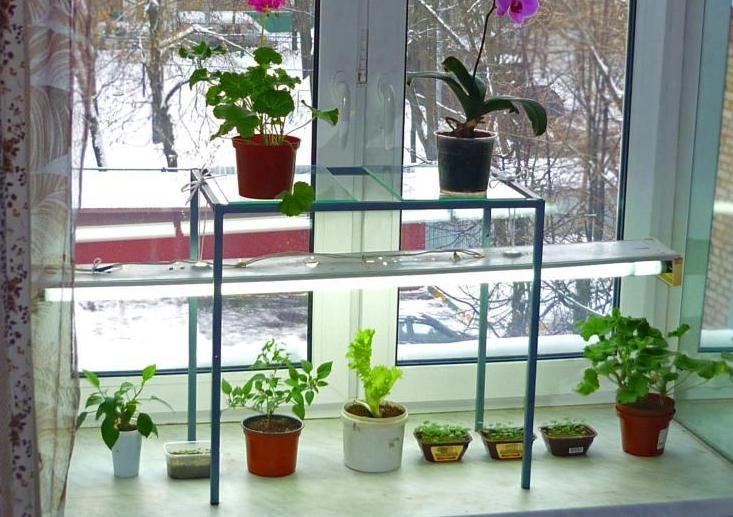
You can use both special equipment and improvised lamp options.
What options to choose
There are several criteria that any grow lamp must meet. If you take them into account, then even without experience it is not difficult to find equipment with the desired characteristics.
illumination
Illumination rates are measured in lux. 1 lux equals 1 lumendistributed over an area per square metre. The indicator directly depends on the power of the bulbs and the height of their location above the plants, therefore, correction factors are used in the calculations. The rules are:
- Most crops need around 8,000 lux per square meter.
- Eggplants, peppers, tomatoes and other crops of the nightshade family - at least 6000 lux.
- Cucumbers located on the windowsill need from 3,000 to 4,000 lux when illuminated.
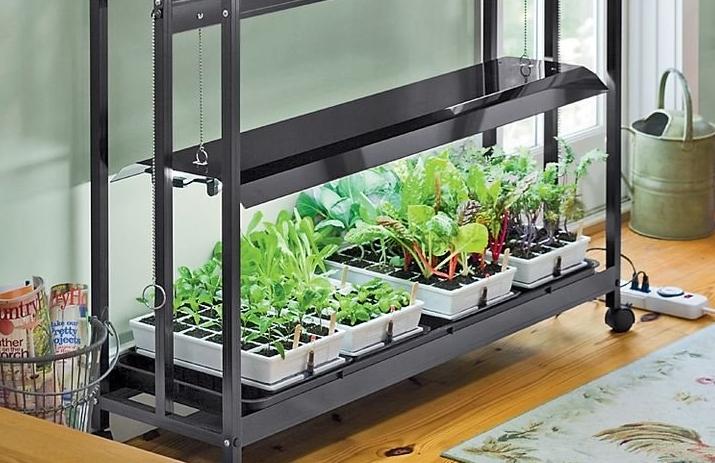
To choose the power of the lamps, you must follow a simple calculation instruction:
- When calculating the area of illumination, you should measure the length and width of one or more containers and multiply them.You need an indicator in square meters.
- Next, calculate the illumination rate. Since the lamps are located at a certain height, you must use an index depending on their position. If it is 30 cm - 1.3, if 60 cm - 1.5.
- Multiply the desired illumination indicator by the index, as a result, you will get the power of the lamps in lumens.
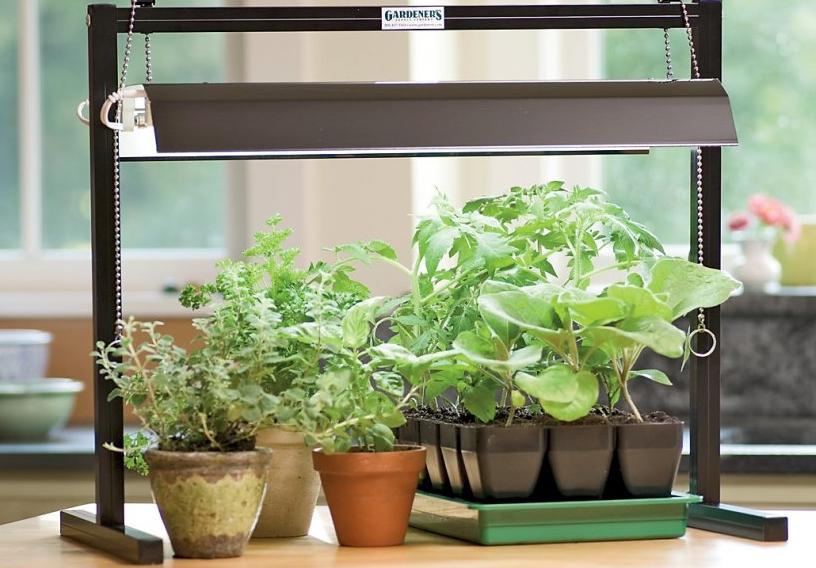
Calculation example for a tank with an area of 0.5 sq.m. with a height of 60 cm. At a norm of 8000 lux, the base illumination should be 4000, but due to a factor of 1.5 it will increase to 6000. For this indicator, you will need 5 incandescent lamps with a power of 100 watts or 2 LED bulbs for 20 watts.
Spectrogram
This is the name of the graph, which shows what kind of radiation the lamp gives. For plants, it is important that the peaks fall within the intervals of the range from 420 to 460 nm and from 630 to 670 nm. Such information is always on phytolamps, in other cases it may not be on the packaging. But on the web you can find data for all types of lighting equipment.
You also need to pay attention to the infrared and far red parts of the spectrum, they should be small. This also applies to other segments - ultraviolet, orange, yellow-green. Peaks should be clear and fall within the ranges indicated.
If you choose specialized lamps, then the best solution would be a special bicolor phytolamp. But it can be replaced with a universal full spectrum lamp, it will cost much less, and it is easier to purchase this type.
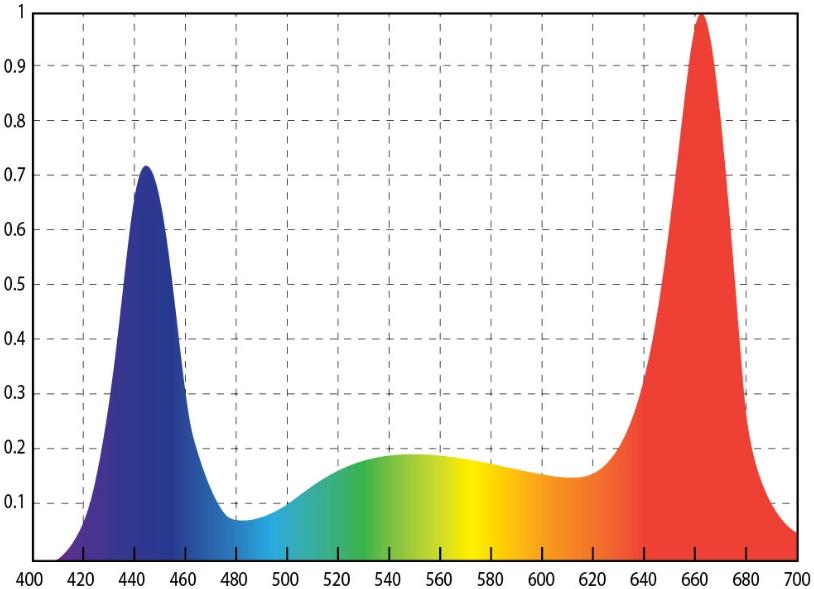
It is most advantageous to install a special lamp, since it consumes electricity only for those parts of the spectrum that are necessary for seedlings. But at the same time, the characteristics of plants are also taken into account. So, cucumbers need much less red spectrum than tomatoes. If the plants are located on the windowsill, then a lamp with a red and blue range is enough for them. But if the container is in a dark place or a closed box with its own microclimate, then the best solution would be equipment that is close in radiation to the natural light of the sun.
When choosing a full spectrum lamp, it is worth choosing an option that is close to solar radiation. The optimal indicator is 6400 K, this is cold white light.
Other characteristics
There are a number of criteria by which a seedling lamp is selected. All of them affect not only the quality of lighting, but also its cost and other aspects:
- Electricity consumption. Since the lamps work for a long time, with a large consumption of electricity, the costs will be much higher. If you use LED lamps, the savings will be very large, they consume many times less energy than conventional options.
![Features of a lamp for growing seedlings at home]() The larger the luminaire, the higher the requirements for its energy efficiency.
The larger the luminaire, the higher the requirements for its energy efficiency. - Ergonomic lamp design. It should be easy to adjust to direct the light where you want it. It is also important that there are no glare in the room, which creates discomfort for the eyes.
- Easy assembly and connection. No need to choose a model that is too complex, demanding on settings and conditions of use. It is important that the kit has a simple and understandable instruction.For safety, you can choose low-voltage options with a 12 V power supply, then the lamp will not harm your health, even if you accidentally damage the wiring.
- The degree of surface heating. Some species become very hot during operation, which creates a danger of burns to the leaves of plants. Because of this, they are raised higher, which reduces the efficiency of lighting. Often it is necessary to install an additional cooling system, which complicates the design and increases power consumption.
- The shape of the plafonds. If the containers for seedlings are oblong, you need to select lamps of the same format. And for square containers, standard round models are suitable. You can arrange several lamps, if necessary.
- Light scattering angle. The larger it is, the worse the light is distributed. It is best to regulate this indicator through reflectors, which you can make yourself using foil.
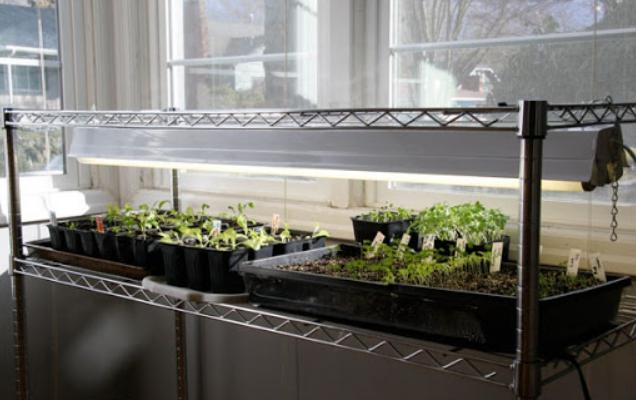
You should not save on the price of a lamp or lamp, due to the economical use of electricity, extra costs are quickly compensated.
Types of lamps
There are several types that are suitable for illuminating seedlings, each has pros and cons that must be considered. Based on the features and the desired characteristics of the fixtures in order to understand which ones are best suited.
Incandescent lamps
They are still used, although this type is inferior in quality to all analogues. The main advantages are:
- Low price.
- Natural radiation familiar to human vision.
- Ease of use.
But the disadvantages of incandescent lamps are much greater than the advantages:
- The color spectrum is dominated by red, and blue is not enough. Because of this, the seedlings will stretch upwards, the stems will turn out to be long and thin.
- Service life rarely exceeds 1000 hours.
- The main part of the electricity goes to the incandescence of the tungsten filament and heat generation. Energy efficiency is low.
- The flask gets very hot during operation, often because of this, burns appear on the leaves.
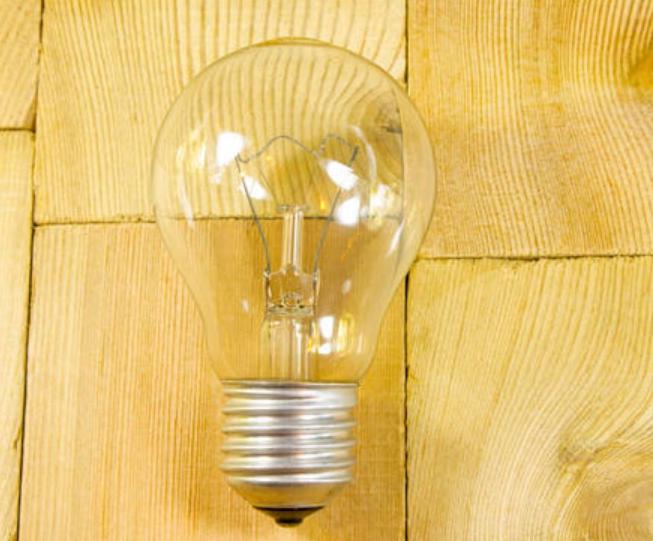
It is worth setting this option as a temporary one, if there is nothing else at hand. In other cases, choose any other solution, as they are all superior to filament models.
It is best to buy incandescent lamps marked "grow lights", in which the combination of red and blue spectra is close to optimal.
Halogen models
An improved version of conventional light bulbs, in which an inert gas is pumped into the flask for better light output and longer life. Features are:
- You can choose the light with different brightness, which allows you to adapt it to different types of seedlings.
- The lamps operate both from standard voltage and from 12 volts, which makes it possible to make a safe system.
- The flask is much smaller in size, which saves space.
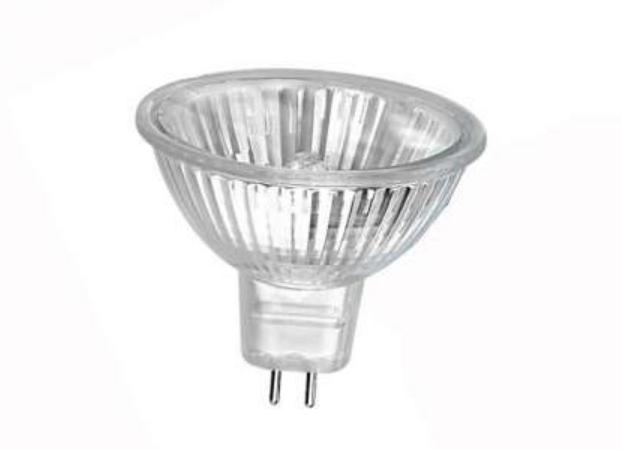
As for the disadvantages, there are also a lot of them:
- The surface becomes very hot during operation and can burn the leaves of the seedlings.
- Electricity consumption is high.
- Service life is about 2000 hours.
When choosing, be sure to check the spectrogram to find the best option.
Fluorescent
About 5 years ago this was the best solution for seedling illumination. The lamps last about 10,000 hours, while the energy efficiency is between 60 and 90 lumens per watt. The advantages are:
- The luminaire can be positioned horizontally, vertically or at an angle.
- There are compact lamps for standard cartridges or long bulbs, which is convenient for narrow containers.
- During operation, the surface does not heat up, which allows you to place the lamp at any convenient height.
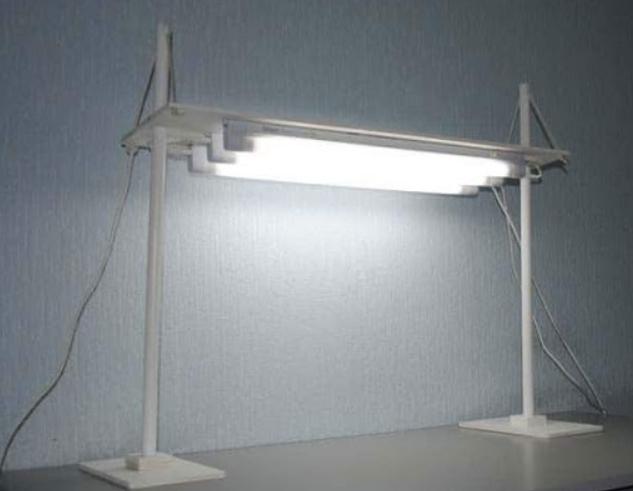
There are also disadvantages:
- Most of these lamps give a yellow-green spectrum.
- Over time, the quality of light decreases, so it is better to replace it every 1-2 years.
- Inside the flasks there are mercury vapors, which requires caution when using, as well as disposal only in special containers.
It is worth choosing lamps with the LHB and LB markings, which give a cold white light.
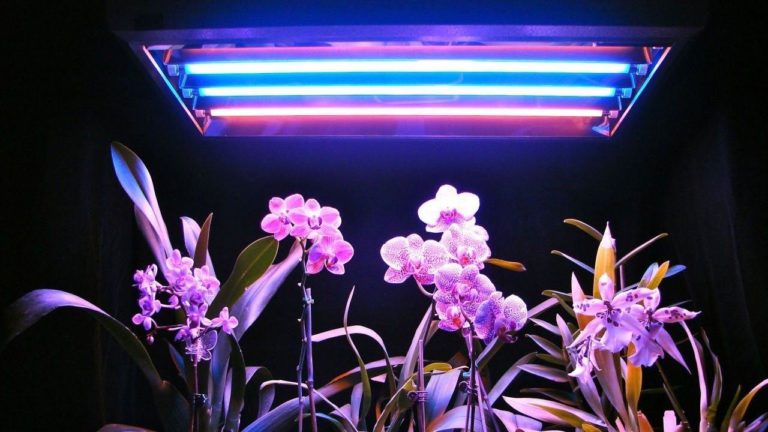
Seedling LED Lights
This option is used most often, as it has many indicators that make it one of the best for today:
- The service life is usually not less than 50,000 hours. At the same time, for high-quality diodes, the lighting indicators almost do not change over time.
- The luminaires can operate from any voltage, which allows you to assemble a safe system.
- The equipment does not harm people and the environment, does not heat up during operation.
- A large number of models of different shapes and capacities.
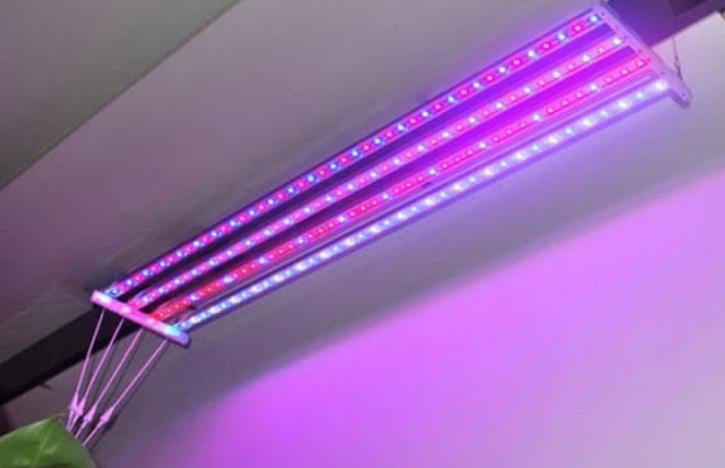
There are also several disadvantages:
- Usually the light is directed to a small area, a large capacity will have to put several elements of low power.
- There are many low-quality products on sale that do not meet the declared indicators.
You can choose any light temperature, which is very important when buying a lamp for seedlings.
induction lamps
A new option, well suited for additional illumination of plants.Since there are no electrodes in the design, it tolerates surges and voltage drops well. The advantages are:
- Service life - up to 100,000 hours.
- During operation they do not heat up, the light is uniform, without flickering.
- The characteristics of the light hardly change.
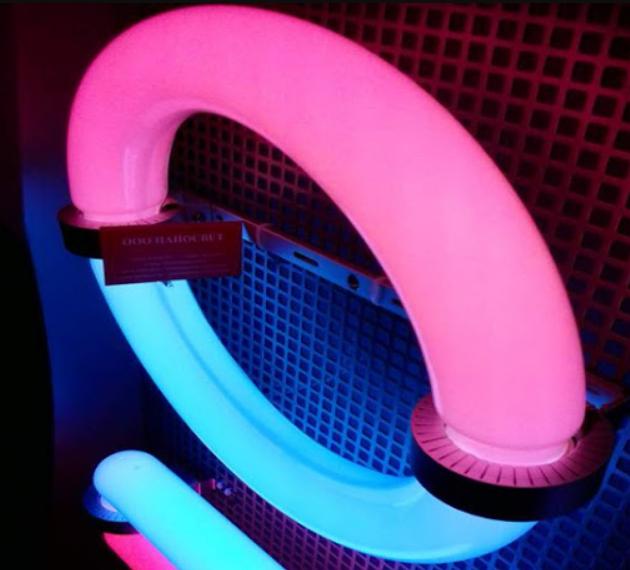
Induction models also have disadvantages:
- They cost more than analogues.
- You need to install an additional power supply.
- Recycle only in special places.
This video tells about the experiment: under what lamps is it better to illuminate the seedlings.
How to highlight seedlings
Selecting fixtures is not enough. To achieve a result, you need to follow a number of recommendations to ensure optimal conditions for the development and growth of plants.
Distance from lamp to surface
In many ways, the location depends on the type of lamps, it is best to use LEDs as the most affordable and convenient. Select the height according to the recommendations:
- After sowing the seeds, it is better to put the lamps at a height of 12 to 15 cm. High light intensity is important here so that the sprouts have enough light to grow through the soil.
- When shoots appear, it is worth raising the lamp to a height of 15 to 20 cm. Select the exact distance according to the situation. It is important that the light is distributed evenly and captures the entire area of \u200b\u200bthe soil.
- When further growing seedlings, maintain a distance of 20 to 25 cm. Remember that plants grow taller, so check the position and change it at least once a week.
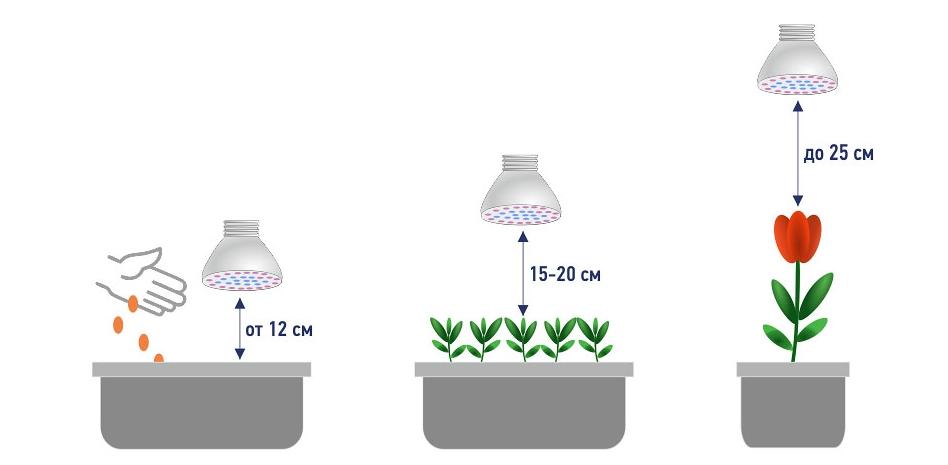
By the way! The distance is measured from the lamp to the top of the seedling.
How long to turn on the lights
You need to consider culture and several other aspects.It won't take much to figure it out:
- For tomatoes and other heat-loving plants, it is necessary to provide lighting for 15-17 hours.
- Other cultures require less time, usually 11-13 hours is sufficient.
- It is best to specify the optimal performance on the package with seeds. You can find information on the network on specialized resources.
- Start from the length of the daylight hours to calculate how long the lamps should work. If the weather is cloudy outside, then increase the highlighting time for maximum effect.
- It is better to turn on the lamp in the morning and in the evening, it is much more effective than the option to turn it on once a day.
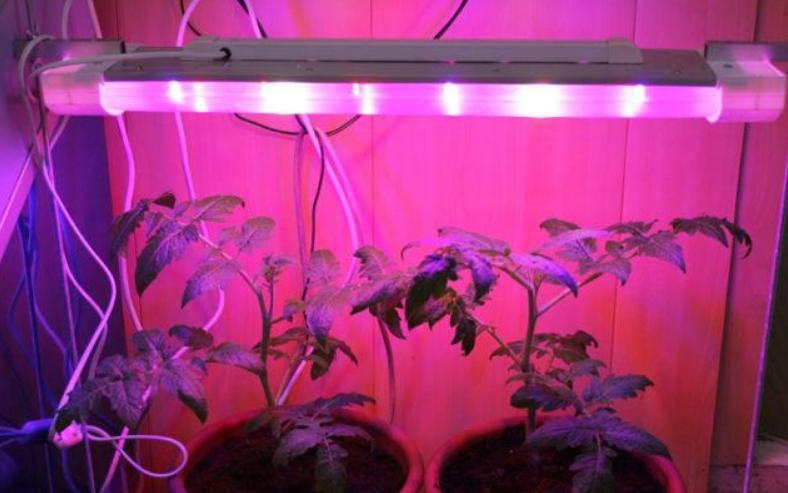
If the plants are in a poorly lit room or are in a special box, then the lamps should work for the set time.
How to improve seedling lighting
If the lighting efficiency is insufficient, then one or more lamps will have to be added to solve the problem. When this is not possible, you can do this:
- Place containers with seedlings on the south or east side of buildings, so they will receive the maximum amount of natural light.
- If you cover one or more sides with white paper or cardboard, the illumination will increase by 15%. This is the simplest solution that can be implemented in a few minutes.
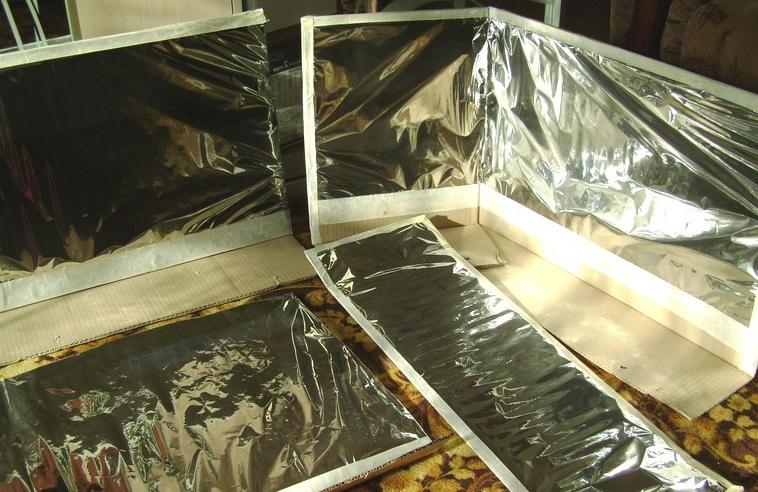
- In order for the light to be distributed over a certain area, you can buy thick foil and make a reflector out of it. Due to this, it is possible to eliminate the scattering of light and increase its brightness, as well as the uniformity of distribution throughout the container with seedlings.
![foil screens.]() You can make foil screens in advance.
You can make foil screens in advance.
It is better to buy a lamp in which you can precisely control the direction of light.
Video: The main mistakes when seedlings are illuminated.
It is not difficult to choose lamps for growing seedlings at home, if you understand the features of different types and take into account their advantages and disadvantages. LED lamps are best suited, they are safe for plants and consume the least electricity.
