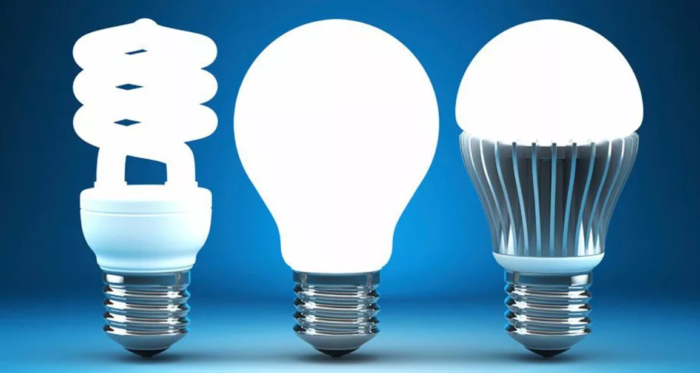
Which is better - LED or energy-saving lamp
Ordinary incandescent lamps have long lost popularity, as strong competitors have appeared on the market. The only thing that saves them is the low cost. Most people prefer to buy energy-saving or LED light bulbs, which are characterized by long life and economy.
Having taken up the lighting of a house or apartment, you should study as much information as possible. Especially if the goal is reliability and economy. Not everyone understands what is the main difference between LED lamps and energy-saving ones, and whether it exists at all.
Description and characteristics of light bulbs
Sometimes in stores you can come across the abbreviation CFL. Its decoding is "compact fluorescent lamps". In the people they are called energy-saving. Despite their popularity due to their cost-effectiveness, they are not without drawbacks:
- Loss of brightness over time.
- The service life will be shortened when installed in a high humidity environment.
- Switching on with a delay (the starting system must first warm up the electrodes).
- Instability to the low quality of the supplied electricity (constant drops and jumps in the network).
- Some products contain ultraviolet radiation, which adversely affects vision.
Energy-saving light bulbs are available with the following markings:
- L - luminescent;
- B - white color;
- TB - warm white;
- E - improved environmental performance;
- D - daylight;
- C - improved color rendering.
The color temperature must be chosen depending on the room and its purpose.

LED lamps also have their drawbacks, the main ones are:
- price;
- direction of light to a specific point;
- not all light bulbs replace with LED because of the size;
- color rendering.
Despite the disadvantages, such products are 10 times more economical than incandescent lamps. Depending on the manufacturer and price, they serve from 30,000 to 50,000 hours. But the characteristics will manifest themselves only in suitable operating conditions.
LED
LED bulbs are also called LED lamps. Their power is measured in watts. The brightness of the glow and the consumption of electricity depends on the power. Light output is measured in Lumens. This is one of the important indicators that you should pay attention to before buying.
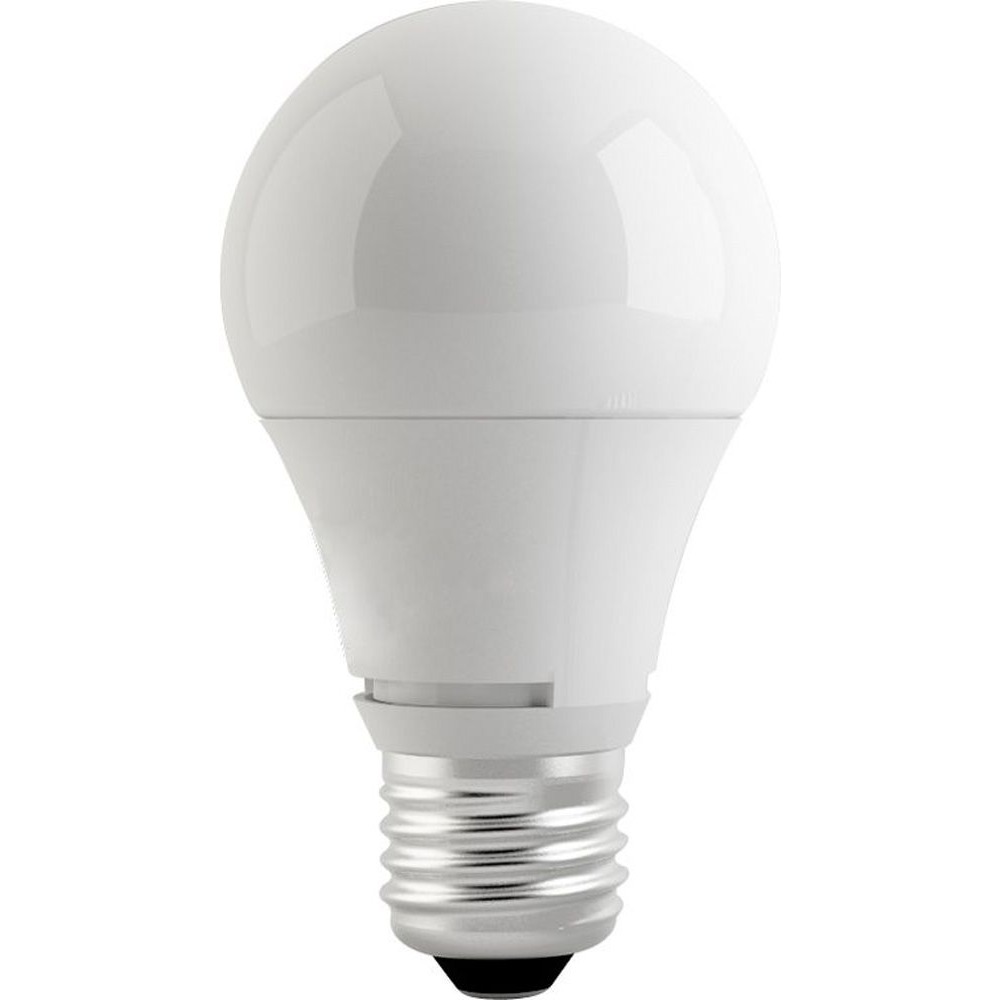
The temperature of light is measured in Kelvin. For example, if you need warm lighting, indicators from 2700 to 3300 K will do. Daylight and cold light require 4000-5000 K. There are different types base, but the most common are E27 (large) and E14 (small).
energy saving
The characteristics of power, luminous flux and temperature of an energy-saving lamp are measured in the same terms as for LEDs. Light transmission is a product efficiency parameter: how much light a specific source produces per 1 watt of energy consumed.
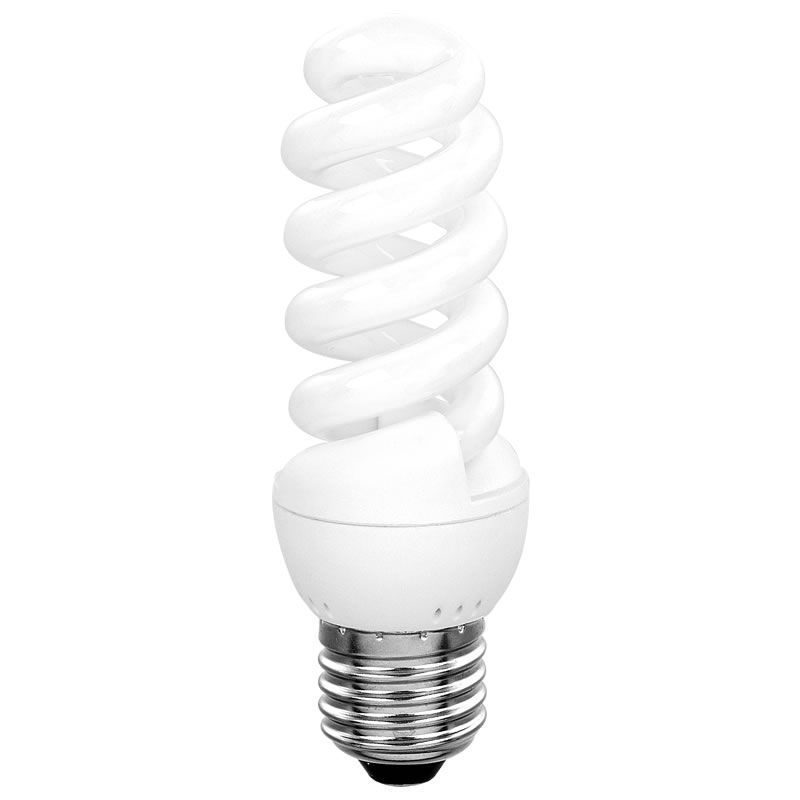
Inside the CFL are tungsten electrodes. They are coated with activating substances - a combination of oxides of calcium, strontium and barium. The flask contains a small amount of mercury vapor and an inert gas. When switching on, the electrodes begin to interact with each other, which takes from 0.5 to 1.5 seconds.
Comparison of energy saving and LED lamps
To determine which lamp is better: LED or energy-saving, it is not enough to get acquainted only with their characteristics. It is important to pay attention to the operating conditions.
If the lamp will be on regularly, it is recommended choose LED, as it often turns out to be more economical than energy-saving.
When it comes to environmental friendliness, the LED lamp is also preferred, since there are no harmful fumes inside it. It is worth considering that it is not advisable to install CFLs together with a switch that regulates the intensity Sveta. It can burn either at full power, or be turned off. This is due to the ionization of the gas, which cannot be controlled.
Power consumption
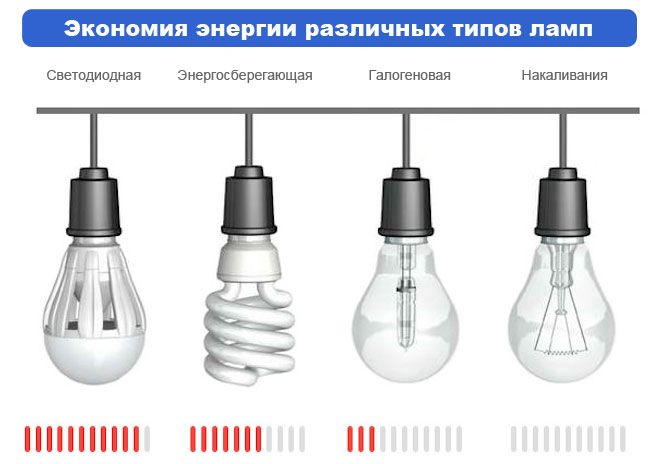
According to the results of the research, it turned out that fluorescent (energy-saving) lamps are 20-30% more economical than conventional incandescent lamps. LED, in turn, are more economical than CFL by about 10-15%. It all depends on the power and brands.
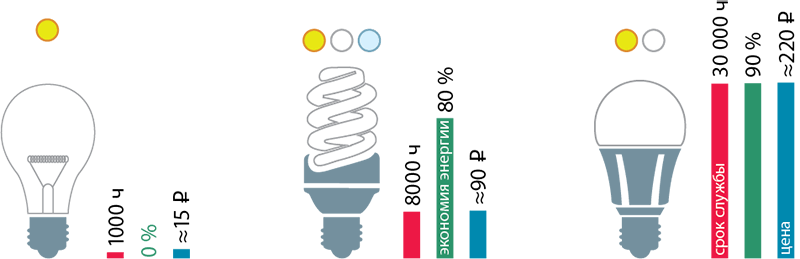
The only advantage of an energy-saving lamp in this case is the cost. LED will cost a lot more. But under proper operating conditions, it will last 2-3 times longer.
Environmental Safety
CFL contains approximately 5 ml of mercury, the amount varies depending on the size. Mercury is harmful to health, it is classified as the highest hazard class. Throw away the light bulb together with the rest of the garbage is prohibited, it must be handed over to a specialized collection point.

The infrared radiation that comes from an energy-saving lamp is also harmful to humans. In order not to expose the body to risks, it is better to give preference to LEDs. At the same time, at the moment there is no direct evidence that a fluorescent light bulb has caused a specific disease.
Working temperature
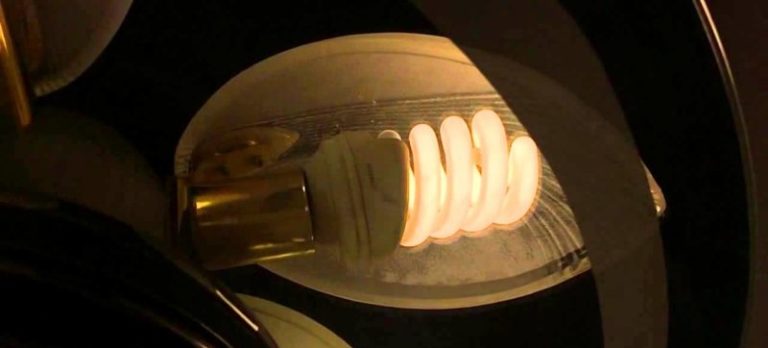
The maximum incandescent temperature of a fluorescent lamp reaches 60 degrees. It will not provoke a fire and is not capable of injuring human skin. But if there is a malfunction in the wiring, the temperature can rise significantly. The likelihood of such a situation is extremely small, but the risk is still there.
LED bulbs practically do not heat up, especially high-quality products from popular brands. This is due to semiconductor technology based on LED crystals. For most people, the heating performance is insignificant, as they do not need to touch the lamp while it is working.
Life time
If the budget is not limited and you need to buy a light bulb with the longest service life, it is better to purchase an LED one. But in order for the price to justify itself, you should buy products from popular brands, which will be discussed below.
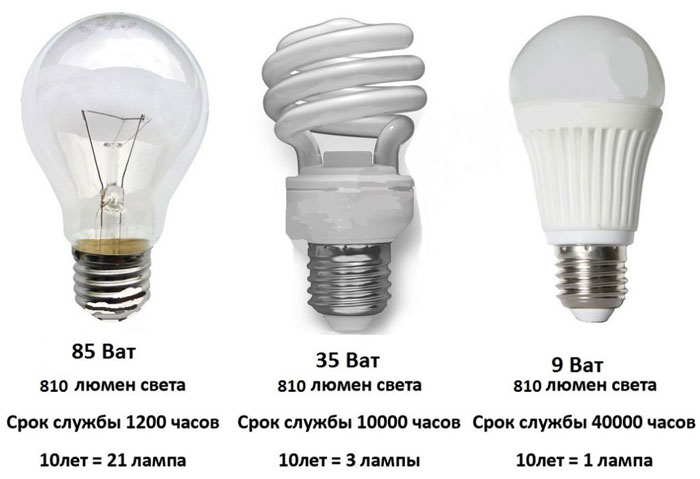
According to research results, LED light sources last 4-5 times longer than fluorescent ones. To check the information, just read the text on the package. An LED bulb, under proper operating conditions, lasts up to 50,000 hours, and an energy-saving one about 10,000.
Comparison results (table)
| Light bulb type | Energy saving | Lifetime | Safety and disposal | Case heating | Price |
|---|---|---|---|---|---|
| LED | + | + | + | + | - |
| energy saving | - | - | - | - | + |
| Outcome | 4:1 winner led lamp |
The most popular manufacturers
To purchase a reliable lamp, you should consider products only from popular brands that have earned the trust of consumers. Now on the market you can find many offers from Chinese manufacturers offering attractive prices. But such products are rarely reliable, often burn out.
LED Lamp Manufacturers
Experts advise giving preference to the following brands:
- Philips.
- Osram.
- A.S.D.
- Jazzway.
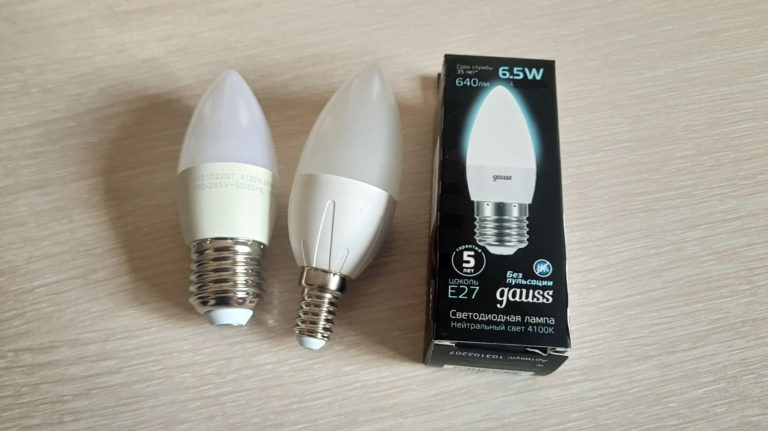
- Gauss.
- camelion.
- Feron.
They proved to be the best in the market of LED lamps, as well as various household appliances. Highest rating from Osram and Philips.
Manufacturers of energy saving lamps
Manufacturers of high-quality energy-saving lamps:
- Navigator.
- Deluxe.
- smartbuy.
- Foton.
- General Electric.
- ERA.
- Philips.
Philips, General Electric, Navigator and Delux received high ratings from buyers.
We advise you to watch the video: Which lamps are the most economical and energy-saving.
Expert advice on selection
It is difficult to say which light bulbs will be better and more economical: LED or energy-saving. It all depends on the place where they will be installed, voltage drops and other factors that will affect the service life and energy consumption.
Comparing, you can see that in almost all respects LED lamps are superior to CFLs. But the cost is much higher, which is essential if you need to light a large house.
Often, CFLs are bought when the choice is between them and incandescent lamps. It is very difficult to compete with LED technology. It is also worth considering that the “housekeepers” will gradually begin to lose brightness, since the gas pressure inside the bulb will decrease over time.