Emergency lighting features
Emergency lighting is a separate type of illumination used during non-working hours and when there are few people in the premises. This option has its own characteristics, which must be taken into account when designing a system, choosing luminaire models and determining their location on walls or ceilings.
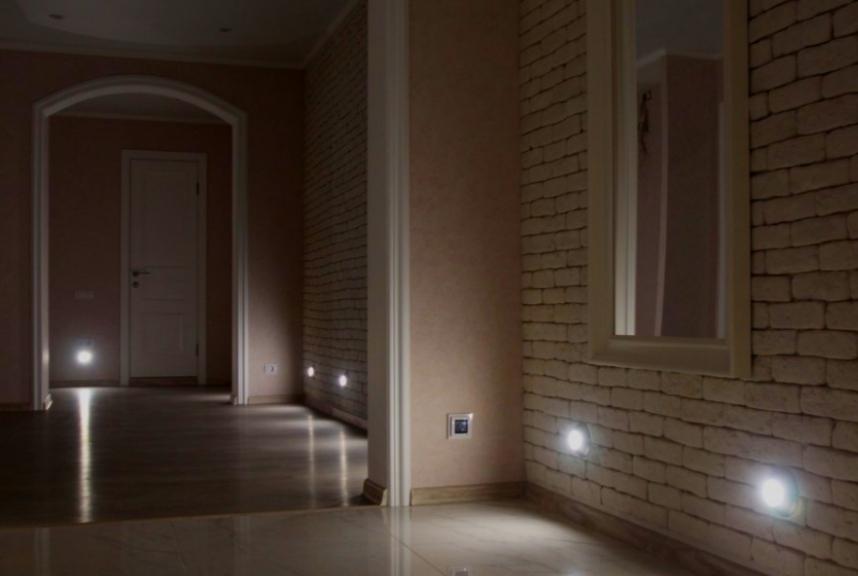
Main differences, scope
The emergency light is used during periods when the number of people in the room is minimal. or they only go there from time to time. Under normal natural light artificial light sources are not required.
It should be understood that this option does not apply to emergency or evacuation lighting. But it can perform their functions, provided that the lamps are connected to a separate line or have an autonomous power supply in case of power outages.
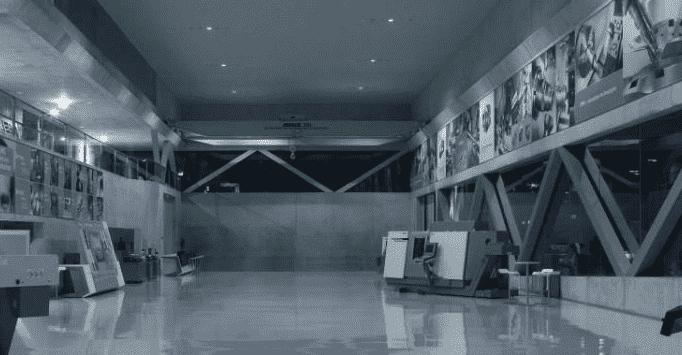
The lighting features are as follows:
- It is used where it is necessary to provide round-the-clock illumination to ensure the safety of people.
- The light should not be bright, its main function is to create a background in which it is comfortable to move along corridors, rooms, stairs, etc.
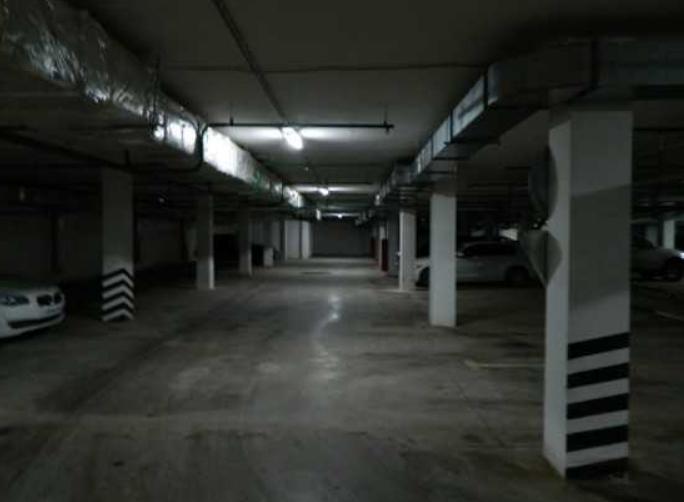
- You can install lights indoors and in underground parking lots or outdoor areas to provide visibility for both pedestrians and cars or other vehicles.
- This light option is mandatory for hospitals and other medical institutions. It allows staff to walk at night, but does not disturb patients in the wards.
- In production, warehouses, aisles and other places where people do not perform their main work are thus illuminated.
- In various public places and establishments, the emergency light works during non-working hours, in the rest of the period standard lighting should be used.
If you equip the lamps with motion sensors, then the light will turn on only when it is needed. This is especially useful for flights of stairs, corridors, and places where there is very little traffic after hours.
Emergency lighting benefits
This option is optional when compared to an emergency or evacuation light. But there are many benefits to using it:
- Ensuring normal visibility in corridors, stairs or adjacent areas. Now you do not need to use the main lighting during periods when it is not particularly necessary.
- Saving electricity.The use of equipment with low power or its operation at minimum settings reduces electricity consumption by 10 times or more. And if you select energy-saving lamps, you can reduce the cost of lighting after hours to a minimum.
- Possibility of using lamps with motion sensors. This will further reduce energy costs, as the light will only turn on when there is a person nearby. The rest of the time, the equipment may not work if it is not necessary.
- If the lamps are constantly working, they also serve as protection against intruders. Thieves are much less likely to enter lighted premises, it is easier for security officers to carry out checks, and with a video surveillance system, penetration can be quickly detected.
- The possibility of using lamps for other purposes. They can serve as emergency lighting if the power goes out and people need to leave the building. Often, the main lighting equipment is used, which during the non-working period simply reduces the brightness by adjusting or by turning on a second light element.
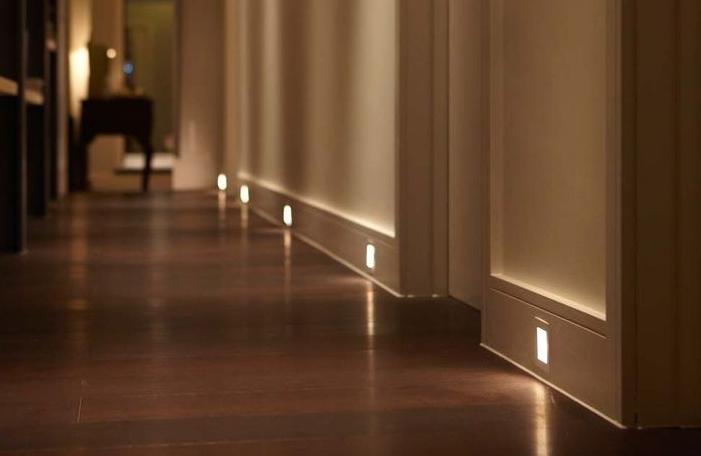
You can set the start of emergency lighting by time or it starts working after manual switching on. Usually turn off the main light and turn on the duty light.
Technical standards for emergency lighting
When designing and selecting equipment, recommendations from the SNiP and GOST standards should be taken into account. For industrial enterprises and public buildings, they are mandatory, for the private sector it is also better to comply with them:
- Light intensity should be from 10 to 15% of the power of the main fixtures. If the standard light is very bright, then the performance may be lower.
- The minimum illumination value should be 1-2 lux per square meter. This is the minimum allowed intensity.
- Emergency lighting very often serves as an element of security. In this case, the minimum illumination indicator should not be less than 0.5 lux per square.
- Standards for this type of light are set for work surfaces. That is, if this is a table, then measurements should be taken according to the height of the countertop. And if we are talking about corridors, flights of stairs, etc., then the indicators are measured on the floor plane.
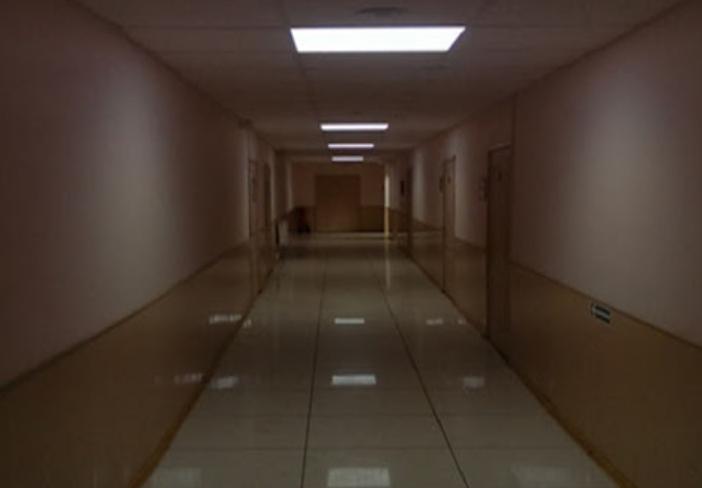
At the same time, there are requirements for the types of lamps that should be used in emergency lighting fixtures:
- Fluorescent lamps can be used in heated rooms where the temperature does not fall below 5 degrees. This option provides good light and consumes electricity sparingly.
- mercury lamps - a traditional solution that is used less and less due to the emergence of more efficient and cost-effective alternatives. This option flares up for a long time, and after turning off, cooling is required to start the lamp again.
- Halogen lamps They give good light, but at the same time they consume a lot of electricity and get very hot during operation. With continuous use, energy costs will be high.
- LED lamp have a long service life (50,000 hours), so they serve for decades.At the same time, they consume the least electricity and are unpretentious to external conditions, the light is of high quality, without flickering. You can change the brightness and set it exactly according to your requirements if you install a dimmer.
- Incandescent lamps are used for emergency lighting only when it is not possible to install other options. They consume the most electricity and last the least.
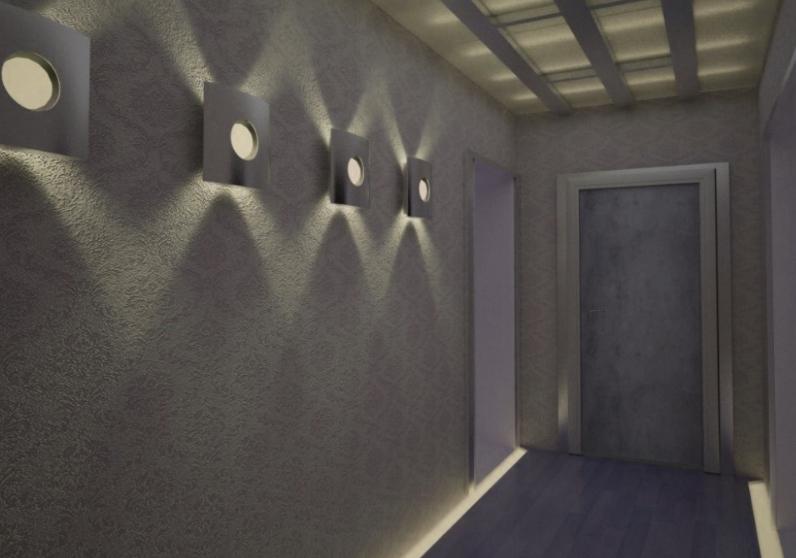
By the way! For emergency lighting, you can use an LED strip. This option gives a soft diffused light, which is enough to ensure visibility in corridors, flights of stairs and in any other room. The tape can be installed anywhere, for the street there are options in a moisture-proof silicone sheath.
Emergency Lighting Tips
To ensure high-quality emergency lighting during off-hours and in conditions of insufficient visibility, several recommendations must be followed. It all depends on the specifics of use, all the rules are in the PUE (rules for the installation of electrical installations), the corresponding GOSTs and SNiPs. To rule out any problems, you need to remember:
- The system should be developed during the construction phase of a building or during a major overhaul. This takes into account both the requirements of the main regulations and industry documentation, if it has special requirements for emergency lighting.
- It is best to consult on drafting a project with a representative of the regulatory authority. Then you can initially do everything according to established standards and avoid rework and unnecessary costs.
- Make the project as detailed as possible, indicate in it the location of the fixtures, their power and installation height.The duty light can be implemented in different ways - at a small height from the floor, under the ceiling or in another place. There are no requirements for uneven illumination for this option.
- If emergency lighting will be used as part of the SPZ (fire protection system), then the standards for such options must be observed. In this case, electricity is supplied through a separate line to ensure operation in the event of a main power failure. Also, the luminaires must be equipped with a rechargeable battery in case the electricity supply is interrupted. In this case, the battery life should be at least an hour.
- It is best to use LED equipment, it is suitable for both businesses and private homes. This is the most economical option that lasts a long time and allows you to adjust the light. If necessary, you can increase the brightness or dim it.
- If there is no need for constant illumination, it is better to use lamps with a motion sensor. They turn on only when needed and work for a limited time - usually 30 to 60 seconds if movement has stopped.
- Emergency and evacuation lamps can be used as emergency lighting if they are constantly on. In this case, it makes no sense to install additional equipment.
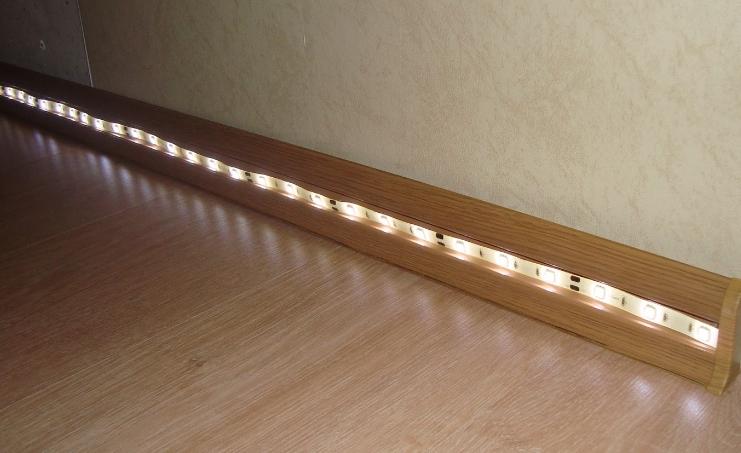
The easiest way is to install an LED strip, since it does not need to be wired, the system runs on a 12-volt power supply, you can even connect to an outlet, and lighting is not dangerous even if damaged.
Emergency lighting is needed to ensure normal visibility where it makes no sense to use the main light.It can be implemented in different ways, there are no strict restrictions and norms for uniformity. And for maximum savings, you can install motion sensors so that the lamps light up only when someone is nearby.
At the end of the video: Emergency lighting from LED strip