Types of emergency lighting and what are the requirements
Emergency or evacuation lighting is a must in most buildings. But the requirements for it are set out in several regulations, which complicates the implementation of the system and the choice of the right technical solutions. Equipment of this type has its own characteristics that must be taken into account when creating a project and installing fixtures.
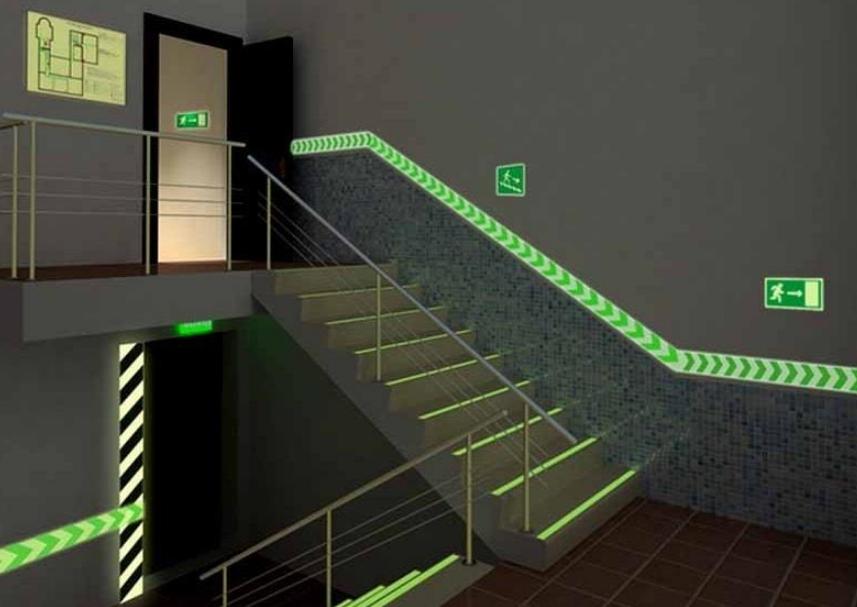
Classification
Luminaires related to emergency lighting are always connected to a separate line, which has nothing to do with the normal lighting network. If the operation of standard lighting equipment is disrupted due to a short circuit or fire, then emergency lamps will help evacuate people from the premises or continue work for some time.
All regulations and requirements regarding emergency lighting are specified in several regulations. First of all, this is SP 52.13330.2016, which replaced the previously existing 52.13330.2011. Moreover, the previous normative act has lost its force only partially. To figure out which items are still in effect, you must be guided by Decree of the Government of the Russian Federation No. 1521, issued on December 26, 2014 No.
Also, when planning and installing, GOST R 55842-2013 and SP 439.1325800.2018 are taken into account. These acts contain almost all the information on the topic. But in some cases, it is necessary to take into account industry acts, if they set out additional requirements.
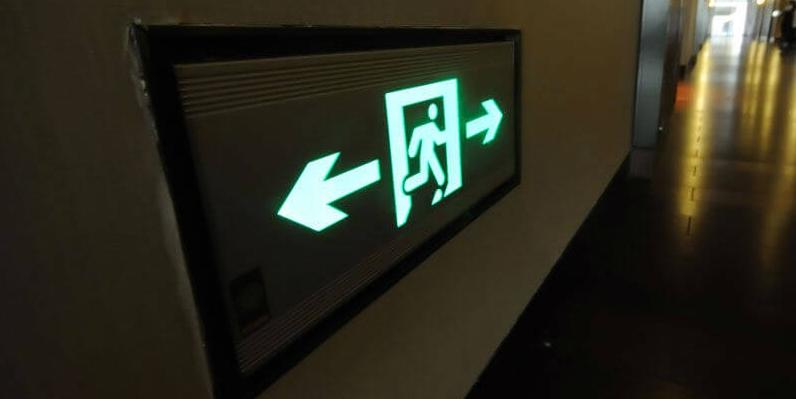
Emergency lighting is divided into two main types - evacuation and backup. The first type is divided into subspecies, so it is important to analyze the features of each of them.
emergency lighting
Emergency evacuation lighting is needed in all buildings where, in case of an emergency, it is necessary to tell a person the shortest and safest way to the exit. Passages, corridors, landings and marches are usually illuminated so that when the main light fails, a certain number of emergency lamps remain.
The equipment must operate from a line that is not related to general lighting or be powered by an autonomous battery, which is placed in the luminaire housing. According to the rules, the light on the evacuation routes must work for at least an hour, and in some cases, the time may be increased.
To determine the required lamp power, the horizontal illumination indicator is used; in corridors up to 2 m wide on the floor in the middle, it should be at least 1 lux.In wide corridors, the central part, approximately half of the total width, should be illuminated with an indicator of at least 0.5 lux. And the indicator of uneven light should not be lower than 1/40.
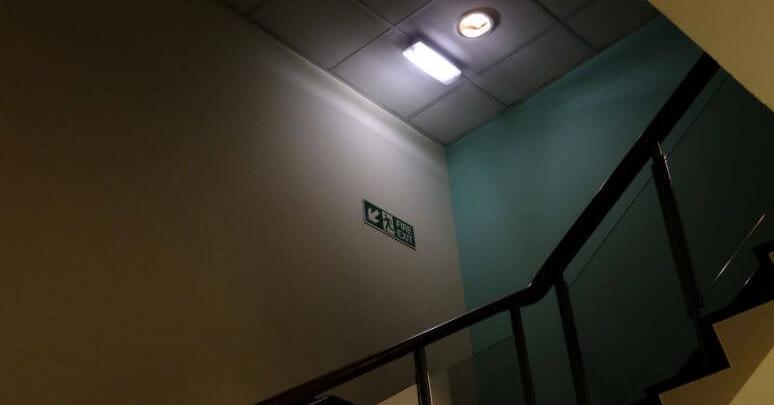
Most often, evacuation lighting is designed at the construction stage. Therefore, it is necessary to foresee the placement of evacuation plans, the location of fire shields and the location of the installation of emergency communications. These points are best agreed with stakeholders to determine the appropriate location for each facility.
Luminaires must be placed in certain areas specified in SNiP:
- Places where there is a floor difference or different types of coverings are joined, which can create an evacuation hazard.
- Wherever the direction of movement changes.
- In corridors, passages and galleries along the way.
- Before each of the evacuation exits.
- At the intersections of corridors and passages.
- On all flights of stairs. It is important that all steps receive direct light to ensure good visibility.
- Near medical stations or first-aid kits, if available.
- Wherever emergency communications or emergency or emergency notification equipment is installed.
- In places where fire extinguishers and fire shields are located.
- About evacuation plans.
In some cases, items may be added if there are specific features.
Illumination of areas of increased danger
This type has features, its main purpose is to complete processes that are dangerous to humans.This can be either the shutdown of equipment or machines, or the shutdown of systems that, in the absence of electricity, create the risk of accidents, explosions, etc.
Lighting is also switched on in emergency situations and should remain on for as long as necessary to complete all hazardous processes and stop equipment. Moreover, it should turn on quickly - the allowable pause between turning off the main lighting and turning on the emergency light is only half a second.
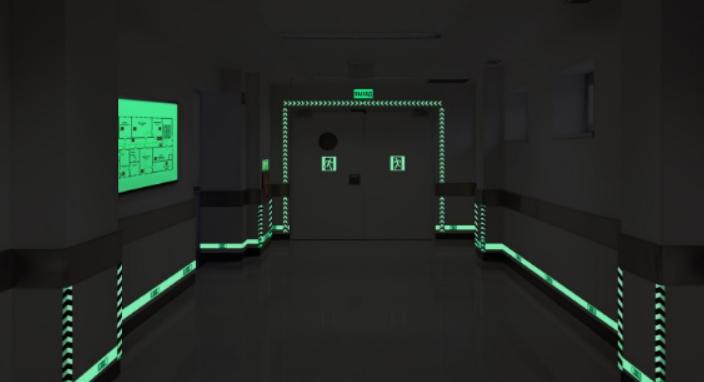
Luminaires are selected so that the illumination in rooms or workshops is not less than 10% of the norm, but not less than 15 lux per square meter. Wherein differences in illumination should not be more than 1/10.
Large area lighting
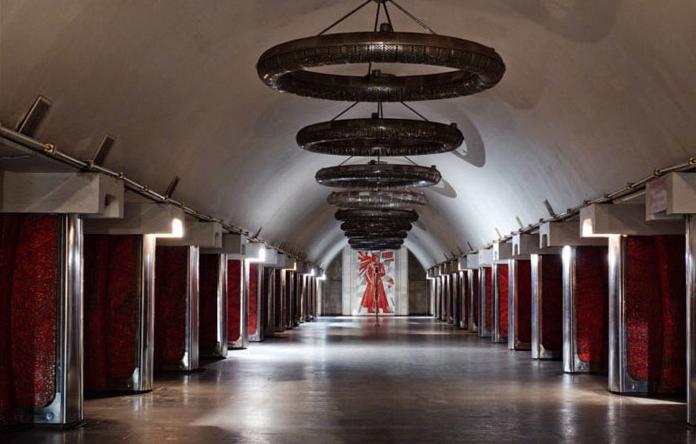
This option is also called anti-panic lighting, since it guarantees order when evacuating a large number of people. The main purpose is to ensure normal visibility, which should not fall below 0.5 lux.
This type is mandatory for rooms larger than 60 sq.m., even if there is good natural light. If there are no windows in the room, then it is advisable to install at least one emergency lamp, even if the area is small.
Backup lighting
Emergency backup lighting does not apply to evacuation. Its main purpose is to ensure the continuous operation of equipment to maintain the process where it is needed.Also, this option is used by organizations involved in water supply, heating, sewerage maintenance and other similar processes.
Backup lighting must be installed in industries that require constant monitoring to prevent explosions, leaks of harmful substances, fires, etc. This system must not interfere with emergency lighting and be used for evacuation. They lay separate circuits that work independently of each other.
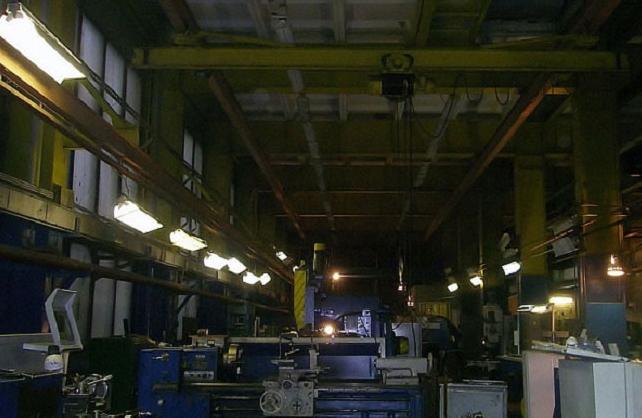
Lighting standards in this case are much higher. They should be at least 30% of the indicators set for the room with standard lighting. Working hours are determined individually depending on the specifics.
Where to use emergency lighting
A complete list is in the regulations, so before you make a lighting system, you need to study them. Several points can be made:
- Illumination can be done both in buildings where people work, and outside them if the lighting conditions are violated there.
- All places where danger is created when people pass should be illuminated.
- All passages and stairs must be equipped with lamps if the number of evacuees exceeds 50 people.
- The main passages and routes of employees in production facilities and workshops with more than 50 employees require the installation of lighting fixtures.
- Stair flights and landings in buildings whose height exceeds 6 floors is another mandatory place for installing emergency lights.
- Industrial premises in which, during evacuation, there is a danger to life due to operating equipment or mechanisms.
- All rooms in which there is no natural light, since visibility will be zero during a power outage.
- If more than 100 people can be in a public building or auxiliary premises of a manufacturing enterprise at the same time, then emergency lighting must be installed.
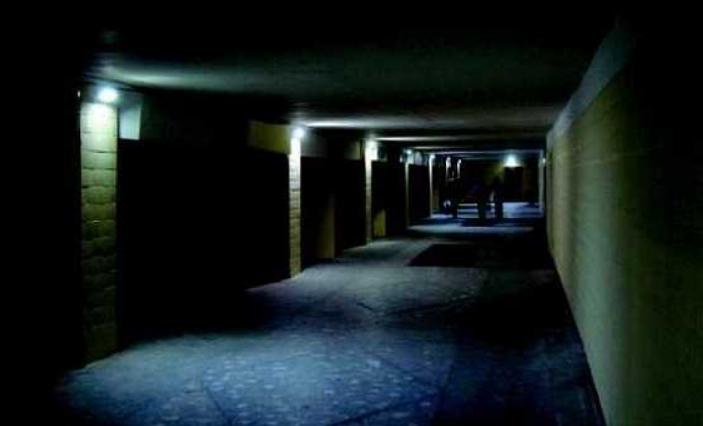
Emergency lighting can turn on during power outages or burn constantly, there are no restrictions on this.
Selection of light sources for emergency lighting
According to SP 52.13330.2016, certain light sources can be used for emergency luminaires. When choosing, proceed from the characteristics of the building, the type of food and other aspects. Main options:
- LED lights. The best solution for today, providing good light quality without flicker. Also, this option is distinguished by low power consumption, which is especially important when using battery power, you can install a battery with a smaller capacity and thereby reduce the cost.
- LED strips are another option that has the same performance as downlights but takes up less space. Using the tape, you can make continuous illumination along the length of the corridor, which will further increase safety during evacuation.
- Fluorescent lamps can be used if the room temperature does not fall below 5 degrees. This option works normally only in heat, so it should not be installed in unheated industrial premises and in cold corridors.
- Discharge lamps also allowed to install. But only on condition that they quickly turn off and flare up again after a short shutdown without any problems.
- Incandescent lamps use in emergency lighting is not recommended. But if there is no other way, you can use them.
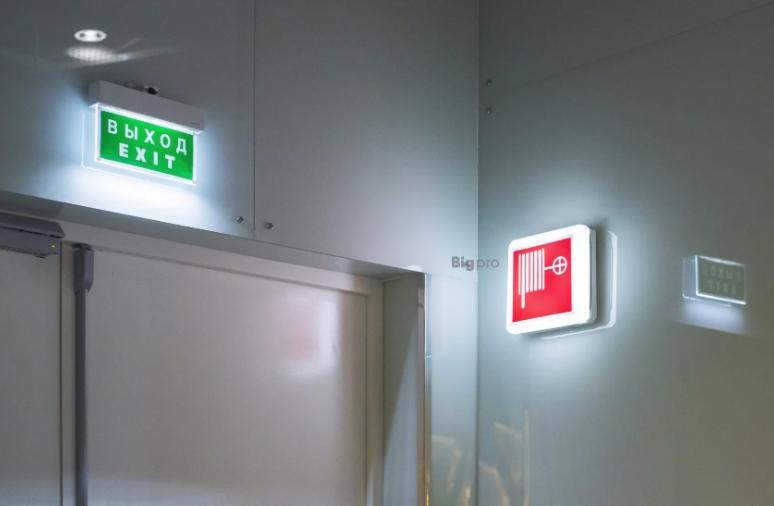
The norm of illumination for all types of lamps is 15 lux, with the exception of incandescent lamps, they have an indicator of 10 lux.
Luminaires are subject to requirements that must be met. Therefore, it is necessary to understand them in order to avoid mistakes in the design and installation of the system:
- All nodes of the system, which include, in addition to the lamp, the block, the control node and the battery must be located in the housing or at a distance of no more than half a meter from it.
- Also, emergency lights should have an indicator showing the mode in which the equipment is operating.
- The lamp must provide a color rendering index of at least 40 Ra.
- You should know the difference between evacuation and emergency lights. The first type indicates directions and exits, most often pictograms or arrows are pasted on the surface. Emergency are used everywhere and provide normal visibility so that a person can see where he is going.
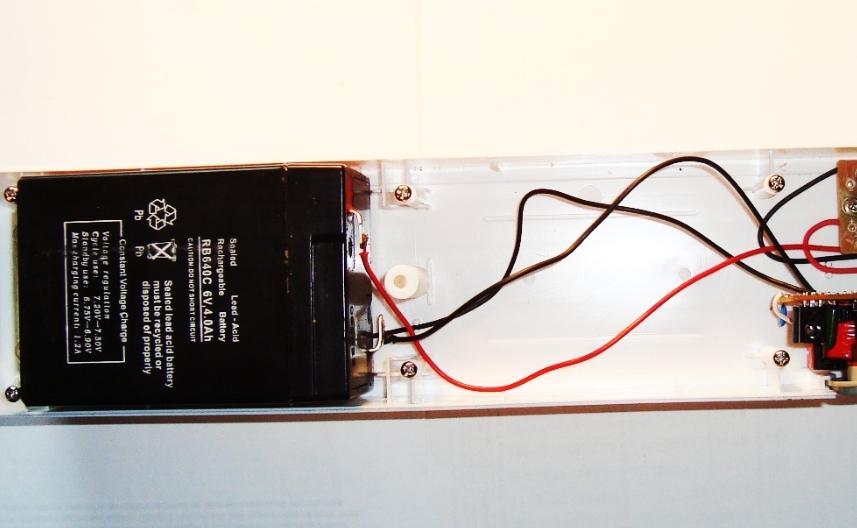
Emergency lighting lines, if powered by a separate circuit, should not run near the main wiring to avoid damage to both circuits at the same time.
Requirements for emergency lighting according to SP 52.13330 and PUE
To better understand the topic, it is necessary to study the main features of emergency systems from regulations and PUE. Here are the most important points that should not be overlooked:
- The emergency light is switched on in case of interruptions with the main lighting. It must always be connected to another power source.
- Backup lighting is not used for evacuation. In some cases, you can combine these options, but in this case, all the requirements for both options must be met.
- Pointers and lamps should normally be powered from a separate line. And if it is damaged, the third option starts working - a battery with a minimum resource of 60 minutes.
- If the building is usually unoccupied or its total area is less than 250 meters, individual flashlights can be used instead of fixed emergency lighting. They should be in every room or every employee.
- Most often, the lamp is mounted on the wall or built into it. In some cases, they are placed on the ceiling.

Organization of emergency lighting
Any violations in the organization of emergency lighting can lead to fines or even a ban on work until the comments are eliminated. To avoid such problems, you need to remember the recommendations:
- The easiest way is to seek advice from the regulatory authority. To do this, you need to have a building project in hand, as well as know the main aspects of the work - the number of employees, their distribution among the premises, etc.
- The emergency lighting project is done along with the rest of the work at this stage. It is important to specify the exact location of the luminaires, their characteristics and the light source used.
- Power for emergency lighting is laid separately. In case of autonomous operation, you can use models with a battery or a generator installed in a specially equipped place.
- When choosing the characteristics of lamps, observe the norms of illumination. In long corridors, place equipment at a distance of no more than 25 meters from each other.
- Dangerous areas are especially distinguished - floor level differences, narrow passages, flights of stairs and landings, etc.
- Batteries need to be checked periodically and recharged if necessary; over time, they inevitably sit down.
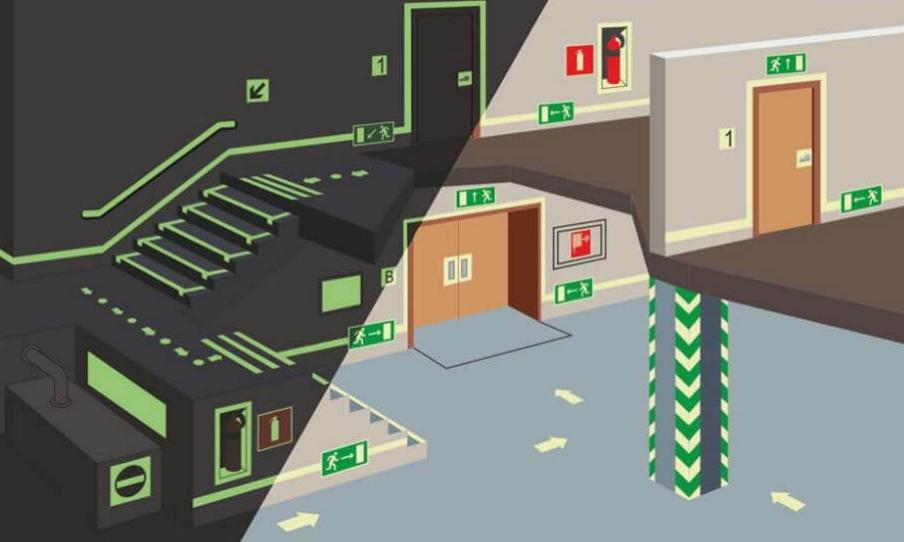
It is not difficult to make emergency lighting if you know all the requirements, design and lay the system in accordance with them. You can use this option as an addition to the main light, this is not prohibited.
Video format: Answers to the most popular questions.