Options for modern lighting in the apartment
Lighting in the apartment must meet a number of requirements, since the comfort of staying in the room depends on it. Moreover, the illumination standards differ in different rooms, so using the same indicators will not work. It is necessary to navigate the features in order to organize high-quality and convenient lighting in a house or apartment.
Organization Features
Before you deal with lamps and lamps, you need to disassemble the types of lighting. Everything is simple here, since there are only two types:
- Daylight - the most preferred option, as it provides an optimal atmosphere for vision and reduces eye strain. If possible, natural light should enter the room for as long as possible, the minimum time cannot be less than 2 hours, this is established by sanitary standards. This option is the most beneficial for human health.
- Artificial lighting - all fixtures and other equipment that allow you to maintain high-quality light at any time of the day. It can be implemented in different ways, it all depends on the specific conditions.
Video: How to create lighting for the interior of an apartment.
Types of lighting
Before choosing equipment for a room and determining its characteristics, you should figure out what varieties there are. Each of the types has features that must be considered:
- General lighting in the room provides uniform light, which most often comes from a chandelier located in the center of the room. It should be intense enough so that a person can be located anywhere and at the same time not cause discomfort to vision by direct or reflected radiation. The most commonly used diffused light shades or panels with LEDs.
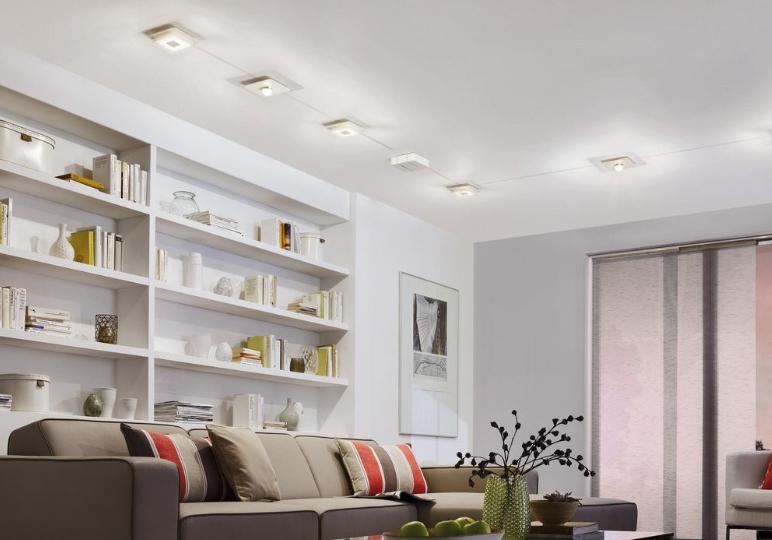
- Local lighting is required to highlight a separate part of the room or create conditions for comfortable work, hobbies or reading there. In this case, sconces, spotlights and track systems can be used, in which you can place ceiling lamps and change their direction almost as you like.
- decorative light. It can be just beautiful lighting that makes the interior original, or lighting that highlights individual parts of the decor or focuses on paintings, sculptures, etc. There are no requirements for quality and brightness, the aesthetic component and the effect that the backlight gives are taken into account.
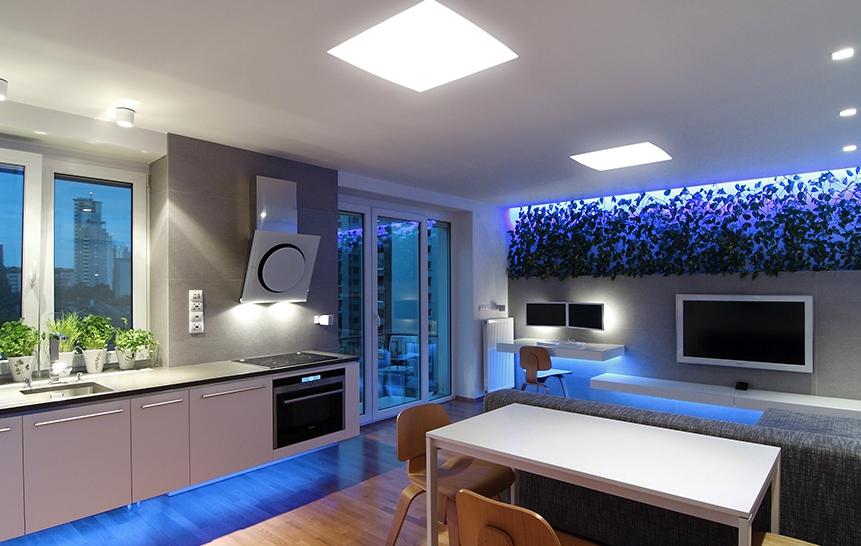
By the way! Most often, indoors combine different options to ensure the best effect.
Requirements by room
For different rooms, the requirements are different, so you need to figure it out in advance:
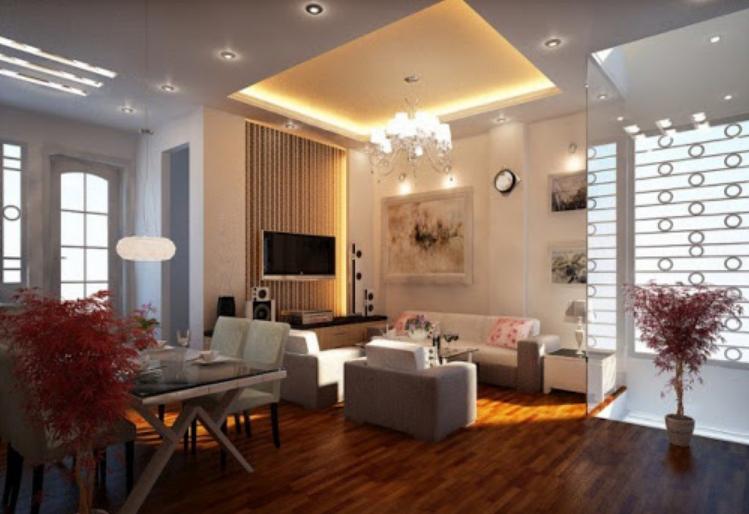
- For the living room it is worth choosing high-quality lighting, which, if necessary, can be adjusted. In this room, they receive guests and gather together, so you can’t save on the quality of the chandelier, it’s better to choose design options with flexible settings. You can also select individual zones, if necessary.
- In the bedrooms, it is worth creating a comfortable atmosphere for relaxation, so the light there is most often dimmed. It is better to use chandeliers with diffusing shades; in addition to them, they often put floor lamps or hanging sconces at the head of the bed to create a bedtime reading area. Lighting of the dressing table, as well as the space in front of the closet, may also be required.
- The requirements for children are especially stringent, since the child's vision and the creation of a comfortable environment depend on this. Typically, rooms are illuminated with high-quality general light, and additional light sources are used for play areas and the desktop. Also in this room put forward high security requirements.
- For the kitchen, it is important to rationally illuminate the space and divide it into functional zones. Most often there is a general light in the form of a chandelier, as well as separate elements on the work surface and in the dining area. Often used and decorative lighting cabinets or kitchen equipment.
- There are no special requirements for the quality of light in hallways and corridors. The main thing is to create a comfortable environment when putting on clothes and shoes. It may be necessary to additionally allocate a zone near the mirror.
- Bathrooms and bathrooms are places where the light should be bright.At the same time, due to increased humidity, the equipment is subjected to additional loads. General lighting is most often not required, use Spotlights.
For all rooms with humidity changes, it is better to purchase equipment with protection class IP65 or higher.
Power rates
The light in the room must comply with a number of standards established in SNiP and SanPiN. Moreover, all indicators are measured at floor level using special equipment. Illuminance is measured in lux, 1 Lux is the intensity of radiation in 1 lumen, distributed over an area of 1 square meter. The rules for different rooms are as follows:
- In the nursery 200 lx per square meter. Moreover, it is important to spread evenly. luminous flux by room.
- For the living room - 150 lx quite enough. But if there is a reading area, then the indicator will be 300 Lux.
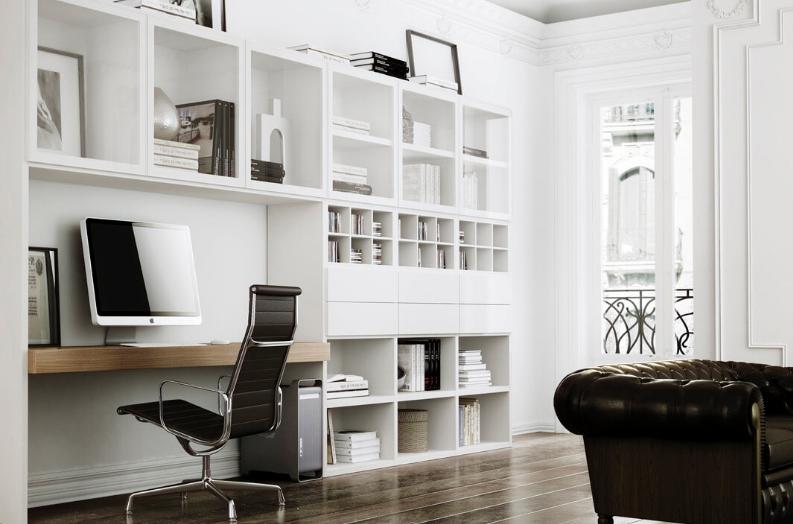
- Office and library - 300 Lux.
![lighting requirements]() For working areas, the requirements for illumination are the highest.
For working areas, the requirements for illumination are the highest. - For the corridor, hallway, bathroom and bathroom, the minimum figure is 50 Lk.
- Places for doing needlework, preparing lessons and other work related to eye strain should be illuminated more intensively, the indicators should be from 400 to 500 lx.
- In the kitchen, it is worth maintaining the level of illumination in the range from 150 to 200 lx.
All rates are approximate, sometimes you need to increase the indicators to create a comfortable environment. Here one should proceed not from the prescribed values, but from the actual situation.
Calculation of the number of fixtures
To ensure the desired level of illumination, it is worth selecting equipment depending on the design of the lamp and type of lamps used. The light output depends on the light bulbs, it is individual for different light sources, therefore, in order to calculate the number of elements, you need to study the information from the table and use it to select the optimal power.
Table of the ratio of power to luminous flux (depends on the type of lamp used).
| Incandescent lamp, W | Fluorescent lamp, W | LED lamp, W | Luminous flux, Lm |
| 20 | 5-7 | 2-3 | 250 |
| 40 | 10-13 | 4-5 | 400 |
| 60 | 15-16 | 6-10 | 700 |
| 75 | 18-20 | 10-12 | 900 |
| 100 | 25-30 | 12-15 | 1200 |
| 150 | 40-50 | 18-20 | 1800 |
| 200 | 60-80 | 25-30 | 2500 |
It is necessary to take into account the norm for a particular room, the indicator is multiplied by the area of \u200b\u200bthe room in square meters. For example, if evening lighting should provide a brightness of 200 Lx, and the size of the room is 5x3 meters, then you need to multiply 200 by 15, you get an amount of 3000 Lx. Based on this, the equipment is selected.
To adjust the lighting depending on the time of day, you can use different operating modes or put a dimmer on the LED equipment. With this fixture, you can adjust the brightness so that it is perfect both in the evening and in the daytime.
Ideas for modern apartment lighting
To ensure maximum efficiency and create a comfortable environment, you should use the recommendations from experts:
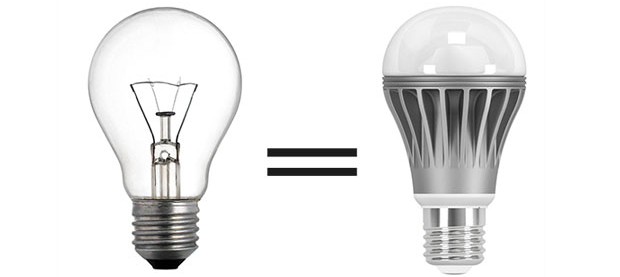
- Better to use led light bulbs, they are efficient and durable, with a service life of 50,000 hours. Bright, flicker-free lighting that consumes the least amount of energy - consumes 10 times less electricity than traditional incandescent lamps.
- Take into account not only the brightness, but also the light temperature of the light sources. Warm gamma is suitable for recreation areas where you need to relax and be distracted.The natural gamut provides accurate color reproduction and is suitable for living rooms and other areas where good lighting is needed. Cold light gives an invigorating effect, but can also cause stress, suitable for the working area in the kitchen.
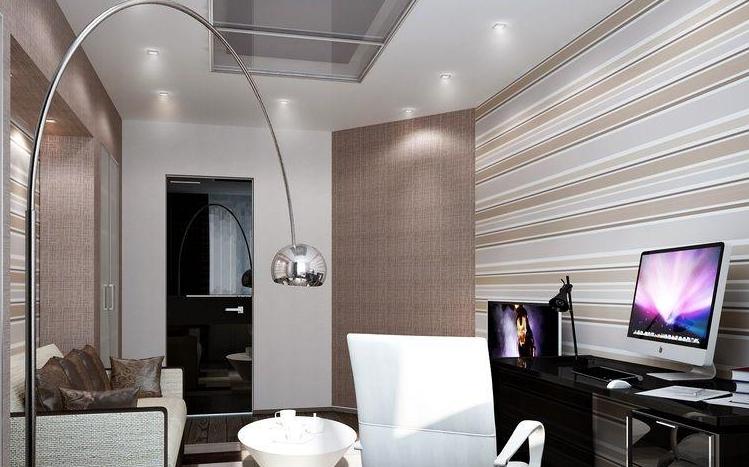
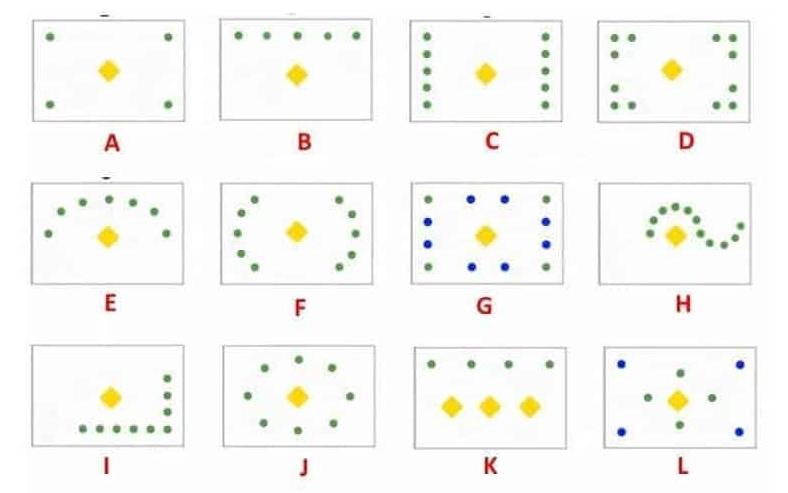
- Give preference not to one powerful light source in the center, but to several, which can be located as you like. You can not connect a chandelier at all, this solution is often used in modern environments.
In order not to turn on the equipment, you can install motion sensors where light is needed only occasionally.
Examples of organizing lighting in different rooms
It all depends on the configuration of the room and the features of the wiring. Often you have to adapt to existing conditions. The lighting design in the apartment is selected taking into account the following recommendations:
- In the hallway, you can place only one row of spotlights in the middle. If it is wide, it is worth putting the equipment in two lines along the walls.
- Spot options are also suitable for bathrooms and bathrooms, they can be both built-in and overhead. The location step is usually about a meter.
- In the kitchen, general lighting is done with a chandelier. Above the dining area is easiest arrange one or more directional lights. And to illuminate the working area, it is worth fixing the LED strip on bottom of hanging cabinets.
- Subdued light is suitable for the bedroom, most often the system consists of a chandelier and local lighting sources in the right places. It all depends on the characteristics of the room.
- The living room needs bright, high-quality light, which can be provided as a chandelier with additional elements, as well as spotlights or general lighting.
This video will talk about serious mistakes when planning lighting on your own.
Providing high-quality lighting means correctly calculating the indicators for each room and choosing reliable and economical equipment. You should not save money, because more expensive LED lamps consume the least electricity and last a long time.