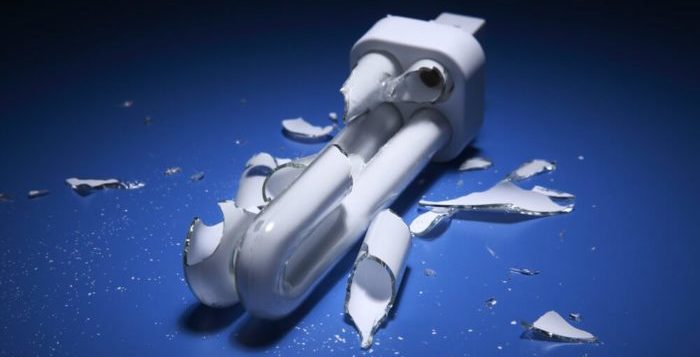
An energy-saving light bulb has broken - what to do
Energy-saving lamps are efficient lighting devices that are widely used in homes. Most of the time they are not a problem, but some emergencies may require immediate action. It is recommended to know in advance what to do if an energy-saving light bulb breaks in order to correctly assess the level of danger.
Description of energy saving light bulb
An energy-saving lamp is an electrical device that works through heating from electrodes of an inert gas and mercury vapor in a sealed flask.
Voltage off ballast causes the movement of electrons and produces ultraviolet radiation. The phosphor coating of the bulb turns it into visible white light.
Is a broken light bulb dangerous?
Principle of operation energy-saving light bulbs is based on heating mercury. Its vapors belong to hazard class 1 and can have an adverse effect on humans and the environment.
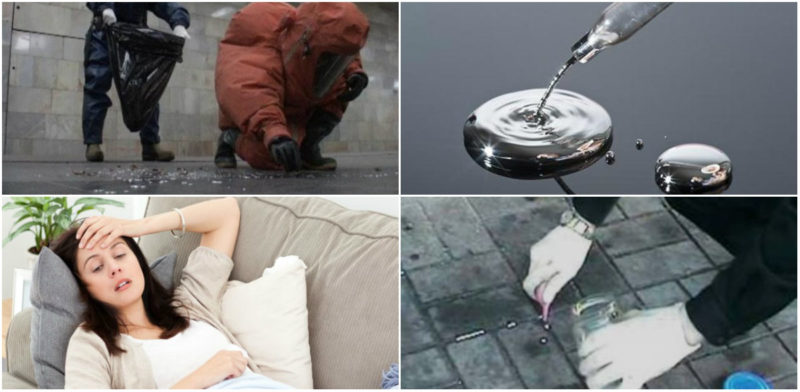
Mercury causes moderate to severe health effects. Spread from a broken lamp occurs very quickly, and the first symptomatology appears on the nervous system.
Symptoms of mercury poisoning include:
- headache;
- vomiting or nausea;
- dizziness;
- weakness;
- temperature rise;
- indigestion and gastrointestinal tract.
Severe poisoning is expressed by severe headaches that roll over and over again. Delusional states and impaired brain function may also occur. A high content of harmful substances in the body causes damage to internal organs, respiratory tract.
Children and pregnant women are most vulnerable to exposure to mercury vapor. One broken lamp is unlikely to cause death, but significant deterioration may occur.
Is there mercury in energy saving lamps
Mercury is indeed present in modern energy-saving lamps. Its exact amount depends on the device model and technology specifics. Standard household light bulbs usually contain no more than 5 mg of the harmful substance. In devices of domestic assembly, the element itself is present, and in European light bulbs an alloy based on mercury is used.
It will be useful to read: What's inside an energy-saving lamp
The substance itself in solid and liquid state is safe for humans. However, it has a very low boiling point and easily turns into steam that penetrates the body. This impact is already dangerous.
AT luminescent tube lamps can contain up to 65 mg of the active substance, and in street DRTs up to 600 mg.
How to eliminate the danger
Elimination of the danger from a broken lamp includes mechanical cleaning, demercurization and waste disposal. Let's consider the steps in more detail.
Mechanical cleaning
All mechanical cleaning work must be carried out by an adult responsible person, the rest must leave the territory, including pets. Before cleaning, it is important to close the doors to other rooms and open the windows wide.
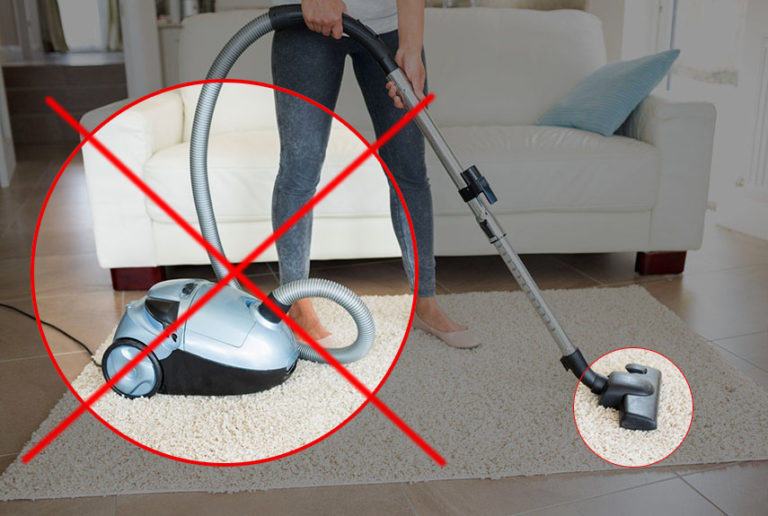
Next, you should assemble all the parts of the device. When removing lamp fragments, in no case should you touch them with your bare hands. All work is carried out in thick gloves, and the collection of residues is done with a sponge, cardboard or rag. The vacuum cleaner cannot be used, otherwise it will have to be disposed of.
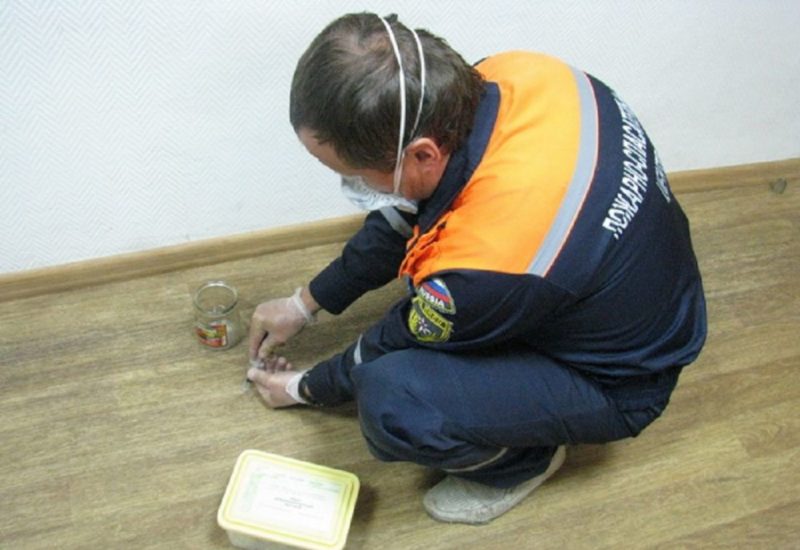
All parts of the device are placed in a tight bag with a sealed zipper. The surface is wiped with a damp cloth or towel, which is also placed in a tight bag for disposal.
The ingress of substances on decor elements is also a reason to place them in sealed bags for further research. Experts will be able to assess the degree of contamination and draw up a conclusion on the suitability of the item for further use.
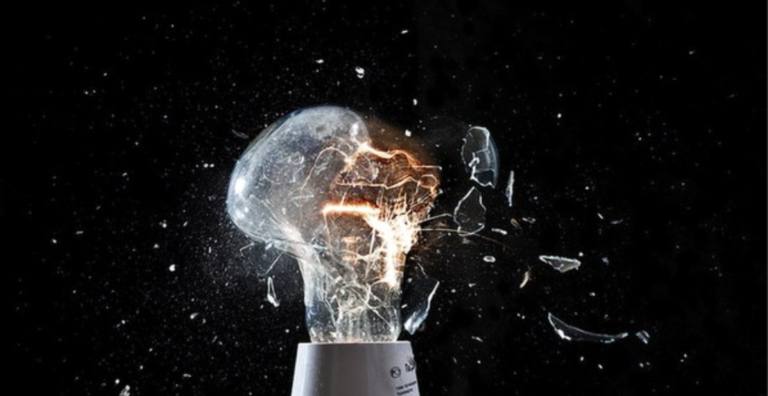
Demercurization
Upon completion of mechanical cleaning, immediately proceed to cleaning the room, demercurization - removing all mercury residues and neutralizing compounds absorbed into the surface. Thorough cleaning is required using special solutions.
The desired solution can be bought at a specialized store or prepared independently.
Options for homemade neutralizers:
- Dissolve 2 grams of potassium permanganate in 1 liter of water and mix.
- In a bucket of 10 liters, dissolve 400 grams of soda and 400 grams of soap. Soda in this case can be replaced with another chlorine-containing composition.
- 100 ml of iodine dissolves in 1 liter of pure water.
The compositions are inexpensive and are prepared quickly, which is convenient for processing large areas.
Wipe all surfaces in the room where the lamp broke with the solution. Pay special attention to cracks, hidden cavities and hard-to-reach areas. All work must be carried out exclusively in tight rubber gloves.
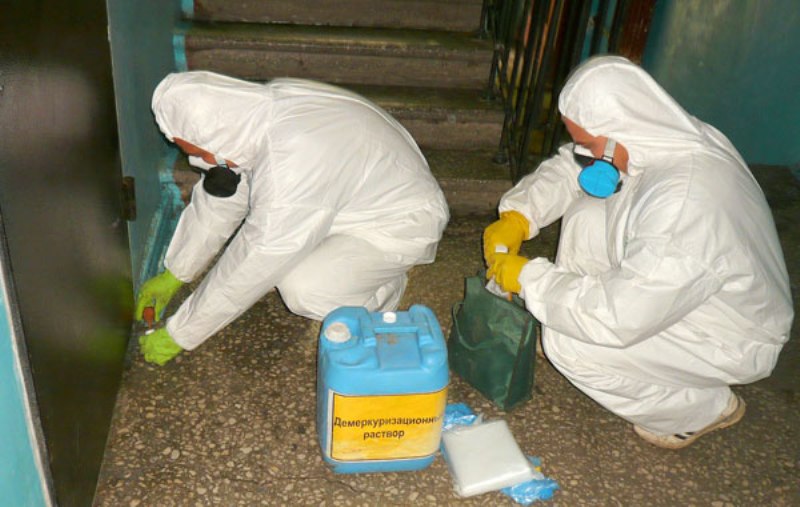
After application, it is desirable to leave the solution on the surfaces for several hours. For complete removal of harmful substances, it may be necessary to repeat the treatment for 3-4 days.
You can apply for a demercurization service to special companies that use specialized tools and methods. After the procedure, employees will measure the content of mercury vapor in the air and assess the interior items that have been exposed to the substance.
Disposal
It remains to remove the bag with lamp waste from the apartment. It is impossible to throw such garbage into a regular tank; you need to find a specialized collection for hazardous waste. It is not difficult to find such tanks in large metropolitan areas, but it is more difficult for residents of small cities.
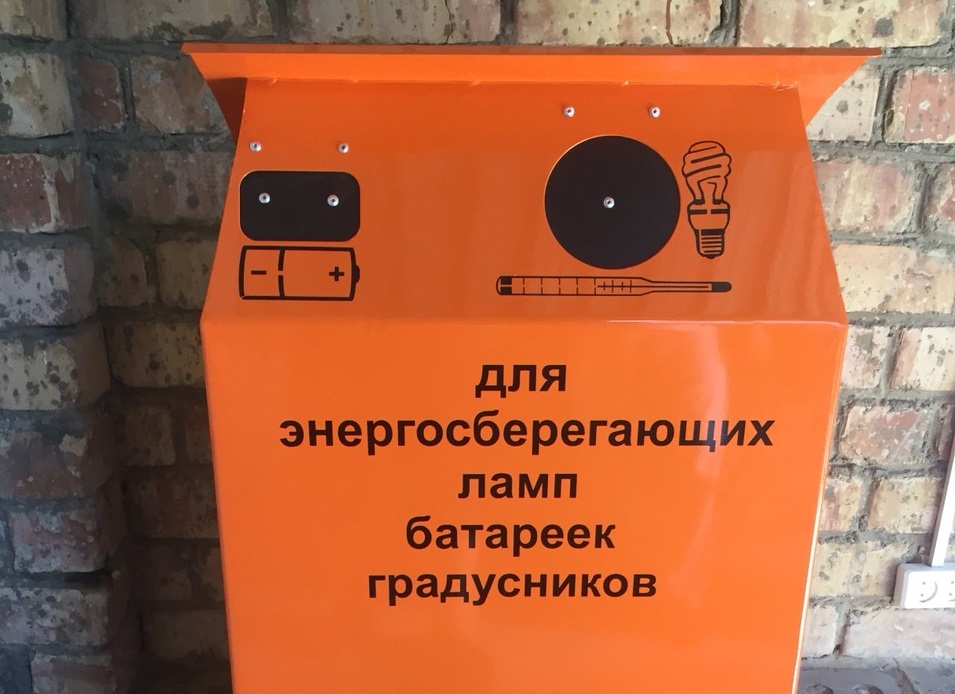
For advice, call the Ministry of Emergency Situations or the sanitary and epidemiological station. Specialists will coordinate and recommend the best disposal option. You can contact the local large enterprises, which should have tanks for the disposal of hazardous waste.
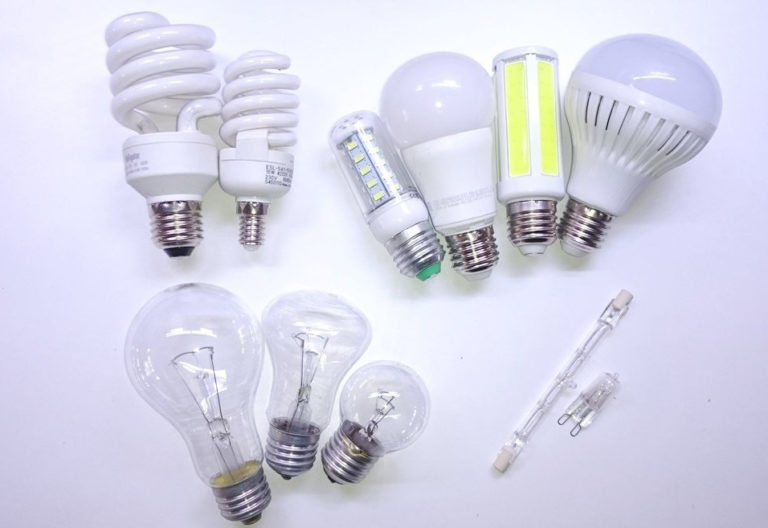
What Not to Do
When dealing with a broken energy-saving lamp, it is important to avoid the following:
- Do not turn on the air conditioner. Mercury vapor will quickly fill its elements, and then will spread around the room for a long time during operation of the device. The same applies to vacuum cleaners and fans.
- It is impossible to collect fragments with a broom, toxic substances will rise up along with the dust.
- Splinters must not be thrown into the trash can.
- Never touch the parts of the lamp with bare hands without protection.
- Residues should not be flushed down the toilet.
Parts of a broken energy-saving lamp are hazardous waste that must be be disposed of properly.