How to choose solar panels
For autonomous supply of electricity to the house, different types of solar panels are used. This is the most popular alternative energy source that can not only generate electricity, but also be used to heat the house. Technology is improving, system efficiency is improving.
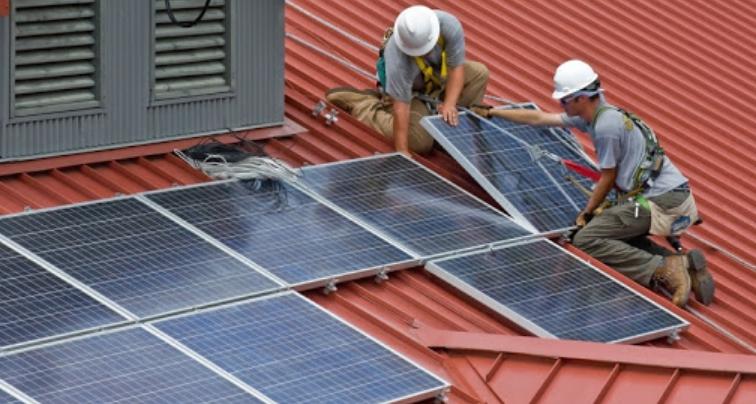
If even 10-15 years ago few people could install solar panels because of the very high price, today the budget has become much lower. The payback period is also reduced. And thanks to modern photovoltaic cells used in panels, even in the middle lane, solar panels generate enough electricity.
Types of solar panels
Solar devices, as solar panels are also called, can be divided into 2 main groups. It all depends on the technology by which they are produced:
- Photovoltaic type, can be film or silicon.These are polymer photocells, which are connected in series with each other by contacts. A separate module is a solar battery.
- The solar collector is tubular and flat. The best solution that can store electricity or heat the coolant.
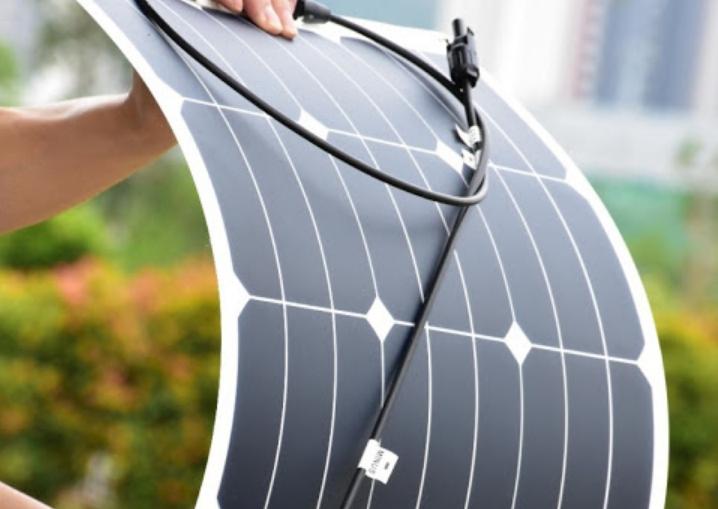
How photovoltaic converters are arranged
The name of the elements suggests that they convert solar energy into electrical energy. They are produced in two versions - on an aluminum frame and on a polymer canvas.
In the first version, the front part is protected by glass, and the back wall is covered with an insulating film. In the second, both protective parts are made of polymeric materials.
All photocells are connected to each other by conductive bars, which are connected to form a single system. Depending on the characteristics of the silicon used, the following types of solar panels are distinguished:
- Monocrystalline. For them, pure silicon is used, which is grown in the form of a single crystal, and then cut into plates with a thickness of 0.4 to 0.4 mm. These blanks serve as the basis for future solar panels. One panel requires 36 of these plates.
- Polycrystalline options are an order of magnitude easier to manufacture, so solar devices of this type are cheaper. The essence of the technology is that silicon is melted and then slowly cooled, after which polycrystals are cut into thin plates. It is easy to distinguish the variety by its characteristic bright blue color.
- Based on amorphous silicon. This option differs from the previous ones in that a technology is used in which evaporating silicon is deposited on the carrier element, then this thin layer is covered with a protective compound.Typically, devices are placed on the walls of houses and other buildings.
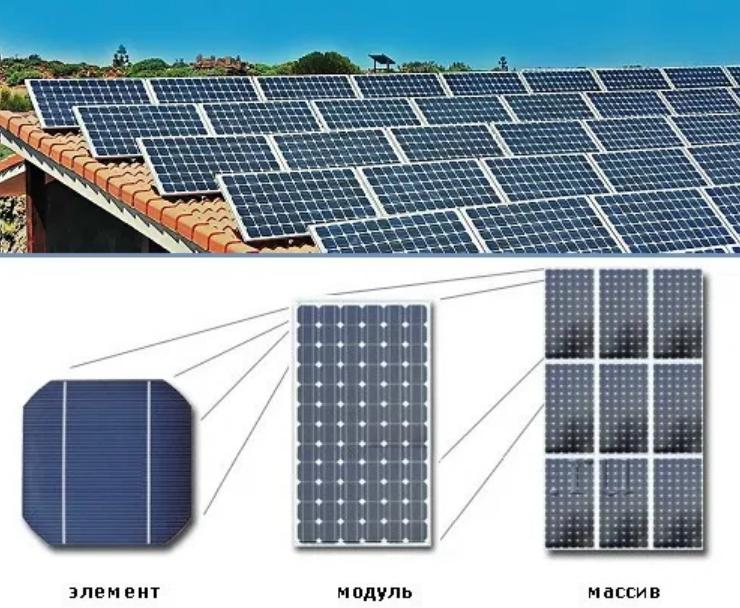
In terms of efficiency, monocrystalline batteries perform best, their average efficiency is usually from 14 to 20%. In polycrystalline, this indicator is an order of magnitude lower - from 10 to 12%. Variants with amorphous silicon are the least productive, they are designed for scattered light and are used as an auxiliary source of energy, their efficiency is from 5 to 6%.
By the way! Sanyo has its own development - a multilayer structure of a photocell, thanks to which the efficiency of their panels is 23%.
Film options are now made on the basis of cadmium, indium and gallium. This is a polymer version, it is good for its flexibility, while the performance is comparable to classic rigid panels. Due to safety (all substances in the composition are in a stable state) and low price, this solution is becoming increasingly popular.
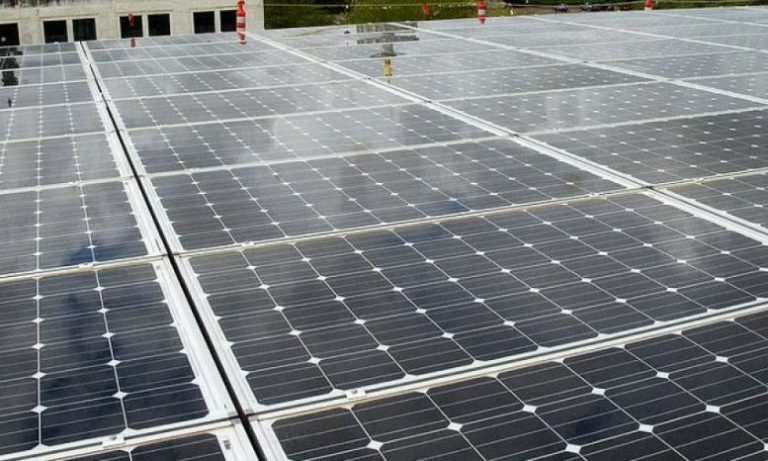
Minimum set for a private house
It is best to buy a ready-made kit so as not to assemble all the elements separately and not to understand the characteristics of each. Ready-made kits have all the necessary nodes, the characteristics of each are selected so that the system works with maximum effect. It is much easier to study information, as it is collected in one place and systematized.
When it comes to accessories, most often the kit includes the following:
- Solar panels. The main part, the amount must be calculated individually, depending on the consumption of electricity. Think about the location in advance, the efficiency of work depends on it.
- Controller protects the system, monitors the charge level of the batteries and cuts off the power supply when they are fully charged.It is placed as close to the panels as possible.
- inverter converts direct current into alternating current, which is needed for the operation of household appliances. You need to select it according to power and remember that the nominal and peak values \u200b\u200bare different. It is not necessary to buy a too productive option if the loads are small most of the time.
- Rechargeable batteries. They accumulate energy in order to give it away during periods when solar panels do not produce it or produce it in insufficient volume. Several batteries are used, connected by jumpers into a single unit.
- Cable for connecting all network elements, jumpers, fuses, circuit breakers and other little things. Again, when buying a kit, everything you need will already be in the kit and you won’t have to figure out what you need to purchase additionally.
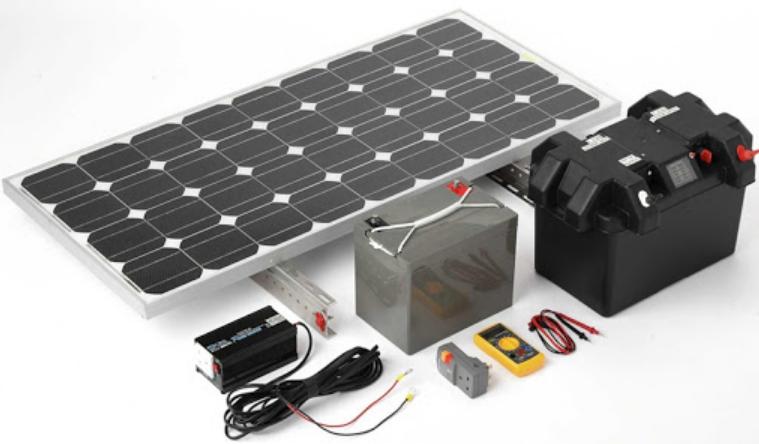
The composition of the kit may vary depending on the power, type of solar panels used. batteries and installation features. Many sellers add a rack for installing batteries and a plastic box for several modules.
When choosing, consider not only the performance of the equipment, but also the manufacturer. It is best to read reviews on specialized resources or thematic forms. The opinion of those who use the system will make it possible to understand whether the indicated data correspond to the actual ones and whether there are any problems during the operation of the selected kit.
The video will "tell" about the experience of using solar panels.
Calculations before buying
To choose a kit with suitable indicators, you must first calculate the power. It depends on the energy load, the higher this figure, the more productive the batteries will be required.For private houses, panels with a power of 150 to 250 watts are best suited, while for a country house there are enough options for 50 watts.
First of all, you should calculate the basic energy consumption, for this you need to take into account each device used and the average time of its operation during the day. Next, you just need to add up all the indicators and get the calculated load in kilowatt-hours.
This is the minimum indicator that you need to focus on. At the same time, it is necessary to make a certain margin and take into account the energy losses that occur in the network, as well as the fact that the battery charge is gradually falling. Usually a margin of about 30% is made, but it is better to make it more.
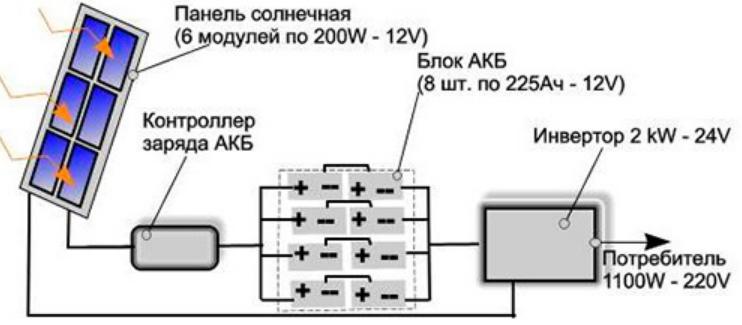
In order to significantly reduce electricity consumption and not purchase powerful equipment, which is much more expensive, it is worth transferring some of the energy consumers to a voltage of 12 V. You can put LED lamps and purchase some household appliances for such characteristics. This will significantly reduce energy consumption and save on solar panels.
Be sure to take into account insolation - an indicator that reflects the amount of solar energy falling on a certain area. Use the pre-built datasheet to calculate the number of panels for your region. Keep in mind that the maximum is in the summer, and the minimum is in the winter, do not miss this moment.
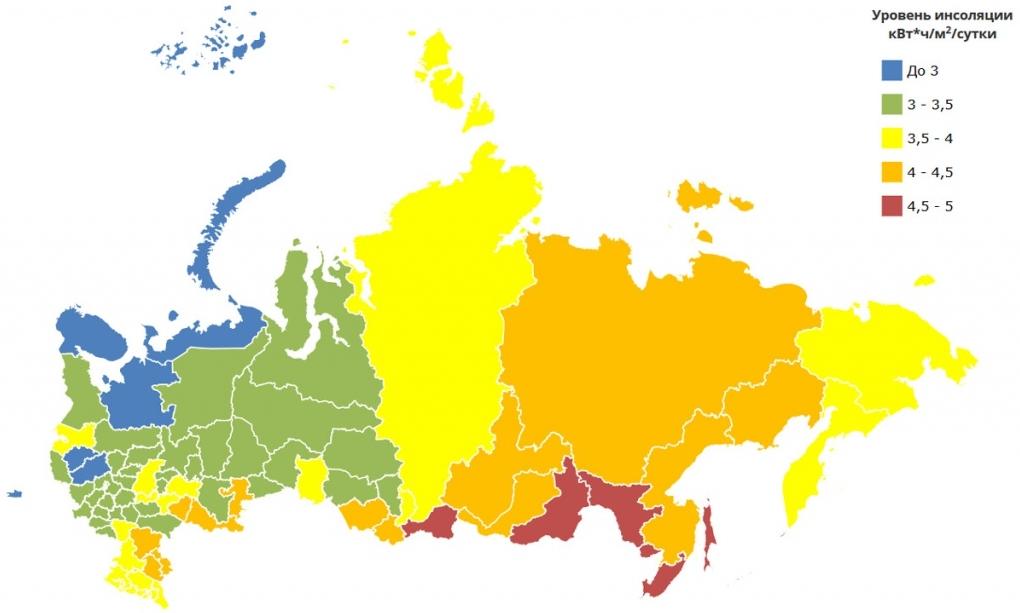
When you have all the data on hand, you can make calculations, take months with minimal insolation as a basis and focus on them. During these periods, the system will operate at almost full capacity, the rest of the time with a margin, which will eliminate overloads and rapid wear due to increased loads.
Rules for choosing
In order to choose a solar panel without experience, you need to consider several aspects. Each of them is important, so it’s worth understanding so as not to miss a single nuance:
- Solar panel manufacturer. There are many options, you need to choose those that have been on the market for a long time and have proven themselves among users. The easiest way is to read reviews on specific models, then everything will become clear. You should not take cheap Chinese panels from obscure manufacturers about which there is no information.
- PTC/STC indicator. Determined by independent laboratories in the United States of America, the value reflects real-world performance (manufacturers usually give figures for ideal conditions, which are unlikely to be achieved). The figure should be about 90%, the higher it is, the better.
- A small indicator of negative tolerance. This is the name of the deviation of the actual performance of solar panels from their nominal value, it should not be more than 3%. It's even better if it's positive. In this case, you need to buy the same panels, because if you put different ones, the system will work on the element with the lowest power and you will lose efficiency.
- Warranty period. The average is 15 years, information must be indicated on the official website of the manufacturer and in the technical documentation. If there is no data or the guarantee is much less, you need to specify the reason. Often sellers offer defective panels, which are much cheaper, but the warranty period is shorter.
- The efficiency of controllers and inverters must be at least 95%. Otherwise, there will be significant energy losses in the system. There are many options on sale with an efficiency of up to 85%, but in fact the indicators are even lower, you should not save on quality.Cheap Chinese products are unstable and the energy loss when using them will be much more than you can save when buying.
- The reliability of the frame elements on which the panels will be installed. Many sellers, in order to save money, offer not the highest quality load-bearing elements. The reliability of fastening on them is lower and they do not last long. It is better to buy coated aluminum options from reputable manufacturers. Otherwise, there is a risk that the panels will simply fall and, as a result, the savings will result in high costs.
- Efficiency of selected solar panels. It is worth paying attention to this indicator only in order to calculate the area of the modules for normal energy supply. Nothing else is affected by this setting. If there is room for roof, it is better to save money and buy modules with lower efficiency, this will not affect the operation of the system in any way.
By the way! To compare offers, check with different sellers the price of the kit in terms of 1 Watt of solar energy. So you can compare which option is the most profitable.
Popular manufacturers
In order for the system to work for a long time, and the indicators from the technical documentation do not differ from the real ones, it is worth choosing products from trusted manufacturers. You should not save on quality; when buying solar panels, this is unacceptable. The best options for today are:
- LG Energy. He has been developing panels for about 30 years and has been producing them on an industrial scale for 11 years. The factory is located in South Korea, the batteries have a guarantee of 25 years and belong to the middle and high price segments. Premium products are popular in North America and Europe.
- sunpower. An American company that produces solar panels with a long service life. Over 25 years, the capacity of the panels decreases by only 8%. Products are expensive, but are considered one of the most durable on the market.
- REC group. A Norwegian company with production in Singapore produces reliable panels, gives a guarantee for 20 years, and the capacity drops slowly, so the service life is much longer than the warranty. There are options from the medium and expensive categories.
- Panasonic. Another famous brand. Solar batteries of this manufacturer have a guarantee of 25 years, the quality is high and the service life is long. Products are well suited for use in mid-latitudes and have an efficiency of 18-20%.
- Jinko Solar. A Chinese company that sells products all over the world and is considered one of the best in the inexpensive price segment. Products have a guarantee of 25-30 years, products are of high quality, despite the low price. There are both budget and mid-range options.
- Trina Solar. Another Chinese brand that offers cheap panels with good performance, but the warranty here is much less - 10 years, during this period the capacity drops by about 10%. Many experts consider this option the best in terms of price and quality.
- longi solar. A Chinese company that has recently entered the global market, but has been selling low-cost solar panels domestically for a long time. The production uses single crystals, which ensures good performance even at low temperatures and poor lighting conditions. Efficiency ranges from 18 to 20%.
Kit cost and payback period
It is impossible to name the exact terms for which the costs of the electricity supply system will pay off.There are many factors that influence this. But you can highlight a few important points and calculate indicative indicators that are suitable in most cases and help evaluate the benefits and decide whether to make such a system or not:
- If the house is not connected to centralized communications, you should clarify how much it will cost to connect and complete all the necessary documentation. Expenses vary by region and the work that needs to be carried out by the energy supply organization, they can range from 50 to 500 thousand rubles. In fact, the system can pay for itself from day one, or it can take a couple of years.
- For uninterrupted power supply, if there is no connection to the network, it is easiest to use a generator. With him, the house will always be with electricity, even if the weather is cloudy for weeks. It turns on only when necessary, which is also important. In such cases, the costs pay off in an average of 5 years.
- If there is a central network, you can not install a generator and eat from it when the energy generated by solar panels is not enough. A simple solution that allows you to reduce electricity costs, especially in summer, when the system can provide complete autonomy. In such cases, the average payback period is 15 years.
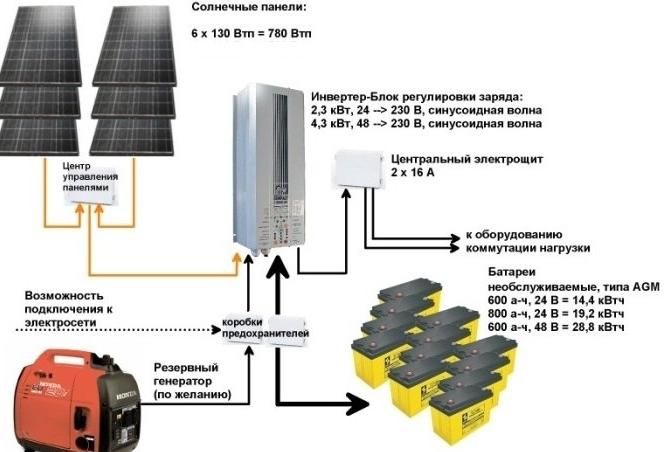
As for the price of the kit, an average set of 4 300W modules and everything you need for them costs from 120 to 200 thousand or more, it all depends on the component manufacturer. This is enough to provide electricity to a house of approximately 100 sq.m. If the structure is larger or smaller, the cost changes, but the payback periods usually remain about the same.
Service life of solar panels
To evaluate the benefits, you need to figure out how long the panels last and whether they will have to be changed after the warranty period ends. There are several features to consider here:
- Monocrystalline and polycrystalline options are the most durable. For 25 years of use, they lose no more than 10% of their capacity. But even further, the drop in power is insignificant, over the next 10-15 years, about the same amount is lost. That is, we can say with confidence that the service life of such options is 35-40 years, and maybe more.
- Thin-film options have a much lower service life - 10-20 years. Moreover, for the first 2 years, the capacity loss can be 10-30%, most manufacturers provide a power reserve to compensate for this problem. In the future, the losses are not so significant.
- To increase the service life, damage to parts of the system must be avoided. Trim the branches of closely spaced trees, wash the surface at least several times per season. Check the reliability of fastening and contacts so that they do not overheat.
- Take into account the cost of replacing other elements of the system. So, rechargeable batteries usually last from 6 to 10 years (the most reliable - 15 years), power electronics have a resource of about 10-12 years. The cost of replacing these nodes is also rather big and this must be taken into account when calculating the payback.
By the way! The more difficult the climatic conditions and the greater the temperature differences between day and night, as well as between the seasons, the shorter the service life of solar panels. In the southern regions they work much longer.
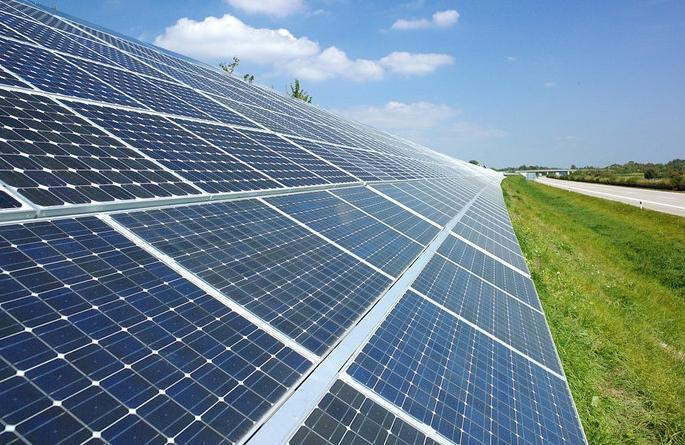
When choosing solar panels for your home, it is better to give preference to reliable and proven monocrystalline and polycrystalline options. High-quality modules will last about 40 years, while the power loss during this time will be about 20%.
