How solar panels work
The design of a solar battery and the principle of its operation depends on what materials and what technology it is made of. Therefore, it is necessary to understand the features of the main options in order to understand what their differences are and choose the appropriate solution for use. All data is relevant for high-quality products, cheap batteries may not meet the declared parameters, as they are often manufactured with violations of technology.

Terminology
The main terms used in this area:
- Solar energy is electricity that is obtained from the sun when using panels.
- Solar insolation - shows how much sunlight falls on a square meter of a surface located perpendicular to the rays.
- Photovoltaic cells are modules capable of converting sunlight into electrical energy. Usually they produce from 1 to 2 watts of energy, but there are also more efficient options.
- A photovoltaic system is a set of equipment that converts sunlight into electricity.
- Solar panels or panels are a group of photovoltaic cells grouped into a large module and connected in a series or series-parallel manner. Typically, one battery includes from 36 to 40 segments.
- An array is a series of solar panels connected to provide the required amount of current.
- Frame modules - structures in an aluminum frame, durable and sealed.
- Frameless elements are flexible options, they are used in conditions of lower loads.
- Kilowatt-hour (kW) is a standard measurement of electrical power.
- Efficiency (efficiency) - solar panels. Shows how much solar energy that hits the surface is converted into electricity. Usually the indicator is 15-24%.
- Degradation is a decrease in the capacity of solar panels that occurs due to natural causes. It is measured as a percentage of the original indicators.
- Peak loads are times when the greatest amount of electricity is needed.
- Crystalline silicon is the raw material for the manufacture of solar panels. The most common and durable option for today.
- Amorphous silicon is a composition deposited on the surface by evaporation and covered with a protective composition.
- Semiconductors are substances that can conduct current under certain conditions. This includes most of the new materials used in the manufacture of solar cells.
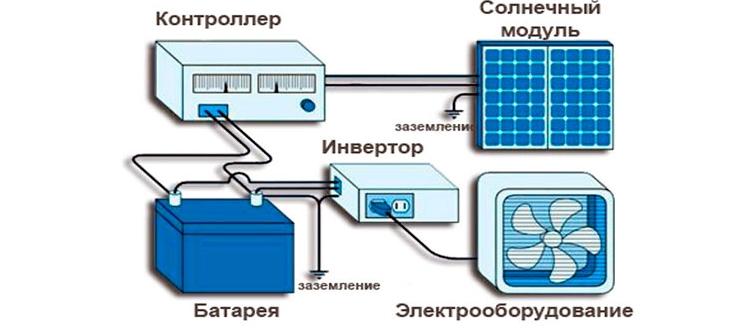
- An inverter is a device for converting direct current into alternating current.
- Controller - regulates the output voltage from the solar modules to properly charge the batteries.

These are only the most common terms, there are additional options. But even knowing the basics will help you understand the topic much better.
Quality categories
To evaluate the quality of a solar panel, it is necessary first of all to find out the class of raw materials used for the production of photovoltaic cells. The efficiency and service life of finished products depend on this. 4 main classes:
- Grade A - the best option, in which there are no any damage and cracks. The uniformity of the filling and the smoothness of the surface guarantee high performance, which is often even higher than stated in the documentation. In addition, this option has the lowest degradation rate and retains good performance for a long time.
- Grade B slightly worse in quality, there may be defects on the surface. But at the same time, most often, the use makes it possible to obtain products comparable in efficiency to class A. The degradation indicators are an order of magnitude worse, therefore, they lose their original characteristics faster.
- Grade C - an option in which there can be quite serious defects - from cracks to chips and other damage. At a price, such modules are much cheaper, but their efficiency does not exceed 15%. An inexpensive solution that is suitable for small loads.
- Grade D - in essence, this is the waste remaining after the manufacture of photovoltaic cells, which should not be used for the manufacture of batteries. But many not very honest manufacturers, especially from Asia, use them in production. The performance of this option is extremely low.
It is better to choose the first option, in extreme cases, the second is also suitable.Only they can provide normal efficiency and will serve for a long time.
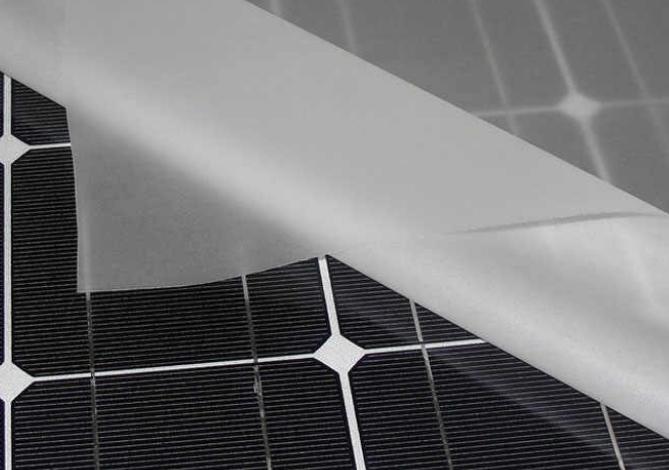
EVA laminating material is a special film that is located on the front side and can be used on the wrong side. The main purpose is to protect working elements from adverse effects without interfering with sunlight. High-quality options last about 25 years, low-quality ones - from 5 to 10. It is impossible to determine the variety by eye, so it's easier to proceed from the price - for good options, it will not be low.
In the video, by example, they clearly understand how an electric current arises under the influence of sunlight.
Principle of operation
It is quite difficult to explain the features of the solar battery, but you can understand the general points:
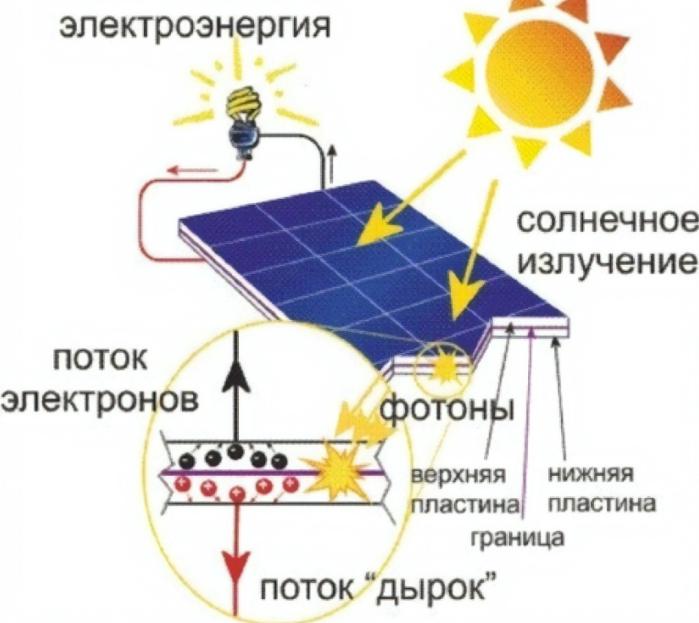
- When sunlight hits photocells, the formation of non-equilibrium electron-hole pairs begins there.
- Due to the excess of electrons, they begin to move to the lower layer of the semiconductor.
- Voltage is applied to the external circuit. A positive pole appears at the contact of the p-layer, and a negative pole appears at the contact of the n-layer.
- If a battery is connected to the photocells, then a vicious circle is obtained and constantly moving electrons provide a gradual charge of the battery.
- Conventional silicon modules are single junction cells that can only generate power from a certain spectrum of sunlight. It is because of this that the efficiency of the equipment is low.
- To solve the problem, manufacturers have developed cascade options, they can take energy from different rays of the solar spectrum.This increases the efficiency, but due to the high cost of production, the price of such panels is much higher.
- The energy that is not converted into electricity turns into heat, so solar panels heat up to 55 degrees during operation, and semiconductor batteries up to 180. Moreover, as the solar battery heats up, the efficiency of the solar battery decreases.
By the way! Solar panels are most efficient on clear winter days, when there is enough light and the low temperature cools the surface.
What are they made of
To study the device of a solar battery, you need to understand the main varieties, since the production technology has significant differences depending on the raw materials used:
- Batteries CdTe. Cadmium telluride is used in the manufacture of film modules. A layer of several hundred micrometers is enough to get an efficiency of the order of 11% or a little higher. This is a frankly low figure, but in terms of 1 watt of power, the cost of electricity is at least 30% cheaper than traditional silicon options. Despite the fact that this variety is much thinner and lighter.
- CIGS type. The abbreviation means that the composition includes copper, indium, gallium and selenium. It turns out a semiconductor, which is also applied in a small layer, but unlike the first option, the efficiency here is an order of magnitude higher and amounts to 15%.
- GaAs and InP types distinguishes the possibility of applying a thin layer of 5-6 microns, while the efficiency will be about 20%. This is a new word in technologies for extracting electricity from sunlight.Due to the high operating temperatures, batteries can become very hot without loss of performance. But due to the fact that rare earth materials are used in the production, the cost of this type is high.
- Quantum Dot Batteries (QDSC). They use quantum dots as an absorbing material for converting solar energy instead of traditional bulk materials. Due to the features of band gap tuning, it is possible to make multi-junction modules that absorb solar energy more efficiently.
- Amorphous silicon applied by evaporation and has a heterogeneous structure. It does not have high efficiency, but a homogeneous surface absorbs even scattered light very well.
- Polycrystalline variants are made by melting silicon and cooling it under certain conditions to produce unidirectional crystals. One of the most common solutions due to the low cost of production and good efficiency indicators.
- Monocrystalline elements consist of solid crystals cut into thin plates and doped with phosphorus. The most durable solution with low degradation rates and a service life of at least 30 years, but most often 10-15 years longer.
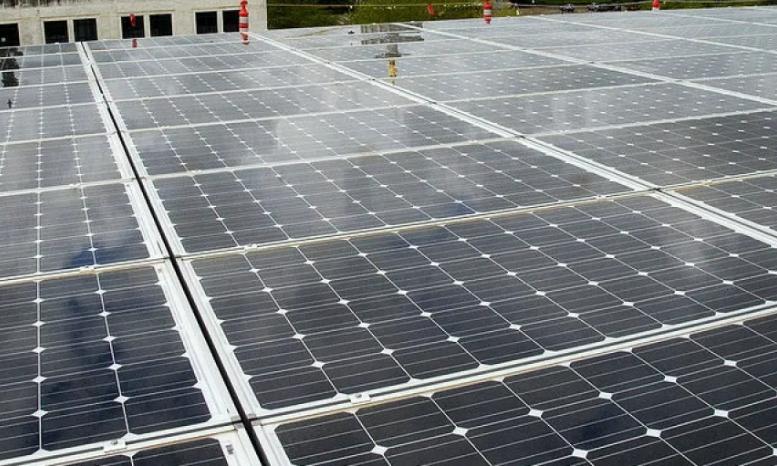
By the way! The effectiveness of one or another option depends on the production technology, so it needs to be clarified.
Pros and cons of solar panels
Each type has its own characteristics that should be considered when choosing in order to decide which type is best suited:
- Monocrystalline panels have the highest efficiency and due to this, the area for the placement of modules is saved. They last at least 25 years and slowly lose power. At the same time, the surface is very sensitive to dirt, it must be washed frequently. And the price is the highest of all silicon-based options.
- Polycrystalline options do not absorb the sun's rays as efficiently, but work better in diffused light. In terms of price-quality ratio, they are more profitable, but they take up more space due to lower efficiency.
- Amorphous silicon batteries can be placed anywhere, including on the walls of buildings, as they absorb scattered light well. With a low efficiency, they have a low price, so they can be used as an economy option. At the same time, they serve for a long time and are not so afraid of surface contamination.
- The rare earth options have similar advantages and disadvantages, so you can consider them together. In terms of efficiency, they are superior to classic panels, they can be applied to the film, which is convenient. They have a larger temperature range, so heating does not affect work efficiency. But due to the high price and rarity of metals, such options are not widely used.
Where are they used
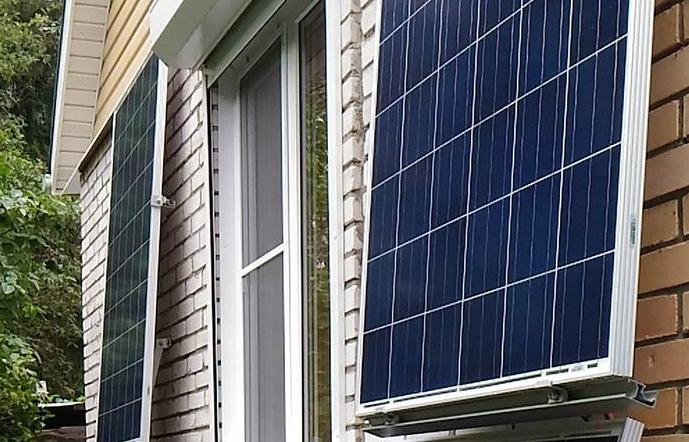
All the considered options can be installed in the private sector in order to receive electricity from the sun and save on energy resources or even achieve complete autonomy. As for use, you need to consider a few simple recommendations:
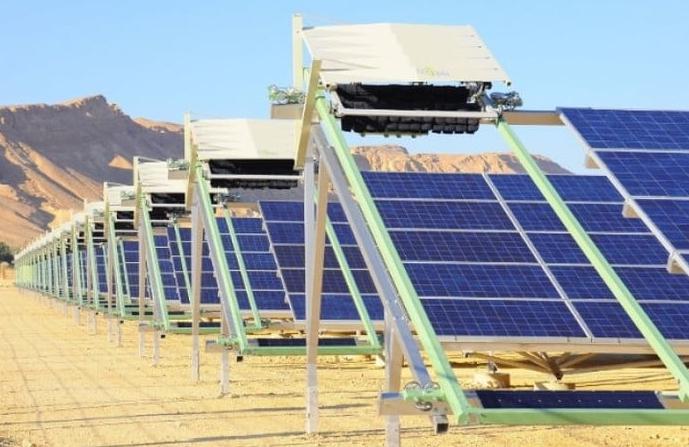
- Monocrystalline and polycrystalline options are best placed on the roof or on the ground, having previously built the frame at the desired angle.It is desirable that the angle of inclination is regulated, so you can adapt to the sun.
- Film modules can be placed anywhere, both on walls and on rooftops. They work well even if the rays do not hit the surface at a right angle, which is very important.
- On an industrial scale, film batteries are also preferred as cheaper and easier to install.
There are several varieties of solar cells, but about 90% of the market is occupied by traditional silicon models due to their low price and good performance. You can choose one of the semiconductor solutions, but then you will have to spend one and a half to two times more money.