Lighting requirements for sports halls
Lighting in the gym should provide a comfortable environment for sports and active games. Therefore, a number of requirements are imposed on it, which must be observed when planning light and choosing the right equipment.
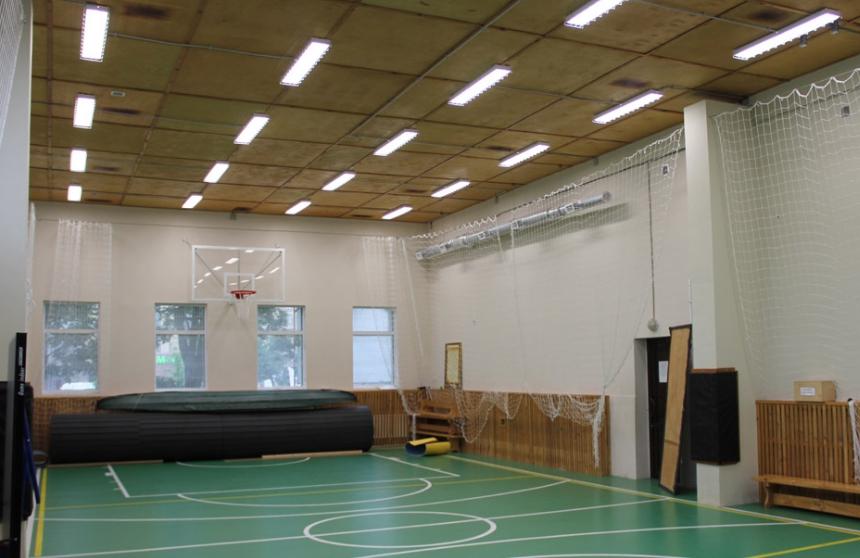
Requirements for lighting in sports and training halls
Regardless of the purpose of the object and the nature of sports, the light in it must perform several functions:
- Zoning the space, if necessary, and dividing it into segments for individual groups of athletes.
- Provide ideal conditions for practicing a particular sport. Different options have their own specifics, which must be taken into account when planning lighting.
- Minimize the risk of injury to those involved in sports. This applies primarily to ideal visibility and the absence of poorly lit areas.
- To create a working atmosphere during sports activities and a comfortable environment during competitions.
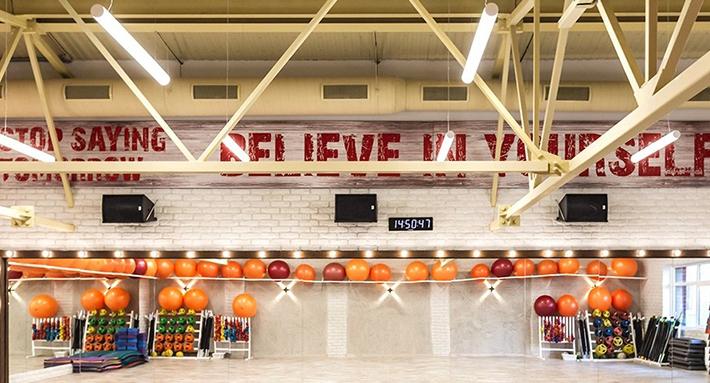
By the way! If one room is used for different purposes, lighting should have several modes.
The lighting standards for sports halls are clearly spelled out in SNiP, therefore, they must be observed. They may differ for different rooms, so it is easiest to study the general requirements. Illumination standards are measured in lux, it is especially important to comply with them at children's facilities, since the child's vision is still being formed and any deviations can cause violations. Remember the following:
- Halls for speed skating, as well as for athletics and weightlifting - 150 Lux.
- Premises intended for swimming, martial arts, wrestling, gymnastics and fencing – 200 lux.
- Ice arenas for hockey and figure skating from 300 lx.
- Halls for various sports games - 300 lux at floor level and minimum 150 lux at a height of 2 m from the ground.
- Places where table tennis is played should be illuminated with intensity at 400 Lux.
- At playgrounds and in school sports halls, the level of illumination should not be lower than 200 lux.
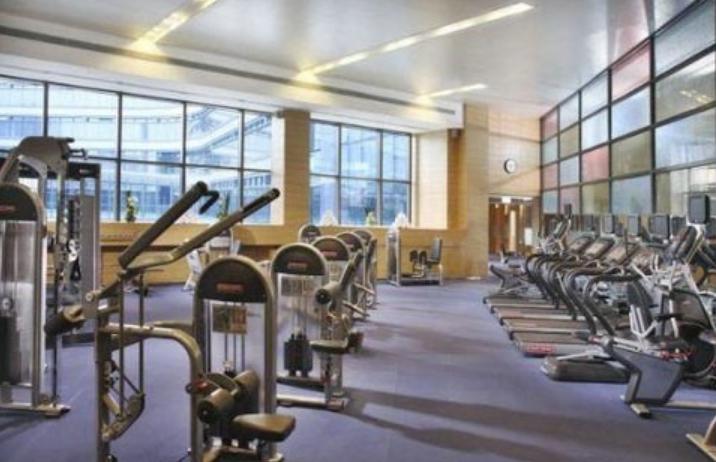
In addition to the main indicators, other norms established by law must be observed:
- Optimal Colorful temperature - from 4000 to 4500 K. This option creates comfortable conditions for playing sports for both an adult and a child.
- Ripple coefficient - no more than 10%, if it is higher, then vision is more strained and fatigue accumulates much faster.
- With a large area of \u200b\u200bthe room, as well as for large areas, lighting is carried out using spotlights, which must be placed at an angle to the floor of 27% or more.
For team sports, it is important that Lighting is on both sides sites.
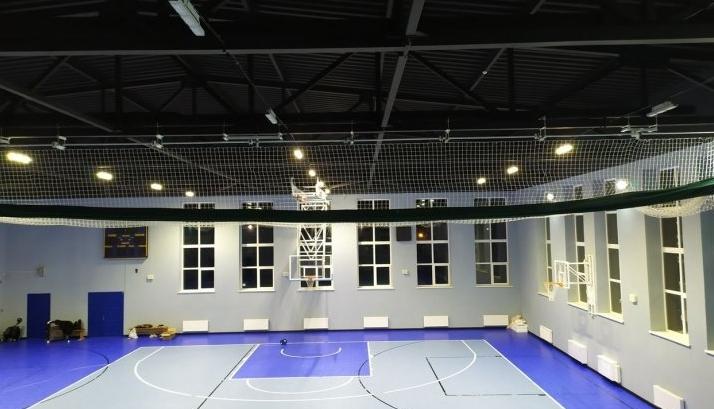
For all types of sports halls, regardless of purpose and size, it is required to provide the highest possible level of natural light. That is why even at the design stage, large window openings are provided.
Features of lighting school gyms
Lighting for the school gym should be selected with particular care and comply with all regulatory requirements. To calculate the number of fixtures, you need to determine the total illumination required for the room and divide it by the indicators of the selected equipment. All options must meet the following requirements:
- Flicker rates as low as possible. If possible, reduce them to eliminate the negative impact on vision. To do this, select modern types of light sources.
- The light should not blind a person, regardless of his location in the gym. It is worth choosing shades with diffused lighting, which give the desired brightness.
![Light should not blind a person.]() Light should not blind a person.
Light should not blind a person. - It is best if artificial lighting is as close to natural as possible.
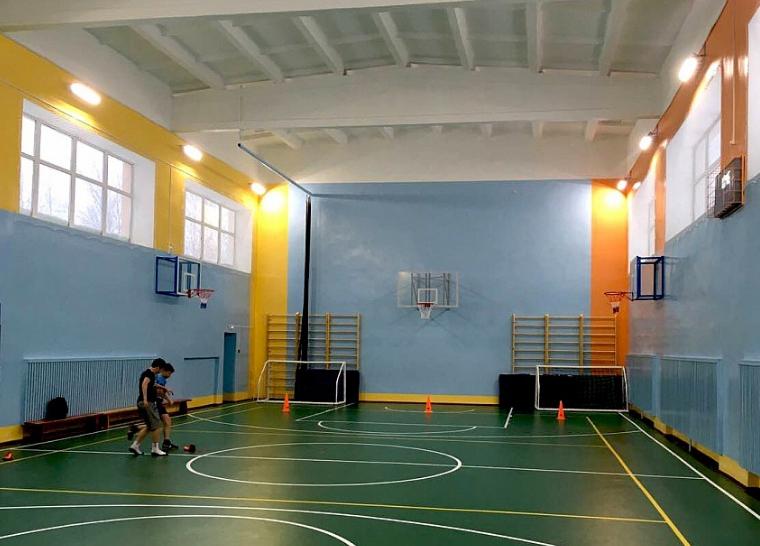
Types of lamps
For children's rooms, it is best to use high-quality light sources. Therefore, it is not worth considering inexpensive and not the most reliable solutions; it is best to use one of two options for installation:
- Fluorescent lamps they consume electricity economically and at the same time almost do not heat up during long-term operation. They can be either in the form of tubular fixtures, or in a compact version for standard cartridges. In terms of light quality, this is a good solution, but at the same time, its flicker indicators are close to the limit. Luminaires must work through ballasts.
- LED options are the best solution for children's gyms today. They provide bright, uniform light with less than 1% flicker and a bulb life of 50,000 hours or more. In terms of energy consumption, this is the most economical option, which is also important when the equipment is turned on frequently.
By the way! In addition to the main lighting, it is imperative to provide and emergency in case of evacuation in the event of a power outage.
How to choose a lamp
It is best to look for ready-made options specifically designed for gyms. They have the right performance and distribute the light correctly to ensure uniformity and minimal light differences. Remember the following:
- It is worth using lamps with a luminous flux opening angle of 120 degrees. They are conveniently placed along the room so that the light is distributed evenly and provides good visibility in all areas.
- All equipment must come in a shatterproof case that will protect the luminaire from accidental hitting by a ball or other object. Most often there is a metal protective frame.
![Luminaires with a protective frame.]() Fixtures in gyms usually initially come with a protective frame.
Fixtures in gyms usually initially come with a protective frame. - The lens or cover should, if possible, scatter light to eliminate glare and visual discomfort.
- Characteristics are selected for a specific gym, taking into account the height of the location and the angle of inclination.
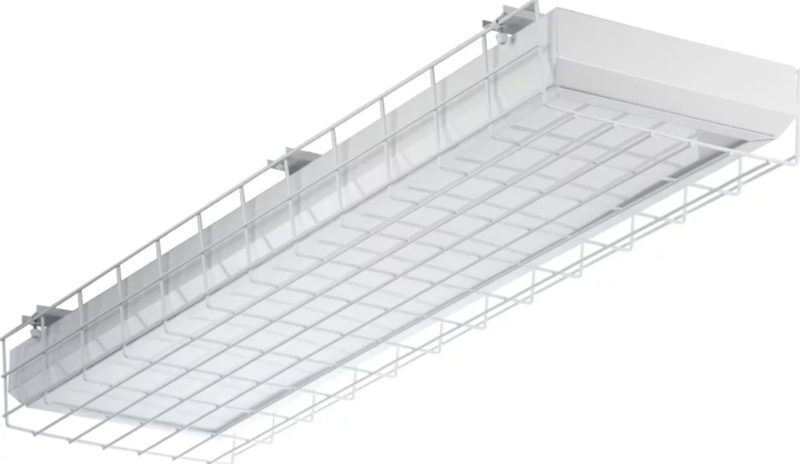
Most often, two or more types of luminaires are combined to ensure normal illumination indicators.
Consequences of non-compliance
If you do not pay attention to the quality of light, many problems can arise. Any violations in active sports can lead to the following consequences:
- Injuries increase, as a person cannot accurately estimate the distance to any object or to a neighboring person. It is important that the lighting is as close as possible to natural.
- When the standards for flicker are exceeded, the eyes get tired much more, especially when doing active sports with a fast moving ball or ball.
- If the illumination is low, the performance of athletes deteriorates, and an uncomfortable environment is created in which people get tired faster.
If you do not provide normal lighting in the aisles and flights of stairs, then the injury rate will be much higher, since these are areas of increased danger.
The lighting of sports halls must comply with a number of standards and take into account the type of sport that will be played indoors. It is important to choose the optimal type of lamps and use impact-resistant lamps with suitable specifications.
At the end of the thematic video.