How to make aquarium lights with LED strip
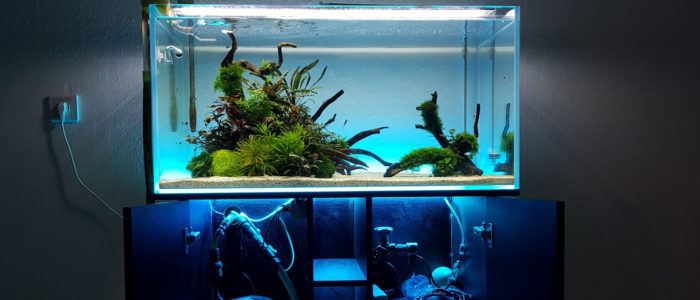
There are many ways to do aquarium lighting, but not all of them will be true and practical solutions for the proper development of its inhabitants. Excess or lack of light is equally detrimental to the life of fish and plants. Aquarium LED strip has become the standard of solutions. When properly calculated, it emits the required amount of the desired light and spectrum.
Lighting specifics
Aquarium lighting with LED strip has supplanted its predecessors due to its superiority. Incandescent lamps for each watt of power emit a luminous flux of no more than 20 lumens. LED strip gives more light, 1 W - 70-120 lm.
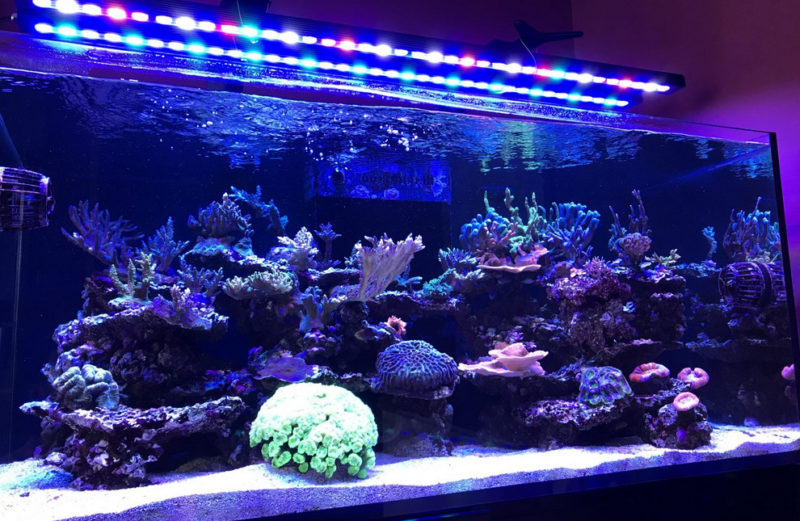
Thanks to the wide spectrum of LEDs, an optimal environment for the inhabitants of the aquarium is created. We are interested in the red and blue spectrum. Blue light has a wavelength of 430 nanometers, and red 650 nanometers - thanks to these values, the process of photosynthesis takes place in the right way, and the production of chlorophyll exceeds the norm. Due to such conditions, plants and fish will feel good.
Key Features
The light scattering angle is 120 degrees, which means that it will not affect unnecessary areas and the aquarium will become quite a pretty piece of furniture at night, as well as night lighting of the room.
The degree of protection of the LEDs will also please. The choice should be stopped on the protection class from IP65 to IP68. This is a fully dust-proof tape that is resistant to direct splashes and drops of water - that's what you need.
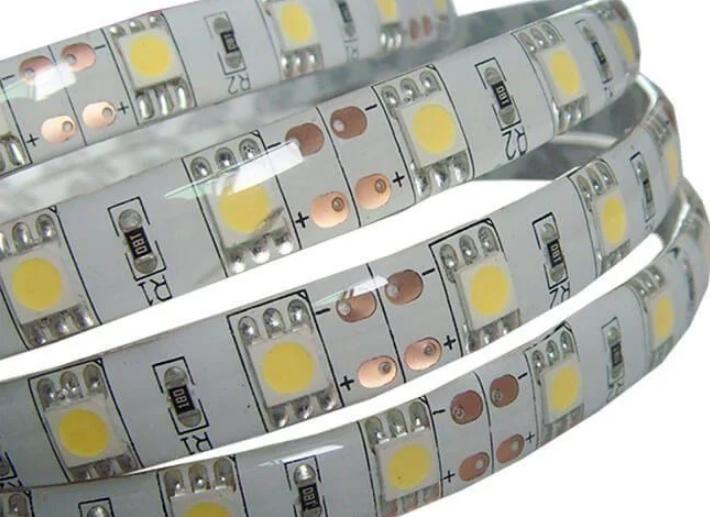
Choose an LED strip with a powerful luminous flux of 800-1700 lm per meter, this will reduce the volume of the installed strip and create optimal lighting. LED strip mounted simply. It is enough to tear off the sticker on the back side, as a sticky plane will appear.
If desired, you can install automatic sensors for turning the backlight on and off. Convenient, modern and practical - your fish are always with light. LED lighting has a long service life, it is low-voltage and safe.
Advantages:
- 25,000 or more hours of work;
- Do not emit heat (no need for heat sinks and fans);
- Various color schemes;
- The equipment is low-voltage and safe;
- Minimum electricity consumption.
Flaws:
- will have to work on the installation;
- the price of LED equipment is higher;
- you need a DC power supply.
Calculation methods
Consider lighting using an LED strip as an example. 5050 with the number of diodes 60 pcs / m: luminous flux of one meter - 1296 lumens (indicated on the package), power 14.4 W. So, dividing the luminous flux power meter by the load consumed by this meter, we get:
1296/14.4=90. So 1 watt of power consumption of the tape produces a luminous flux of 90 lumens. Next, we determine the size of the aquarium, and at what height from the bottom of the aquarium the lamp will be located.
Let's say our aquarium has dimensions: width 1 meter, depth 0.3 m, height 0.6 m - this is 180 liters of water. It also has a lid. Brightness is measured in lux, for aquariums the brightness level is calculated as follows:
- Low level - 15-25 lumens per liter;
- The average level is 25-50 lumens per liter;
- High level - more than 50 lumens per liter.
Illumination is calculated based on the power of the luminous flux and the illuminated
area: E(illuminance)=F(luminous flux)/S(aquarium base area).
In our case, 1296 / (1mx0.3m) = 4320 lux - taking into account the density of water and the fact that the light beam is turned 120 degrees. According to the table, this is enough to light the average level of our volume and the maximum for a 100-liter aquarium.
We looked at an example of a standard aquarium, but the sizes are different, so use the calculation example provided. Do not forget about the red and blue spectra, they also emit light, so one meter of such a tape for 180 liters is enough to head and it will be bright.
Blue and red spectra have less strength luminous flux, approximately 300 lm and are taken equally on a one-to-one basis. In our case, cut off 50 cm and mount side by side.
Video tutorial with a step-by-step description of the installation of the backlight.
Installing tape in the aquarium
The LED strip is a coil of flexible tape that cut every 3-5 centimeters in specially marked places. The length of one coil reaches five meters. To do everything right, follow these instructions. So let's refresh our memory a bit.We need an LED strip of protection class IP65 and IP68, wires with a cross section of 2 cores of 0.75 m each2, a soldering iron with solder (you can do without it, with connectors) a power supply and optional diffusers. Here is a useful link for you:
Video tutorial - How to solder LED strip.
Diffusers are an unusual and very interesting solution. Put an orange, pink or green LED strip into it, and at night turn it on as additional lighting installed on the back wall of the aquarium. The diffuser is a body, it can be correctly applied, the choice is yours.
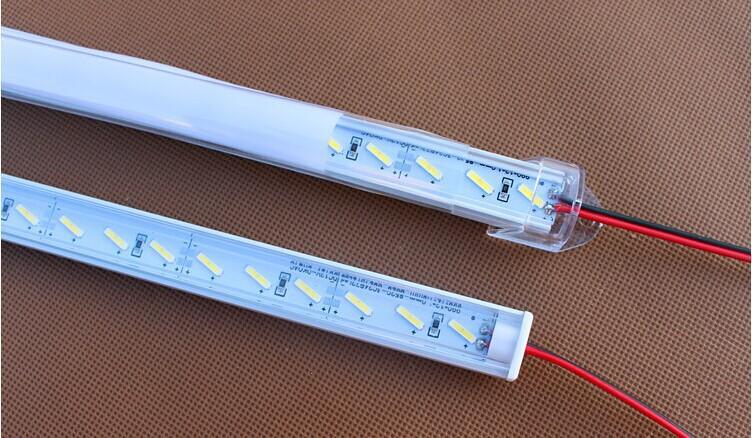
For a 200-liter aquarium, we need about one meter of tape, maybe a little more (the exact calculation is indicated above, a rough calculation is 1 watt of tape power per 2 liters of water, that is, for a 100-liter aquarium, 70 cm of tape gives the effect of medium-level lighting) white tape , blue and red - maybe a little less.
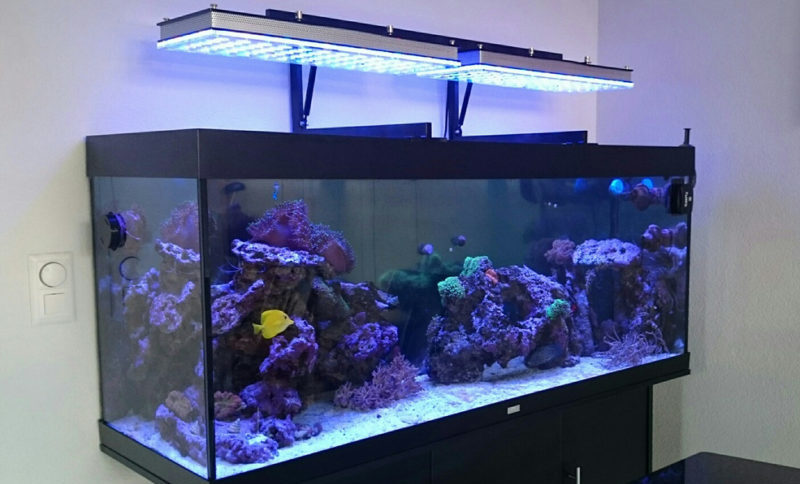
The simplest and most efficient way is fastening led strip under the lid of the aquarium. In this case, you don’t need to invent anything, just three ribbons are installed for lighting at regular time and one for decoration separately. This is done as follows: remove the cover, wipe it dry and degrease it.
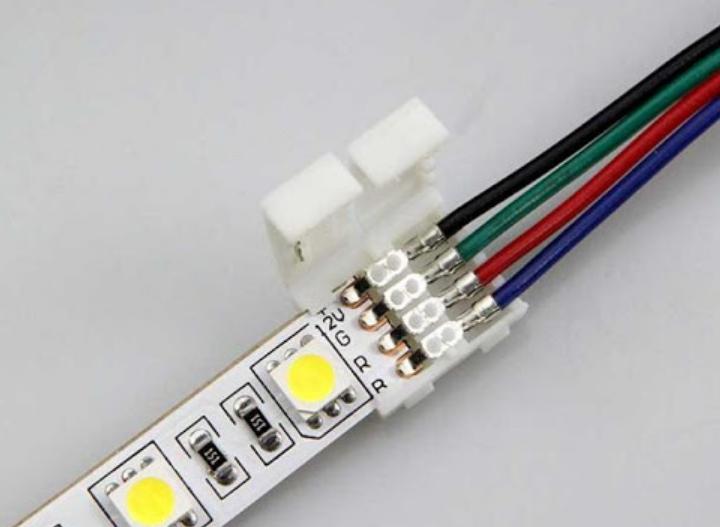
We connect the LED strips to the wires (see the video above), but not in series, but solder each section separately. Each strip is connected separately, and then one wire is led to the power supply.
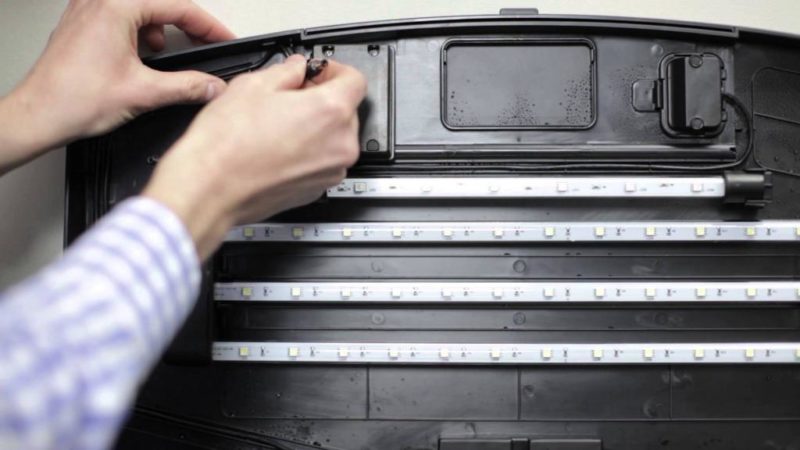
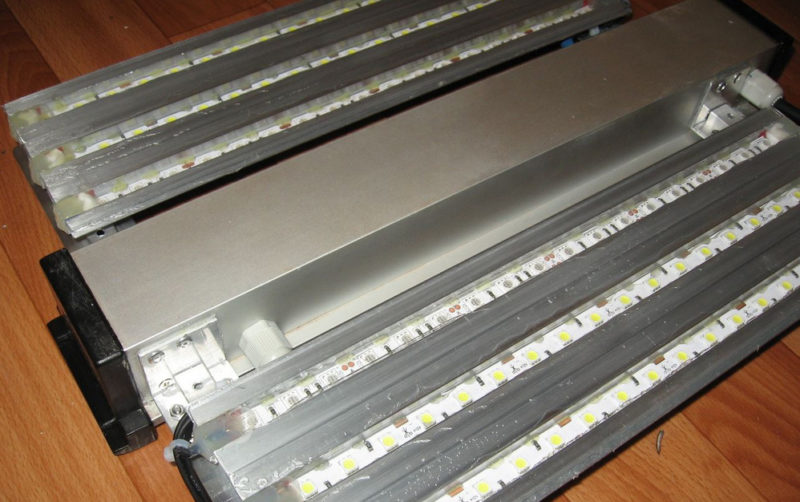
Try to correctly distribute the LEDs relative to the free space under the cover. After all, the more evenly they are laid, the higher the illumination indicator will be.Feel free to experiment with the design of homemade pendant lights. The main thing is to calculate the amount of light you need and go for it. For example, let's look at another option for attaching a tape under a cover with a different configuration.
Tips
Try to buy the tape and the power supply in one place. In this case, you can check everything at once. The power supply is taken with a power reserve of 20%. The power consumption of the tape meter is indicated on the packaging. Use waterproof tape.
At the place of purchase of equipment, be interested in electronic timers. Their cost is low and they allow you to program the time to turn on the aquarium backlight as you like.
LED lighting does not harm plants and fish, it is safe for humans. Feel free to experiment and indulge yourself with new ideas for creating the right lighting.
If you don't have a lid on your aquarium and you don't know how to make mounts for diffusers beautifully, follow the link to the video on how to make a lid for an aquarium with your own hands.
Link to video (how to make a cover with your own hands).