How fast does light travel in a vacuum
The speed of light in vacuum is an indicator that is widely used in physics and at one time made it possible to make a number of discoveries, as well as explain the nature of many phenomena. There are several important points that need to be studied in order to understand the topic and understand how and under what conditions this indicator was discovered.
What is the speed of light
The speed of propagation of light in vacuum is considered an absolute value, reflecting the speed of propagation of electromagnetic radiation. It is widely used in physics and has a designation in the form of a small Latin letter "s" (it says "tse").
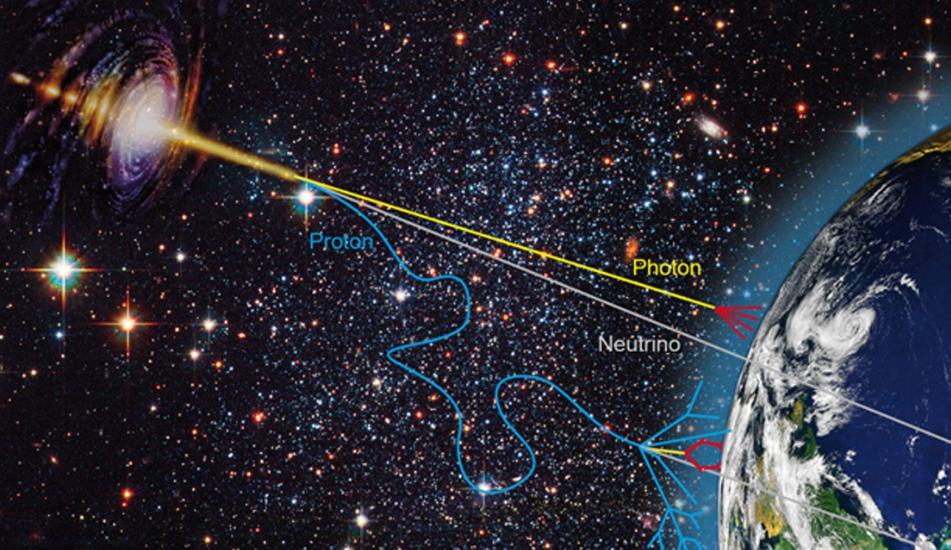
According to most researchers and scientists, the speed of light in vacuum is the maximum possible speed of particle movement and propagation of various types of radiation.
As for the examples of phenomena, they are:
- Visible light from any source.
- All types of electromagnetic radiation (such as x-rays and radio waves).
- Gravitational waves (here the opinions of some experts differ).
Many kinds of particles can travel near the speed of light, but never reach it.
The exact value of the speed of light
Scientists have been trying for many years to determine what the speed of light is, but accurate measurements were made in the 70s of the last century. Eventually the indicator was 299,792,458 m/s with a maximum deviation of +/-1.2 m. Today it is an invariable physical unit, since the distance in a meter is 1/299,792,458 of a second, that is how long it takes for light in a vacuum to travel 100 cm.
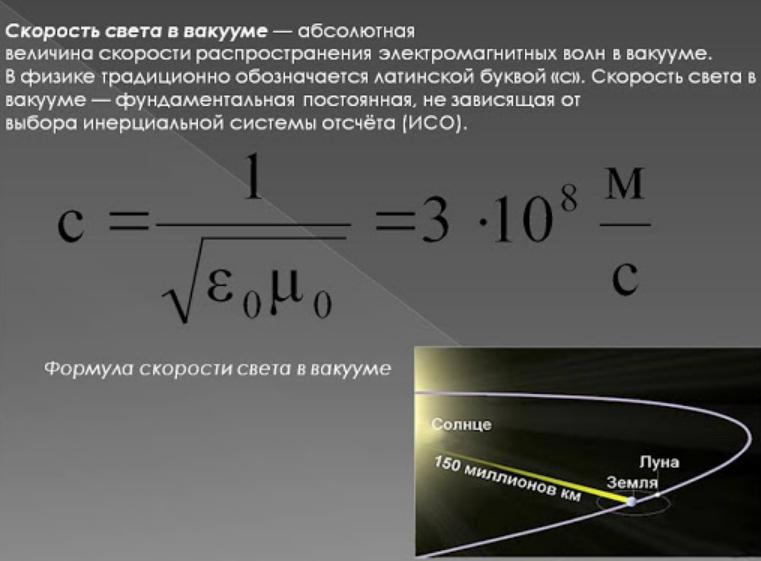
To simplify the calculations, the indicator is simplified to 300,000,000 m/s (3×10⁸ m/s). It is familiar to everyone in the course of physics at school, it is there that the speed is measured in this form.
The fundamental role of the speed of light in physics
This indicator is one of the main ones, regardless of which reference system is used in the study. It does not depend on the movement of the wave source, which is also important.
Invariance was postulated by Albert Einstein in 1905. This happened after another scientist, Maxwell, who did not find evidence of the existence of a luminiferous ether, put forward a theory about electromagnetism.
The assertion that a causal effect cannot be transported at a speed exceeding the speed of light is today considered quite reasonable.
By the way! Physicists do not deny that some of the particles can move at a speed exceeding the considered indicator. However, they cannot be used to convey information.
Historical references
To understand the features of the topic and find out how certain phenomena were discovered, one should study the experiments of some scientists. In the 19th century, many discoveries were made that helped scientists later, they mainly concerned electric current and the phenomena of magnetic and electromagnetic induction.
Experiments by James Maxwell
The physicist's research confirmed the interaction of particles at a distance. Subsequently, this allowed Wilhelm Weber to develop a new theory of electromagnetism. Maxwell also clearly established the phenomenon of magnetic and electric fields and determined that they can generate each other, forming electromagnetic waves. It was this scientist who first began to use the designation "s", which is still used by physicists all over the world.
Thanks to this, most researchers already then started talking about the electromagnetic nature of light. Maxwell, while studying the speed of propagation of electromagnetic excitations, came to the conclusion that this indicator is equal to the speed of light, at one time he was surprised by this fact.
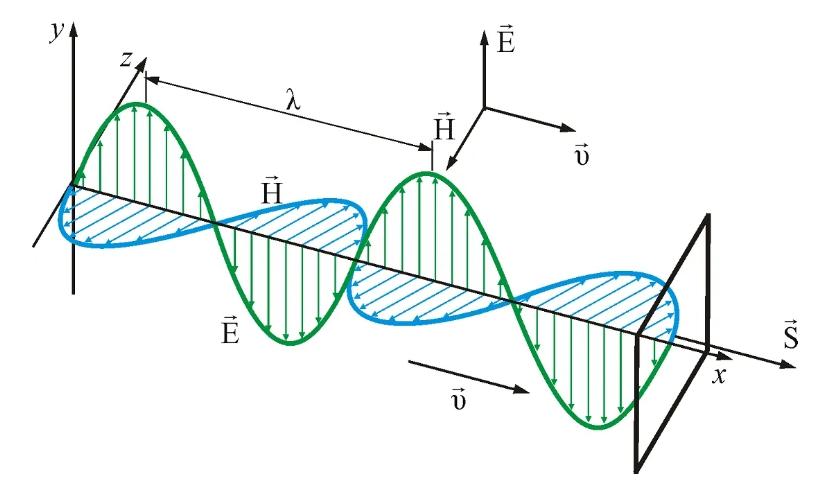
Thanks to Maxwell's research, it became clear that light, magnetism and electricity are not separate concepts. Together, these factors determine the nature of light, because it is a combination of a magnetic and electric field that propagates in space.
Michelson and his experience in proving the absoluteness of the speed of light
At the beginning of the last century, most scientists used Galileo's principle of relativity, according to which it was believed that the laws of mechanics are unchanged, regardless of which frame of reference is used. But at the same time, according to the theory, the propagation velocity of electromagnetic waves should change when the source moves. This went against both the postulates of Galileo and Maxwell's theory, which was the reason for the start of research.
At that time, most scientists were inclined to the “ether theory”, according to which the indicators did not depend on the speed of its source, the main determining factor was the features of the environment.
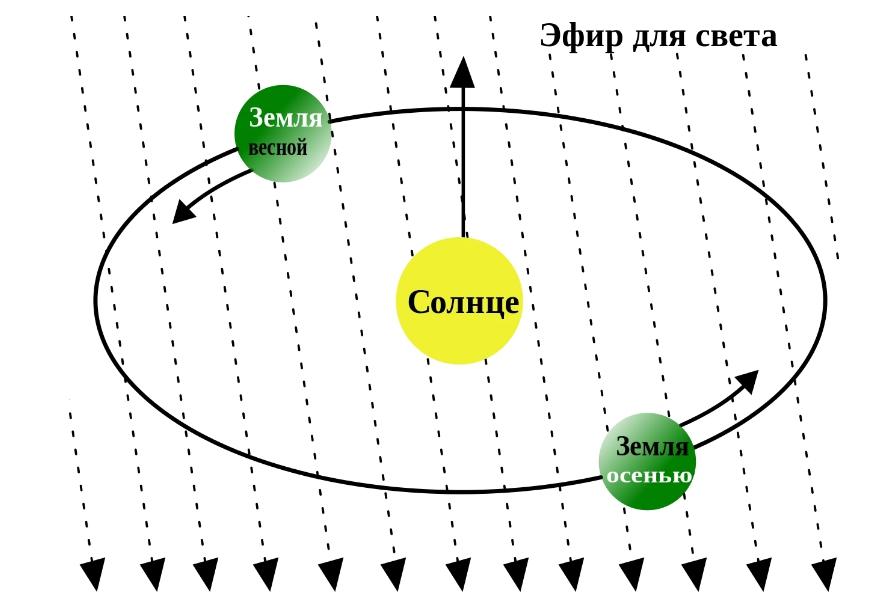
Since the Earth moves in outer space in a certain direction, the speed of light, according to the law of addition of velocities, will differ when measured in different directions. But Michelson did not find any difference in the propagation of electromagnetic waves, regardless of which direction the measurements were made.
The ether theory could not explain the presence of an absolute value, which showed its fallacy even better.
Albert Einstein's special theory of relativity
A young scientist at that time presented a theory that runs counter to the ideas of most researchers. According to it, time and space have such characteristics that ensure the invariance of the speed of light in vacuum, regardless of the chosen frame of reference. This explained the unsuccessful experiments of Michelson, since the speed of light propagation does not depend on the movement of its source.
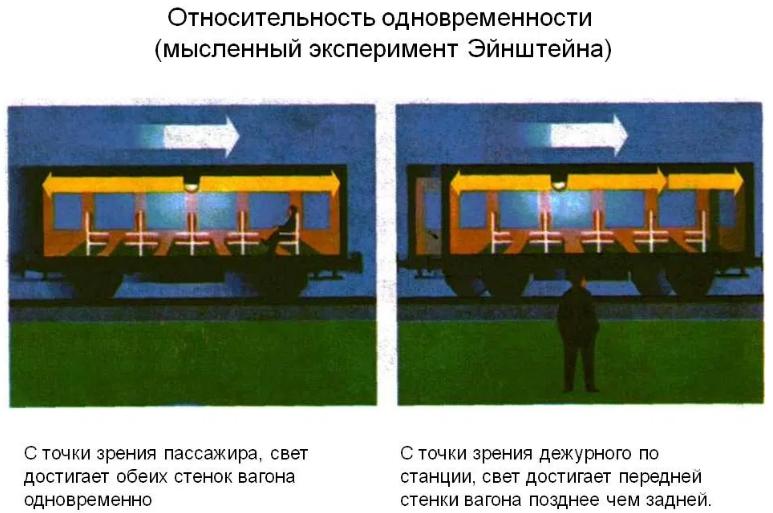
[tds_council]Indirect confirmation of the correctness of Einstein's theory was the "relativity of simultaneity", its essence is shown in the figure.[/tds_council]
How was the speed of light measured before?
Attempts to determine this indicator have been made by many, but due to the low level of development of science, it was previously problematic to do this. Thus, scientists of antiquity believed that the speed of light was infinite, but later many researchers doubted this postulate, which led to a number of attempts to determine it:
- Galileo used flashlights. To calculate the speed of propagation of light waves, he and his assistant were on hills, the distance between which was determined exactly. Then one of the participants opened the lantern, the second had to do the same as soon as he saw the light. But this method did not give results due to the high speed of wave propagation and the inability to accurately determine the time interval.
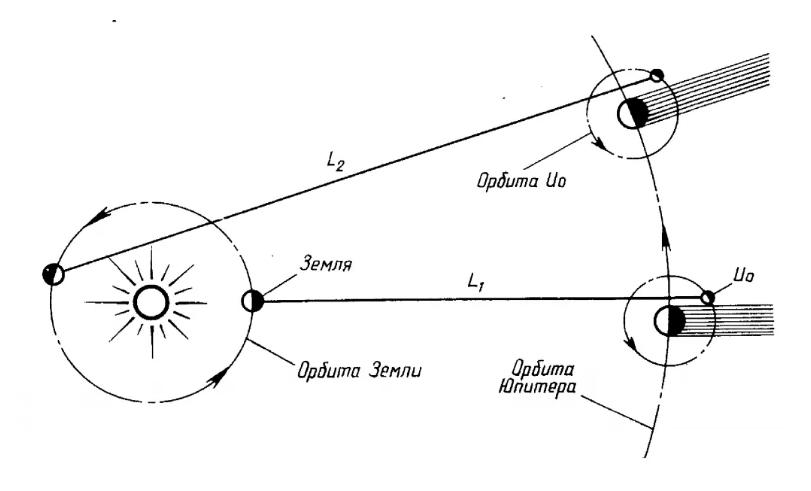
- Olaf Roemer, an astronomer from Denmark, noticed a feature while observing Jupiter. When the Earth and Jupiter were at opposite points in their orbits, the eclipse of Io (a moon of Jupiter) was 22 minutes late compared to the planet itself. Based on this, he concluded that the speed of propagation of light waves is not infinite and has a limit. According to his calculations, the figure was approximately 220,000 km per second.
![Determining the speed of light according to Roemer.]() Determining the speed of light according to Roemer.
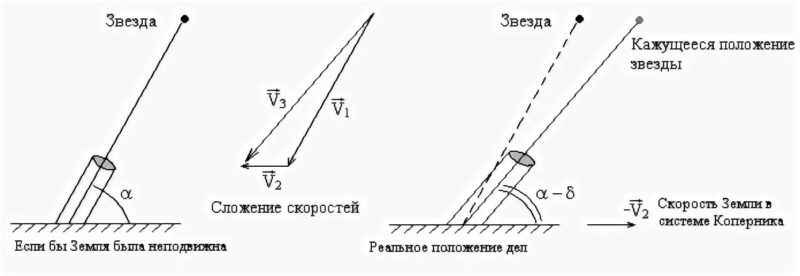
Determining the speed of light according to Roemer. - Around the same period, the English astronomer James Bradley discovered the phenomenon of light aberration, when due to the movement of the Earth around the Sun, as well as due to rotation around its axis, due to which the position of the stars in the sky and the distance to them are constantly changing.Due to these features, the stars describe an ellipse during each year. Based on calculations and observations, the astronomer calculated the speed, it was 308,000 km per second.
![How fast does light travel in a vacuum]() aberration of light
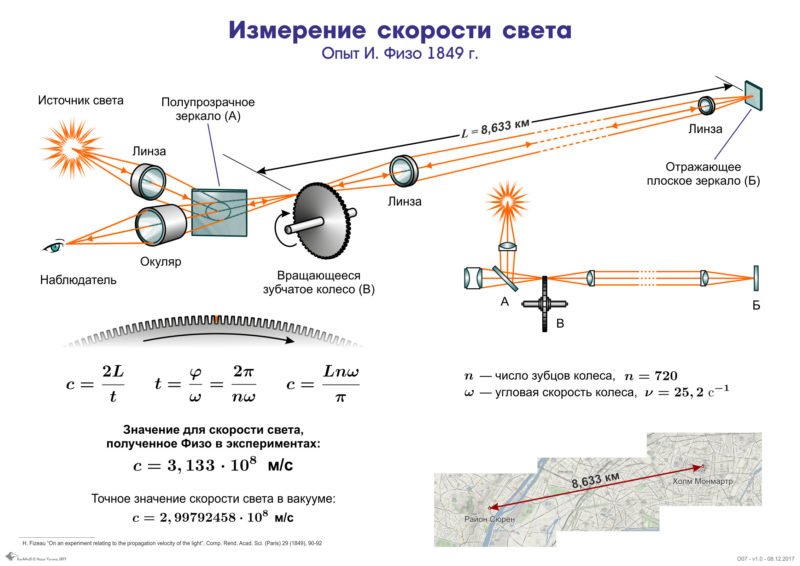
aberration of light - Louis Fizeau was the first who decided to determine the exact indicator through a laboratory experiment. He installed a glass with a mirror surface at a distance of 8633 m from the source, but since the distance is small, it was impossible to make accurate time calculations. Then the scientist set up a cogwheel, which periodically covered the light with teeth. By changing the speed of the wheel, Fizeau determined at what speed the light did not have time to slip between the teeth and return back. According to his calculations, the speed was 315 thousand kilometers per second.
![How fast does light travel in a vacuum]() Experience of Louis Fizeau.
Experience of Louis Fizeau.
Measuring the speed of light
This can be done in several ways. It is not worth analyzing them in detail; each will require a separate review. Therefore, it is easiest to understand the varieties:
- Astronomical measurements. Here, the methods of Roemer and Bradley are most often used, since they have proven their effectiveness and the properties of air, water and other features of the environment do not affect the performance. Under conditions of space vacuum, the measurement accuracy increases.
- cavity resonance or cavity effect - this is the name of the phenomenon of low-frequency standing magnetic waves that arise between the surface of the planet and the ionosphere. Using special formulas and data from measuring equipment, it is not difficult to calculate the value of the speed of particles in the air.
- Interferometry - a set of research methods in which several types of waves are formed.This results in an interference effect, which makes it possible to carry out numerous measurements of both electromagnetic and acoustic vibrations.
With the help of special equipment, measurements can be taken without using special techniques.
Is superluminal speed possible?
Based on the theory of relativity, the excess of the indicator by physical particles violates the principle of causality. Because of this, it is possible to transmit signals from the future to the past and vice versa. But at the same time, the theory does not deny that there may be particles that move faster, while they interact with ordinary substances.
This type of particles is called tachyons. The faster they move, the less energy they carry.
Video lesson: Fizeau's experiment. Measurement of the speed of light. Physics grade 11.
The speed of light in a vacuum is a constant value; many phenomena in physics are based on it. Its definition became a new milestone in the development of science, as it made it possible to explain many processes and simplified a number of calculations.