Features of the ultraviolet flashlight
Varieties of UV flashlights
The human eye can only see objects in a certain spectrum and many things remain hidden, but there are ways to make them visible. The fact is that most of the substances that are indistinguishable or poorly distinguishable in daylight are capable of fluorescing, that is, they glow in a special way in the ultraviolet range of luminescence. It was for the determination of such components that an ultraviolet flashlight was adapted, and its modern versions have become so compact that they fit in a lighter or keychain. Depending on the type of light source, UV lamps are:
- gas-discharge - they are a flask filled with mercury vapor, which emit ultraviolet radiation when a high-frequency current passes through them. In mobile versions, they are implemented in currency detectors and forensic lamps;
![Features of the ultraviolet flashlight]()
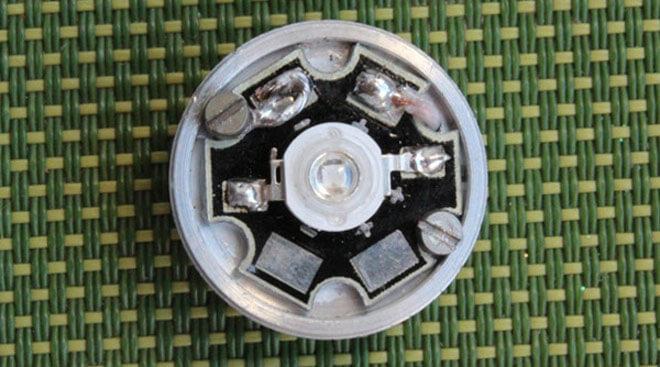
- LED - represented by an LED with a crystal without a phosphor shell, emitting light in a given range.
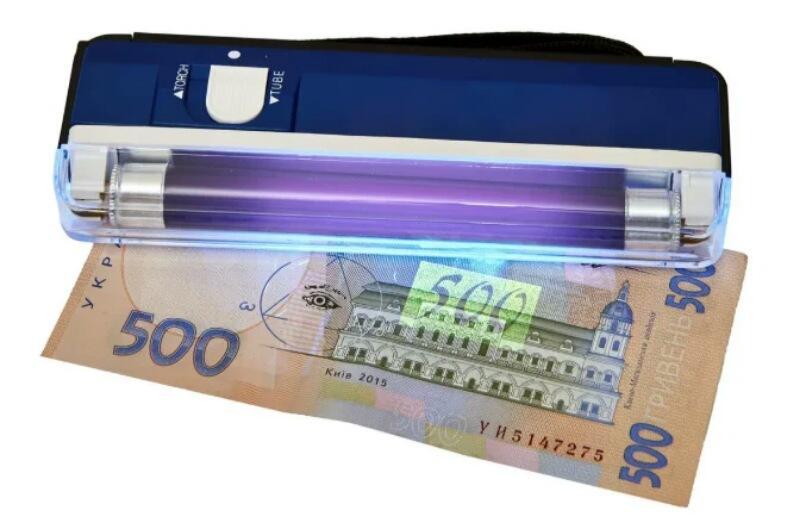
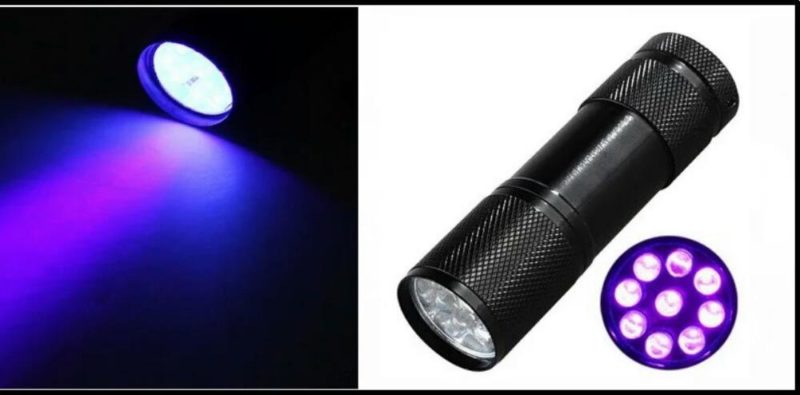
Now LED elements have become the main source of light for lighting devices, since their service life is longer than that of gas-discharge ones, they consume relatively little energy and, at the same time, are compact.
The use of LEDs made it possible to make mobile UV lights of various types:
- headbands - are attached to the head for the ability to manipulate hands. Some headbands are equipped with two types of light sources to alternate between normal and UV mode;
![Features of the ultraviolet flashlight]()
- pocket - used in everyday life;
![Features of the ultraviolet flashlight]()
- searchlights are a rather rare phenomenon, since the use of expensive devices is advisable only in narrow areas of application;
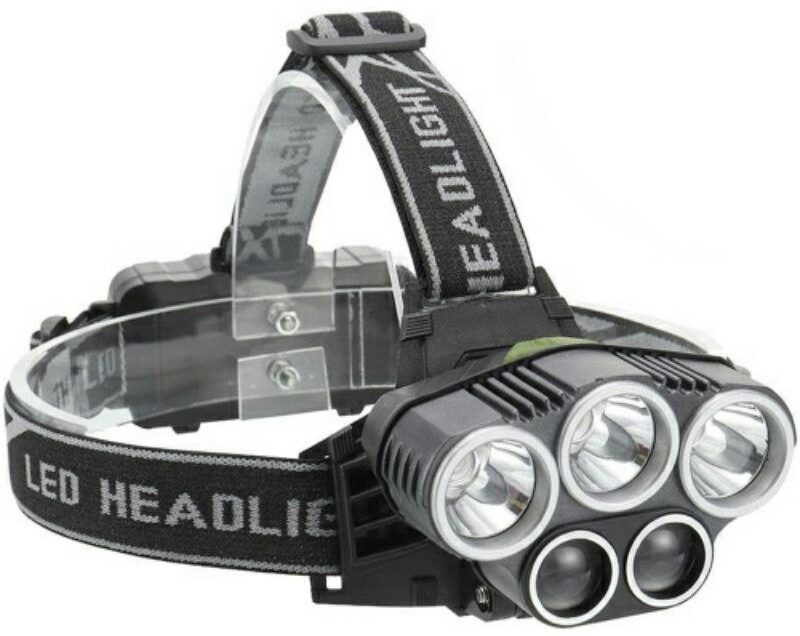
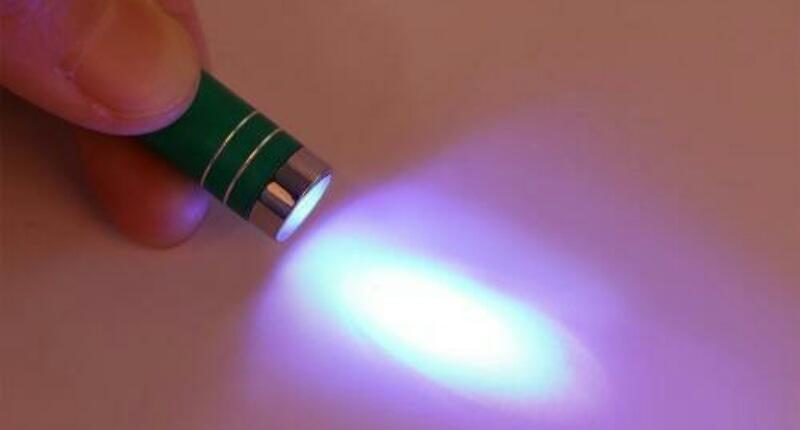
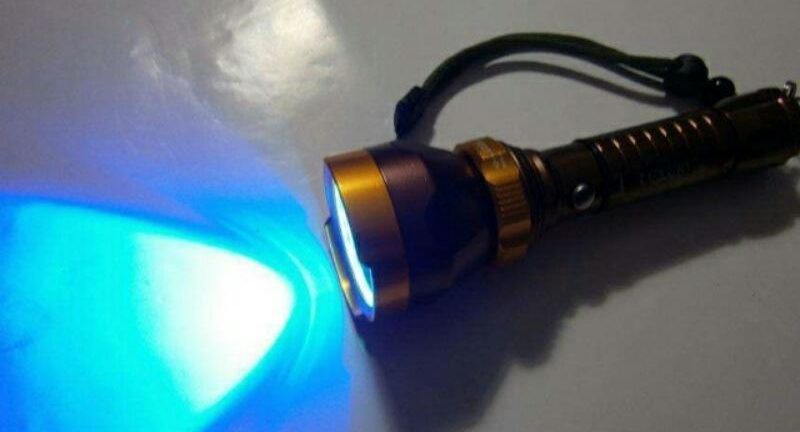
UV LED lamps are powered by standard batteries and accumulators of the same type as conventional ones, since their power consumption and driver circuit are no different from standard LED systems. You can independently rearrange UV elements of the same power on any LED flashlight and they will work.
Pros and cons of UV lights
UV rays make it possible to detect and identify objects invisible in ordinary light, but their use is associated with some difficulties. First, the fluorescence of most substances is visible only in the absence of natural or artificial light. That is, during the day the light bulb will work, but only in conditions of strong shading, and for a 100% result, it will be necessary to conduct research in a completely closed room. Secondly, it will be difficult to use a UV flashlight as an ordinary everyday one, since even a powerful spotlight produces an insufficient spectrum of visible light, and the color of ordinary things in ultraviolet light is greatly distorted.In addition, it is necessary to take into account the danger posed by UV radiation, although much depends on the conditions and duration of operation of the apparatus. By and large, a person is exposed to sunlight every day, in which the UV range is also present. The spectrum of most LED lamps lies in the relatively safe, long wavelength UV-A range of 365 to 395 nanometers.
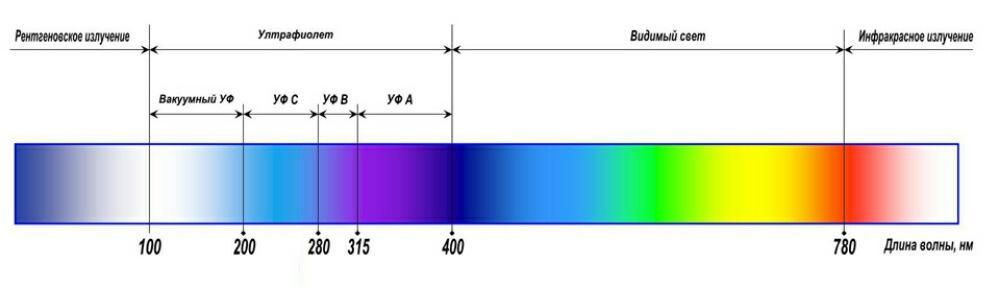
It is the aggressive shortwave bands from UV-B and below that pose the greatest danger to people. However, it is worth following the rules when using even low-power UV lamps:
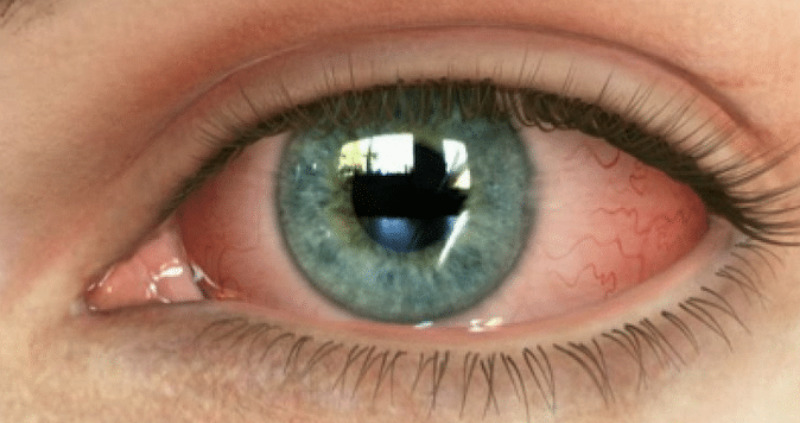
- Do not direct the beam of light into the eyes - the human eye is sensitive to UV radiation, which can cause burn cornea with symptoms of conjunctivitis.
![Features of the ultraviolet flashlight]()
- Minimizing skin exposure is especially important for people with increased photosensitivity and cancer. As evidence of the danger of UV from LED-elements, an experimental course of irradiation of a skin area through a patterned stencil with a flashlight with a wavelength of 365 nm was carried out.
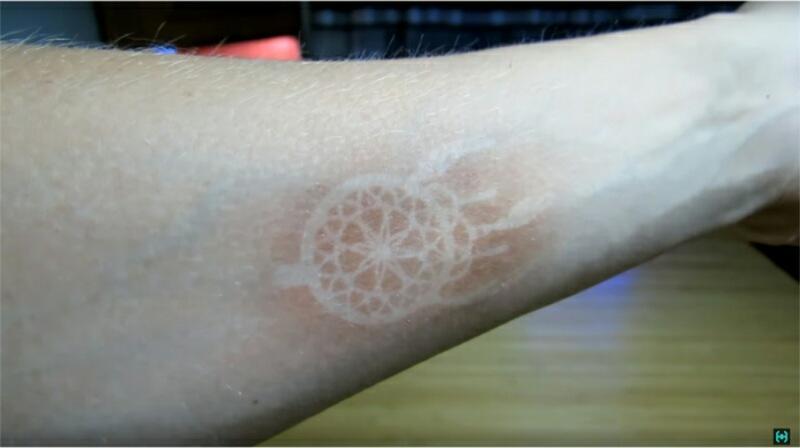
By adhering to these two rules, you can eliminate or minimize possible harm, and some features can even be used for cosmetic purposes.
What is an ultraviolet flashlight for?
First of all, the need for certain mobile UV devices is due to the scope of their application, for example:
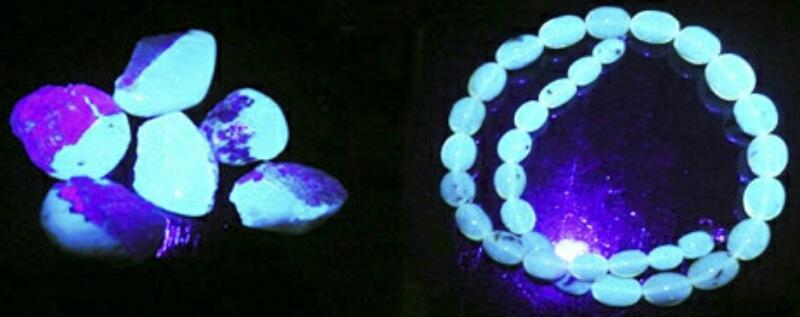
- geology - different minerals give fluorescence in different colors, which is used to identify minerals. In particular, such a search is practiced by seekers of amber, which gives a characteristic blue and turquoise illumination. By the way, this is how fake products are separated from real ones when buying amber jewelry;
![Features of the ultraviolet flashlight]()
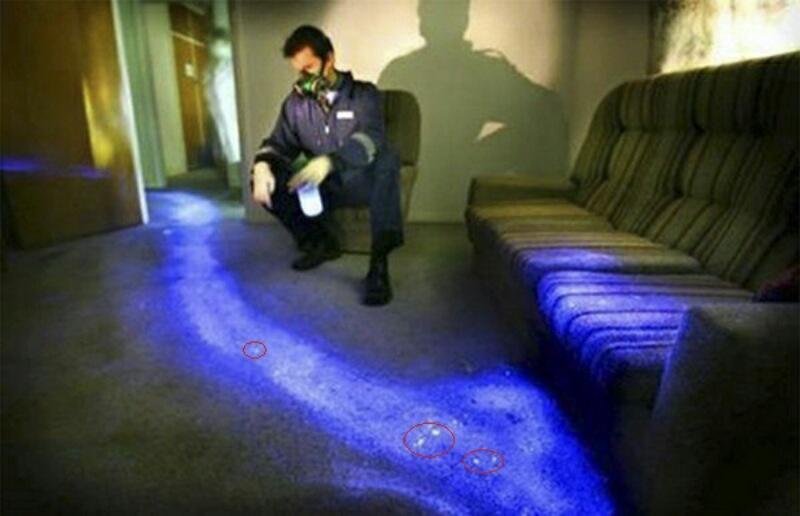
- forensics - blood, saliva, urine, semen, sweat, in general, all human biological fluids, even after they have been washed away, remain in the pores and microcracks of the coating. It is impossible to detect such residues after careful covering of traces in the usual way, but under a UV lamp it is elementary;
![Features of the ultraviolet flashlight]()
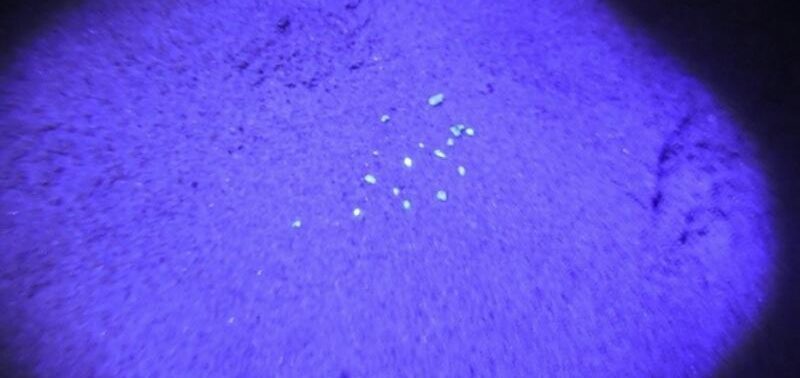
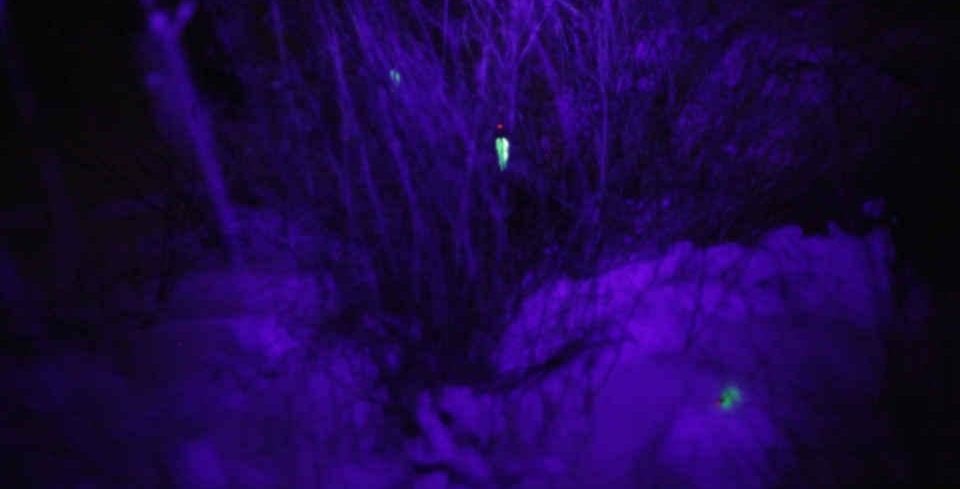
- hunting - at night, the search for a hidden wounded animal becomes much easier if you use powerful UV search engine;
![Features of the ultraviolet flashlight]()
- to facilitate the night search for lost arrows, their plumage is made fluorescent;
![Features of the ultraviolet flashlight]()
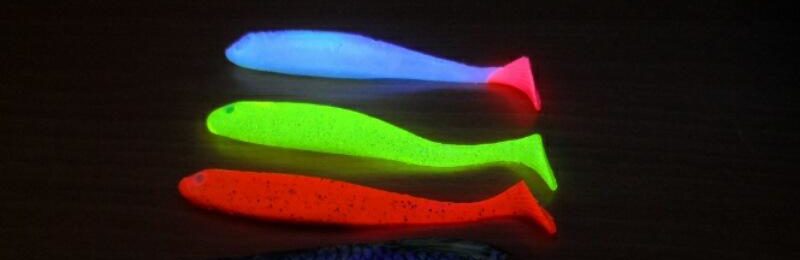
- night fishing - to attract fish, baits are made glowing in UV rays;
![Features of the ultraviolet flashlight]()
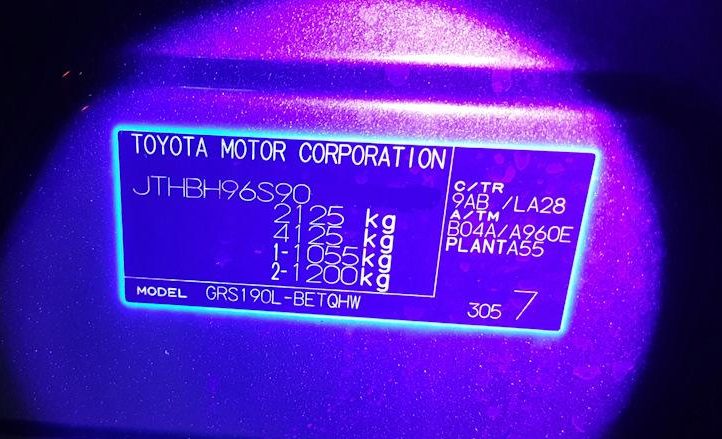
- car trade - under UV, the underlying layers of paintwork and putty appear in places of handicraft body repair. This determines whether the car has been involved in an accident. True, for such a study, you will have to drive the car into a dark garage or wait for the night. Modern factory marking of bodies and engines is also made fluorescent;
![Features of the ultraviolet flashlight]()
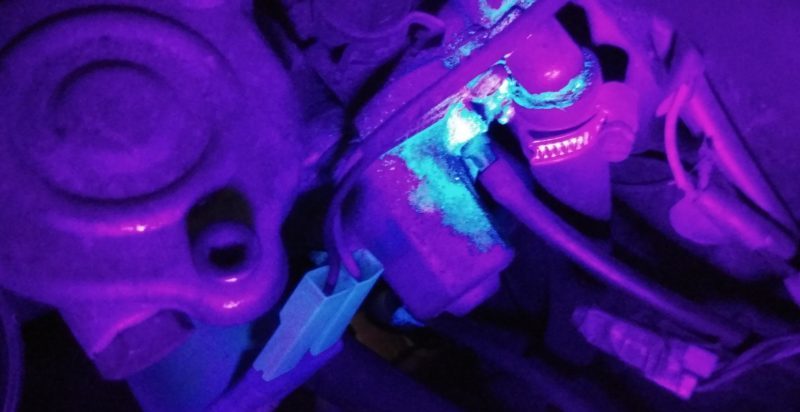
- according to the same principle, car mechanics are looking for places where oil and antifreeze leak from the units of the units;
![Features of the ultraviolet flashlight]()
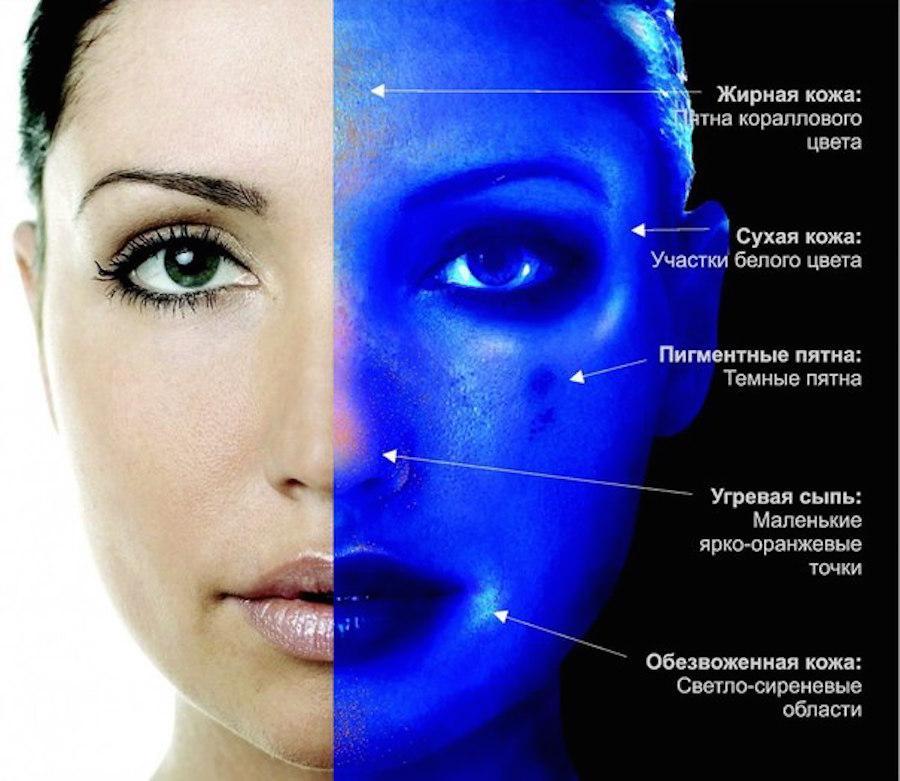
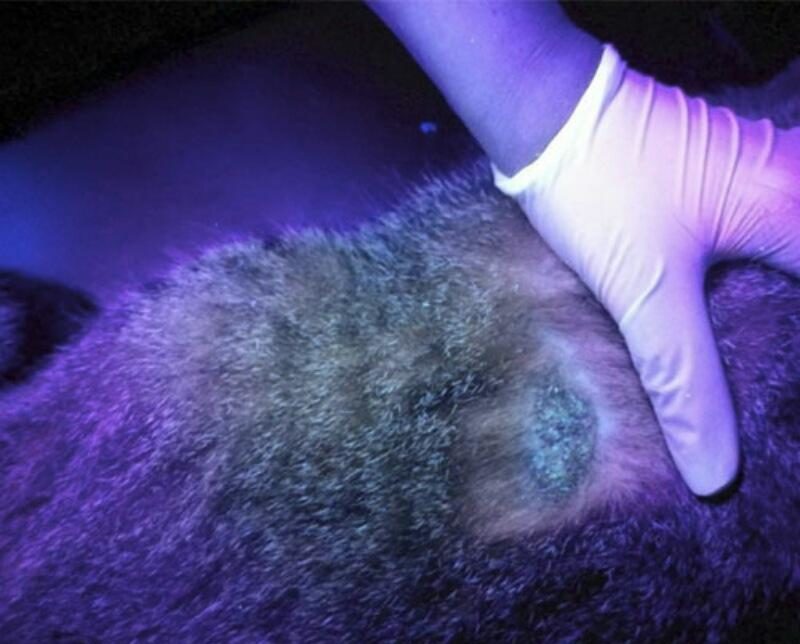
- medicine - some skin diseases are accompanied by the release of fluorescent waste products of microorganisms. For research, a Wood filter is installed on the flashlight, which cuts off the visible spectrum of light for greater contrast and easier diagnosis;
![Features of the ultraviolet flashlight]()
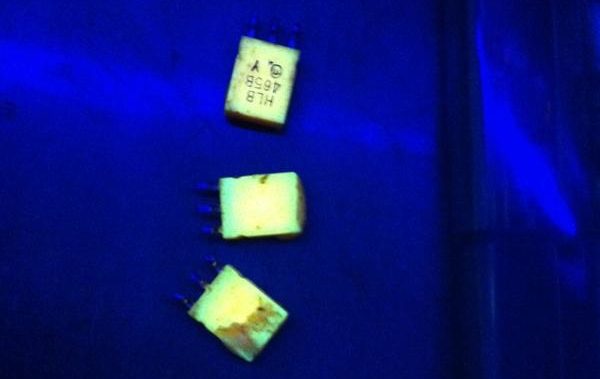
- electrical engineering - to identify radio components that have a given glow color in ultraviolet.
Application in everyday life
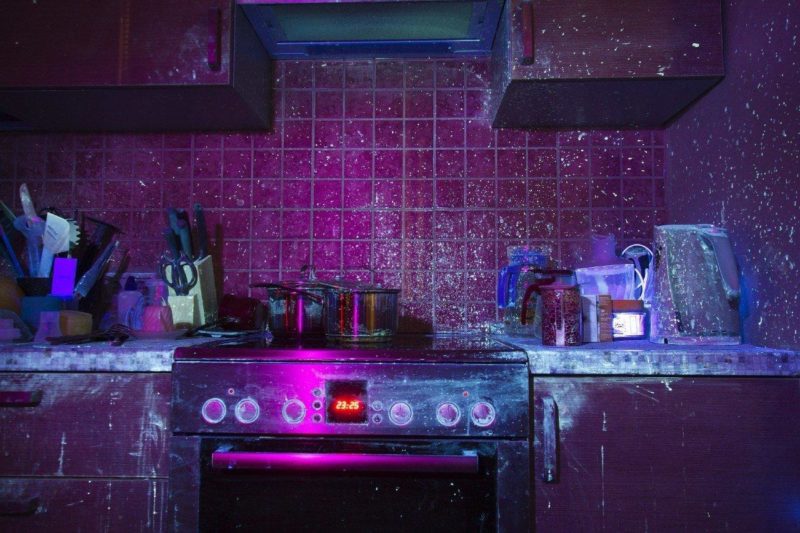
At home, the UV lamp helps to control the quality of cleaning, revealing the remnants of organic pollution, invisible at first glance. The photo below shows a "totally clean" kitchen.
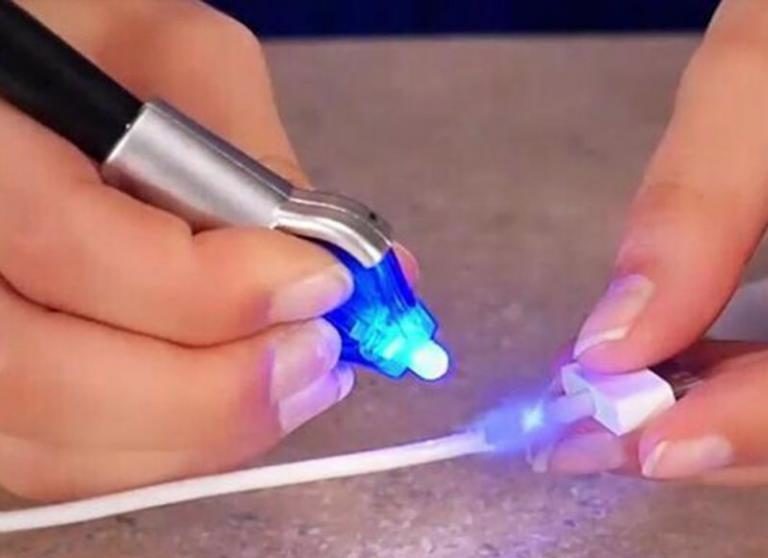
Also, the flashlight is used to cure photocomposite adhesive, which is more durable and practical than hot melt adhesive, which softens when heated.
Some insects and arachnids also fluoresce in different colors, making them easier to detect on clothing and indoors during pest control.

With filter Wood ringworm is easily diagnosed in pets and humans. In the light of a flashlight, the affected areas glow greenish.
The use of fluorescent markers and paints allows you to make an atmospheric holiday or party with memorable photo shoots.

True, to implement a large-scale event, you will need a more powerful unit than a pocket one, and prolonged exposure can lead to eye injury. So it is better to limit such events in time to 30-40 minutes, and then have fun in normal lighting.
To check bills
Most often, an ultraviolet flashlight is used to verify the authenticity of money. Special fibers are added to the composition of banknote paper, watermarks are printed on them, visible only under UV rays. Some of the images are visible in normal light, while under a UV lamp it visually changes to another.
How to choose
First of all, you need to focus on the intended purpose. If you need a device for hunting, then you need a powerful browband or a manual search engine. If you are planning underwater night hunting, you need a waterproof flashlight for divers. For radio amateurs, a device with a flexible leg or tripod mount is suitable. For household use, flashlights are sold with a luminous spectrum of 365, 395 and an intermediate 380 nanometers. In this regard, LED-elements with a wavelength of 365 nm show themselves better, since when checking banknotes, 395 nm is not enough to identify certain signs of authenticity. 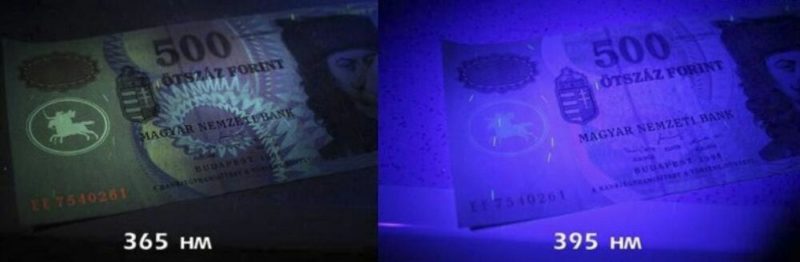
The photo shows that watermarks under the 395nm lamp are poorly visible or not visible at all, while the 365nm LED clearly shows watermarks, changes the color of the number to orange, and contrasts the areas against the general background. This effect helps to determine when buying a flashlight whether the product corresponds to the declared characteristics. The only remark regarding the more aggressive spectrum of light bulbs with a wavelength of 365 nm. They must be used with great care and not directed into the eyes. Longer wavelength flashlights put out a lot of visible violet light that interferes with identification and fails to show some elements, but they are practically harmless.