Eye burn by ultraviolet lamp
Quartz and ultraviolet lamps are actively used for disinfection of premises. They emit strong radiation and, if misused, can cause severe eye burns. This can happen imperceptibly, and the consequences will appear after a while. Consider the main symptoms of damage and methods of treatment.
Is it possible to look at a quartz lamp
Quartz lamps are used in kindergartens, hospitals and clinics. The equipment is extremely effective at disinfection, but requires a number of precautions. Neglect of recommendations often leads to serious problems.
Looking at a quartz lamp without special protection is not recommended, since the emitted UV rays have a high radiation power. The mucous membrane of the eye is especially sensitive to such influences.
Damage can affect both the upper layer of the mucosa and deeper layers, and seriously injure the retina or cornea. Such injuries require long-term treatment and subsequent rehabilitation. And in some cases, a person may even lose sight.
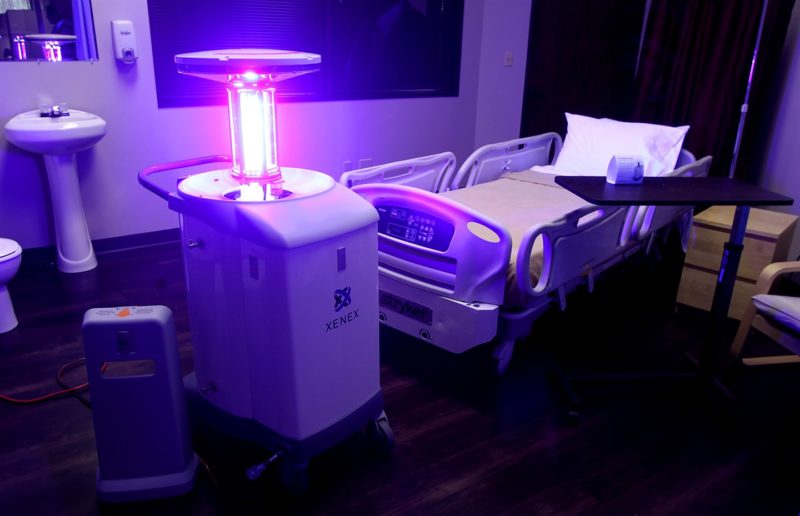
The effect of ultraviolet radiation on the eyes
The use of quartz and ultraviolet radiation sources for disinfection is due to their power. Complete sterilization of rooms requires direct exposure to strong rays on surfaces. There are models that emit long, medium and short waves. Shortwave sources are the most dangerous for humans.
What to do if you get burned
The degree of damage to the organ depends on how long the person has been exposed to UV rays and on the intensity of the radiation. You also need to consider the wavelength and the distance between the emitter and the eye.
When injured, it is important to identify the symptoms and provide first aid.
Personal experience of how I got a burn of my eyes and face with careless use of an ultraviolet lamp.
Symptoms
Symptoms of ultraviolet damage to the organs of vision divide injuries according to severity.
If a person looks at the lamp for only a few seconds without any goggles, a first-degree burn occurs. Symptoms in this case will not appear immediately, but several hours after exposure.
Symptoms of a slight eye burn with a quartz lamp:
- protruding tears;
- increased sensitivity to light;
- hyperemia;
- slightly swollen eyelids.
A moderate burn occurs with prolonged contact with radiation. There may be redness of the eyes, high sensitivity to light up to the inability to open the eyes. Additionally, erosion may occur, causing clouding of the cornea and a general deterioration in vision.
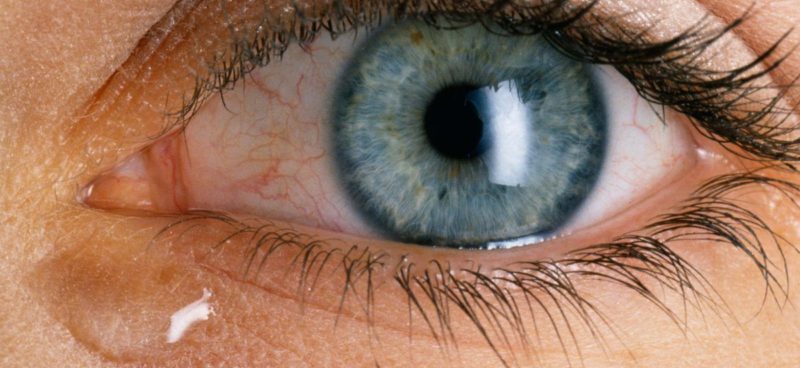
Signs of an average burn:
- swollen eyelids;
- pain sensations;
- hyperemia;
- blepharospasm.
If a person looks at a quartz lamp for a long time without protective glasses, severe eye burns may occur.It is accompanied by blisters on the eyelids, severe pain, lachrymation and inability to open the eyes in the light. In this case, the cornea instantly becomes cloudy, and a crust forms on the eyelids, which then dies off.
Prolonged exposure to the rays can cause deep damage to the eyeball. Symptoms in this case appear almost instantly.
The most complex eye burns from an ultraviolet lamp or a quartz source lead to the rejection of damaged areas, seriously impair vision and often lead to blindness.
First aid
Timely first aid will help to alleviate the symptoms and mitigate the consequences. It is advisable to consult a doctor as soon as possible, who will be able to assess the extent of damage and prescribe treatment.
What to do immediately after a burn is detected:
- Immediately remove the victim from the area of radiation, preferably in a room with a dim light.
- Severe pain requires the use of painkillers.
- It is advisable to promptly treat the exposed organs with an antibacterial ointment.
- Apply cold.
- Put glasses on the victim and take to the hospital. For severe cases, it is advisable to call an ambulance.
In case of burns, in no case should you rub your eyes, put pressure on them, rinse with water, instill drops or warm them. All this can cause an unpredictable reaction in the early stages and lead to complications.
Treatment
At the hospital, a doctor will examine the victim and assess the level of damage. Further, a course of treatment using medications is selected individually. These can be antibacterial ointments, eye drops, regenerating ointments, novocaine drops and disinfectants.
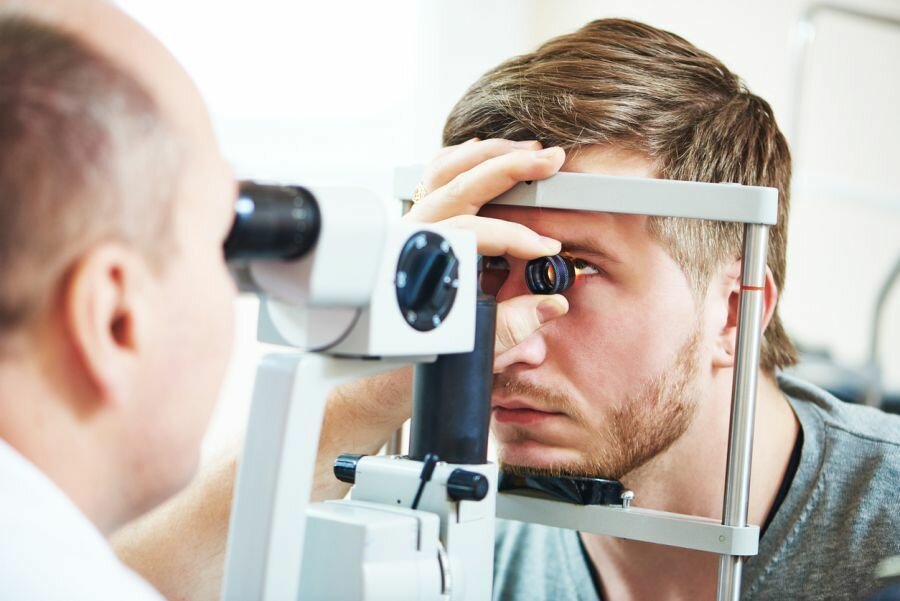
The specific list of medicines will depend on the severity of the burn.It is not recommended to supplement the list provided by the doctor with anything. self-medication is unacceptable.
Sometimes the doctor may recommend some folk remedies. Lotions from decoctions of herbs remove swelling well.
During the recovery period, it is best to completely avoid activities that cause eye strain. It is advisable to observe bed rest, avoid sources of bright light. Excessive corneal irritation can significantly prolong recovery time.
Possible consequences
An eye burn with an ultraviolet or quartz lamp can cause a lot of complications:
- fusion of the conjunctiva with the eyelid;
- scarring on the eyelids or their deformation;
- retinal detachment;
- significant deterioration of vision;
- complete or partial blindness.
Most of the consequences can be avoided by providing the correct first aid and contacting a specialist in a timely manner.
Precautionary measures
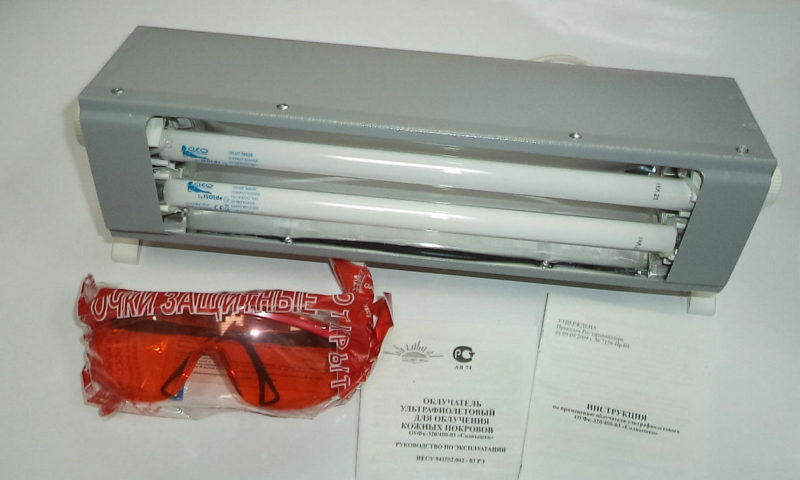
First aid and treatment for a quartz lamp burn is important when a problem occurs. However, it is best to avoid such injuries by observing the following precautions:
- you should not enter the room in which the quartz lamp works;
- when working with a lamp, it is important to follow safety rules;
- you can look at UV rays only through special glasses;
- if you need to be in the same room with a quartz source, do not exceed the exposure time;
- after using the appliance, ventilate the room;
- the power of the equipment must correspond to the tasks;
- it is better to use closed-type emitters;
- Before use, it is important to read the instruction manual.
Before using the lamp, it is recommended to consult a doctor to ensure that there are no individual contraindications.