Features of Wood's lamp in dermatology
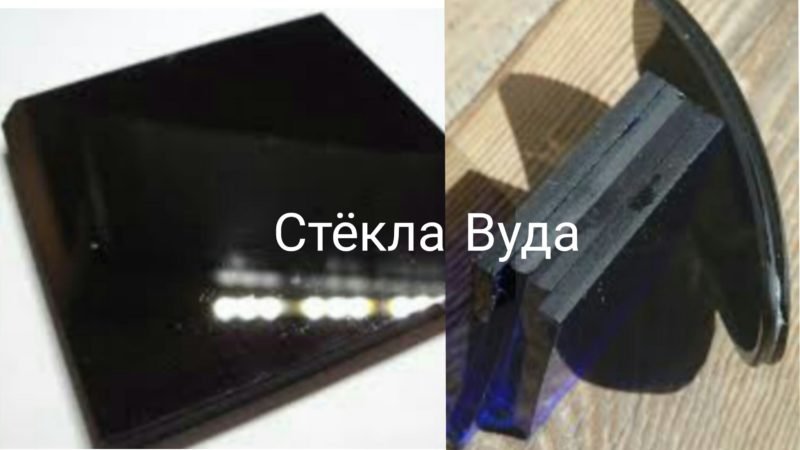
In 1903, scientist and inventor Robert Williams Wood created a filter that cuts off all visible light except ultraviolet. The filter was a barium-sodium silicate glass with the addition of nickel or cobalt oxide and was called the "Wood's filter". Later, the development found application in diagnostic medicine for the reason that under ultraviolet light, lichen and other skin pathologies stand out with special colors and shades.
What is a Woods lamp
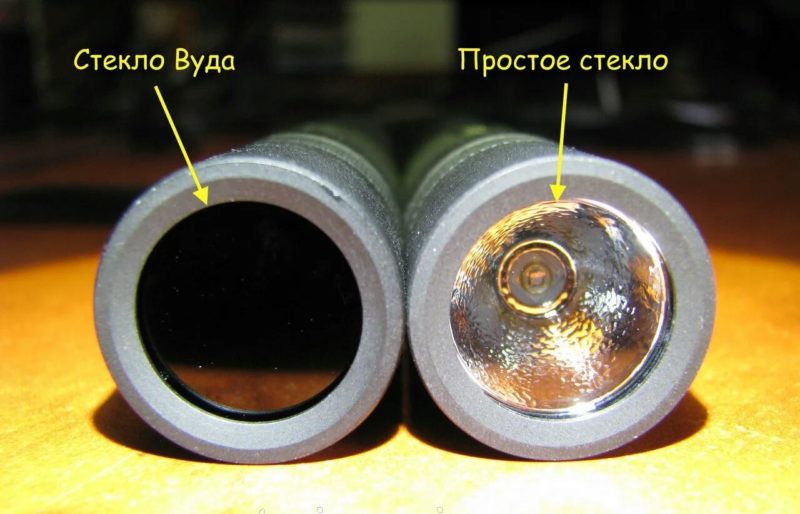
In fact, Robert Wood invented a kind of glass that transmits long-wave ultraviolet in the range of 320-400 nm. Accordingly, his name began to be called an ultraviolet light source with a flask made of a filter material invented by a scientist. In addition, the device is sometimes called a "black lamp" because:
- glass has a dark blue, almost black color;
- the filter cuts off most of the light visible to the human eye, and when the device is on, objects that do not have the luminescence effect appear to a person as black.
From a technical point of view, neither the first nor the second option is wrong, since a real black lamp is made of completely transparent glass and emits light in the range of 350-500 nm. Such devices are used in traps for flying insects, as they are attracted to this particular range. The main property of the Wood lamp as an instrument is the visualization of substances that can luminesce, that is, glow under the influence of ultraviolet radiation.
Varieties
Now Wood's lamp is called any device that emits light in a narrow wavelength range of 320-400 nm, filtering aggressive UVC, UVB and visible spectra. There are devices designed according to three principles.
GRL
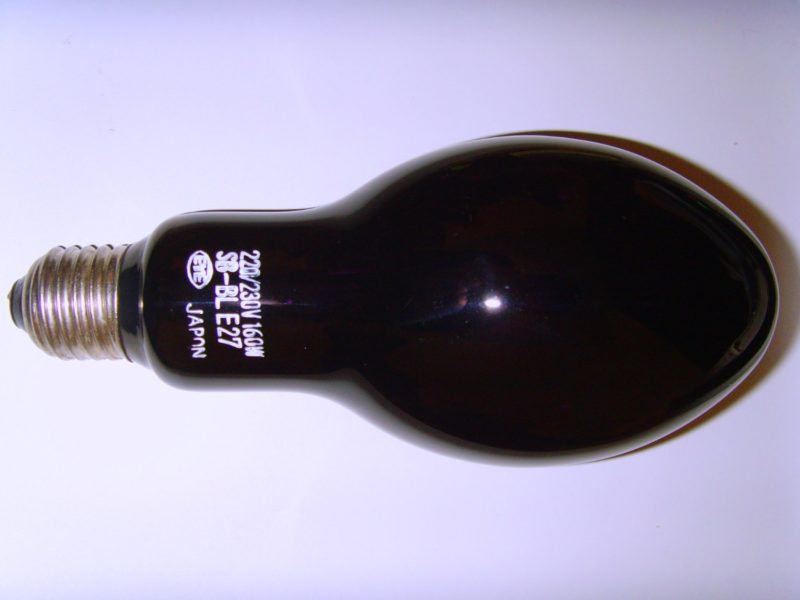
Low-pressure mercury vapor lamp with a range of 350-400 nm, with a filter glass bulb. The peak emission of the device is at 365 nm.
fluorescent
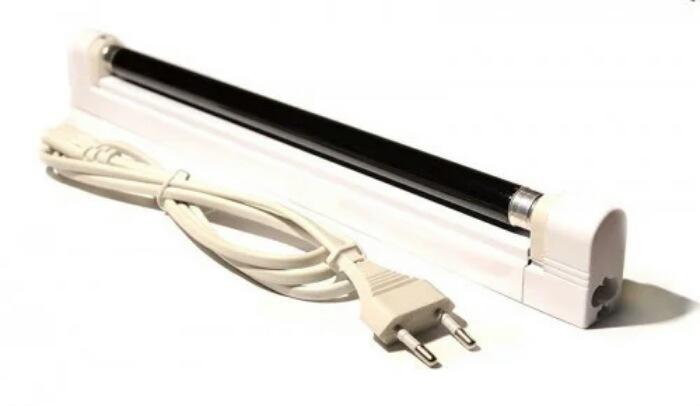
Fluorescent or halogen lamp. It is placed in a transparent flask with sputtering from the inside of special types of phosphors that emit two wavelength ranges:
- 368-371 nm - with europium-activated strontium borate phosphor.
- 350-353 nm - with lead-activated barium silicate phosphor.
ultraviolet
UV LEDs or LED elements manufactured to emit a narrow range of soft light at 365 nm.
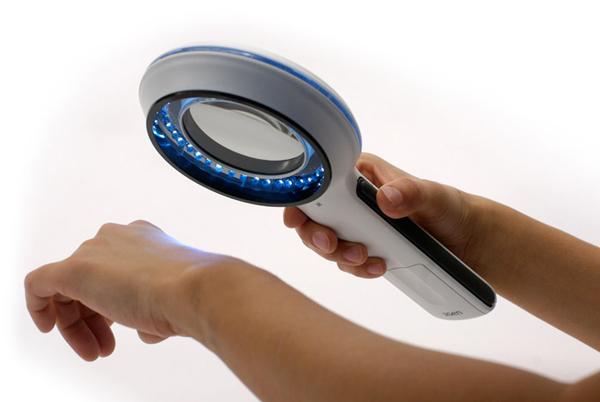
Only the first option (waves in the range of 320-400 nm) fits the definition of Wood's classic invention, but the use of the original technology in the medical field made this name justified in relation to any light source with a range suitable for activating luminescence in the visible range.
Where applicable
Depending on the spectrum of the emitted light, devices have found application in such areas as:
- criminalistics - for highlighting biological traces of blood, sweat, fat, urine, semen, saliva;
- medicine - for express diagnostics of dermatological diseases, laboratory tests, hardening of composite fillings;
- veterinary medicine - most pathogens of skin diseases in humans and animals are of the same type;
- radio engineering - for the definition and classification of radio components;
- insecticidal protection - in traps for mosquitoes and mosquitoes;
- the entertainment industry - in strobe lights, light shows, to identify visitors to private events;
- trade and financial sphere - for highlighting banknotes, identifying barcodes, fixing labeled banknotes during investigative measures;
- geology - for the study of minerals.
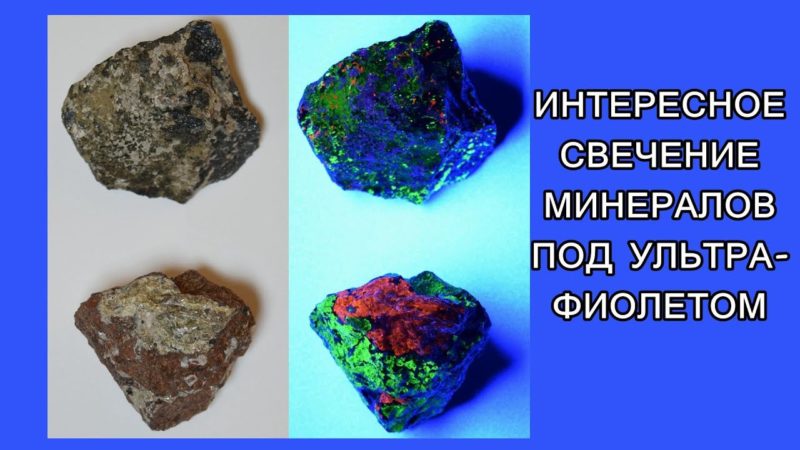
The main difference between the Wood's lamp and the UFL used for quartzing is the absence of aggressive radiation, as well as the glow visible to the human eye.
Use of the lamp in dermatology
Wood's lamp found its use in dermatology as early as 1925, when the scientists Margaro and Davis discovered the phenomenon of fluorescence in the waste products of various microorganisms, especially fungi and bacteria.The ability of pathogens to emit different colors is the basis of the lumdiagnostics method.
How to do a skin exam
Study preparation includes:
- Exclusion of the use of disinfectants and detergents, creams and ointments at least two days before the study. Chemical preparations distort the color of the examined area of the body, and the destruction of traces of vital activity of microorganisms reduces the intensity of their glow under UV rays.
- Cleaning of contaminants on the eve of inspection - dirt and foreign matter are removed with clean running water. Drying is done with an electric dryer or a dry (non-bactericidal) paper towel with blotting movements.
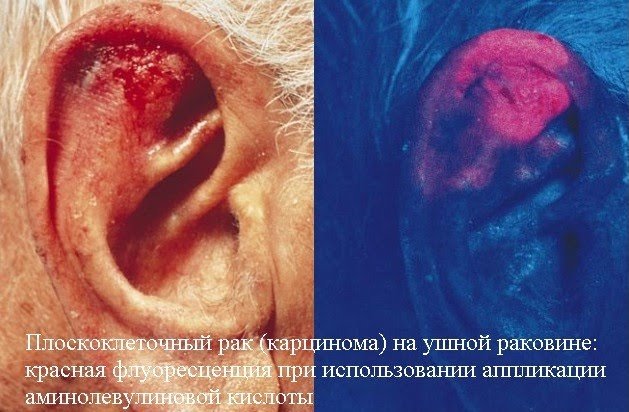
In some cases, for example, if skin cancer is suspected, 4-5 hours before the examination, the dermatologist prescribes the application of 20% 5-aminolevulinic acid-based ointment to the body area under study to stimulate the production of protoporphyrin IX, which fluoresces under UV rays, a diagnostic sign of carcinomas, diseases Bowen, Paget's disease, solar keratomas.
To identify the passages of scabies mites, a fluorescein solution or tetracycline paste is applied to the skin before lumdiagnostics.
The tactics of conducting luminescent diagnostics is as follows:
- The device is turned on 5 minutes before the inspection to allow the lamp to reach the optimal operating mode (not required for LED elements).
- The examination is carried out in a darkened or completely dark room. The tester must first adapt their vision to the darkness.
- The device is brought to the examined area of the body at a distance of 10-15 cm (for LED-elements 5 cm is allowed) from the skin surface.
The simplicity of the procedure makes it affordable for self-administration at home, especially since the instructions for branded devices often contain a comparative table with examples of the most common pathologies.
Self-diagnosis can only be allowed as a preliminary one and serves as a reason for contacting a specialist. Self-treatment based on the examination is excluded.
By the same principle, regular examinations of domestic and farm animals are carried out.
How lichen glows under a lamp
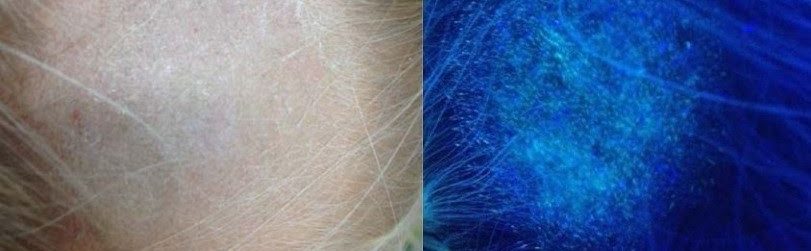
The most common diseases detected by the lumdiagnostic method:
- ringworm - glows under a Wood's lamp with a bright green glow. However, it should be borne in mind that some microsporia pathogens do not fluoresce;
- pityriasis versicolor - glows yellow-white or copper;
- Pseudomonas aeruginosa infection - smears from the focus or purulent contents of wounds infected with Pseudomonas give a yellow-green glow under UV light;
- melasma - hyperpigmented spots and their borders under UV light contrast sharply with healthy skin.
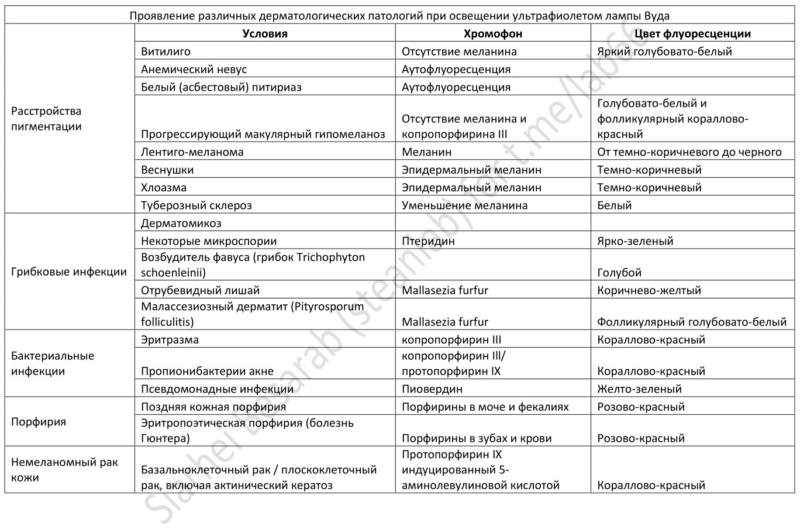
Wood's invention is a means for non-invasive diagnosis at the initial stage, but the final diagnosis is made solely on the basis of a comprehensive study, the tactics of which are determined by the attending physician.
How to make a lamp with your own hands
The technology for the production of a classic Wood's lamp involves the manufacture of specific glass or the deposition of a rare phosphor on the flask.It is much easier to purchase any UV light source with the required wavelength range between 320-400 nm and a standard E27 or compact G23 base. If there is no letter L in the lamp marking, for example UV-9W-L, this means that an original device is required to start it. Turning on such a lamp by screwing it into the socket of a table lamp will not work due to the lack of an electronic ballast - an electronic ballast. To bring it into working condition, you must:
- Find any energy-saving fluorescent light bulb with a power identical to ultraviolet.
- Unsolder the contacts from the filaments and disconnect the bulb.
- In a similar way, unsolder the contacts of the UV lamp and solder the electronic ballast from the ELL to them. If the contact sizes do not match, you need to connect the flask to the board using wires.
- Mount the resulting lamp into any reflector from a street lamp or table lamp of suitable dimensions.
Video: Making germicidal lamps from street lighting fixtures
When the outer flask with the phosphor is destroyed, the inner one is exposed, emitting an aggressive spectrum below 300 nm. The device is not suitable for diagnostics due to the danger to humans.
Contraindications for use
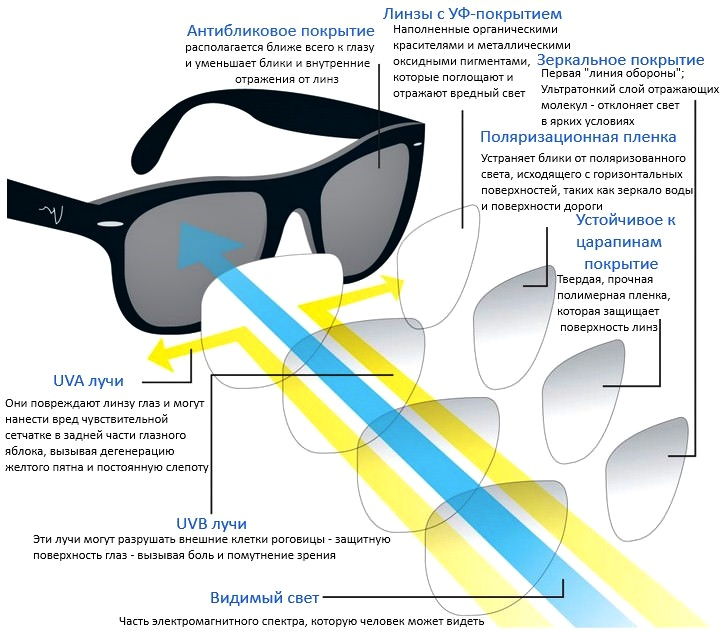
Increased skin photosensitivity is the only contraindication to luminescent diagnostics. A specialist working with conditionally safe UV radiation must use special goggles to protect the eyes of the O-45-UV Vision type or their analogues.
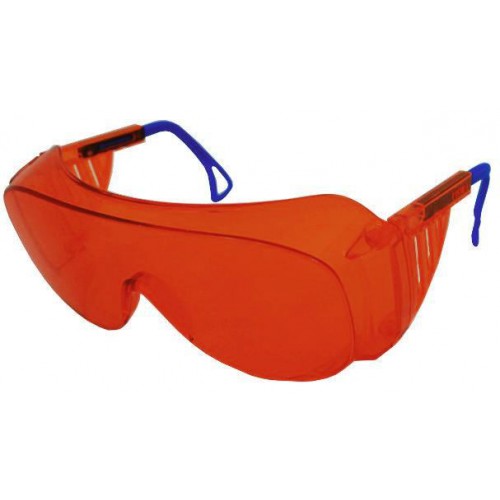
At home, under the condition of a short duration of exposure, yellow polycarbonate glasses with a light filter are suitable.