Features of the ultraviolet lamp
Ultraviolet lamps have long been used for the treatment of premises in medical institutions. Later they began to be called bactericidal and used at home. Devices are often bought by parents after the birth of a child in order to protect him from harmful microorganisms.
With the growing interest in UV lamps, different types of devices began to appear that met the specific requirements of customers. For example, some appliances used in hospitals are not suitable for the home. It is necessary to consider the types of emitters, the principle of operation and purpose.
What is a UV lamp
An ultraviolet lamp is a device that emits artificial light, which is endowed with bactericidal properties. The lamp emits part of the spectrum of sunlight - a neon purple glow is formed in the bulb.When the device is connected to the network, the mercury vapor inside the bulb begins to interact with electromagnetic discharges, emitting ultraviolet light.
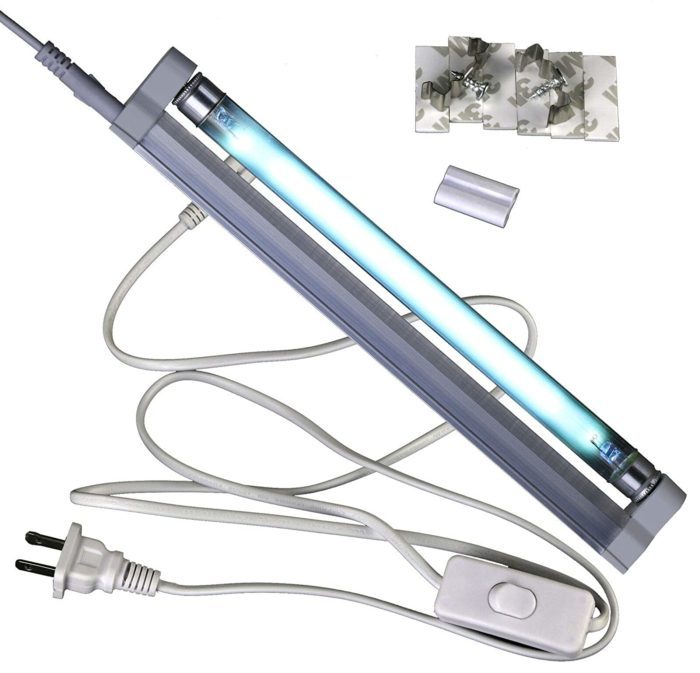
Inside the case, instead of mercury, cadmium, indium or bismuth is sometimes present. The emitted light is in the range between x-rays and rays visible to the human eye. The UV lamp has the form of an elongated flask, along the edges of which electrodes are installed that create a discharge for interaction with mercury. Outwardly, it resembles a standard fluorescent lamp.
Principle of operation
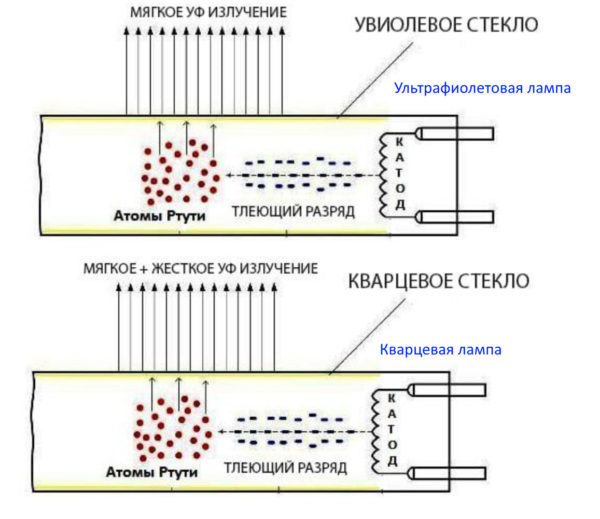
The principle of operation of an ultraviolet lamp is almost identical to a quartz lamp. The main difference is that here, in most cases, a special uviolet glass is installed instead of quartz. It is necessary to filter aggressive UV radiation. Thanks to this, the device does not emit ozone, but only harmless soft ultraviolet.
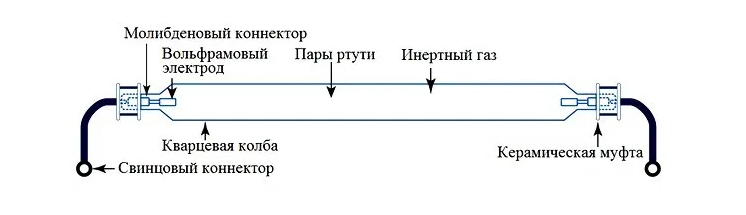
Molybdenum current-carrying threads and electrodes are located inside the body in mercury vapor. The housing is sealed and equipped with a durable base.
Varieties
Among the existing UV emitters for disinfection, the most popular are bactericidal and quartz lamps. In classical devices, the flask is made of quartz glass. During operation, the device emits harmful ozone into the air.
Such devices are more often used for processing medical and industrial premises, where it is not necessary for a person to be at the time of processing. A uviol glass flask is installed in bactericidal emitters. Structurally, ultraviolet lamps are as follows:
- portable. Due to their compactness and light weight, they are actively used in everyday life.Apply to the treatment of the toilet, tables, sinks and shoes;
- open. Kill pathogenic microbes in the air and on all surfaces. At the time of operation of the device, there should be no animals, people and plants in the room. Suitable for processing large rooms;
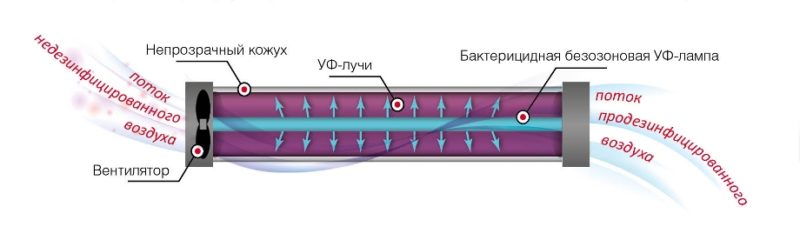
- closed. They are called closed type recirculators. They are often used in everyday life, since processing can be carried out in the presence of a person. The design of the lamp includes a fan. It is necessary to draw air inside, where disinfection with ultraviolet rays takes place. The purified air is then returned to the room.
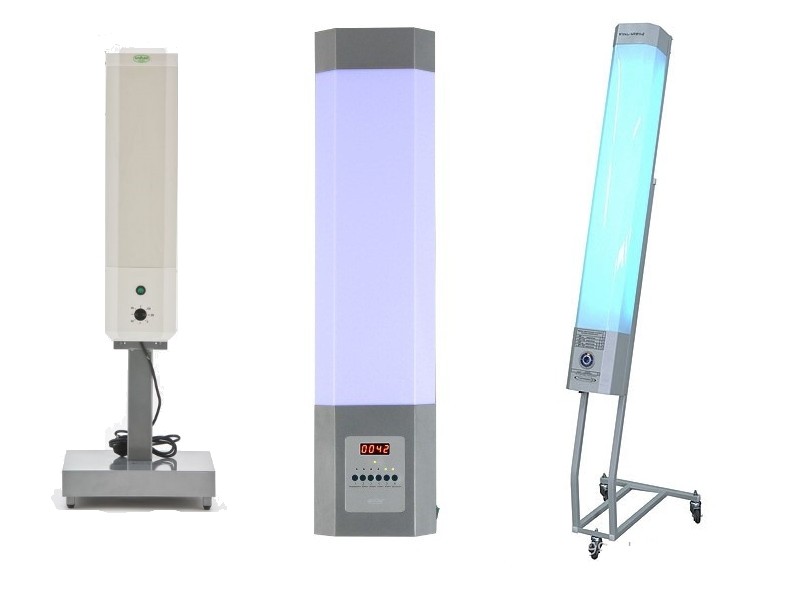
In addition to design differences, ultraviolet lamps are divided according to the type of installation. They can be:
- floor. Best suited for decontamination of spacious rooms. They are often placed in the corner of the living room, corridor, bedroom or nursery. Sometimes used to disinfect the wardrobe;
- hinged. Mounted on the ceiling or wall. The lamp must be mounted only on a secure mount. Due to the large number of shapes and colors, the device can be matched to the design of the room. Devices are characterized by increased efficiency;
- desktop. Usually they have a concise design and small size. Such models can be used in any room, whether there are people there or not.
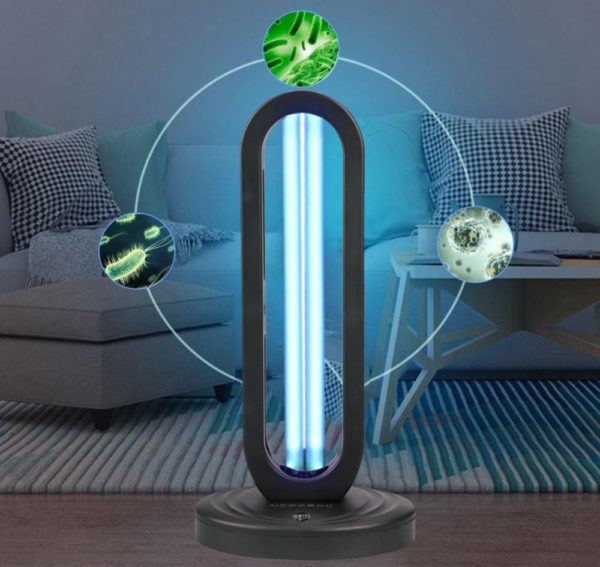
Some models of UV colored lamps are equipped with an automatic connection mechanism. If the disinfector will be used in everyday life, it is better to choose a portable model.
UV lamp device
The ultraviolet lamp consists of the following elements:
- uviolet or quartz glass flask;
- tungsten electrodes;
- metal plinth;
- molybdenum threads;
- coupling (ceramic);
- connector.
What is needed for
UV lamps are used:
- for medicinal purposes. With laryngitis, sinusitis, sinusitis, non-purulent otitis media, influenza and tonsillitis. In the midst of an epidemic, ultraviolet lamps are used as a bactericidal agent. Ultraviolet radiation therapy is not recommended for children under 3 years of age. But this is possible if the newborn has a mild form of liver dysfunction (manifested as jaundice). For a runny nose and sore throat, a model with a short wavelength is suitable. Often included are nozzles;
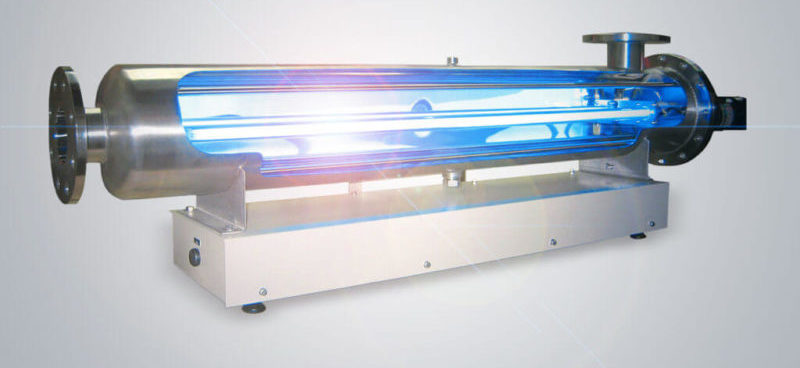
- for water purification. The devices look like a tank with a lamp. The disinfector treats the liquid with rays, destroying harmful microbes. The output is clean and usable water. It is important to learn how to determine the amount of ultraviolet light needed for cleaning. In addition, you need to change the lamp when it begins to weaken;
- for plants. When they suffer from a lack of ultraviolet radiation, the issue can be resolved with the help of a phytolamp. Artificial radiation will help ensure the process of photosynthesis, which is necessary for full development.
What kills ultraviolet lamp
Thanks to ultraviolet rays, the device is able to kill dangerous viruses, bacteria (staphylococci, bacilli, enterococci), fungi (yeast and mold) and mold.
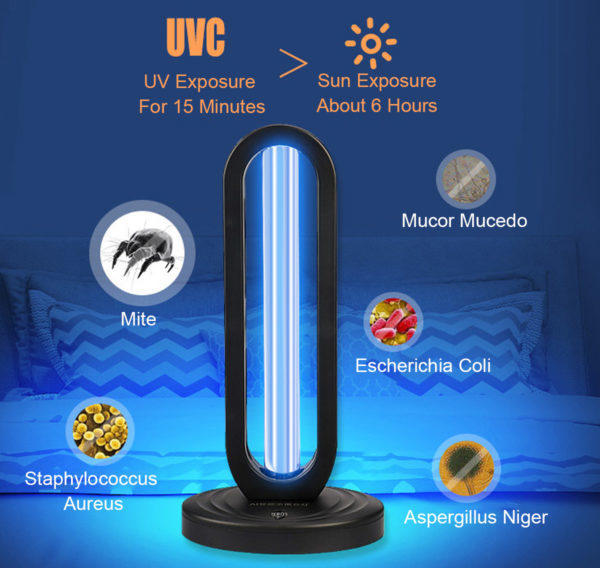
The antibacterial effect is explained by the property of short-range ultraviolet rays (up to 280 NM). They are able to penetrate the DNA of pathogenic microorganisms and destroy it from the inside, preventing further reproduction.
Also read: Differences between a recirculator and a quartz lamp.
How to use a lamp at home
It is believed that ultraviolet radiation, even in minimal amounts, can be harmful to health. When using the device for disinfection, it is necessary to adhere to safety precautions. Rules for using the disinfector:
- the bactericidal device should be turned on only if there are no people in the room and only for the period of time specified in the instructions;
- if you need to do ultraviolet treatment of any parts of the body, you need to make sure that the device is designed for this purpose. Before turning on, you should put on special glasses (often they are included) and close your eyes. It is also worth adhering to the recommended mode, distance to the lamp and processing time;
- if a lamp of the “C” spectrum was used, it is necessary to ventilate the room after the procedure. This is necessary to weather the accumulated ozone;
- when using a household recirculator, just in case, you should make sure that it is really ozone-free. If this is not the case, you cannot turn it on in the presence of people in the room.

How long can you stay under the lamp
To disinfect the room, the device is turned on for about 15-30 minutes. Even if it is a harmless ultraviolet lamp, it is better to leave the room during its operation and take plants and animals with you. Upon completion of the procedure, the room must be checked. If the child has signs of acute respiratory infections, the doctor may prescribe treatment with ultraviolet rays.
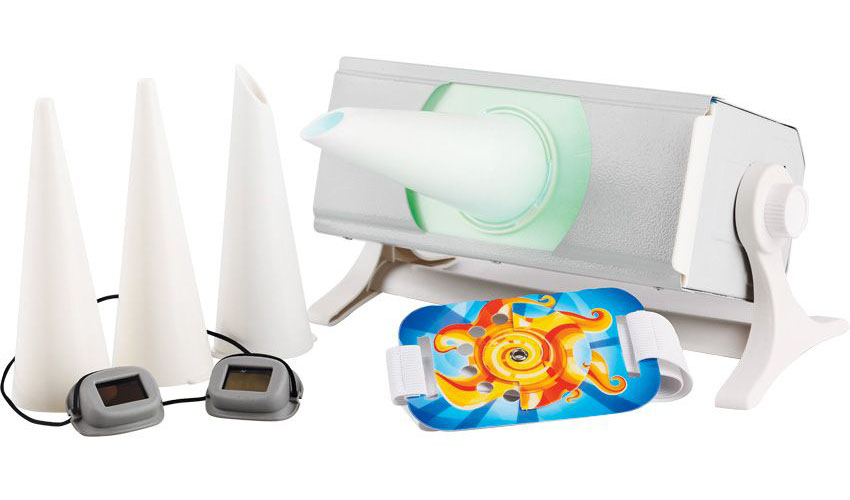
To do this, the child is put on special glasses, sit or lay on the couch (10 centimeters from the device) and carry out the procedure.It lasts no more than 10 minutes. The general course of treatment is 3-4 days. After 3 sessions, the symptoms of a cold should disappear. In the treatment of the nasal mucosa, it can be irradiated only after the amount of secretions has decreased. Depending on the intensity of the symptoms, the daily dose of radiation can be reduced to 3 minutes, then to 1.
Advantages and disadvantages
Among the advantages of ultraviolet germicidal lamps, there are several main ones:
- due to the variety, devices can be used in various fields of activity, as well as in everyday life;
- most models serve for a long time at a low price;
- devices almost instantly reach the operating performance of the radiation power;
- modern recirculators are safe for health, they can be turned on and not leave the room.
The disadvantages include the release of ozone into the air. If you do not follow the safety rules, you can harm yourself. In addition, lamps should not be thrown away just like that with the rest of the garbage. To do this, they are referred to specialized reception points. Also, do not forget that you need to constantly monitor the correct operation of the lamp, gradually it will begin to lose its properties.
Video: Are you sure you are choosing the right UV lamp for your animal?
Life time
On average, germicidal lamps last 8000-9000 hours. It depends on their purpose and design. The service life depends on whether the emitter will overheat during operation or not.
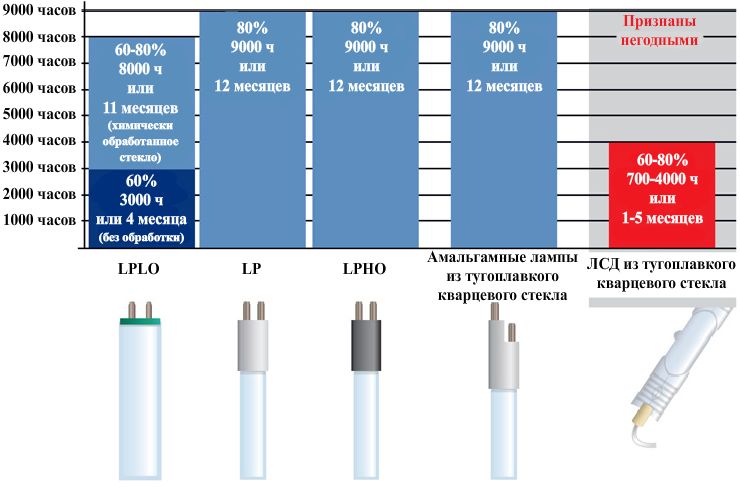
During operation, the lamp gradually wears out. This is reflected in the radiation spectrum, so over time, its properties will begin to change. If deviations in the operation of the device were noticed, it is better to replace it with a new one.
Conclusion
In order to avoid problems during use with the lamp, it is necessary to correctly determine the desired model. For example, if you need a disinfectant for your home, you should to choose from recirculators with uviol glass, which do not emit harmful substances into the air. For medical institutions, quartz devices are more often purchased.