What to do if a fluorescent lamp breaks
Inside the fluorescent lamp there are substances harmful to humans - mercury vapor. Its content in lamps is less than in thermometers. Despite this, experts advise to carefully handle energy-saving lamps, having studied the safety rules. If the fluorescent lamp is broken, the place should be treated with products containing active chlorine.
Mercury vapor is necessary for a light bulb to create an ultraviolet glow, which occurs under the action of an arc discharge. If the integrity of the flask is broken, mercury vapor will pollute the air, which can adversely affect human health. To avoid consequences, you need to properly dispose of the lamp and neutralize harmful substances.
How to use a fluorescent lamp
If the fluorescent light bulb is working, the mercury vapor inside the bulb is not dangerous to the environment and humans. For safe use:
- you need to choose reliable brands with quality assurance. They follow the manufacturing technology at all stages, so the products arrive on the shelves without defects, which is confirmed by codes and certificates;
- do not mount the lamp in a cramped lampshade or ceiling. First of all, this applies to devices with a power of more than 10 watts, as they can get very hot. If this is a cheap device, the electrical circuit may ignite, which sometimes leads to an explosion of the bulb;
- before buying, you must check the integrity of the product. If there is even minor damage on the case, for example, microcracks, it is unusable;
- after installation, periodically check the lamp for integrity, especially older than 1 year;
- screw in or unscrew the light bulb carefully so that the bulb does not crack in your hand.
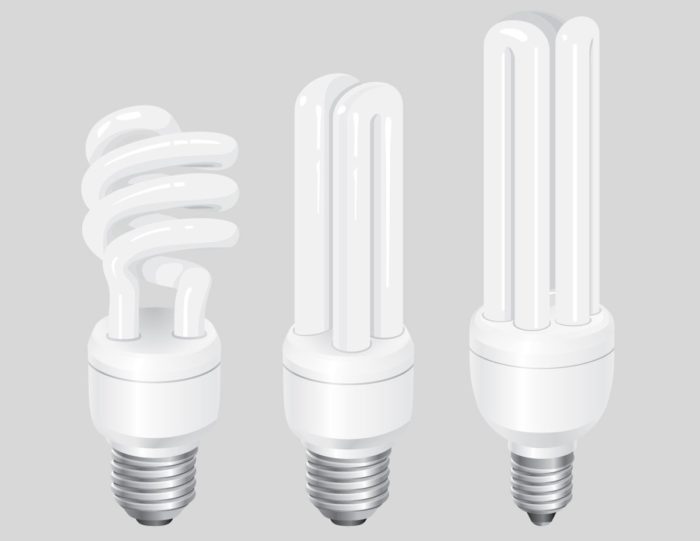
How much mercury is in a fluorescent lamp
Inside the modern fluorescent lamp there is no "free" mercury in the form that can be observed in thermometers.
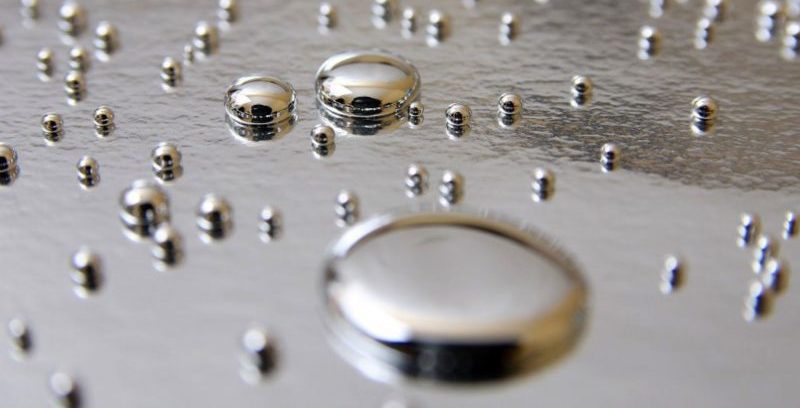
In the flask there are only its vapors in minimal quantities, about 6 milligrams, if we are talking about a device up to 8 watts. Therefore, experts guarantee that there is no danger in case of damage to the flask. But despite this, cleaning should be carried out without fail, using the recommended cleaning products.
What to do if the lamp is broken
If the lamp breaks, do not panic. Inside it is a small amount of mercury. But without special cleaning can not do.
The first thing to do is to get the children out of the room as quickly as possible. Further take measures, including neutralization and collection of mercury.It is also necessary to collect all the pieces of broken glass.
Room demercurization
Demercurization is a procedure for neutralizing mercury that has entered the room openly.. The process consists of the following steps:
- mercury from the lamp will not form balls, as if an old-style thermometer breaks. Vapors will enter the air, so you need to ventilate the room well. In this case, the air should not go in, but out. You need to ventilate as long as possible, the recommended time is 1 hour or more;
- during cleaning it is recommended to use a chemical respirator, rubber gloves and goggles. Many people have this set. If it is not available, protective equipment should be purchased along with the purchase of a light bulb;
- make a scoop out of cardboard or thick paper to collect fragments and mercury powder from the flask. You can collect the remains with an ordinary rag, dense and damp;
- after assembly, the dustpan and rag with garbage must be placed in a sweaty plastic bag and tied tightly. Make sure it doesn't break. It is better to use 2 or 3 bags, as the fragments can cut through one of them. To prevent this from happening, sharp fragments can be poured from the scoop into a rag, and then tied up so that they do not fall out inside the bag.

How to dispose of collected mercury
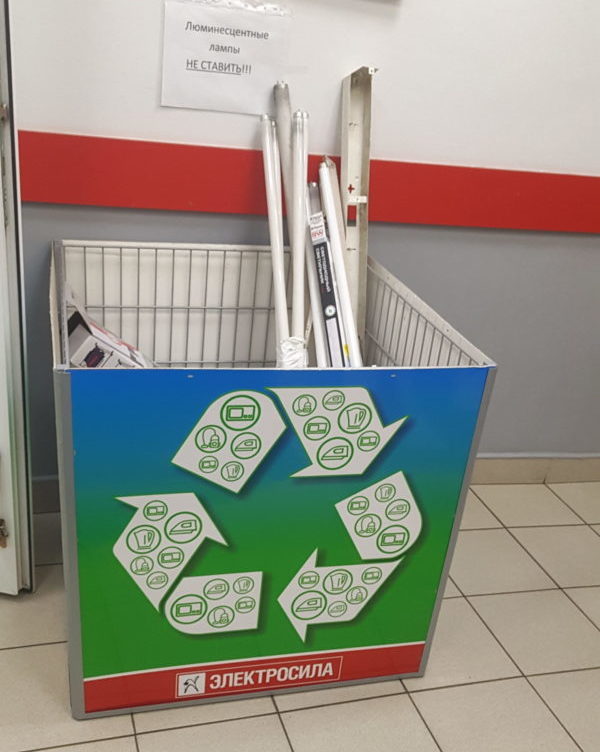
The package with mercury powder and fragments of the flask must not be thrown into a bucket or containers with household waste. It is necessary to find a special organization that deals with disposal of fluorescent lamps and the mercury in it. Often this is a housing office, a fire department or private firms (can be found on the Internet).
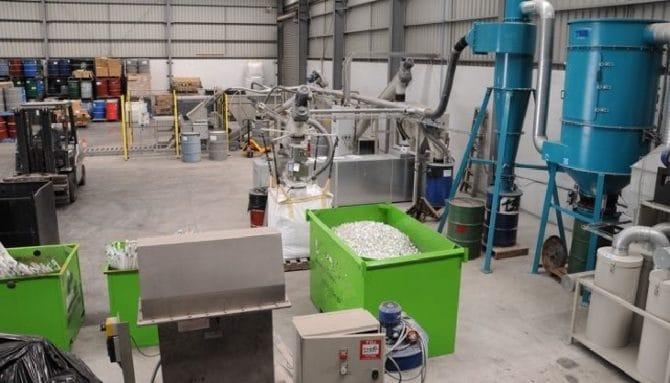
The garbage bag will be accepted for a small fee or free of charge. Next, the mercury is neutralized with the help of special chemicals, and the broken glass of the flask is sent for recycling. Only in this way a broken lamp disposed of will not pollute the environment and will not harm health.
What to do is prohibited
In no case should you:
- throw the bag with the collected fragments and mercury powder into the sewer;
- collect the broken light bulb with a vacuum cleaner. This will spread the mercury around the room, and the filters of the device will be saturated with its vapors;
- use a broom to collect the fragments, as any dry material absorbs mercury. The broom will have to be thrown away;
- during the cleaning process, it is forbidden to turn on the fan or air conditioner.
What threatens mercury poisoning
According to the classification catalog of wastes, mercury is a harmful substance belonging to the first class of the most dangerous. It negatively affects the body even in small quantities. To do this, it is enough for a person to inhale its vapors. After a certain period of time, the tissues will begin to absorb mercury, and it is almost impossible to remove it.
Be sure to watch: How you can inhale mercury without knowing it
Mercury damage has the symptoms of standard toxic poisoning:
- severe pain in the abdomen;
- heat;
- inflammation of the gums and lungs;
- bloody diarrhea and nausea.

Mercury is especially dangerous for pregnant women. Poisoning provokes a memory disorder, apathy and drowsiness. If these signs have made themselves felt after collecting fragments of a fluorescent lamp, even with a slight content of mercury in the flask, urgent hospitalization is necessary.After the examination, the doctor will prescribe drugs to neutralize mercury in the body.
Conclusion
Most people are sure that the mercury vapor inside the bulb of a fluorescent lamp is not as dangerous as it might seem. If a person did not feel the symptoms of poisoning, this does not mean that biological tissues did not absorb it. After some time, serious health problems may arise. Therefore, energy-saving lamps should be used and disposed of strictly adhering to safety regulations.