How to repair light switches at home
At one of the European exhibitions of electrical engineering at the end of the 19th century, visitors were fascinated by a light switch. Inexperienced spectators were delighted with the ease of control - with one movement, the lighting turned on and off. A lot of time has passed, the household switch has become a familiar household item in the apartment, and in production it is not surprising. This accessory can be seen everywhere. Sometimes such a device fails, you can try to restore it, although the device is inexpensive.
Malfunctions of light switches and their symptoms
If the switch is broken, then it is easy to understand. He himself will let you know that he needs repairs. It will attract attention with obvious signs of a malfunction, the main of which is that the light has stopped turning on. But this final stage may be preceded by:
- jamming of keys or buttons;
- their fuzzy fixation in extreme positions;
- turning on the lighting "once";
- sparking during switching;
- flickering light.
The first two faults are most likely caused by a breakdown of the mechanical part of the switching element. The last two with a 99% probability indicate a malfunction of the contact group or terminals. The third malfunction can be caused by either one or the other. It may also be impossible to turn off the light from the on position. This can be caused both by a breakdown of the mechanical part, and by welding of the contact group due to the occurrence of an electric arc.
From the video it will become clear what to do if the switch cracks when the light is turned on.
Probable causes of failure
The cause of mechanical failures can be natural wear and tear. There are no eternal units and devices, but the better the switch is made, the better the materials used in its production, the more reliable its operation and the longer the service life.
Contact group malfunctions are also caused by wear of the contact surfaces, but for this the device must work long enough, and the mechanical components will wear out earlier. Most often, the device stops working due to the burning of contacts, which can be loaded beyond measure, or a powerful load is of a pronounced inductive nature. Welding contacts in a household network is unlikely, but possible when the switching element is turned on for a short circuit.
| Machine type | Number of keys | Maximum switched current, A |
| ABB 2CLA220100N1102 Zenith | 1 | 16 |
| EKF Murmansk | 2 | 10 |
| UNIVersal Seville | 2 | 10 |
| Pro Connect | 2 | 10 |
| Schneider Electric ATN000112 AtlasDesign | 1 | 10 |
Phased renovation
Switches are not so expensive and do not fail so often. Periodic node replacement is always available.But there are situations when it is necessary to repair this particular light switch. For example, in cases where stores are temporarily unavailable or for aesthetic reasons (when it is difficult to buy a switch that fits the interior). In this case, the appliance can be tried to be repaired.
Dismantling
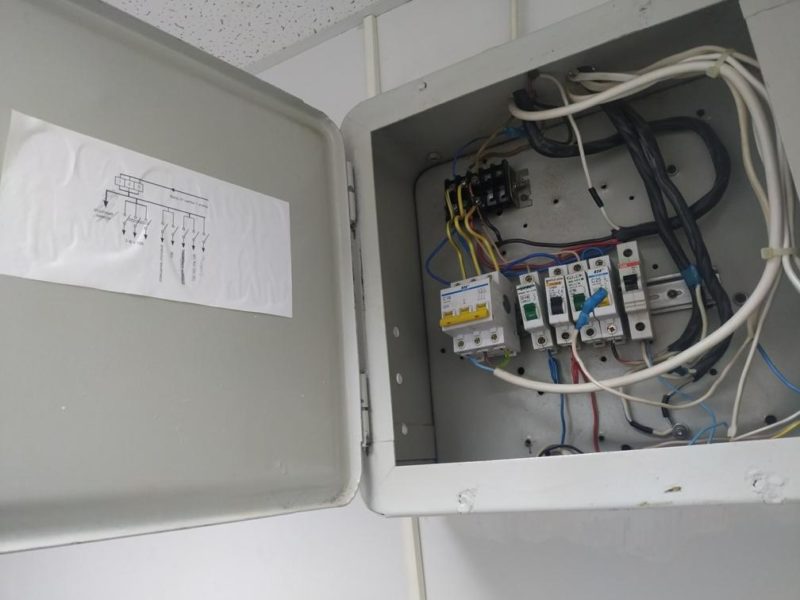
The first stage of repair is the dismantling of the device from the installation site. Before removing the device, it is necessary to de-energize the lighting network. The switch is in most cases located in the switchboard. You can find the one you need according to the diagram pasted inside the shield or by signatures.
Dangerous! Having turned off the circuit breaker in the switchboard, it is necessary to check with a tester or an indicator screwdriver that there is no voltage at the place of work. It is impossible to trust schemes or inscriptions on machines! They may be wrong.
Next, you need to remove the keys and gain access to the terminals and screws of the expanding petals.
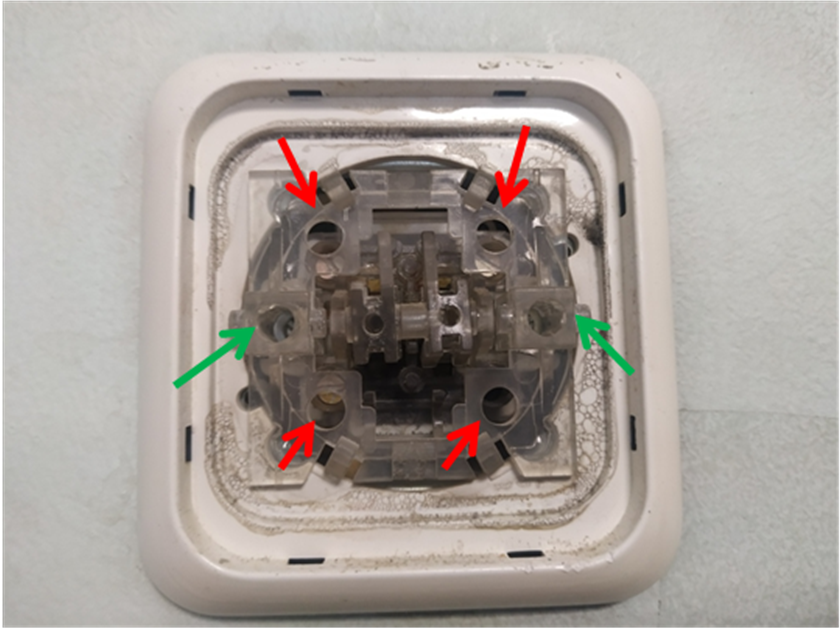
The terminal screws must be loosened, the screws of the petals should be loosened as much as possible. After that, the switching element must be carefully pulled out so as not to damage it and the wires to which it is connected. If the aluminum wire breaks off, there will be many problems.
Some devices are fixed to the wall with screws. They need to be unscrewed.
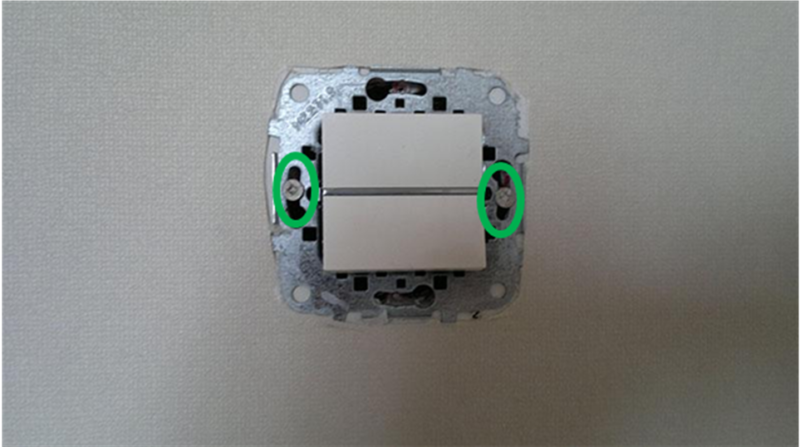
Important! Before dismantling the switch, you must make sure that the fault is in this node. It is necessary to exclude a malfunction of the lighting device (replacement of lamps, etc.), poor contact in the terminals due to loosening of bolted connections (make a broach), burning off or breaking off external wires (especially for aluminum wiring).
A video example will help with the disassembly of the switches.
Preliminary diagnostics
After that, you need to once again make sure that the switch is working or not. The mechanical part is checked by turning the unit on and off several times. In the presence of jamming, the absence of a clear fixation, it is necessary to disassemble the switch and look for damage.
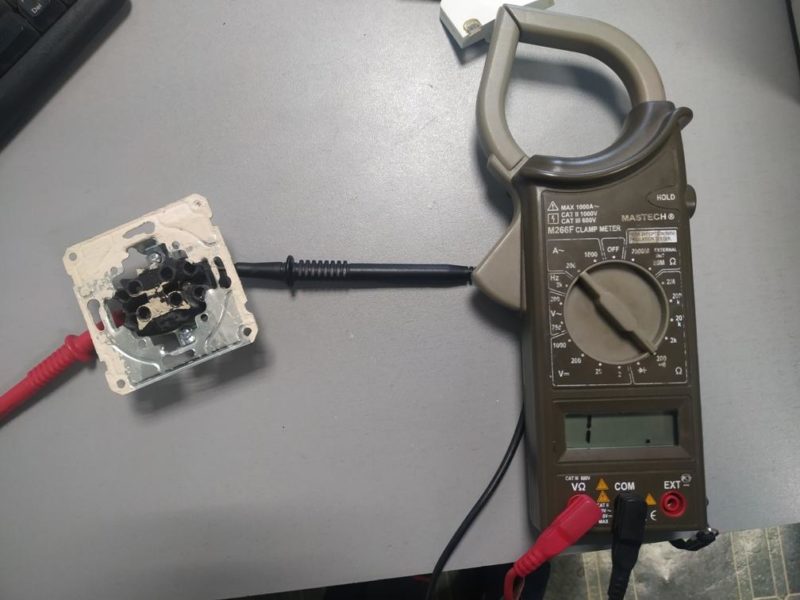
The condition of the electrical part can be checked with a multimeter. It must be connected to the node terminals. Turning the switch on and off, make sure that when the switch is on, the resistance is close to zero, and when it is off, it is infinite. If a malfunction is found, you will have to disassemble the device further.
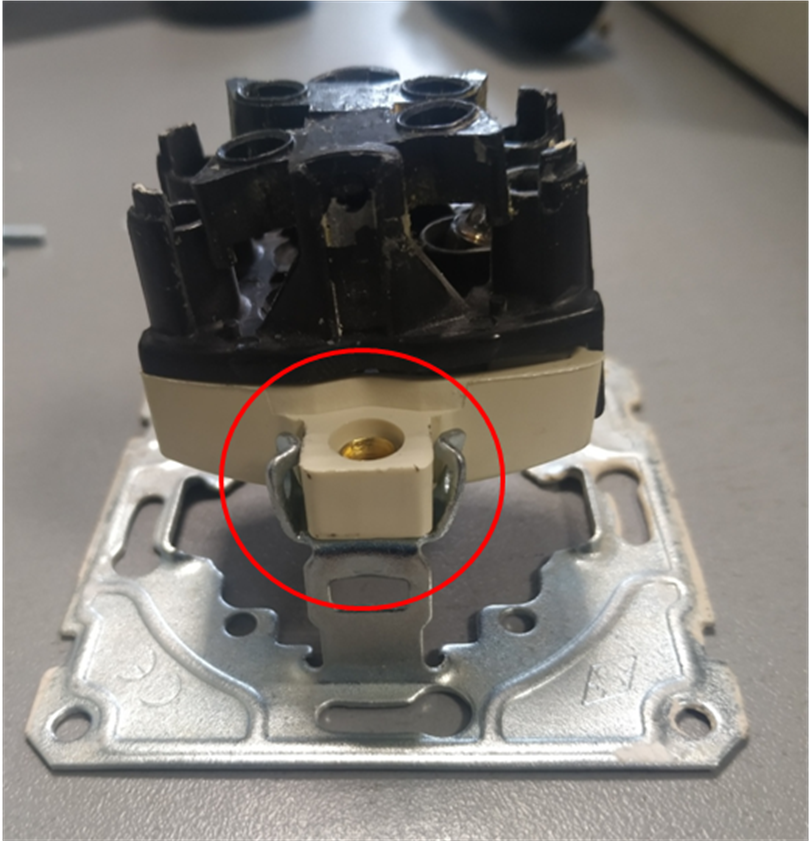
To remove the movable mechanism with terminals and contact group, it is necessary to bend the holders on both sides and remove the block.
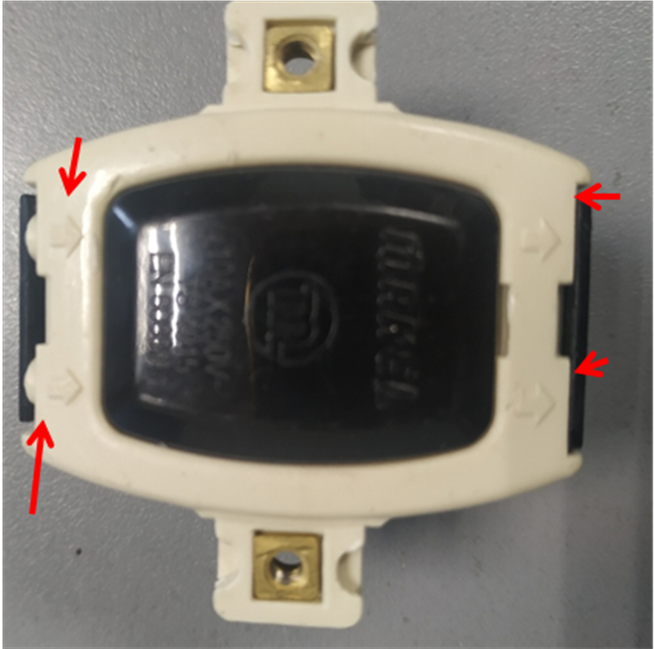
To get close to the contacts, you need to wring out the plastic latches with a thin screwdriver or knife.
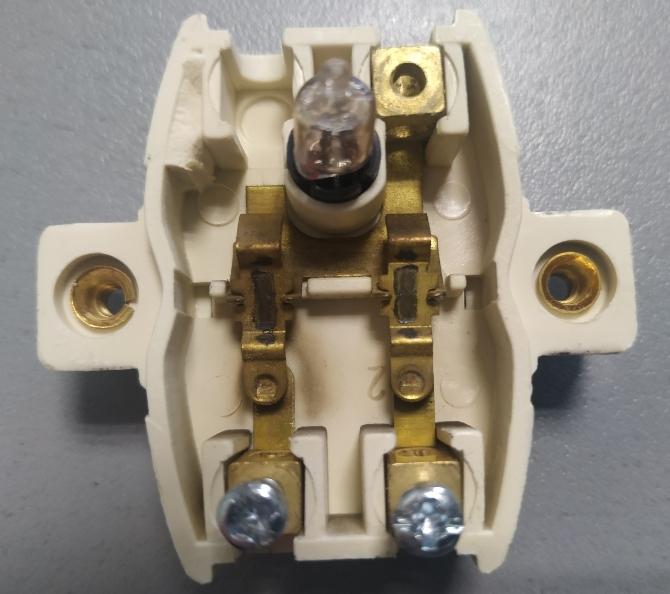
After removing the cover, a contact group with moving and fixed contacts is available. They should be inspected for damage or burning.
Electrical repair
If soot is found on the contacts, it must be cleaned off with a screwdriver, a knife, or better, with a fine emery cloth.
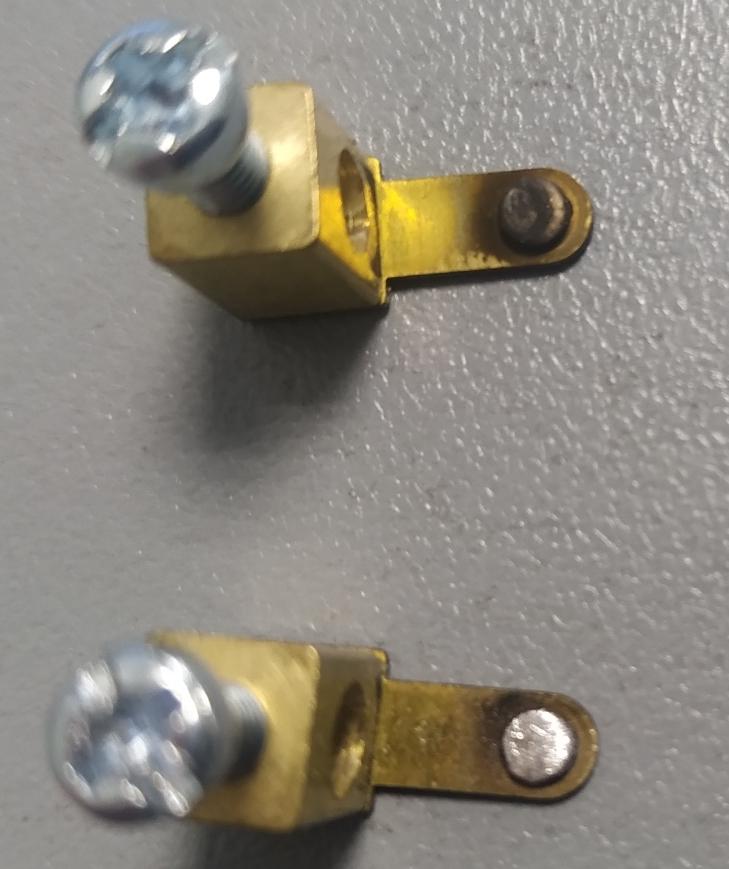
The photo shows an example of contacts before and after cleaning.
Mechanical repair
If something is broken in the mechanics, then the only way to fix the problem is to replace the node. But spare parts for switches are not sold separately. In this case, the donor device will help out. The same applies to the electrical part - the design of the terminals does not always allow cleaning, and in some cases they will need to be replaced.Also, movable and fixed contacts may need to be replaced (in case of melting or serious burning).
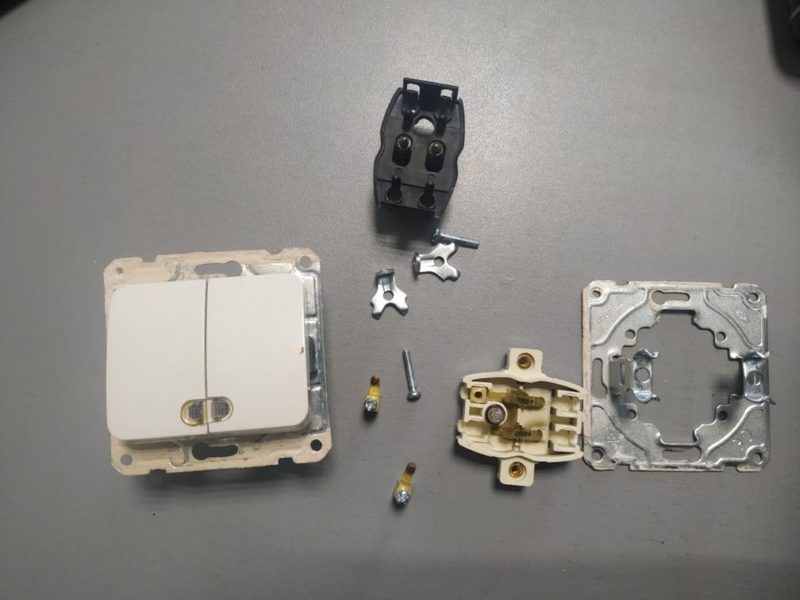
In many cases, one can be made from two faulty switching elements.
The apparatus is assembled in the reverse order. Before installing it in place, it is necessary to check again the absence of voltage on the supply wires (it may appear due to unauthorized switching on by strangers).
Repair of other types of switches
The dismantling and repair of a switch with two keys is discussed above. Single-key and three-key devices have a similar device, so after reading the step-by-step instructions, there should be no problems with their restoration. It can be seen that the switch shown in the figure with one key differs from the two-key only in a combined (and not separate) movable bar fixing decorative trims. And he understands exactly the same.
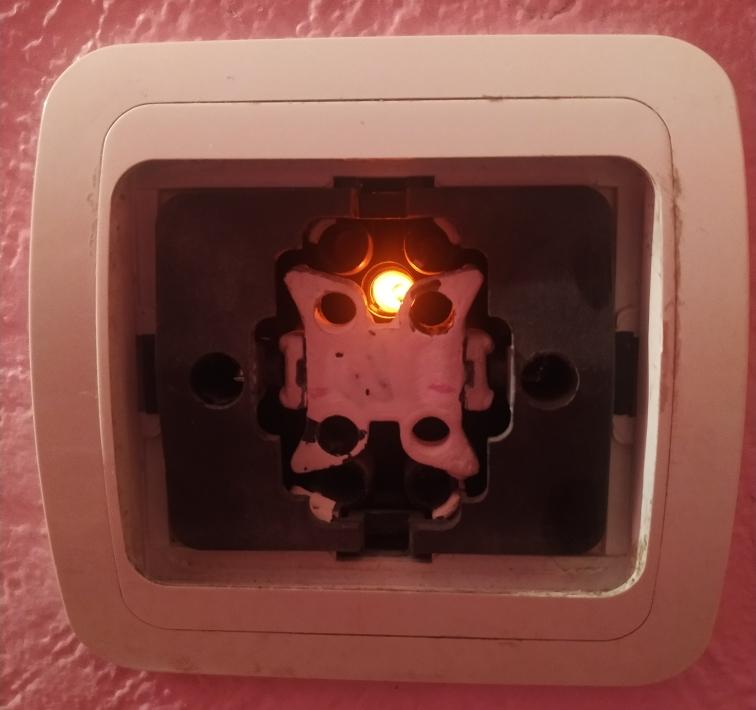
You just need to keep in mind that the design of the devices may differ slightly from manufacturer to manufacturer. But there are other types of household switching elements.
Switches of old types
In some places you can still find old types of devices. In addition to design, they differ from modern ones in the way of fastening (using only expandable lugs) and in a more maintainable design of the terminals.
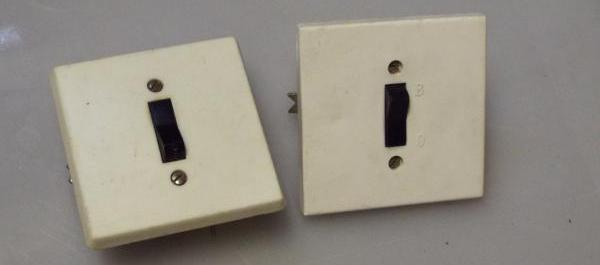
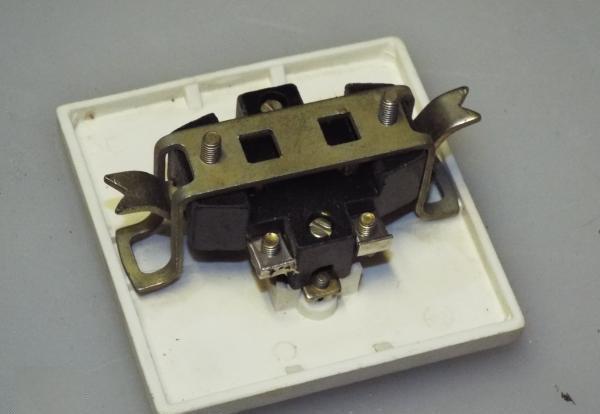
In the event that such a device fails, there is not much point in repairing it. But sometimes such a switching element can serve as a unique element of the interior. Therefore, you can try to restore it by creatively using the instructions provided.To do this, remove the keys or the decorative panel, open the petals, loosen the terminals and pull out the switch. Only the contact group and, in some cases, the terminals are subject to repair by stripping. It will be difficult to find a donor. The same applies to even older devices - rotary switches or in the form of a button.
Removing a switch with a dimmer
Switching devices combined with dimmers are gaining popularity - dimmers. They have a swivel or swivel-push design. The first turn off the light in the position of minimum brightness - for this you need to tighten the round key in the same direction. Turn-push turn off the lighting in any position by pressing the rotary knob.
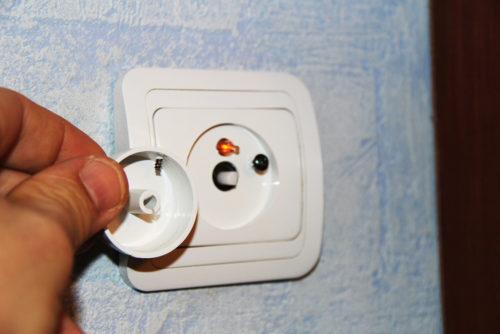
For dismantling, it is enough to remove this handle. A self-tapping screw will be found under it. If you unscrew it, you can remove the decorative panel and gain access to the fasteners.
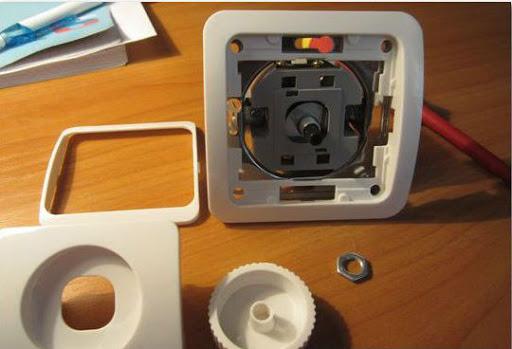
Further dismantling is similar to a conventional switch.
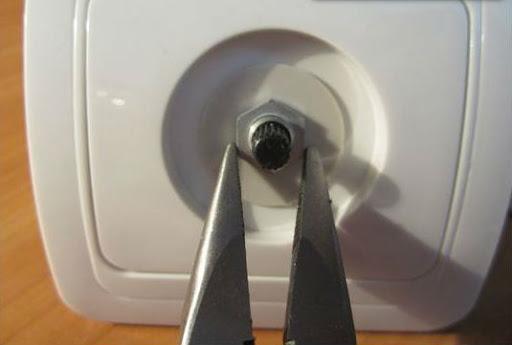
There are other design options as well. They are parsed differently.
Repair of such a switch is quite complicated. Restoring brightness control is out of scope. And the contact group is not always available. But if you managed to get to it, you can try to fix such a light switch by cleaning the contacts.
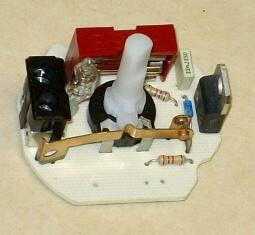
The same fully applies to touch devices, only their device is more complex. Restoring light switches is unlikely to bring a serious economic effect. But there are situations when it is indispensable. And an exciting activity, combined with creative development, also costs a lot.