What is the difference between xenon and bi-xenon, which is better to choose
Poor headlights are often the cause of accidents in conditions of poor visibility. Manufacturers of automotive lamps offer halogen and gas-discharge light sources. These include xenon and bi-xenon lenses.
Xenon (Xe) occupies the 54th cell in the periodic table. It is used to fill gas discharge lamps in headlights and PTF units, providing bright illumination of the roadway and good visibility at night.
Briefly about xenon lamps
The principle of operation of xenon optics is based on the radiation of a powerful electric discharge inside the lamp. With a stable voltage and the presence of a gaseous environment, xenon light does not change direction and remains constant. The high-voltage pulse necessary for operation is generated by an electronic ignition unit connected to each headlight.It works, depending on the installation location, as a high beam, low beam or fog lights. Xenon light is comparable to a daylight lamp and provides illumination of a large radius.
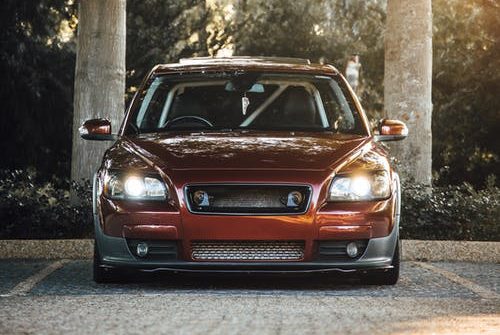
A high degree of radiation stability does not allow to obtain a greater or lesser luminous flux than stated in the technical characteristics of the equipment.
Often, combined optics are installed in the headlights: xenon for low beam and halogen lamps for high beam. Bi-xenon lenses solve this problem.
What are bi-xenon headlights or lenses
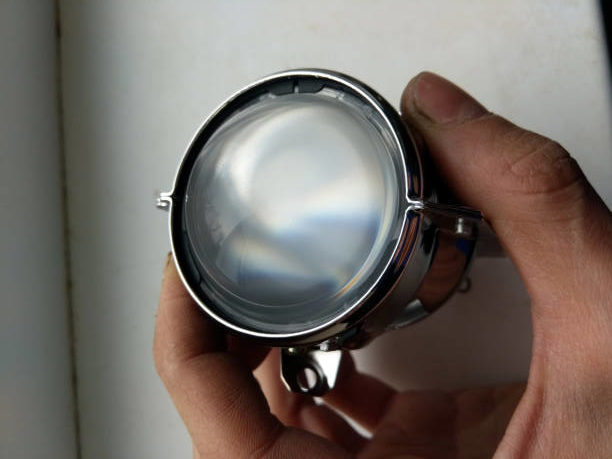
Also, like xenon lamps, the glow occurs when an electric discharge passes through an inert gas medium. The degree of brightness and efficiency is almost the same as xenon. The prefix "bi" distinguishes this type of lens from its predecessor in that they can operate in two modes, providing both low and high beam at the same time. The organization of the focusing of the light flux is technically possible due to the mechanism built into the design of the lamp. The spring pushes the mechanism, the magnet attracts the luminous bulb, and the direction of the light flux is regulated by the shutter. Lighting modes are switched automatically and do not affect the quality of light.
Table of differences between xenon and bixenon
Discharge lamps have common features in characteristics, but they have a number of significant differences.
| Characteristic | Xenon | Bixenon |
|---|---|---|
| Compound | A mixture of inert gases emits a glow using a stabilized arc discharge. | Gas is formed from salt during the passage of the discharge. Shutter, magnet, spring. |
| Principle of operation | Near, far or light in the fog lamps. | Both high and low beam at the same time. |
| Equipment | Lamp, ignition unit for each individual type of lighting. | Lamp, ignition unit, relay. |
| Installation Features | Installing each lamp separately. Suitable for headlights or PTF. Lamps with different bases: H1, H11, H13, H3, H4, H7, H9, HB4. | One lamp. Suitable for installation in headlights only. Two modes of light range in the lamp itself. Base: H4, HB5, HB1. Regular base: D1S, D2S. |
| Mounting | Mounting in the headlight with separate seats for 2 lamps. | Installation in a one-piece headlight with one seat. |
Pros and cons
With proper installation and adjustment, the light from xenon / bi-xenon does not blind other drivers and illuminates the roadway and the roadside with high quality. In fog, rain, snowfall, visibility from such lamps is better. The brightness of xenon reaches 3200 lm (lumen), which is 2 times more than that of halogen lamps. Xenon and bi-xenon lamps are economical: their service life is about 3000 hours, and low energy consumption minimizes the load on the generator and fuel consumption.
Of the shortcomings:
- The complexity of self-installation. For legal installation in headlights such lamps, you need to study the technical characteristics of the car (installation of xenon and bi-xenon is not possible in every model). Check the compatibility of the equipment with the car headlight.
- Re-equipment of headlights not intended for installation of xenon / bi-xenon is carried out in specialized centers. The cost of such modifications is quite high. In addition, the process of coordination with the traffic police takes a lot of time.
- Expensive components: control units, ignition units, purchase and installation of bi-xenon itself.
- When buying a used car with factory or modified xenon, you need to check the permits for optics.For illegal xenon in Russia, you face a fine or deprivation of rights.
Is there a penalty for using bi-xenon bulbs
For the use of xenon lamps in headlights, the factory design of which is not designed for their use, the Code of Administrative Offenses of the Russian Federation provides for punishment.
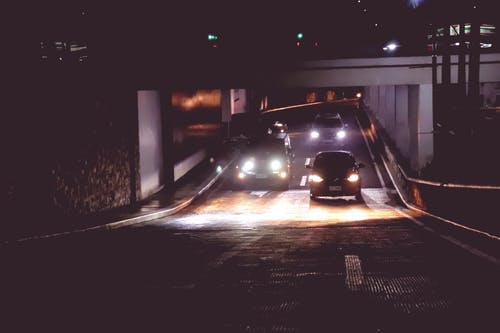
Non-standard xenon can dazzle other road users due to the lack of an automatic light beam corrector and headlight washer, the wrong scattering angle of the reflected radiation, and the mismatch of the class of the reflective surface. This is a violation of the terms of safe traffic.
According to article 12.4, part 1 of the Code of Administrative Offenses of the Russian Federation, “for the installation on the front of the vehicle of lighting devices, the color of the lights and the mode of operation of which do not meet the requirements of the Basic Provisions for the admission of the vehicle to operation and for ensuring road safety, an administrative fine for citizens of $ 30 is expected, $15-20 for officials, $400-500 for legal entities” with confiscation of lamps and ignition units.

For driving a vehicle with installed lighting devices, the color and mode of operation of which do not meet the requirements under Article 12.5, clause 3, deprivation of rights for a period of 6 to 12 months is provided for with a retake of the exam for knowledge of traffic rules and confiscation of these devices and devices.
Stopping the vehicle to check the compliance of the headlights with the standards is carried out at a stationary post. The inspection is authorized to be carried out only by the inspector of technical supervision after the provision of a certificate.
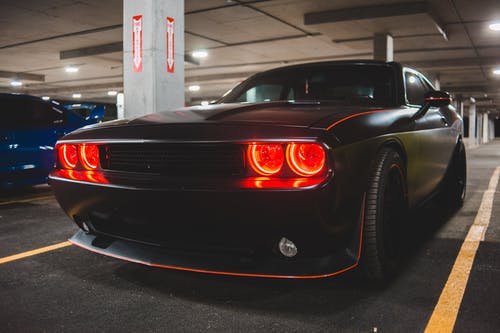
Xenon and bi-xenon in headlights designed for halogen lamps are qualified as a discrepancy between the operating mode of the external light device and the technical characteristics of the vehicle and is regarded as a malfunction of the vehicle:
- clause 3.1: "The number, type, color, location and mode of operation of external lighting devices do not meet the requirements of the vehicle design"
- Clause 3.4: “There are no diffusers on the lighting devices, or lamps and diffusers are used that do not correspond to this type of lighting device.”
Only a court can deprive the right to drive a vehicle (Article 3.8 of the Code of Administrative Offenses of the Russian Federation). Police officers do not have such powers. The court's decision can be appealed to a higher court.
Is it possible to install xenon in a car is described in the operating instructions for the vehicle. The absence of markings on the headlight and information in the manual means that the installation of xenon is illegal and entails the same punishment for use in headlights and in PTF.
Read more here: Is it possible to drive with xenon headlights according to traffic rules
How to legally install non-standard xenon
Unpleasant meetings with traffic police officers, fines and deprivation of a driver's license can be avoided - equip the car with xenon or bi-xenon lamps in accordance with the technical characteristics of the car.
GOST R 41.99-99 (UNECE Regulation N 99) clearly regulates the marking of gas-discharge light sources. Xenon and bi-xenon are marked on the base with the letter "D" for DC (dipped beam xenon), DCR (bi-xenon), DR (high beam xenon) headlights.
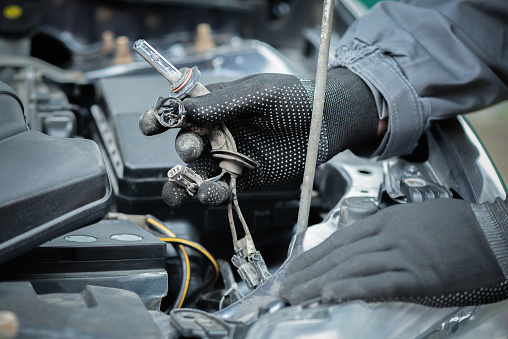
Entrust the installation of lamps to qualified craftsmen who can guarantee the legality of the installation and issue permits.
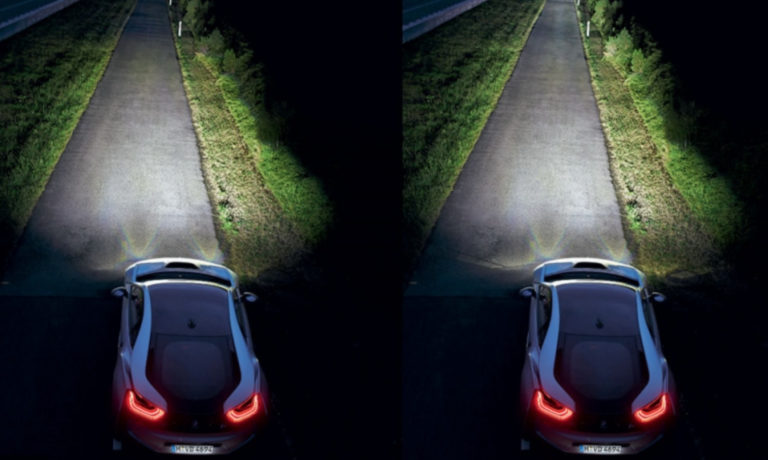
What are the types and recommendations for choosing bi-xenon optics
The choice of bi-xenon lenses depends on the factory design of the car and the wishes of the driver:
- lens type: regular or universal. For the original bi-xenon D1S, D2S, lamps from Bosch, Philips, Osram, Koito, FX-R, Hella are suitable.
- light temperature. A popular standard lens is 4300K. Soft white-yellow light, good visibility on wet pavement. 5000K - bright white light, but inferior in illumination to the previous version. 6000K and 8000K look aesthetically pleasing with a bluish tint, but the roadway illumination is more diffuse.
- Lamp dimensions must be smaller than the headlight. Bi-xenon lenses come in three diameters: 2.5; 2.8; 3.0.
- headlight design. The corrugated surface must be polished or replaced with a transparent one to avoid light scattering and dazzling oncoming drivers.
Read also: 6 best models of xenon lamps
Conclusion
A significant difference in pricing often inclines drivers in favor of xenon. It is used with halogen lenses. Bixenon closes the issue of two types of lighting with one lens. A wide range of illumination allows you to better see objects on the road and the roadside.
Properly installed xenon and bi-xenon lamps provide high-quality lighting in all weather conditions and reduce eye fatigue.