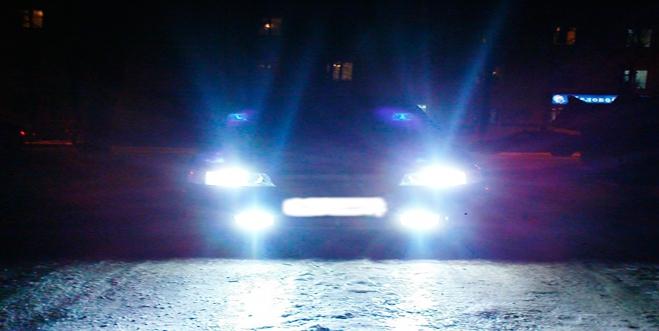
Is it possible to drive with xenon headlights according to traffic rules
Non-standard xenon is a violation prohibited by the Rules of the Road and most often entails the deprivation of a driver's license. The minimum penalty for this is a fine, but, as practice shows, traffic police inspectors rarely use this option. Therefore, it is worthwhile to deal with the features of installing xenon, situations when it can be used legally and other aspects related to this topic.
Xenon lamps are a special type of equipment that differs from the halogen options used on most cars. They are regularly installed on many modern models, but in this case the design of the headlights differs from the usual one. As for the reasons for the installation, most often they are:
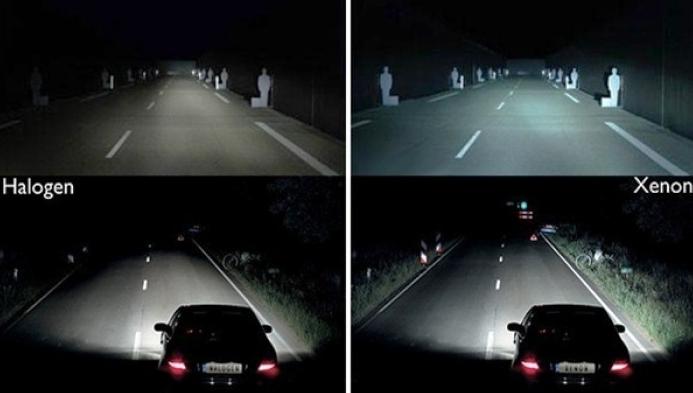
- Light brightness increases by 2-3 times, and sometimes more. This improves driving comfort and safety both in the city and on the highway.
- Life time quality light bulbs is at least 3 years.This is more than the standard ones, so despite the high price for xenon, the costs are about the same.
- The color temperature is an order of magnitude higher and close to natural daylight. This not only improves illumination, but also reduces the strain on the driver's eyesight, which is especially noticeable on a long trip. Visibility is much better, even small bumps in the road can be seen, and pedestrians on the side of the road can be seen from afar.
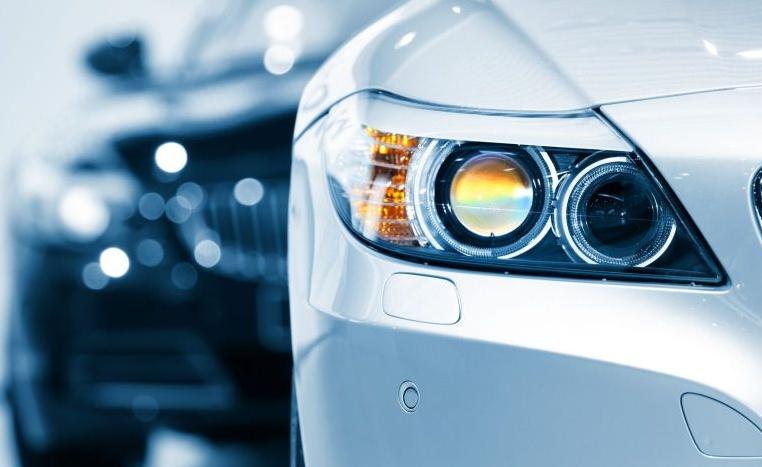
![Is it possible to drive with xenon headlights according to traffic rules]() The quality of lighting from xenon lamps is an order of magnitude higher.
The quality of lighting from xenon lamps is an order of magnitude higher. - Xenon is more energy efficient. If ignition requires a lot of energy (therefore, a special unit is always provided in the design), then during operation, electricity consumption is approximately one and a half to two times lower.
- Lamps tolerate vibration much better. Due to the ignition unit, which controls the supply of electricity, power surges in the on-board network do not cause much damage to the lamps. Even when the voltage is exceeded, the life of xenon does not decrease, as with halogen bulbs.
Due to the fact that light sources heat up much less during operation, the reflector and other structural elements last longer.
Read also: Rating of car lamps H4 headlight
Why xenon was banned
We must start with the fact that only xenon, installed independently and not provided by the manufacturer of the car, is prohibited. If it came in the factory configuration, there are no prohibitions, although there are also some requirements for its operation. As for the ban, it was introduced for the following reasons:
- When installing xenon lamps in headlights designed for halogen, the light distribution is disturbed due to the shorter spiral.Because of this, the luminous flux is distributed incorrectly and does not meet the requirements of the technical regulations. And it will not work to adjust it, since it is impossible to change the position of the luminous element.
- Regular xenon is mandatory equipped with automatic headlight range control and washer. The fact is that the luminous flux strongly blinds oncoming drivers, especially on wet roads and during precipitation, which often leads to emergency situations. And when the glass is dirty, the light distribution is disturbed, which not only causes discomfort to other road users, but also worsens visibility.
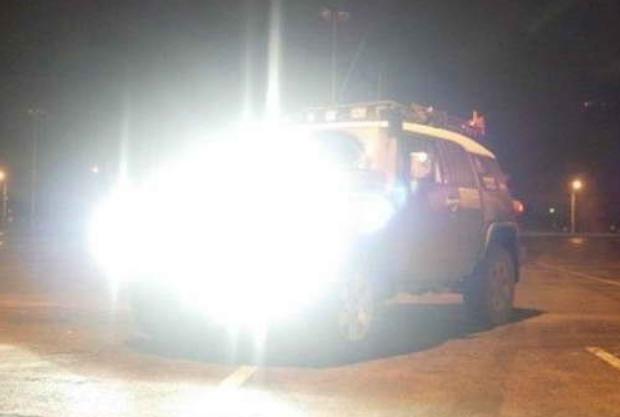
With all its advantages, xenon can only be used when ensuring the safety of other road users. And it is impossible to do this when installed in headlights designed for halogen lamps.
Punishment for xenon
It should be noted right away that punishment can only be in case of violation of traffic rules. In clause 3.4, which regulates the admission of vehicles to operation, there is a remark regarding light. It indicates that if there are no diffusers on the lighting devices or diffusers and lamps do not correspond to the type of equipment, the operation of the vehicle is prohibited.
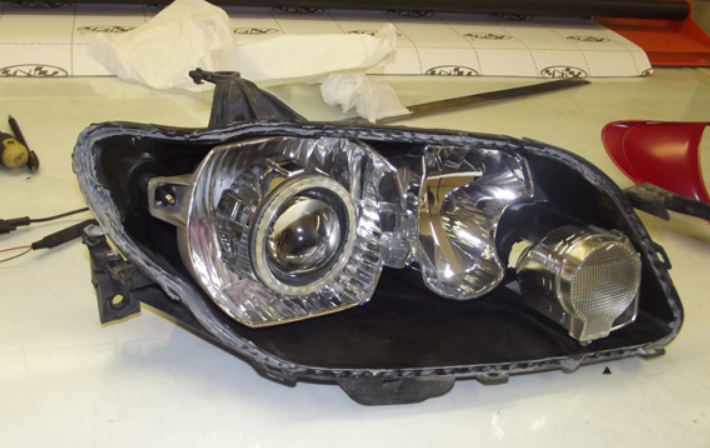
in the headlights
If a traffic police inspector finds that xenon lamps are installed in halogen headlights, a violation report will be drawn up. But this violation can be qualified in different ways:
- Part 1 of article 12.5 Code of Administrative Violations. For violation of the operating mode of lighting equipment, a fine is provided - for xenon or LED lamps in the headlights, it is 500 rubles.But most often, representatives of the authorities do not use this clause, although it is suitable for the nature of the violation. Only individual inspectors are guided by this option when determining punishment.
- Part 3 of article 12.5 Code of Administrative Offenses Prohibits the use of cars with light sources that do not comply with the technical regulations for the admission of vehicles. In this case, provided deprivation of rights for xenon for a period of 6 to 12 months. In this case, all items that violate the Rules must be confiscated. Simply put, the inspector is obliged to seize the lamps and provide them during the trial as evidence.
Court decisions almost always deprive the driver of the rights, while the period depends on the situation. Therefore, if the case is taken to court, deprivation is likely to follow, precedents with fines are very rare and can be considered an exception.
Video explanation: Punishment for xenon and LEDs in 2021.
in foglights
Fog lights are a separate element, the operation of which is subject to the general rules regarding lighting equipment. Therefore, there is not much difference with the main light. If a violation is discovered and proven, a court hearing and deprivation of the right to drive a vehicle will most likely follow. At best, a fine of 500 rubles.
But detecting a problem is an order of magnitude more difficult, since fog lights are far from always used, and it can be difficult to determine the presence of xenon in them during normal adjustment. Many halogen bulbs with increased brightness shine just as well. Therefore, if you want to avoid problems, you should not turn on the fog lights unnecessarily.And when buying gas discharge lamps, choose options with a yellowish light, they attract less attention and illuminate the road much more efficiently in poor visibility conditions.
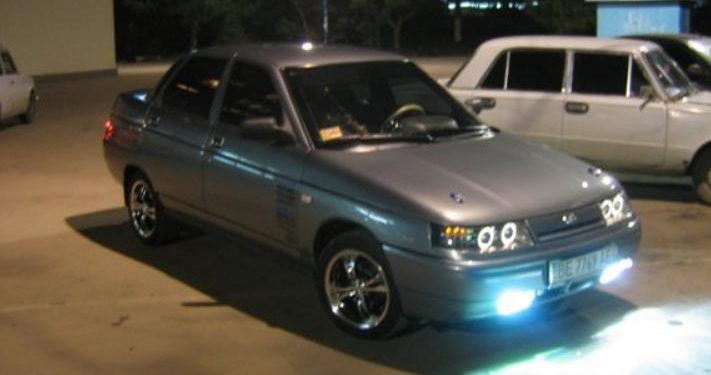
There are several conditions that allow you to install xenon bulbs, even if they were not originally there. First of all, you need to deal with headlight markings, as they always indicate the necessary information. If the headlight is non-separable, the data is applied to the glass, and if the assembly is disassembled, then most often all the inscriptions are made on the body, sometimes a special sticker is used. Everything is simple here:
- If there are designations HC, HR or HCR, designed for halogen lamps. Any other options will not work and will not provide the proper quality of light.
- When there are inscriptions DC, DR or DCR, the use of xenon is allowed. DC - a xenon lamp can be placed in the low beam headlights, DR - distant, DCR - near and far. If there is such a marking on the headlight, the traffic police inspector will not have any complaints.
- Also on the body or glass must be a letter "E" in a circle. It confirms that the headlight has been certified and can be used for a car. There is also a cipher that tells which country issued the permit.
Video test: Xenon 4300K VS 5000K.
In addition to marking, there are also design features that are due to the specifics of the operation of gas discharge lamps, here we can distinguish 3 main elements:
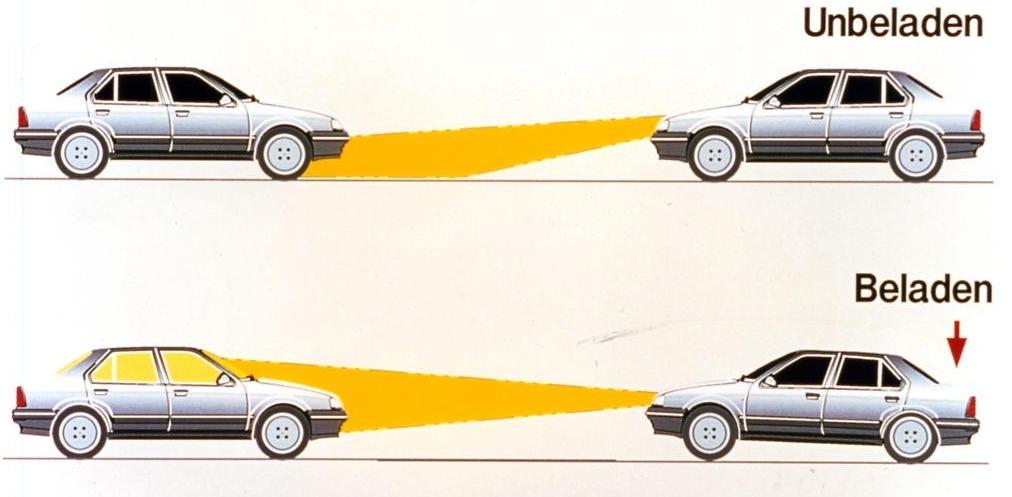
- Automatic headlight range control. When using light with a brightness of more than 3000 Cd, a corrective device must be installed on the vehicle, which regulates the luminous flux depending on the load on the vehicle. All headlights originally designed for xenon have this unit. And it should be automatic, not manual.
![Is it possible to drive with xenon headlights according to traffic rules]() A good example of why you need an automatic headlight range control.
A good example of why you need an automatic headlight range control. - headlight washer. Another mandatory element, without which xenon cannot be operated. When dirt gets on the glass, the directional beam of light begins to scatter and the light deteriorates, plus glare blinds oncoming traffic. It is important that the washer hits the glass opposite the lens, it must be adjusted.
- Headlight glass must be smooth. The xenon lens does not need a diffuser, it distributes the light on its own. If there is a standard glass from a halogen headlight, the luminous flux will not be distributed correctly.
By the way! Glass can be changed. If the headlights are designed for different types of lamps, the glasses are sold separately and simply re-glued.
How to avoid disqualification
It was noted above that almost always, when a case is brought to court, a decision is made on the deprivation of rights. But sometimes you can convince the judge and mitigate the punishment. There are no guarantees here, but it is worth remembering the following:
- If the seized lamps do not have DC, DR or DCR markings (and this is often the case on cheap Chinese products), it is difficult to prove that xenon was installed deliberately. The law requires a state examination, and this is a big waste of time and public money, usually they try not to use this option and, to simplify, they can simply issue a fine.
- The technical regulations say about the use of lighting devices with an inappropriate mode of operation. But the mode of xenon and halogen is the same - they shine constantly. But strobe lights are really illegal, as they have an intermittent mode. If you give detailed arguments, the judge can also meet halfway.
Deprivation of rights for xenon is used as a measure to combat those who put it on their own and blind oncoming drivers. If you do everything right and choose the right headlights, there will be no problems.