Calculation of the number of spotlights for stretch ceilings
To calculate the number of spotlights needed to comfortably illuminate a room, you need to take into account several factors and follow a simple instruction. If you do not determine the optimal performance, then the room will be either too dark or too light. Both options are undesirable, as they have a bad effect on vision.
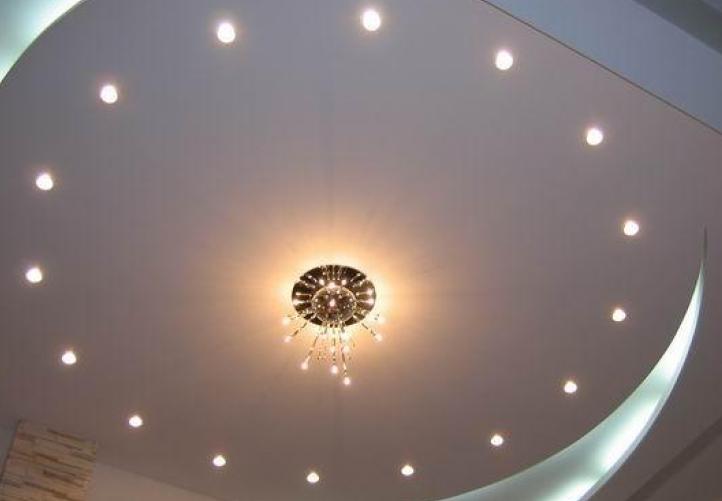
Calculation of the number of spotlights
It all depends on the size of the room, its purpose, ceiling height, finishing materials and other factors, so it is impossible to give a universal formula for all rooms. First you need to deal with the illumination standards that are established by SNiP, there are several options.
The easiest way is to use the old rule that was in force in the Soviet Union.According to it, 20 W of power should fall per square meter when using incandescent lamps (there were no other types then).
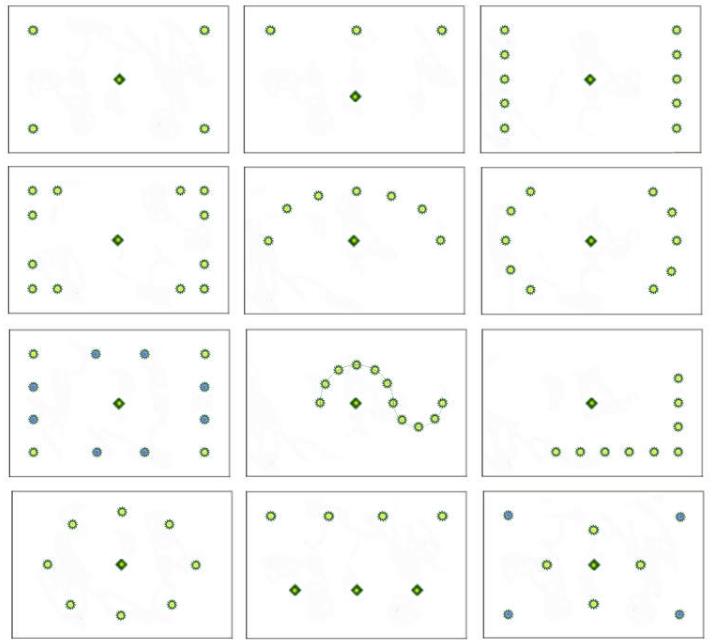
If you are guided by the power of the equipment, it is easier to select the necessary data from the table. It has all the options for light bulbs and the standards established for them based on watts per square meter.
| incandescent lamp | Fluorescent Lamp | Halogen lamp | LED lamp | |
|---|---|---|---|---|
| Children's | 60 | 20 | 75 | 8 |
| Bedroom | 15 | 5 | 16 | 2 |
| Hall and living room | 22 | 8 | 27 | 3 |
| The corridor | 12 | 3 | 12 | 1 |
| bathroom | 20 | 7 | 25 | 2 |
This is general information that is set for ceilings with a height of 250 to 270 cm, without taking into account the material of the ceiling, the color of the finish and other important factors. But even this is enough to give a general idea of what the total power of the lamps should be for normal lighting of a particular room.
Manufacturers use lux (Lx) to indicate the level of illumination, which corresponds to a luminous flux of 1 Lumen (Lm) per square meter. That is, over what area the light of the bulb is distributed. For example, if it has a power of 200 lm and the light is directed to 1 square meter, then the illumination is 200 lux, and if the illumination is scattered over 10 squares, then the illumination will be 20 lx.
There are norms in suites for all types of rooms:
- Hall and living room - 150.
- Office - 300.
- Dining room and kitchen - 150.
- Children's - 200.
- Corridor and hallway - 50.
- Bathroom - 50.
- Bedroom - 120.
- Bathroom - 250.
- Pantry - 60.
Most often, data on the luminous flux is on the packaging with the lamp or in the instructions for the lamp. If there is no information, you can determine the indicators by power using the table.
| Lamp type (wattage) | Light flow | ||||
| 220+ | 400+ | 700+ | 900+ | 1300+ | |
| incandescent lamp | 25 | 40 | 60 | 75 | 100 |
| Halogen | 18 | 28 | 42 | 53 | 70 |
| fluorescent | 6 | 9 | 12 | 15 | 20 |
| LED | 2,5 | 4 | 8 | 9 | 16 |
Important! In addition to power, it matters correct placement of lights, as they must provide uniform light.
Also, the power of the lamps can be determined by the calculator.
How to determine how many lamps you need for a particular room
Even using the basic information above, you can calculate how many spotlights you need in a room. Here are some simple tips for this:
- Determine the area of the room by measuring the length and width.
- According to the table, determine the rate of illumination per square meter. Multiply by the area to get an approximate result.
- Pick up the fixtures, after which the final number from the paragraph above is divided by the power of one element. If the value is a fraction, it is better to round up.
- If there are several options with different power, it is worth using less powerful fixtures and putting more of them. Then the light will be more even and more comfortable for the eyes.
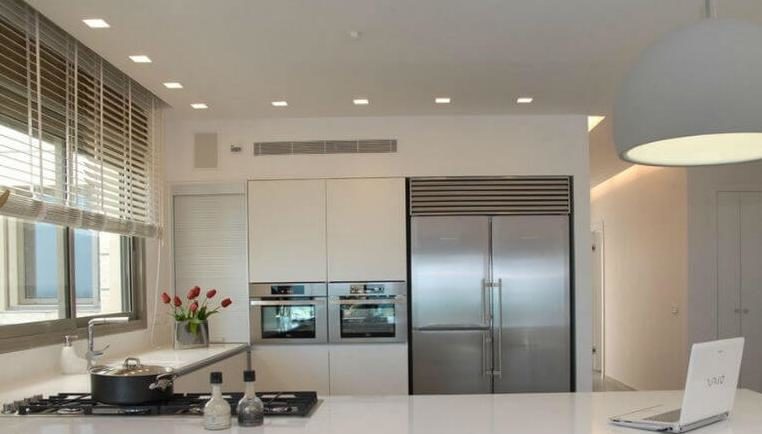
Calculate the number of light bulbs per square meter
You can find out the number of spotlights per square meter using formulas or automatically (online calculator). Both options are very simple, because. you can substitute your indicators and get the result in a matter of seconds.
Formula
The formula looks like this:
N=(S+W)/P
Let's analyze each indicator:
- N - the number of fixtures that will be required for a particular room.
- S is the size of the room in square meters.
- W is the power of the luminous flux, which is selected according to established standards.
- P is the power of one spotlight.
When calculating, you need to take into account such an indicator as the angle of illumination. Some spotlights capture a small space, so it's better select models with little power to bring them closer together.
In principle, this is enough for use at home; it makes no sense to use more complex options. But to get a more accurate result, you need to take into account one more aspect.
Be sure to take into account the height of the ceiling in the room, the correction factor depends on this. If it is 250-270 cm, then the result will remain the same. At a height of 270 to 3 m, increase the value by 20%. If the ceiling is from 3 to 3.5 meters, then you need to multiply the final number by 1.5, and if the height is very large - from 3.5 to 4.5 meters, then the result is doubled.
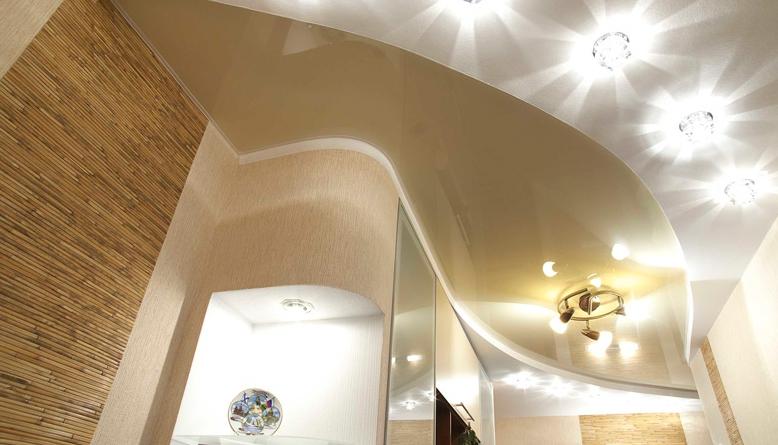
Note! In LED options, the light is closer to natural, so it is best to use them.
Calculator
How to take into account the reflectance of surfaces
Finishing the floor, ceiling and walls affects the degree of illumination, as it reflects light in different ways. It depends both on the texture of the surface and on its color.Design affects the overall performance very strongly, so you need to take this factor into account when calculating.
An indicator that characterizes the properties of a material is called the reflection coefficient. There are 5 main groups that are used in calculations:
- Black - 0%.
- Dark shades - 10%.
- Gray and close to it - 30%.
- Light and pastel colors 50%.
- White color - 70%.
But these indicators by themselves do not give anything. To calculate the average reflectance, you need to take into account the color of the floor, ceiling and walls. For example, the room has a dark floor, pastel wallpaper and a white ceiling. That is, you need to add 10%, 50% and 70%, it turns out 130%. The result is divided by 3, it turns out approximately 43 or 0.43. The result obtained by the formula must be multiplied by the coefficient and the exact figure will be obtained, which must be used when choosing the number of fixtures.
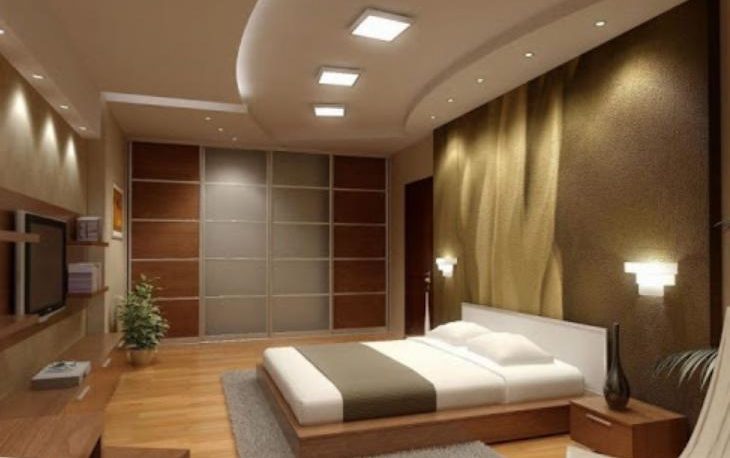
Features of lighting stretch ceilings
The calculation of the number of fixtures in a stretch ceiling must be carried out taking into account some features of this material. This is due to the fact that the characteristics of the canvas differ from traditional options. It is worth considering the following:
- Glossy surfaces reflect light much better than any other ceiling covering. This applies to both light and dark options. Luminaires on such bases provide excellent quality of light, especially if properly positioned.
- The canvas does not tolerate overheating, so it is better not to use incandescent and halogen options.The minimum distance from the stretch ceiling to the ceiling when using such options should be 20 cm, which is not very good, since a lot of space is wasted.
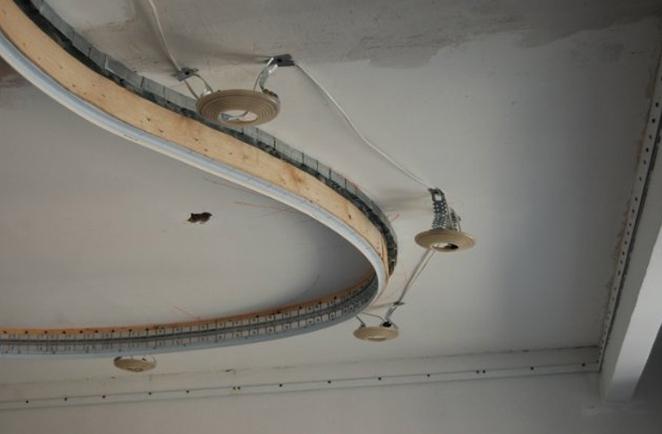
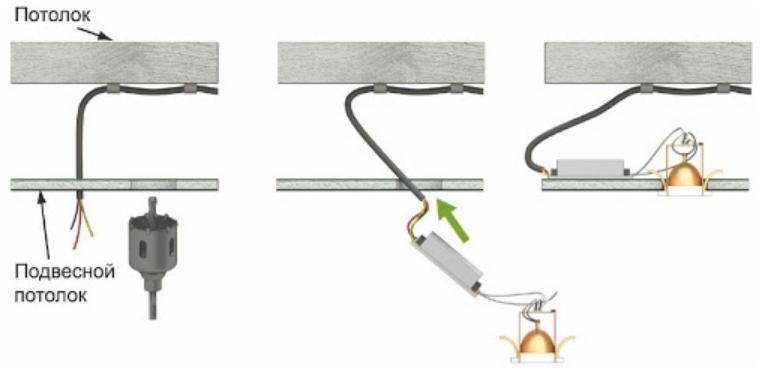
- Installation is also different, as the bases for spotlights are attached before laying the ceiling. It is necessary to make a clear scheme in advance and determine the location in order to bring the wires and secure platforms of a suitable size.
Which lamps to choose, the nuances of combination
Stretch ceiling allows you to realize almost any ideas, if everything is well prepared. The following must be taken into account:
- It is best to use LED spotlights, make calculations for this option. Diodes almost do not heat up during operation, do not require large space. The number of fixtures can be very large, but due to the low consumption of electricity, the wiring will not be overloaded.
- You can use both built-in models, and overhead or semi-overhead. They give glare on the surface, which looks original and serves as a decoration for the room.
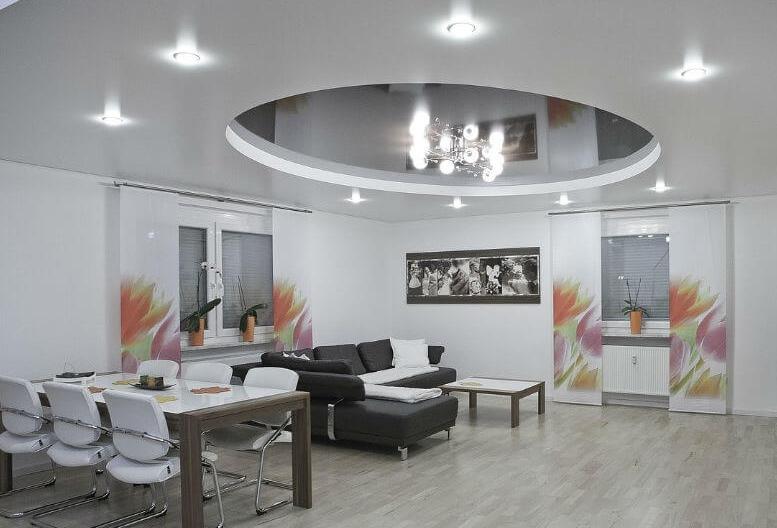
- You can combine built-in models with a classic chandelier, which is hung in the middle. In this case, to calculate the number of spotlights, you need to subtract the power of the chandelier and take into account the area that it effectively illuminates.
![Calculation of the number of spotlights for stretch ceilings]() Combined lighting option
Combined lighting option - If track systems or sconces are to be used, these should also be included in the calculations to determine the number of spot features.
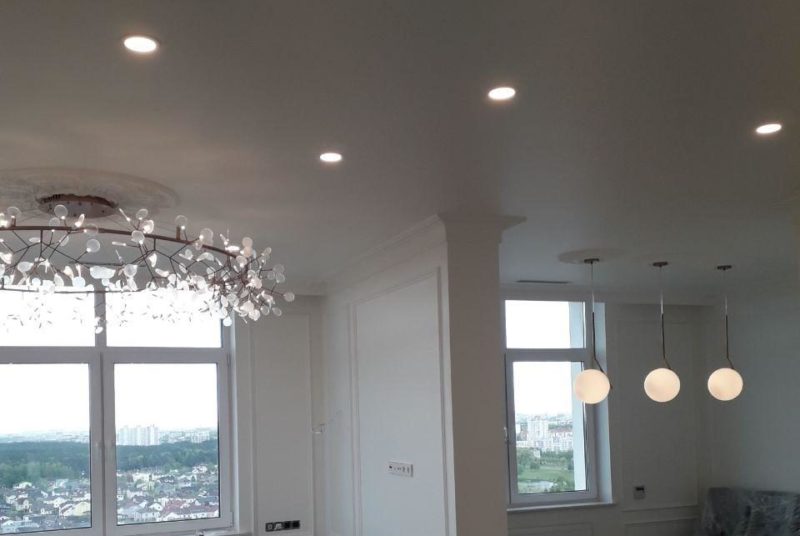
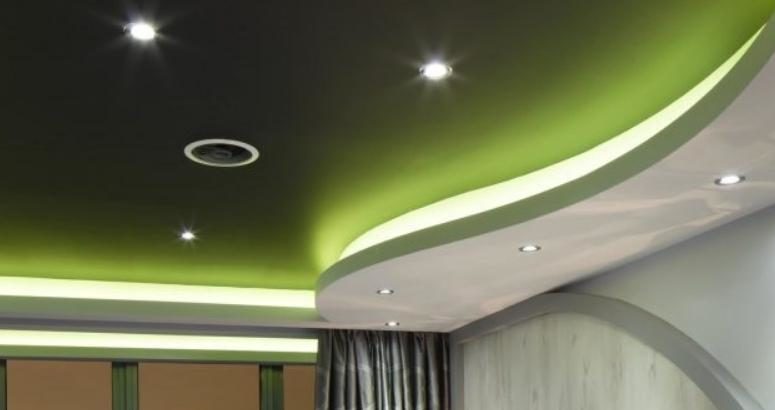
Note! If a backlight is installed around the perimeter, then it should be taken into account only if it scatters light well and has sufficient power. Decorative options do not need to be taken into account.
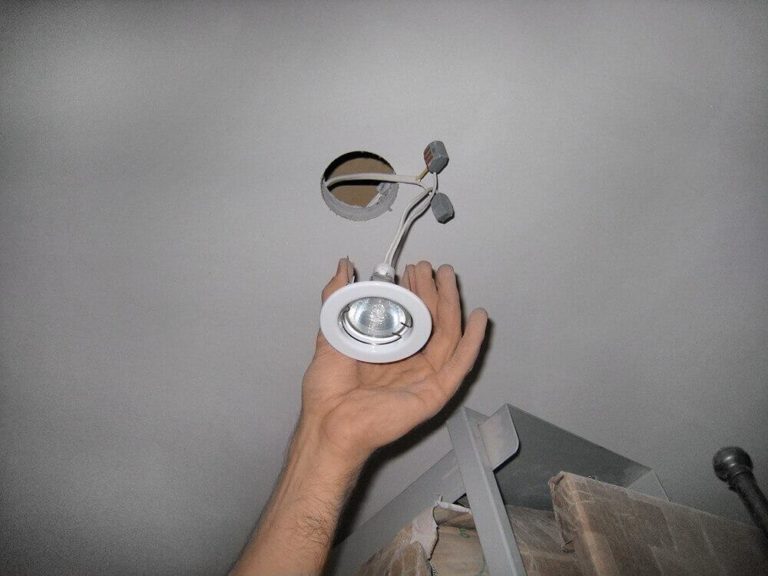
When installing fixtures for 12 or 24 V, you need to install converters, you need to select a place for them in advance. Calculate the quantity according to the total power of the bulbs, always select a model with a margin of at least 20%.
Thematic video
Inaccuracies and errors in the calculation of LED lighting
When installing LED spotlights, mistakes are often made that affect the quality of lighting. To exclude them, it is worth considering a few recommendations when calculating:
- If you plan to update the wall or floor finish and the color changes, it is better to adjust the reflectance of the surfaces in advance. If this is not done, then it may turn out that there is not enough light in the room, you will have to install more powerful lamps, or increase their number.
- When only a portion of the fixtures are used, such as over a work area, position them to provide the desired amount of light in one spot. If you arrange the equipment evenly, then the illumination will not be sufficient for the work to be done.
- When buying inexpensive fixtures, it may turn out that their actual performance is lower than stated.
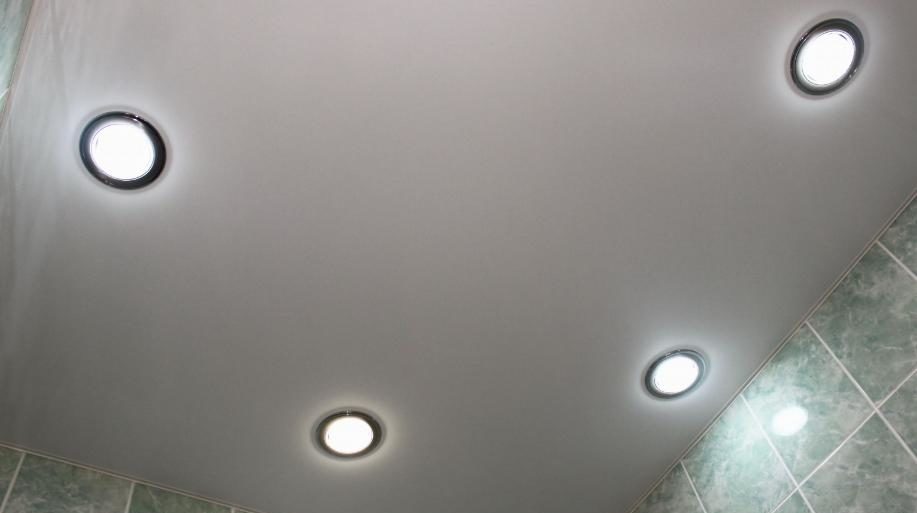
It is not difficult to calculate the number of spotlights if you know the illumination rate for different rooms and use a simple formula. Do not lose sight of the reflectance of surfaces, it greatly affects the quality of light in the room.