What lighting should be in the aquarium
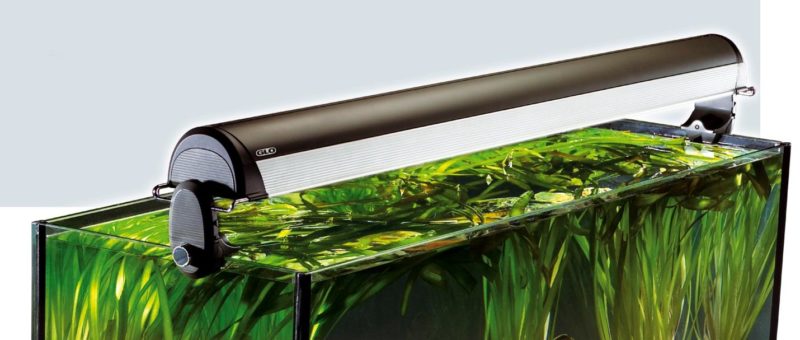
Lighting for an aquarium is a very important criterion. Thanks to the light, algae and plants release oxygen, which is necessary for underwater inhabitants. But not all light sources can provide high-quality illumination. In this case, the plants will begin to take on an inanimate appearance, yellow and brown spots will appear on the leaves, and then completely wither away. The process of photosynthesis requires good lighting. Let's take a closer look at this topic and figure out how to make the right light for the aquarium.
Lighting features
Lighting for an aquarium performs not only a decorative function. The main task of the light bulb is to create a powerful light flux to saturate the layers of water with the right amount of light. The development of life in it directly depends on light.
Time of day for many underwater plants also does not matter.To correctly calculate the lighting in the aquarium, you need to familiarize yourself in detail with each representative of your underwater world. It turns out that many of them develop at night, and therefore the lighting regime must be properly planned.
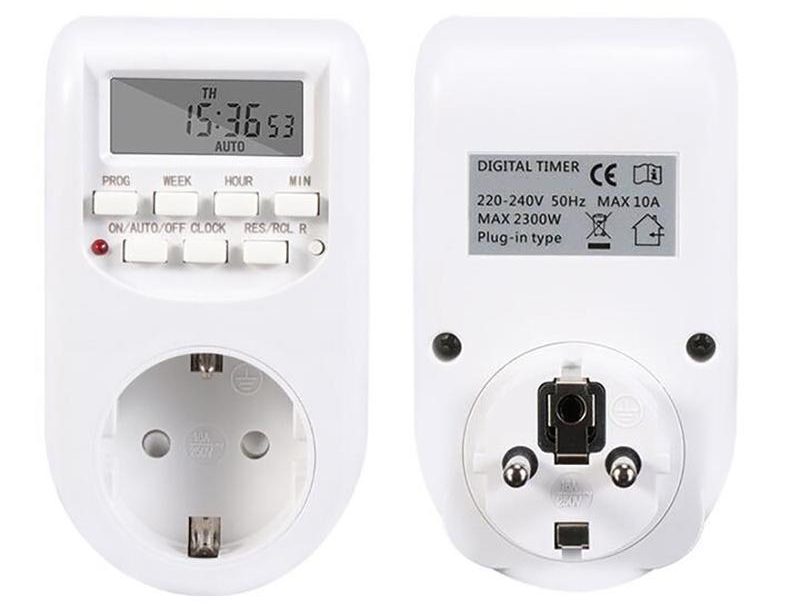
For exact compliance with the regime, it is not at all necessary to follow this process yourself. You can use inexpensive programming hardware that will reliably turn on the right lights at a certain time. Excess light adversely affects plants and fish, as well as its lack.
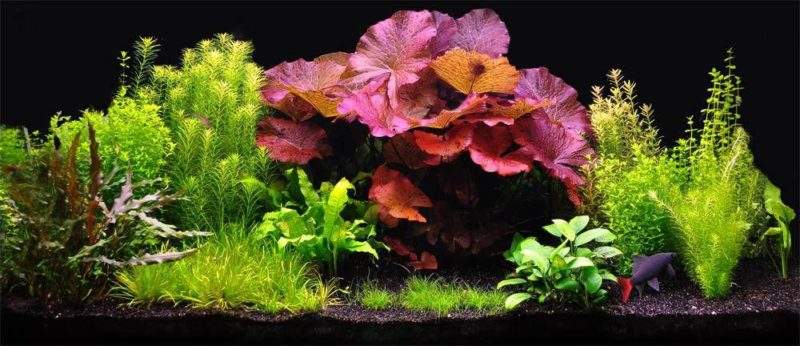
When calculating, it is necessary to pay attention to the fact that the development of the plant world requires a red and blue spectrum. The blue lamp should have a wavelength of 43-450 nanometers, and the red spectrum should correspond to a value of 660 nm (not lower, but that much). Keep in mind that the brightness of the red stream should be higher than the blue one, due to the high resistance of water during passage.
What type of lamp is best for an aquarium
[ads-quote-center cite='Mark Twain'] In 20 years, you will be more disappointed with the things you didn't do than with the things you did. So depart from the quiet harbor. Feel the tailwind in your sail. Move forward, act, open![/ads-quote-center]
Even 20 years ago, only fluorescent lamps and incandescent lamps were used as a light source for an aquarium. Today their use is practiced, but alternative light sources have appeared with more energy-efficient characteristics and elements that give more light flow.
A useful video about choosing a lamp for aquatic inhabitants.
The following five types of lamps are used as lighting:
- incandescent lamp;
- halogen incandescent lamp;
- luminescent;
- energy-saving lamps;
- LED lightening.
incandescent lamp
[ads-quote-center cite='Frank Hubbard'] „An expert is a person who no longer thinks; he knows“[/ads-quote-center]
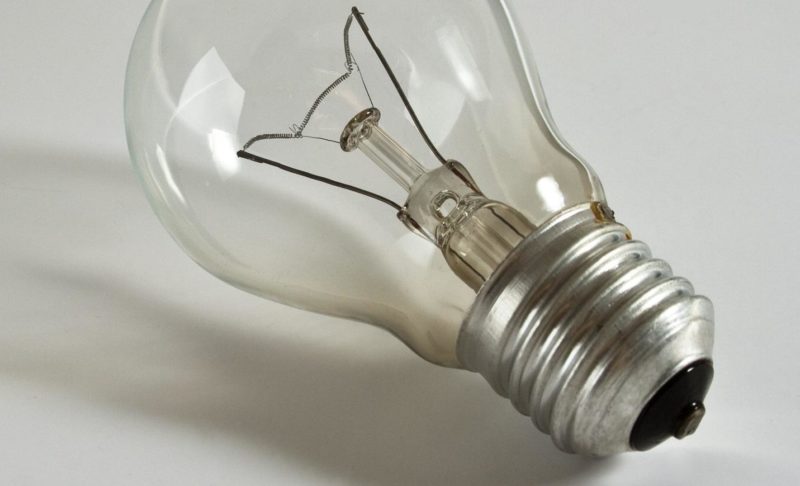
A standard incandescent lamp is ideal for lighting an aquarium, but its main disadvantage is its high power consumption and significant heat generation, which can have an extremely undesirable effect on underwater inhabitants. It is based on a luminous thread of refractory metal, located in a vacuum.
Apply such lighting with reflectors and heat sinks in the top cover for shallow aquariums. As a rule, the luminous flux of such a lamp is not enough to break through the water column to the very bottom of the tank with a depth of more than 50 cm. A 100 W lamp emits a luminous flux approximately equal to 1000 Lm.
Halogen
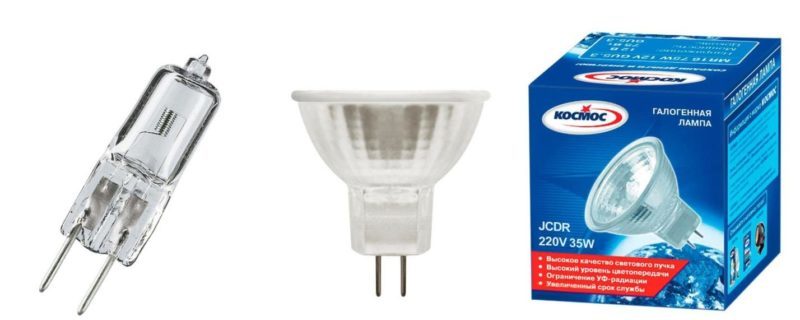
The device of the lamp is fully consistent with a simple incandescent lamp, only instead of a vacuum, gas is pumped into the lamp. Halogen bulbs have a powerful luminous flux, but have the same disadvantages as simple incandescent bulbs and need a heat sink. When deciding to use incandescent lamps, choose halogen ones, their power is enough to illuminate aquariums with a depth of up to 70 cm.
Fluorescent
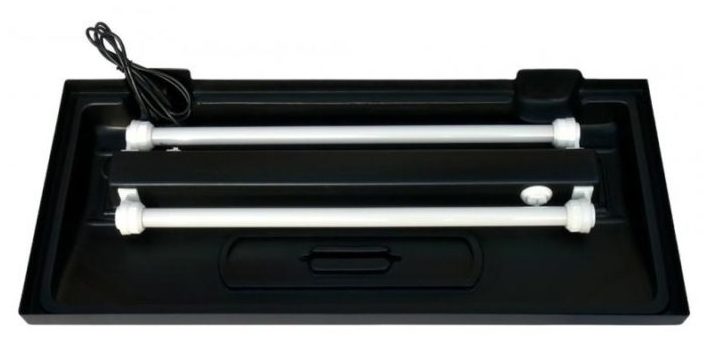
Discharge lamp - it is based on a gas saturated with mercury vapor. Due to the coating of the phosphor on the walls of the glass tube, ultraviolet radiation is emitted. The lamp has a wide spectrum and has a relatively low power consumption factor.
This type of lamp successfully outperforms incandescent lamps due to its superiority. An excellent solution for lighting aquariums up to 60 cm deep. Mounted in the top cover. Such lamps, as a rule, come complete with an aquarium and are considered the golden mean in effective lighting.
The disadvantage of lamps is the gradual attenuation of the luminous flux, this is due to the burnout of the phosphor. Requires periodic replacement.
energy saving
They are a kind of linear predecessors. The meaning is exactly the same. This is a modern gas-discharge independent light bulb (the device is rather complicated, so I will call this lamp a device).
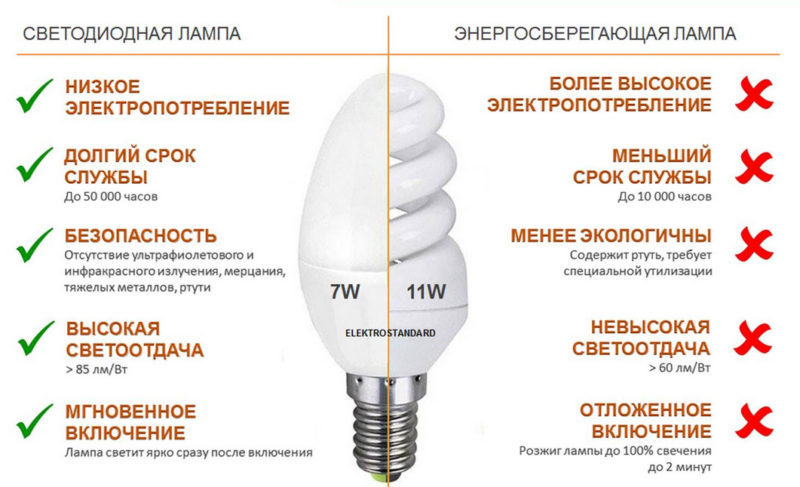
The electronics necessary for its kindling is installed in the base of the device. Good luminous flux, low power consumption, long service life. The disadvantage is that it cannot be installed in large deep-sea aquariums. In this case, it is used in conjunction with other light sources (for example, LED strip or halogen lamp).
| incandescent | LED | energy saving | |
| Light output efficiency Lm/W | 30 | 90 | 10,5 |
| Service life, hours | 1000 | 50000 | at least 20000 |
| Working temperature, deg.С | above 150 | Up to 75 | above 100 |
| Created luminous flux, lm | Power consumed from the network, W | ||
| 200 | 20 | 2 | 6 |
| 400 | 40 | 4 | 12 |
| 700 | 60 | 9 | 15 |
| 900 | 75 | 10 | 19 |
| 1200 | 100 | 12 | 30 |
| 1800 | 150 | 19 | 45 |
| 2500 | 200 | 30 | 70 |
LED
LED devices are the favorites in this segment. They have good luminous flux and low power consumption. Lighting for the aquarium is carried out with LED lamps and LED strips.
Thanks to phyto tapes, you can achieve optimal indicators of the level of light in the aquarium, their spectrum and wavelength fully correspond to the required level for the development and prosperity of life in the aquarium.
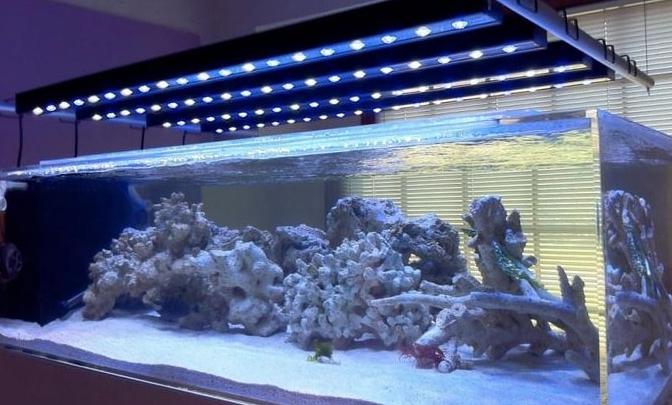
Ease of installation, the ability to manufacture a deep-sea lamp and use it as a decor to illuminate certain places in your reservoir - this is their main advantage. Plus low power consumption and the ability to connect to automatic start devices at the right time.
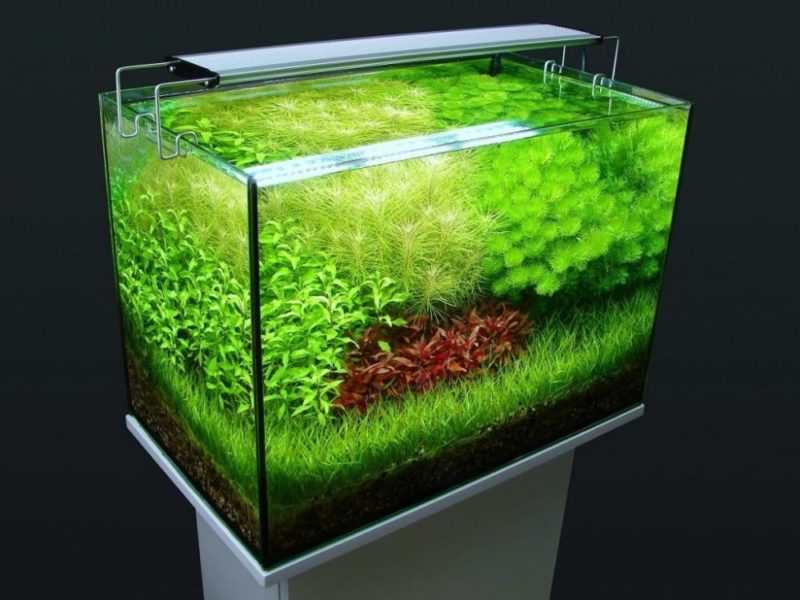
An example of calculating lighting for an aquarium
[ads-quote-center cite='Dale Carnegie']“Personally, I like strawberries and cream, but for some reason fish prefer worms. That's why when I go fishing, I don't think about what I love, but about what the fish loves”[/ads-quote-center]
The illuminance parameter is measured in Lux, and the luminous flux in Lumens. In the case of an aquarium, the units can be equated, since 1 Lux of illumination \u003d 1 Lumen of the light flux facing one square meter of area.
E=F/S, where E is the illumination, F is the luminous flux S is the area of the site.
The luminous flux is indicated on the lamp box, based on this data, calculate the required lamp power for the aquarium in accordance with the formula and accepted standards. Good bright lighting is an illumination equal to 30-40 lux per liter of water.
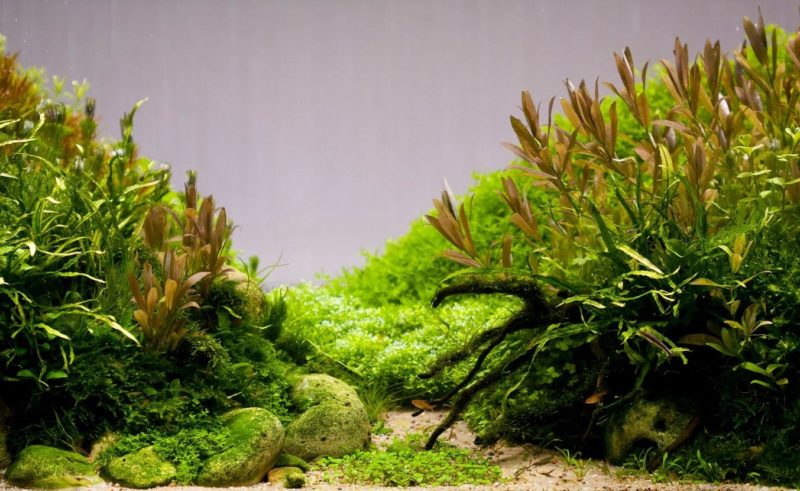
Consider an example: Let's say we have an aquarium one meter long, 50 cm deep and 60 cm high.All calculations are made in meters, for this we translate our length and width, we get 1 m and 0.5 m, multiplying these values, we get the value 0.5 m2.
The table above states that an LED light bulb produces 90 lm of luminous flux per watt. Let's say we have a lamp with a power of 20 W, which means that the luminous flux is 20 * 90 \u003d 1800 Lm. Dividing this value by the area of the aquarium, we get 1800 / 0.5 \u003d 3600 lux.
The volume of our aquarium is a cubic value, which means that by multiplying the length, width and height, we get 1 * 0.5 * 0.6 \u003d 0.3 m3which is equal to 300 liters of water. Dividing the calculated illumination of 3600 lux and the volume of water, we get the value of the amount of illumination per liter 3600/300 = 12 lux. Therefore, the calculation for high-quality lighting of an aquarium of this size: we you will need a minimum of three such lamps or one with a power of at least 60 watts.
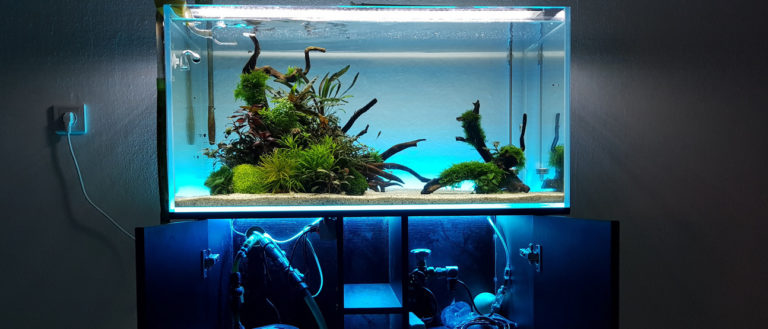
daylight hours
The daily routine is 12 hours. During this time, the maximum backlight intensity is used. It is necessary to familiarize yourself in detail with the inhabitants of the animal and plant aquarium. It is possible to turn on special light sources at night. Some types of plants wake up at night and need light.
[tds_council]Use a time relay to make things easier. Such devices can turn lights on and off at a given intensity or at a set time.[/tds_council]
Conclusion
Maintain the correct lighting conditions in the aquarium. This will ensure active growth and comfortable conditions for its inhabitants. The installation of modern equipment does not require complex maintenance and makes it convenient to use.Night illumination with blue and red rays will not only add growth to your plants, but also decorate your room with pleasant light.